Amid mounting international concern over intensified repression in the aftermath of Iran’s recent nationwide protests, Dr. Mai Sato, the United Nations Special Rapporteur on the situation of human rights in Iran, has issued a stark warning.
In a public statement on Twitter, she disclosed that in the weeks leading up to the protests that began on December 28, 2025, she and other UN experts had sent multiple formal communications to Iranian authorities regarding several execution cases and deteriorating prison conditions.
At the center of these concerns is the case of Zahra Tabari, a 67-year-old electrical engineer sentenced to death on charges of baghi (“armed rebellion against the state”). The ruling was reportedly issued following a hearing lasting less than ten minutes. Sato noted that the primary evidence presented against Tabari consisted of a fragment of material bearing a protest slogan, raising serious concerns about the absence of due process and the violation of fair trial standards in capital cases.
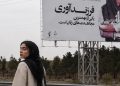
Dr. Mai Sato also referenced the case of Ehsan Faridi; a mechanical engineering student sentenced to death on charges of efsad-e fel-arz (“corruption on earth”). His indictment, she said, was based on intelligence reports prepared by a prosecutor who was subsequently dismissed on corruption charges, an issue that had previously been formally communicated to Iranian authorities.
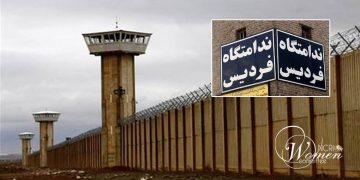
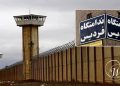
Separate communications addressed conditions in several detention facilities, including Qarchak Prison, Qezel Hesar Prison, Sheiban Prison, and Lakan Prison. Reports documented deaths in custody, torture, executions carried out without prior notice, and the denial of detainees’ access to family contact. Iranian officials, however, reportedly dismissed the allegations as politically motivated and maintained that all judicial proceedings complied with domestic law.
Dr. Mai Sato emphasized, “Just as Faridi and Tabari were sentenced to death based on investigation and trial that appear to be clearly in violation of procedural safeguards, individuals may now be executed for participating in the protests. I have been receiving reports of forced confessions of protesters, echoing the allegations raised in the communications. The prison conditions alleged in the communication are the conditions into which newly detained protesters may have been placed.”
She further warned of a profound lack of transparency regarding the status of detainees: “Today, we do not know how many people are detained, where they are held, or in what condition. We do not know how many have been sentenced to death or already executed. We do not even know how many people have been killed: the State’s own figure stands at over 3,000, while reports by civil society organisations far exceed that number.”
To underscore the human toll of the crisis, Dr. Sato recounted the story of a teenager killed during the protests.
“But behind the numbers are individual lives. I have been receiving information about specific cases. One of these is a teenage boy killed during the protests. A few months before the nationwide protest, he wrote in his diary: ‘Today, as we are on the last day of summer, I feel a lot of excitement and enthusiasm for tomorrow because it is the first day (of school). In my new school, my field of study is electronics and related to electricity. I hope a bright future is waiting both for me and for my family.’”