Tuesday, June 2, 2026
  • English
  • Français
  • فارسی
  • عربى
PODCASTS
NCRI Women Committee Women Resistance Freedom
  • Home
  • NEWS
    • Women’s News
    • Articles
    • Statements
  • PUBLICATIONS
    • Monthlies
    • Documents
    • Reference Library
  • ABOUT US
    • The NCRI Women’s Committee
    • Gender Equality
    • Women’s Platform
  • MARYAM RAJAVI
    • Maryam Rajavi
    • Maryam Rajavi Speeches
    • The Plan on Women’s Rights and Freedoms
    • Ten-Point Plan for the future of Iran
  • VANGUARDS
    • The Fallen for Freedom
    • Heroines in Chain
    • Women of Iranian Resistance
    • Famous Women
    • Women in History
  • EVENTS
    • IWD Conferences
    • Activities
    • IWD Speeches
    • Solidarity
  • VIDEO
    • Videos
    • IWD Videos
  • PODCAST
  • DONATE
  • CONTACT US
No Result
View All Result
NCRI Women Committee Women Resistance Freedom
  • Home
  • NEWS
    • Women’s News
    • Articles
    • Statements
  • PUBLICATIONS
    • Monthlies
    • Documents
    • Reference Library
  • ABOUT US
    • The NCRI Women’s Committee
    • Gender Equality
    • Women’s Platform
  • MARYAM RAJAVI
    • Maryam Rajavi
    • Maryam Rajavi Speeches
    • The Plan on Women’s Rights and Freedoms
    • Ten-Point Plan for the future of Iran
  • VANGUARDS
    • The Fallen for Freedom
    • Heroines in Chain
    • Women of Iranian Resistance
    • Famous Women
    • Women in History
  • EVENTS
    • IWD Conferences
    • Activities
    • IWD Speeches
    • Solidarity
  • VIDEO
    • Videos
    • IWD Videos
  • PODCAST
  • DONATE
  • CONTACT US
No Result
View All Result
NCRI Women Committee
No Result
View All Result
Home Heroines in Chain
Freedom from Prison Prison memoirs of Mehri Hajinejad

Soheila Mokhtarzadeh

Freedom from Prison

February 14, 2026
in Heroines in Chain

Prison memoirs of Mehri Hajinejad from the book The Last Laughter of Leila – Last Part

In the final installment of Mehri Hajinejad’s prison memoirs, published in the book The Last Laughter of Leila, the author who was a teenage student at the time recounts the moment of her freedom from prison.

Take Me Away, My Gentle Hope

One spring day in 1986, they read out the names of twenty prisoners, mine among them, and ordered us to prepare for transfer to Evin Prison. When we asked why, they said it was because we were nearing the end of our sentences and would be taken to Evin to overgo our freedom process.

That day was one of the hardest days of my life. It was around four or five in the afternoon when I had to say goodbye to all those I loved. I felt as though I was suspended in a limbo between life and death. I kept asking myself: If I’m released but cannot reconnect with the Organization, what will I do? At least in prison, I was among my comrades, facing the enemy directly. But outside, what awaited me there?

The moments of farewell were unbearably painful. I felt like a fish thrown out of water, struggling desperately to find its way back to the sea. As I said goodbye to each of the women, only one sentence passed between us. I would say, “I’m not staying. I’ll soon go beyond the white mountains.”

This was the phrase we used for those who managed to cross the border.

Each of them had her own message, her own request. One gave me a code and asked me to keep it as her radio identification, adding, “Maybe one day I’ll manage to make it outside too.” Another said, “Send my greetings to the others.” One urged me not to waste a single moment once I was free. Another insisted, “If you end up staying in Evin, somehow let us know.”

As I turned my face, I saw the girls’ eyes, filled with affection and brimming with the joy of freedom, and I felt that every single glance placed a heavier burden of responsibility on my shoulders. How many days and nights we had lived through together. But in the end, the moment of separation from my companions arrived.

Along with prisoners from other wards, we were put on a bus. I cried the entire way. The innocent faces of my comrades never left my sight for a moment: the mischievous, restless eyes of Forouzan; the warm, affectionate gaze of Shekar Mohammadzadeh; Azam’s firm and serious encouragement; Firoozeh’s radio code and her hope of reunion; and the poem that Soheila Mokhtarzadeh[1] recited to me in our final moments together:

When you cross this desert of terror,

And pass through it safely,

To the blossoms, to the rain,

Carry our greetings.

We arrived at Evin at nine o’clock at night. At first, they took us to Ward 209, but the next day we were transferred downstairs to Ward 4. When we entered the ward, no one else was there. This was the very ward that had once held more than six hundred prisoners, now completely empty. Its inmates had been transferred to Ward 1, to the newly built cells of Section 325, and to Gohardasht Prison.

On the morning of April 26, 1986, at ten o’clock, a guard named Rahimi called my name and a few others over the loudspeaker and ordered us to come to the ward entrance. When we arrived, he said, “Take your belongings and come.” Even then, he did not tell us we were being released, so that we would not dare to feel happy.

We said goodbye to the girls, gathered our few belongings, and set off. They blindfolded us. A female guard took the hand of the first person, and the rest of us followed in a line behind her. In Ward 216, they searched us and all our belongings once again. Little by little, we began to believe that we were truly being released.

Around two in the afternoon, in the prosecutor’s office building, my name was called. Guard Sa’adati grabbed the edge of my chador and pulled me into a room filled with papers and files. There, I heard a rough voice say, “Lift your blindfold just enough to see the paper.”

I saw a document signed by three people as my guarantors. One was my uncle, another an acquaintance, and the third a man named Mohsen whom I did not know. In addition to the three guarantors, they had taken three million tomans as bail.

My poor mom must have gone from door to door, exhausting herself, to secure these guarantors and gather the money and collateral.

I signed the release paper. They also took another signature, obligating me to report to the local committee once every two weeks, and warning that the slightest misstep would send me back to prison.

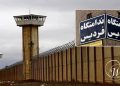
At four o’clock in the afternoon, they put us on a bus and drove us out through the gates of Evin. As we passed through the massive iron gate, the final gate of the prison, a regime henchman who had opened it sneered, “Go ahead. In a little while, you’ll all be back. You’re all hypocrites.”

Instinctively and with absolute certainty, I replied, “Impossible. We will never return here.”

The moments after leaving Evin were strange and unsettling. A deep sense of alienation took over my entire being. I felt intensely alone and had no idea what to do next. As I walked, it felt as though hundreds of waiting eyes (the eyes I had left behind in Ghezel Hesar and Evin) were now facing me, urging me on with their gaze: Mahboubeh, don’t stop! Go! This is not where you belong.

Hundreds of inspirational whispers echoed in my ears: No matter what, you must make it. Remember, you represent us as well…

A pounding headache brought me waves of nausea, and I could barely walk. The bus dropped us off at Luna Park.

Wearing only a pair of slippers, draped in a black chador, and carrying a coarse cloth bag filled with a few clothes, odds and ends, and prison keepsakes, I stood by the side of the street, wondering which direction to take. I was confused, having lost even my sense of direction. Everything around me felt unfamiliar, distanced.

The alleyways and streets, the people, the walls, the noise, everything was there. Yet amid all of it, one thing remained closest to my eyes and mind: the images of prison and the memories of the girls.

Lost in these thoughts, I suddenly saw, almost in disbelief, ten or fifteen people walking toward me. They were there to welcome me.

Among them, I recognized only my mom and my dear uncle. The others were neighbors and friends who had come out of respect and affection for the Mojahedin to take me. I embraced them all with affection. Mohsen, our neighbor, had brought his minibus, and we all got in.

What a clash of emotions I felt. Everyone was happy. I was happy to see them too, but inside me, a storm was raging. I was under overwhelming pressure.

The city felt lifeless and cold. There was no trace left of the vibrant presence of the local young PMOI men and women who, like dew upon flowers, had once given freshness to Tehran’s streets. For that reason, I had no desire to look at the city at all.

It was seven in the evening when we arrived at our memory-filled home, a house I had last left before June, and now, upon my return, none of my loved ones were there. I was completely alone.

Along the way, I decided that the moment I reached home, I would first listen to the Voice of Mojahed Radio. This way, at least, I could reconnect myself and find my path. When I tuned the radio to the right frequency, the very first thing I heard was this song:

Take me away, take me away, my gentle hope,

Take me to the city of poems and passions,

We are drawn onto a star-filled path,

We are carried beyond the stars…

I felt as though my entire being were a thirsty desert, drinking this gentle voice drop by drop, yet growing thirstier with every sip.

After years, I was finally hearing the Voice of Mojahed again. Despite all the noise that distorted the signal, I could still hear it, like a parched traveler who, after miles upon miles, finally reached water. It was a voice intertwined with all my hopes and longings.

Once more, I felt the presence of the watchful eyes of my imprisoned comrades all around me. Their final words of advice echoed in my mind, and Soheila’s voice resonated in my ears:

When you cross this desert of terror,

And pass through it safely,

To the blossoms, to the rain,

Carry our greetings.


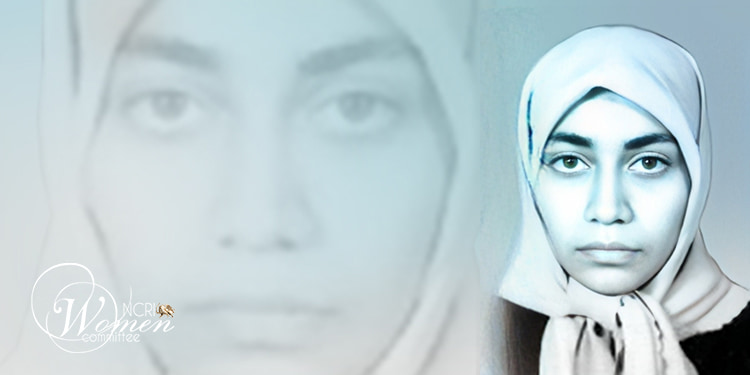
[1] Soheila Mokhtarzadeh was arrested in Tehran before June 20, 1981, solely for supporting the People’s Mojahedin Organization of Iran (PMOI/MEK). She was released from prison in 1986, but while attempting to leave Iran, she was arrested once again. This time, she was subjected to far more brutal torture.

Soheila was ultimately executed on January 28, 1987, at the age of just 23. Before her, her heroic sister Sara Mokhtarzadeh had also been killed under torture on November 22, 1981.
ShareTweetPinShareSendShare

Related Posts

Iran: Imprisoned Christian Convert Marks Seventh Day of Hunger Strike

June 1, 2026
Iran: Female Imprisoned Christian Convert Marks Seventh Day of Hunger Strike

Ghazal Marzban, a Christian convert imprisoned in Evin Prison, has entered the seventh day of a hunger strike in protest to the lengthy prison sentence imposed on her....

Read moreDetails

May 2026 Report: The Enduring Resistance of Iranian Women

May 31, 2026
May 2026 Report: The Enduring Resistance of Iranian Women

Political Prisoners Remain Defiant Despite Escalating Crackdowns and Inhumane Conditions May 2026 Report: From the Frontlines to the Prison Cells Monthly May2026_ENDownload New Casualties Confirmed from the January...

Read moreDetails

Iran: Regime’ Judiciary Upholds Death Sentence Against Female Political Prisoner

May 31, 2026
Iran Regime Reaffirmed Death Sentence Against Female Political Prisoner

The Revolutionary Court in Rasht has once again sentenced political prisoner Zahra Tabari to death on charges of bagh-y ("armed rebellion against the state") based on her alleged...

Read moreDetails

Iran: Intensifying Pressure on Families of PMOI Members and Political Prisoners

May 30, 2026
Intensifying Pressure on Families of PMOI Members and Political Prisoners

Amid escalating crackdowns and the continued repression of political dissent, the Iranian Intelligence Ministry has stepped up the summoning and interrogation of families of PMOI supporters and political...

Read moreDetails

How Internet Blackout in Iran Forces Women into Structural Poverty

May 30, 2026
How Internet Blackout in Iran Forces Women into Structural Poverty

The internet blackout in Iran—which is now entering a phase of drip-fed restoration after nearly three months of absolute blockage—has dealt a devastating blow to society, alongside the...

Read moreDetails
Next Post
Nina Pesyan: The People of Iran Do Not Want the World to Fight for Them

Nina Pesyan: The People of Iran Do Not Want the World to Fight for Them; They Want the World to Stand with the Truth

Documents

Crushed by Design: Structural Crises and Inequitable Policies Push Female-Headed Households to the Edge

Crushed by Design: Structural Crises and Inequitable Policies Push Female-Headed Households to the Edge

May 18, 2026

Introduction Life for the Iranian people under the religious dictatorship is fraught with hardship and peril from every perspective. Whether...

A Report to CSW70: Gender-Based Discrimination Under Iranian Law

A Report to CSW70: Gender-Based Discrimination Under Iranian Law

March 8, 2026

Structural Inequality and State-Sanctioned Oppression of Women Gender-Based Discrimination Under Iranian Law” is the title of the NCRI Women’s Committee’s...

Annual Report 2026: From Protests, to Uprising, and the Role of Iranian Women

Annual Report 2026: From Protests, to Uprising, and the Role of Iranian Women

March 3, 2026

On the eve of International Women’s Day 2026, the NCRI Women’s Committee presents its Annual Report 2026, offering a recap...

Monthlies

May 2026 Report: The Enduring Resistance of Iranian Women
Monthlies

May 2026 Report: The Enduring Resistance of Iranian Women

May 31, 2026
April 2026 Report: Mass Arrests of Women: Targeted Repression in Time of Crisis
Monthlies

April 2026 Report: Mass Arrests of Women in Iran

April 30, 2026
March 2026 Report: How Iranian Women Are Shaping the Resistance
Monthlies

March 2026 Report: Courage Under Fire

April 3, 2026
January 2026 Report: Women at the Core of the Uprising
Monthlies

January 2026 Report: Women at the Core of the Uprising

January 31, 2026

Articles

How Internet Blackout in Iran Forces Women into Structural Poverty

How Internet Blackout in Iran Forces Women into Structural Poverty

May 30, 2026

The internet blackout in Iran—which is now entering a phase of drip-fed restoration after nearly three months of absolute blockage—has...

The Crimson Diary Under the Daily Shadow of Femicide in Iran

The Crimson Diary Under the Daily Shadow of Femicide in Iran

May 29, 2026

What follows is merely a horrifying glimpse into leaked news from an incredibly brief period—from mid to late May 2026....

Aziz Rezaei: Mother of Resistance, Teacher of Steadfastness

Aziz Rezaei: Mother of Resistance, Teacher of Steadfastness

May 22, 2026

In the contemporary history of Iran, there are names that live not merely as memories, but as paths. The name...

The Fallen for Freedom

White-Clad in the Line of Fire: Samin Rostami
The Fallen for Freedom

White-Clad in the Line of Fire: Samin Rostami

May 20, 2026
Killed by Two Bullets to the Heart and Leg: Fatemeh Abdollahi
The Fallen for Freedom

Killed by Two Bullets to the Heart and Leg: Fatemeh Abdollahi

May 17, 2026
Fereshteh Azhadi: A Life of Resistance, Sacrifice, and Unyielding Commitment
The Fallen for Freedom

Fereshteh Azhadi

May 1, 2026
Mahin Khiabani: A Life of Defiance Until the Final Breath
The Fallen for Freedom

Mahin Khiabani

May 1, 2026

ABOUT US

NCRI Women Committee

We work extensively with Iranian women outside the country and maintain a permanent contact with women inside Iran. The Women’s Committee is actively involved with many women’s rights organizations and NGO’s and the Iranian diaspora.
The committee is a major source of much of the information received from inside Iran with regards to women. Attending UN Human Rights Council meetings and other international or regional conferences on women’s issues and engaging in a relentless battle against the Iranian regime’s misogyny are part of the activities of members and associates of the committee.

CATEGORIES

  • Activities
  • Articles
  • Documents
  • Famous Women
  • Heroines in Chain
  • IWD Conferences
  • IWD Speeches
  • IWD Videos
  • Maryam Rajavi
  • Maryam Rajavi Speeches
  • Monthlies
  • Podcast
  • Reference Library
  • Solidarity
  • Statements
  • The Fallen for Freedom
  • Videos
  • Women in History
  • Women in Leadership
  • Women of Iranian Resistance
  • Women's News

BROWSE BY TAG

Child marriage coronavirus education execution forced hijab Gender Gap Generation Equality Honor killings Iran Teachers Maryam Akbari Monfared Nurses Plan on Women's Rights and Freedoms Poverty Prisoners Protests rural women Saba Kord Afshari The girl child Violence against women Women's Leadership Women Heads of Household Zeinab Jalalian

The copyright of all the material published on this website has been registered under © 2016 the Women’s Committee of the National Council of Resistance of Iran. To obtain permission to copy, redistribute or publish the material published on this website, you should write to the NCRI Women’s Committee. Please include the link of the original article on our website, women.ncr-iran.org.

Welcome Back!

Login to your account below

Forgotten Password?

Retrieve your password

Please enter your username or email address to reset your password.

Log In

Add New Playlist

No Result
View All Result
  • Home
  • News
    • Women’s News
    • Articles
    • Statements
  • Publications
    • Monthlies
    • Documents
    • Reference Library
  • About Us
    • The NCRI Women’s Committee
    • Gender Equality
    • Women’s Platform
  • Maryam Rajavi
    • Maryam Rajavi
    • Maryam Rajavi Speeches
    • Ten Point Plan for Iran
    • The Plan on Women’s Rights and Freedoms
  • Vanguards
    • The Fallen for Freedom
    • Heroines in Chain
    • Women of Iranian Resistance
    • Famous Women
    • Women in History
  • Events
    • IWD Conferences
    • Activities
    • IWD Speeches
    • Solidarity
  • Video
    • Videos
    • IWD Videos
  • Podcast
  • Donate
  • Contact us
  • فارسی
  • عربی
  • Français

The copyright of all the material published on this website has been registered under © 2016 the Women’s Committee of the National Council of Resistance of Iran. To obtain permission to copy, redistribute or publish the material published on this website, you should write to the NCRI Women’s Committee. Please include the link of the original article on our website, women.ncr-iran.org.