
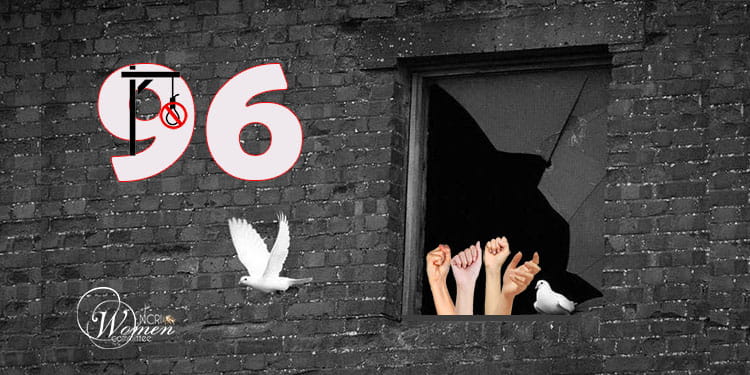
The 96th week of “No to Execution Tuesdays” campaign continued across 55 prisons in Iran, amid a growing wave of executions that has prompted groups of prisoners to launch hunger strikes in protest.
This week, inmates at Birjand Prison also joined the campaign and, as of Tuesday, November 25, 2025, began participating in the protest hunger strike.
In this week’s statement, the campaign described the new surge in executions as a political tool used to consolidate power and instill fear. “The ruling system, by dramatically escalating the implementation of death sentences in the absence of fair and independent judicial proceedings, is weaponizing capital punishment as a systematic mechanism to suppress society,” the statement reads. According to the signatories, this constitutes a blatant violation of fundamental human rights and an unmistakable example of a crime against humanity.
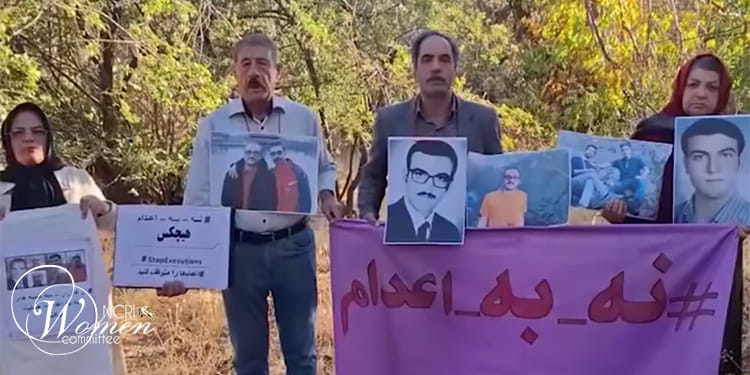
Bereaved Families at the Frontline of Protest
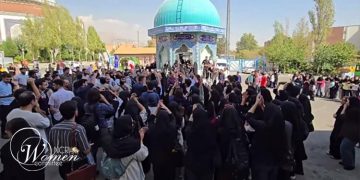
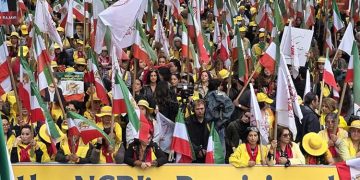
During the 96th week of “No to Execution Tuesdays” campaign, families of political prisoners sentenced to death sought to amplify the voices of prisoners who, behind prison walls, are deprived of their most basic human right, the right to life.
Their placards and leaflets carried slogans such as “Support ‘No to Execution Tuesdays’,” “No to the Execution of Anyone,” and “Stop the Executions.” Chanting “No to executions — stop the killings,” families called on society to stand against the death sentences.
Their persistent and courageous presence, as symbols of resistance, once again underscored how the “No to Execution Tuesdays” campaign has become a vital bridge linking the struggle of prisoners with the broader social movement outside prison walls.
Alarming Rise in Executions
As the “No to Execution Tuesdays” campaign continues, reports indicate a sharp increase in executions carried out in 2025, exceeding 1,750. Many of those executed were protesters and political detainees arrested during and after the nationwide uprising of 2022.
In most of these cases, judicial proceedings were marred by widespread violations of fair trial standards, including coerced confessions extracted under torture, show-like court sessions, and the denial of access to independent legal counsel.