
Tuesday, January 13, 2026
  • English
  • Français
  • فارسی
  • عربى
PODCASTS
NCRI Women Committee Women Resistance Freedom
  • Home
  • NEWS
    • Women’s News
    • Articles
    • Statements
  • PUBLICATIONS
    • Monthlies
    • Documents
    • Reference Library
  • ABOUT US
    • The NCRI Women’s Committee
    • Gender Equality
    • Women’s Platform
  • MARYAM RAJAVI
    • Maryam Rajavi
    • Maryam Rajavi Speeches
    • The Plan on Women’s Rights and Freedoms
    • Ten-Point Plan for the future of Iran
  • VANGUARDS
    • The Fallen for Freedom
    • Heroines in Chain
    • Women of Iranian Resistance
    • Famous Women
    • Women in History
  • EVENTS
    • IWD Conferences
    • Activities
    • IWD Speeches
    • Solidarity
  • VIDEO
    • Videos
    • IWD Videos
  • PODCAST
  • DONATE
  • CONTACT US
No Result
View All Result
NCRI Women Committee Women Resistance Freedom
  • Home
  • NEWS
    • Women’s News
    • Articles
    • Statements
  • PUBLICATIONS
    • Monthlies
    • Documents
    • Reference Library
  • ABOUT US
    • The NCRI Women’s Committee
    • Gender Equality
    • Women’s Platform
  • MARYAM RAJAVI
    • Maryam Rajavi
    • Maryam Rajavi Speeches
    • The Plan on Women’s Rights and Freedoms
    • Ten-Point Plan for the future of Iran
  • VANGUARDS
    • The Fallen for Freedom
    • Heroines in Chain
    • Women of Iranian Resistance
    • Famous Women
    • Women in History
  • EVENTS
    • IWD Conferences
    • Activities
    • IWD Speeches
    • Solidarity
  • VIDEO
    • Videos
    • IWD Videos
  • PODCAST
  • DONATE
  • CONTACT US
No Result
View All Result
NCRI Women Committee
No Result
View All Result
Home Heroines in Chain
The Spirit of Resistance in the Lines of Our Letters

Afsaneh Afzalnia

The Spirit of Resistance in the Lines of Our Letters

November 26, 2025
in Heroines in Chain
Share on FacebookShare on Twitter

Memoirs of Mehri Hajinejad from “The Last Laughter of Leila”— Part Nine

In the previous part, we read about how the women in Evin found small ways to keep their spirit of resistance alive in the middle of isolation and surveillance, from sharing stories and memories to creating tiny moments of joy for the newcomers who entered their ward frightened and exhausted. Mehri Hajinejad described how even the smallest acts of solidarity, like comforting a stranger or spreading a bit of warmth in a cold cell, became a quiet form of resistance.

In this new section of her memoir, she turns to another channel of survival and defiance: the short letters, only five to seven lines, that they were suddenly allowed to send to the outside world in 1982. These brief notes became far more than communication with family; they carried the stamp of their resilience, their coded loyalties, and their unwavering commitment to their fallen loved ones and imprisoned comrades.

The Five–Seven Line Letters

In 1983, when the guards finally had less work on their hands compared to the chaos of 1981–82, they decided to give us paper for writing letters. Until then, we had neither paper nor pens. If a pen existed in a room, it was used with extreme caution so the ink wouldn’t run out.

Their goal was twofold: they needed to appease the families, especially those who had gone two years without a single visit, and they hoped that allowing letters would redirect prisoners’ minds toward family concerns rather than political commitment.

The first day they handed out a few sheets of paper and some pens, we were thrilled. We could finally write notes to our friends downstairs, crumple them into little balls, and throw them through the window. We also hid a few pens “for emergencies.”

Then we sat down and said, “Now what? How do we write a whole letter in five lines?”
Everyone sat around the room quietly, thinking. But silence never suited us. No one was ever alone or withdrawn in our ward, so this stillness felt strange.

It didn’t last long. Suddenly Zahra burst out:
“What on earth are we supposed to write in just a few lines? And why is everyone so quiet? I’m sick of this silence!”

She walked into the middle of the room. I joined her, agreeing that she was right, we needed to think about what message we wanted to send.

Soon everyone was talking and laughing.
One girl said she wanted to draw the whole room and send it instead of a photo.
Another joked she’d write a “Prison Dictionary” so they could turn it into a book outside.
Someone else suggested we write one letter and all of us copy it word for word.

Eventually, we decided that even with only five lines, we would send our joy, our strength, and the reality of prison life to the outside.

Writing the First Letter

My first letter was written in a way that my mother, with help from my sister, could rewrite and deliver to my brother, Ali, imprisoned in Gohardasht.

I began with: “In the name of God, the Ahad (One) and the Samad (Eternal),[1] who is unmatched, self-sufficient, and steadfast. My only dear one, I long to see you so much…

My dear mother, please tell my uncle that I have never forgotten the prayer he taught me, and I always recite it during my prayers: ‘Peace be upon you for the patience you endured; how excellent is the final home…’”

By beginning this letter with the name of the Ahad and Samad God, I wanted all my family to know that I remain faithful to the path of my executed brothers, Ahad and Samad.

I wrote “my only dear one” so my brother in Gohardasht would understand that our other two brothers had already been executed.

Back then we referred to Massoud Rajavi[2] using the code word “uncle.” So, I told my mother to give him my message and say that we remain steadfast.

I was satisfied with the letter because a note without the spirit of the prison wasn’t a real letter. And if I didn’t express this, what would my mother, who had given her entire life to this cause, think? How else would she hold on to hope?

A Comrade’s Request

Minoo, one of my cellmates who was a Marxist, liked the letter so much she asked me to help write one for the family of her husband, who had been killed during the Jungle clashes in February 1982.

After that, every month when we were permitted to write letters, we sent our messages out with the same spirit and resolve.

Of course, many letters never reached their families. We later discovered that any letter containing a Quran verse or a line from Nahj al-Balagha[3] was confiscated, because the guards claimed they were “codes.”

Letters Carried Our Spirit of Resistance

Contrary to what the regime intended, these letters did not increase our longing or sadness. They strengthened us. They brought out our fighting spirit.

Through these letters, I even sent a note to the sister of my sister-in-law Ashraf Mousavi, who was later hanged during the 1988 massacre. At the time she was imprisoned in Qezel Hesar. She had no visitors, so I wrote to tell her that Akram (her sister) had left Iran and that Nasrin, my niece, was living with my mother.

One day, a letter arrived addressed to my sister but clearly written for me. I instantly recognized Ali’s style, my brother writing from Gohardasht, with my mother rewriting it so it would pass inspection.

A Collective Joy

When letters from our families arrived, the entire ward came alive. Joy spread through all six rooms, everyone read everyone’s letters. No letter belonged to a single person; happiness and grief belonged to all of us.

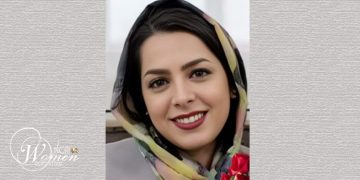
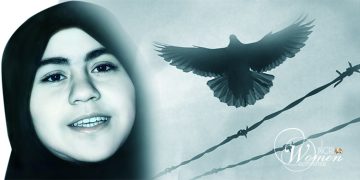
I always rushed to Room 3 to ask Farzaneh if there was a new photo of her niece Fatemeh. She was the sister of Af­saneh Afzalnia,[4] a student organizer who had been executed. Because of my affection for Afsaneh, I loved seeing photos of her little girl who lived with her grandmother in Mashhad.

We even made a little photo album for Fatemeh, using scraps of plastic and cardboard. Farzaneh, who had beautiful handwriting, wrote poems around the pictures.

In the end, letter-writing itself became a collective act among us.
And once again, the guards’ plan backfired; they tried to break us, but even in five lines, we found a way to stay unbreakable.


[1] Ahad (one) and Samad (eternal) are two of the adjectives for God but were also the names of my brothers who had been executed by the regime.

[2] Massoud Rajavi was the then Secretary General of the PMOI/MEK and the charismatic leader of the organization.

[3] Nahj al-Balagha (Path of Eloquence) is a revered collection of sermons, letters, and sayings attributed to Imam Ali, the first Shia Imam. Compiled in the 10th century by Sharif al-Radi, it is considered one of the most important works of classical Arabic literature and a key text in Shia religious and ethical thought.

[4] Afsaneh Afzal-Nia was a heroic member of the PMOI, a sociology student, and one of the organization’s student-affairs coordinators. She was killed on February 9, 1982, at the age of 26, by agents of the clerical regime. She left behind a young daughter named Fatemeh.
ShareTweetPinShareSendShare

Related Posts

Robina Aminian

January 13, 2026
Robina Aminian Art student killed during the 2026 Iran Uprising

Art student killed during the 2026 Iran Uprising Robina Aminian, 22, an art student originally from Marivan and residing in Tehran, was shot dead on the evening of...

Read moreDetails

Akram Peargazi

January 13, 2026
Akram Peargazi

The First Woman Slain during the 2026 Iran Uprising Akram Peargazi was shot in the abdomen by Iranian regime security forces during protests in Neyshabur on January 7,...

Read moreDetails

Internet Shutdown and Suppression Orders: Death Toll Surpasses 3,000

January 12, 2026
Internet Shutdown and Suppression Orders: Death Toll Surpasses 3,000

Partial list of women detained during the nationwide uprising The People’s Mojahedin Organization of Iran (PMOI/MEK) announced today, January 12, that the death toll during the nationwide uprising...

Read moreDetails

Iran Nationwide Uprising Spreads to 200 Cities as Violent Crackdown Intensifies

January 11, 2026
Iran Nationwide Uprising Spreads to 200 Cities as Violent Crackdown Intensifies

On Saturday night, January 10, 2026, the fourteenth day of Iran’s nationwide uprising, dozens of cities across the country witnessed widespread popular protests and direct confrontations with security...

Read moreDetails

Iran Uprising Expands to 173 Cities as Protests Intensify, Marking a New Phase in Popular Revolt

January 9, 2026
Iran Uprising Expands to 173 Cities as Protests Intensify

Over Thursday and Friday, January 8–9, 2026, Iran uprising of the Iranian people continued with unabated intensity in at least 173 cities across the country. Young protesters clashed...

Read moreDetails
Next Post
Mahin Rahimi Executed in Vakilabad Prison, Mashhad

Mahin Rahimi Executed in Vakilabad Prison, Mashhad

Documents

More than 400 Prominent Women Demand Halt to Iran Execution of Political Prisoner Zahra Tabari

More than 400 Prominent Women Demand Halt to Iran Execution of Political Prisoner Zahra Tabari

December 25, 2025

More than 400 prominent women from across the globe, among them Nobel Prize winners, former presidents and prime ministers, parliamentarians,...

The Gendered Dimensions of the Water Crisis in Iran: Impacts on Women’s Health, Livelihoods, and Security

The Gendered Dimensions of the Water Crisis in Iran: Impacts on Women’s Health, Livelihoods, and Security

October 12, 2025

How Iranian Women Shoulder the Heavy Burden of a Deepening Crisis Download Italian Version The water crisis in Iran has...

The Failure of Iran's Population Growth Law Despite the Repression of Women A Glance at a Costly and Ineffective Policy

The Failure of Iran’s Population Growth Law Despite the Repression of Women

August 24, 2025

A Glance at a Costly and Ineffective Policy The “Youthful Population Law” in Iran vs. Women’s Human Rights Following a...

Monthlies

December 2025 Report: A Year in Review: Iranian Women’s Resistance Against Religious Dictatorship
Monthlies

December 2025 Report: A Year in Review: Iranian Women’s Resistance Against Religious Dictatorship

January 5, 2026
November 2025 Report: Under the Clerical Regime, Nowhere Is Safe for Women in Iran
Monthlies

November 2025 Report: Under the Clerical Regime, Nowhere Is Safe for Women in Iran

November 30, 2025
October 2025 Report: Death Sentence for a Female Political Prisoner The Resistance of Female Political Prisoners Inspires Iranian Women and Girls in Their Struggle Against the Regime of Executions and Massacre
Monthlies

October 2025 Report: Death Sentence for a Female Political Prisoner

October 31, 2025
September 2025 Report: One Woman Executed Every 4 Days in Iran
Monthlies

September 2025 Report: One Woman Executed Every 4 Days in Iran

September 30, 2025

Articles

Internet Shutdown and Suppression Orders: Death Toll Surpasses 3,000

Internet Shutdown and Suppression Orders: Death Toll Surpasses 3,000

January 12, 2026

Partial list of women detained during the nationwide uprising The People’s Mojahedin Organization of Iran (PMOI/MEK) announced today, January 12,...

Iran Nationwide Uprising Spreads to 200 Cities as Violent Crackdown Intensifies

Iran Nationwide Uprising Spreads to 200 Cities as Violent Crackdown Intensifies

January 11, 2026

On Saturday night, January 10, 2026, the fourteenth day of Iran’s nationwide uprising, dozens of cities across the country witnessed...

Iran Uprising Expands to 173 Cities as Protests Intensify

Iran Uprising Expands to 173 Cities as Protests Intensify, Marking a New Phase in Popular Revolt

January 9, 2026

Over Thursday and Friday, January 8–9, 2026, Iran uprising of the Iranian people continued with unabated intensity in at least...

The Fallen for Freedom

Robina Aminian Art student killed during the 2026 Iran Uprising
The Fallen for Freedom

Robina Aminian

January 13, 2026
Akram Peargazi
The Fallen for Freedom

Akram Peargazi

January 13, 2026
In Memory of Zohreh Bani Jamali
The Fallen for Freedom

In Memory of Zohreh Bani Jamali

November 20, 2025
Fatemeh Farshchian
The Fallen for Freedom

Fatemeh Farshchian

September 11, 2025

ABOUT US

NCRI Women Committee

We work extensively with Iranian women outside the country and maintain a permanent contact with women inside Iran. The Women’s Committee is actively involved with many women’s rights organizations and NGO’s and the Iranian diaspora.
The committee is a major source of much of the information received from inside Iran with regards to women. Attending UN Human Rights Council meetings and other international or regional conferences on women’s issues and engaging in a relentless battle against the Iranian regime’s misogyny are part of the activities of members and associates of the committee.

CATEGORIES

  • Activities
  • Articles
  • Documents
  • Famous Women
  • Heroines in Chain
  • IWD Conferences
  • IWD Speeches
  • IWD Videos
  • Maryam Rajavi
  • Maryam Rajavi Speeches
  • Monthlies
  • Podcast
  • Reference Library
  • Solidarity
  • Statements
  • The Fallen for Freedom
  • Videos
  • Women in History
  • Women in Leadership
  • Women of Iranian Resistance
  • Women's News

BROWSE BY TAG

Child marriage coronavirus education execution forced hijab Gender Gap Generation Equality Honor killings Iran Teachers Maryam Akbari Monfared Nurses Plan on Women's Rights and Freedoms Poverty Prisoners Protests rural women Saba Kord Afshari The girl child Violence against women Women's Leadership Women Heads of Household Zeinab Jalalian

The copyright of all the material published on this website has been registered under © 2016 the Women’s Committee of the National Council of Resistance of Iran. To obtain permission to copy, redistribute or publish the material published on this website, you should write to the NCRI Women’s Committee. Please include the link of the original article on our website, women.ncr-iran.org.

Welcome Back!

Login to your account below

Forgotten Password?

Retrieve your password

Please enter your username or email address to reset your password.

Log In

Add New Playlist

No Result
View All Result
  • Home
  • News
    • Women’s News
    • Articles
    • Statements
  • Publications
    • Monthlies
    • Documents
    • Reference Library
  • About Us
    • The NCRI Women’s Committee
    • Gender Equality
    • Women’s Platform
  • Maryam Rajavi
    • Maryam Rajavi
    • Maryam Rajavi Speeches
    • Ten Point Plan for Iran
    • The Plan on Women’s Rights and Freedoms
  • Vanguards
    • The Fallen for Freedom
    • Heroines in Chain
    • Women of Iranian Resistance
    • Famous Women
    • Women in History
  • Events
    • IWD Conferences
    • Activities
    • IWD Speeches
    • Solidarity
  • Video
    • Videos
    • IWD Videos
  • Podcast
  • Donate
  • Contact us
  • فارسی
  • عربی
  • Français

The copyright of all the material published on this website has been registered under © 2016 the Women’s Committee of the National Council of Resistance of Iran. To obtain permission to copy, redistribute or publish the material published on this website, you should write to the NCRI Women’s Committee. Please include the link of the original article on our website, women.ncr-iran.org.