
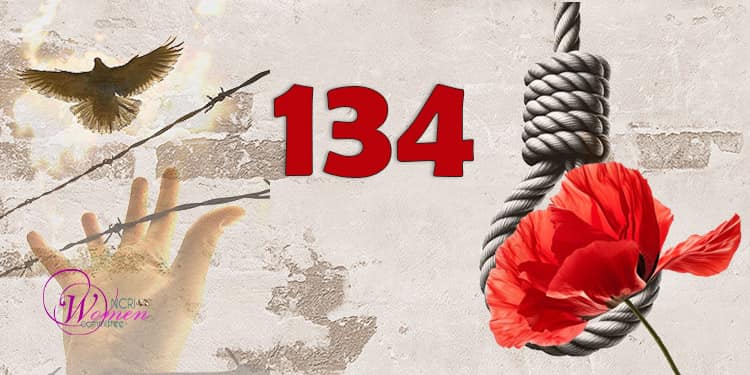
On the 134th week of the “No to Executions Tuesdays” campaign, political prisoners across 60 prisons nationwide went on a hunger strike on Tuesday, August 18, 2026, once again declaring their firm opposition to the continuous issuance and execution of death sentences.
In this struggle, women political prisoners in various women’s wards play a vital and prominent role in sustaining this resistance. Participants in this campaign also honored the memory of all political prisoners killed during the summer 1988 massacre, emphasizing the urgent need for justice and demanding that the perpetrators and masterminds of this crime against humanity be held accountable before a court of justice.
Campaign Statement: Emphasis on Justice for the 1988 Massacre and an End to Executions
In a statement released on the 134th week, coinciding with the anniversary of the 1988 massacre, members of the “No to Executions Tuesdays” campaign highlighted the justice-seeking aspect of their movement, declaring:
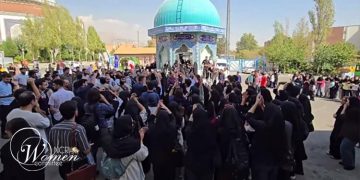
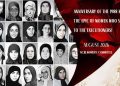
“On the anniversary of the massacre of political prisoners in the summer of 1988—recognized as a ‘crime against humanity’ by Mr. Javaid Rehman, the former UN Special Rapporteur on Human Rights—we honor the memory of all those who lost their lives for freedom and equality.
We hope that the perpetrators and masterminds of this anti-human tragedy will soon face a court of justice. The ‘No to Executions Tuesdays’ campaign seeks justice for each and every one of these loved ones and for all those executed by the ruling dictatorship in Iran.”
The statement continues by addressing the recent executions carried out by the clerical regime:
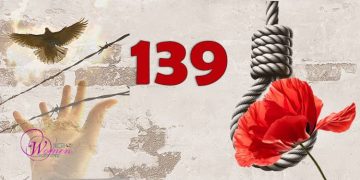
“Over the past week, the tyrannical regime brutally hanged Shahram Sadeghi, a political prisoner from the January 2026 protests, in Karaj. With the executions of Shahram Sadeghi and Mohammad (Charag) Afrookhte in Zahedan, the number of political prisoners executed since the beginning of the Persian year 1405 (March 2026) has reached at least 39.”
Campaign members warned that these figures represent a grave alarm for all other political and non-political prisoners currently facing death row.
The statement further addresses the regime’s ongoing strategy of repression while highlighting the achievements of the prisoners’ protests, emphasizing:
“Despite widespread protests, the ruling clerical regime has never ceased executions, as it views its survival as dependent on repression and killings.
Over recent months, the rate of executions surged to such an extent that after 134 weeks of the continuous ‘No to Executions Tuesdays’ campaign and its repeated reporting to the public and international bodies—alongside widespread protests by the public and anti-death penalty activists—32 countries worldwide issued a landmark joint statement demanding an immediate end to executions in Iran.”
Call to Condition International Relations on Halting Executions
In another part of the statement, the members note:
“We, the members of the ‘No to Executions Tuesdays’ campaign, call on all these nations to condition all diplomatic and commercial relations with the Iranian regime on a complete halt to executions, ensuring effective action to stop the execution machine. Furthermore, we once again appeal to all awakened consciences to be the voice of this campaign and of all those sentenced to death in Iran, taking continuous action through every possible avenue.”
Women’s Wards and Participating Prisons in the Hunger Strike
On the 134th week, a group of inmates at Gachsaran Prison issued a statement formally joining the “No to Executions Tuesdays” campaign. Consequently, prisoners across 60 facilities nationwide joined the movement and went on a hunger strike.
List of Participating Wards and Prisons:
Men’s and women’s wards of Evin Prison, men’s and women’s wards of Sepidar Prison in Ahvaz, men’s and women’s wards of Adelabad Prison in Shiraz, men’s and women’s wards of Zahedan Prison, men’s and women’s wards of Yazd Prison, men’s and women’s wards of Lakan Prison in Rasht, Qarchak Prison in Varamin, Ghezel Hesar Prison (Units 2, 3, and 4), Karaj Central Prison, Fardis Prison in Karaj, Greater Tehran Central Penitentiary,
Khorin Prison in Varamin, Chubindar Prison in Qazvin, Ahar Prison, Arak Prison, Langarud Prison in Qom, Khorramabad Prison, Borujerd Prison, Yasuj Prison, Asadabad Prison in Isfahan, Dastgerd Prison in Isfahan, Sheiban Prison in Ahvaz, Nezami Prison in Shiraz, Firuzabad Prison in Fars, Dehdasht Prison,
Borazjan Prison, Ramhormoz Prison, Behbahan Prison, Bam Prison, Kahnuj Prison, Tabas Prison, Birjand Central Prison, Mashhad Prison, Gorgan Prison, Sabzevar Prison, Gonbad-e Kavus Prison, Qaemshahr Prison, Rudsar Prison, Haviq Prison in Talesh, Azbaram Prison in Lahijan, Dizelabad Prison in Kermanshah, Ardabil Prison, Tabriz Prison, Urmia Prison, Salmas Prison, Khoy Prison, Naqadeh Prison, Miandoab Prison, Mahabad Prison, Bukan Prison, Saqqez Prison, Baneh Prison, Marivan Prison, Sanandaj Prison, Kamyaran Prison, Ilam Prison, Kerman Prison, Borujen Prison, Nishapur Prison, and Gachsaran Prison.
About the “No to Executions Tuesdays” Campaign
Now in its third year, the “No to Executions Tuesdays” campaign has become the most widespread, enduring, and impactful protest movement inside the country’s prisons. Despite intensified security pressure, continuous threats, communication restrictions, and punitive measures against participants, this protest movement has remained unstoppable.
In recent weeks, with additional inmates from various facilities joining, its scope has further expanded, bringing the anti-death penalty protest to 60 prisons across Iran. A significant portion of these striking prisoners consists of female political prisoners serving their sentences in the women’s wards of Evin Prison, Qarchak Prison in Varamin, Sepidar Prison in Ahvaz, Adelabad Prison in Shiraz, Zahedan Prison, Yazd Prison, and Lakan Prison in Rasht.