Sunday, December 14, 2025
  • English
  • Français
  • فارسی
  • عربى
PODCASTS
NCRI Women Committee Women Resistance Freedom
  • Home
  • NEWS
    • Women’s News
    • Articles
    • Statements
  • PUBLICATIONS
    • Monthlies
    • Documents
    • Reference Library
  • ABOUT US
    • The NCRI Women’s Committee
    • Gender Equality
    • Women’s Platform
  • MARYAM RAJAVI
    • Maryam Rajavi
    • Maryam Rajavi Speeches
    • The Plan on Women’s Rights and Freedoms
    • Ten-Point Plan for the future of Iran
  • VANGUARDS
    • The Fallen for Freedom
    • Heroines in Chain
    • Women of Iranian Resistance
    • Famous Women
    • Women in History
  • EVENTS
    • IWD Conferences
    • Activities
    • IWD Speeches
    • Solidarity
  • VIDEO
    • Videos
    • IWD Videos
  • PODCAST
  • DONATE
  • CONTACT US
No Result
View All Result
NCRI Women Committee Women Resistance Freedom
  • Home
  • NEWS
    • Women’s News
    • Articles
    • Statements
  • PUBLICATIONS
    • Monthlies
    • Documents
    • Reference Library
  • ABOUT US
    • The NCRI Women’s Committee
    • Gender Equality
    • Women’s Platform
  • MARYAM RAJAVI
    • Maryam Rajavi
    • Maryam Rajavi Speeches
    • The Plan on Women’s Rights and Freedoms
    • Ten-Point Plan for the future of Iran
  • VANGUARDS
    • The Fallen for Freedom
    • Heroines in Chain
    • Women of Iranian Resistance
    • Famous Women
    • Women in History
  • EVENTS
    • IWD Conferences
    • Activities
    • IWD Speeches
    • Solidarity
  • VIDEO
    • Videos
    • IWD Videos
  • PODCAST
  • DONATE
  • CONTACT US
No Result
View All Result
NCRI Women Committee
No Result
View All Result
Home IWD Speeches
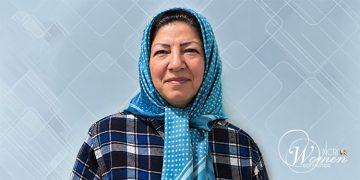
Yakin Ertürk

Yakin Ertürk, UN Special Rapporteur on Violence against Women (2003-2006)

March 9, 2016
in IWD Speeches
Share on FacebookShare on Twitter

Remarks at the IWD gathering, “Pledge for Parity: Women United against Fundamentalism”

February 27, 2016 – Paris


Good afternoon. It has been a long afternoon, and much has been said, so I will try to be brief as much as I can…

Well, it has been 37 years since the Iranian Revolution. At that time, I was a young graduate student studying in the United States. I can still remember the sounds that I heard over the radio, with millions of Iranian women wearing their chador in solidarity with the revolution, going to the streets, and chanting “Azadi, Azadi”.

They said “Azadi” with the same enthusiasm. But the enthusiasm was short-lived, because just two days before the International Women’s Day, March 8, Khomeini started announcing measures that signaled what was to come. And we know what has come.

It was a let down on most of us, both inside and outside of Iran where we had vested much hope in the call for Azadi. In 2005, I went back to Iran as the UN Special Rapporteur and I must say, I went at the invitation of the Iranian government, which provided me an opportunity to see things as they were happening, unfolding in Iran. And I have not only talked with officials, but also with several society agents and human rights defenders, women’s organizations, victims of violence and many young women awaiting execution in Evin prison. It was an experience that I will never forget. And I have written my findings in a report to the Human Rights Council, and Madam Rajavi has referred to this report. I’m happy that the report has been useful for your struggles, because unless civil society actors use these reports for their ends, UN reports and special rapporteurs have no meaning.

While we continue to observe the developments in Iran with concern, I must make one caution, that extremism and fundamentalism is not a new phenomenon, it is not limited to Iran, and it has not ended with Iran unfortunately. If that were the case, our task would have been simpler.

The history of fundamentalist movements dates back. And it is not limited to Islam and Islamic groups for all that matter. Christian fundamentalism, Judaism fundamentalism, Hinduism, etc.

So fundamentalism and extremism come in very different shapes and sizes and appearances. So let us have a broader picture in envisioning how we are going to deal with this problem. Otherwise we will lock ourselves up into a box which will feed just the opposite of what we want to do, and really feed on Islamophobia. Which is a major problem as well as fundamentalist movements.

So, we know in recent history there are many examples, which have also resembled the Iranian experience, which started out with a call for freedom and equality and so forth. The Arab spring just yesterday led many young women and men to the streets with the same expectations. And yet, it was shortly co-opted by extremist groups. We need to ask, why? Why does this happen?

And ISIS of course, is the main actor on stage, the most notorious of extremists that we have seen. I live in a geography where ISIS is now preying not right at my border, but inside my border. And I try to come to terms with the “whys” not only that I am terrorized as an individual, I fear for myself, for my loved ones and for the people that I live with. But I also ask as a social scientist, why is it that such groups are thriving when we have advanced so much in the area of human rights?

I think Madam Manjoo talked about an imperfect system but a fairly good system that has developed in the area of international human rights. So why is it that we are still dealing, not still, but we are confronting new and more extremist movements? How do we explain the fact that many young men and women from western countries are going and joining ISIS? How do we explain the fact that fairly smart women submit to the gender contract of such groups?

These are not simple questions that we can simply brush away. Yes, you can say, well, they’re ignorant, they’re this, they’re that… But I think that is a cop-out. Unless we are able to deal with these issues in a serious manner, our ability to move forward and counter them will always be incomplete. There are many scholarly books but I think we need to look at the near history and even far way history.

For one thing, fundamentalism is very useful for power. Hegemonic powers have maintained themselves by using and resorting to support for fundamentalist groups. Colonialism is full of testimonies of examples of how colonial powers supported and empowered reactionary groups in order to control the local populations. So thereby preventing progressive groups from emerging and from developing. In more recent times, many governments have vested their support in religious fundamentalist groups to counter communism. And look, communism is dead but the fundamentalists are thriving.

In 1980, there was a military coup in Turkey. The generals came to save Turkey from chaos, from ten years of chaos with the left and the right fighting one another. In order to crush the progressive and left-wing groups, they fed the extremist Islamic groups. And today, they have a big voice in my country.

So these are important issues to be mindful of. We may see these short-sighted politics as being useful for the immediate purpose, but once you create a monster, you have no way of containing it.

Furthermore, the Palestinian issue still remains to be one of the most shameful human rights violation and displacement to humanity over half a century. And we are still not dealing with this issue in any successful way. People are still living in the diaspora. The displacement of Palestinian people is a tragedy that is only responded in lip service I am afraid. Today, we are not even talking about it, because now we have different areas of concern.

Poverty. Today the world is more affluent than ever before in history, but people are still dying of hunger. How do we explain that? All these leave a vacuum for extremists to come in, and give answers to.

So we can go on and on in responding to this question that I asked. In my own country, Turkey, the only Muslim majority country with secular laws. Turkey granted the right to vote for women and be elected in 1934, ten years before the French women and many other countries. Our secularism was not a perfect one, no doubt. We learned over time that it created its own contradiction. And in a way, the mistakes that were made in our journey to secularism empowered religious groups. But the more important thing is that in recent years, again as a result of trying to respond to extremism, a new project was invented. Moderate Islam. And Turkey was celebrated and promoted as the example of a moderate Islam.

Well, one analyst wrote: “Turkey’s moderate Islam is stirring Turkey into a moderate sharia.” A party that is ruling for 14 years now, which started out on a very positive ground, over the past few years has turned into a very authoritarian system. And many of the gains that Turkish people have made over the years are being threatened today, because of this trend towards authoritarian politics.

So, as I said at the beginning of my talk, fundamentalism comes in many different shapes. Sometimes in a very seemingly liberal environment which promotes women’s rights issues. Women’s rights are in fact blocked in many ways. I remember Beijing + 5 in 2000, which took place in New York, at the UN headquarters. The UN corridors were full of coalitions of hardliners from all religions, joining forces to stop the Beijing process which they saw as a most dangerous mission, the most dangerous project, because it gave women autonomous space. So the idea is to prevent women from being able to control their own lives, control their own bodies, whether you do this with repression, as done in extremist movements, or done in different forms which are less noticeable.

I think we need to be vigilant, we need to respond to all levels of transgression on women’s lives and on fundamental rights and freedoms.

So today, I do not want to go on and on, but today there is a major clash, in my opinion, between international human rights law and trans-nationalized extremist movements. They are on a head-on collision with one another. Which one is going to win? Which one do you think is going to win? Well, I do not know myself. May be you have the answer, but what I do know is that I will do everything in my own power to make sure that I struggle to uphold the international human rights standards and go into strategic coalitions with groups who have similar goals. Because I think one of the mistakes that we are making is in dealing with extremists, religious fundamentalism movements, is falling into the trap of getting into a religious debate.

But let us not forget that fundamentalism is not about religion, it is about power. So, in order not to fall into the trap of trying to defend ourselves on the basis of this or that religious principle, I think we need to very insistently uphold international standards. And again, Madam Manjoo mentioned many such mechanisms that are at our disposal which we can make the best use of.

But we need a new vision. We need not only a new vision among women, but a new vision that will bring all like-minded people together to have a common front against extremist movements.

I wish you all the best in your struggles.
ShareTweetPinShareSendShare

Related Posts

Sediqeh Ghorbani Hanged in Urmia Central Prison; 59th Execution of a Woman in 2025

December 13, 2025
Sediqeh Ghorbani Hanged in Urmia Central Prison; 59th Execution of a Woman in 2025

At dawn on Saturday, December 13, 2025, a woman identified as Sediqeh Ghorbani was hanged in Urmia Central Prison. The Chief Justice of Urmia announced the execution without...

Read moreDetails

Ida B. Wells: Trailblazing Journalist, Anti-Lynching Crusader, and Architect of American Civil Rights

December 13, 2025
Ida B. Wells: Trailblazing Journalist, Anti-Lynching Crusader, and Architect of American Civil Rights

Ida B. Wells (July 16, 1862 – March 25, 1931) stands as one of the most fearless voices in American history; a pioneering Black journalist, data-driven investigator, suffragist,...

Read moreDetails

Collective Torture in Prison

December 13, 2025
Collective Torture in Prison

Memoirs of Mehri Hajinejad from “The Last Laughter of Leila”— Part Thirteen In this section, Mehri Hajinejad recounts another form of cruelty she endured: collective torture, a two-minute...

Read moreDetails

A 70% Surge in the Execution of Women: What’s Happening in Iran?

December 12, 2025

An unprecedented wave of executions against women is sweeping across Iran; in just one year, the execution of women has risen by 70%.Over the past 11 months, more...

Read moreDetails

Zeinab Hezbapour Transferred to Sepidar Prison in Ahvaz amid Intensifying Pressure on the Jamee’i Family

December 12, 2025
Zeinab Hezbapour Transferred to Sepidar Prison in Ahvaz

Zeinab Hezbapour, the wife of Massoud Jame’i—a political prisoner sentenced to two death penalties—has been transferred to the women’s ward of Sepidar Prison in Ahvaz to begin serving...

Read moreDetails
Next Post
Rashida Manjoo

Rashida Manjoo, United Nations Special Rapporteur on violence against women, its causes and consequences until July 2015

Leave a Reply Cancel reply

Your email address will not be published. Required fields are marked *

Documents

The Gendered Dimensions of the Water Crisis in Iran: Impacts on Women’s Health, Livelihoods, and Security

The Gendered Dimensions of the Water Crisis in Iran: Impacts on Women’s Health, Livelihoods, and Security

October 12, 2025

How Iranian Women Shoulder the Heavy Burden of a Deepening Crisis Download Italian Version The water crisis in Iran has...

The Failure of Iran's Population Growth Law Despite the Repression of Women A Glance at a Costly and Ineffective Policy

The Failure of Iran’s Population Growth Law Despite the Repression of Women

August 24, 2025

A Glance at a Costly and Ineffective Policy The “Youthful Population Law” in Iran vs. Women’s Human Rights Following a...

Widowed Women in Iran: Main Problems and Challenges

Widowed Women in Iran: Main Problems and Challenges

June 22, 2025

Widowed Women in Iran, Alone and Oppressed in the Shadow of Discrimination In the Iranian legal system, where gender-based discrimination...

Monthlies

November 2025 Report: Under the Clerical Regime, Nowhere Is Safe for Women in Iran
Monthlies

November 2025 Report: Under the Clerical Regime, Nowhere Is Safe for Women in Iran

November 30, 2025
October 2025 Report: Death Sentence for a Female Political Prisoner The Resistance of Female Political Prisoners Inspires Iranian Women and Girls in Their Struggle Against the Regime of Executions and Massacre
Monthlies

October 2025 Report: Death Sentence for a Female Political Prisoner

October 31, 2025
September 2025 Report: One Woman Executed Every 4 Days in Iran
Monthlies

September 2025 Report: One Woman Executed Every 4 Days in Iran

September 30, 2025
AUGUST 2025 Report: Dual Repression of Political Prisoners and Their Families
Monthlies

August 2025 Report: Dual Repression of Political Prisoners and Their Families

August 31, 2025

Articles

State Violence and Torture Against Women Political Prisoners in Iran

State Violence and Torture Against Women Political Prisoners in Iran: Medical Denial and an Engineered Health Crisis

December 10, 2025

As the two-week global campaign to end violence against women concludes, and on the International Human Rights Day, we turn...

Execution of Women in Iran Soars: 70% Increase in Just One Year

Execution of Women in Iran Soars: 70% Increase in Just One Year

December 8, 2025

Execution, the regime’s tool for intimidating a discontented society Execution of Women in Iran: A State-Sponsored Violence The execution of...

55% of Child Abuse Cases in Iran Involve Young Girls A Disturbing Rise in Child Abuse and the Vulnerability of Young Girls

55% of Child Abuse Cases in Iran Involve Young Girls

December 5, 2025

A Disturbing Rise in Child Abuse and the Vulnerability of Young Girls A largely overlooked aspect of systemic violence in...

The Fallen for Freedom

In Memory of Zohreh Bani Jamali
The Fallen for Freedom

In Memory of Zohreh Bani Jamali

November 20, 2025
Fatemeh Farshchian
The Fallen for Freedom

Fatemeh Farshchian

September 11, 2025
Nosrat Ramezani
The Fallen for Freedom

Nosrat Ramezani

May 1, 2025
Sussan Mirzaei: A Trailblazer in Iran’s Struggle for Freedom and Democracy
The Fallen for Freedom

Sussan Mirzaei

May 1, 2025

ABOUT US

NCRI Women Committee

We work extensively with Iranian women outside the country and maintain a permanent contact with women inside Iran. The Women’s Committee is actively involved with many women’s rights organizations and NGO’s and the Iranian diaspora.
The committee is a major source of much of the information received from inside Iran with regards to women. Attending UN Human Rights Council meetings and other international or regional conferences on women’s issues and engaging in a relentless battle against the Iranian regime’s misogyny are part of the activities of members and associates of the committee.

CATEGORIES

  • Activities
  • Articles
  • Documents
  • Famous Women
  • Heroines in Chain
  • IWD Conferences
  • IWD Speeches
  • IWD Videos
  • Maryam Rajavi
  • Maryam Rajavi Speeches
  • Monthlies
  • Podcast
  • Reference Library
  • Solidarity
  • Statements
  • The Fallen for Freedom
  • Videos
  • Women in History
  • Women in Leadership
  • Women of Iranian Resistance
  • Women's News

BROWSE BY TAG

Child marriage coronavirus education execution forced hijab Gender Gap Generation Equality Honor killings Iran Teachers Maryam Akbari Monfared Nurses Plan on Women's Rights and Freedoms Poverty Prisoners Protests rural women Saba Kord Afshari The girl child Violence against women Women's Leadership Women Heads of Household Zeinab Jalalian

The copyright of all the material published on this website has been registered under © 2016 the Women’s Committee of the National Council of Resistance of Iran. To obtain permission to copy, redistribute or publish the material published on this website, you should write to the NCRI Women’s Committee. Please include the link of the original article on our website, women.ncr-iran.org.

Welcome Back!

Login to your account below

Forgotten Password?

Retrieve your password

Please enter your username or email address to reset your password.

Log In

Add New Playlist

No Result
View All Result
  • Home
  • News
    • Women’s News
    • Articles
    • Statements
  • Publications
    • Monthlies
    • Documents
    • Reference Library
  • About Us
    • The NCRI Women’s Committee
    • Gender Equality
    • Women’s Platform
  • Maryam Rajavi
    • Maryam Rajavi
    • Maryam Rajavi Speeches
    • Ten Point Plan for Iran
    • The Plan on Women’s Rights and Freedoms
  • Vanguards
    • The Fallen for Freedom
    • Heroines in Chain
    • Women of Iranian Resistance
    • Famous Women
    • Women in History
  • Events
    • IWD Conferences
    • Activities
    • IWD Speeches
    • Solidarity
  • Video
    • Videos
    • IWD Videos
  • Podcast
  • Donate
  • Contact us
  • فارسی
  • عربی
  • Français

The copyright of all the material published on this website has been registered under © 2016 the Women’s Committee of the National Council of Resistance of Iran. To obtain permission to copy, redistribute or publish the material published on this website, you should write to the NCRI Women’s Committee. Please include the link of the original article on our website, women.ncr-iran.org.