
Saturday, August 29, 2026
  • English
  • Français
  • فارسی
  • عربى
PODCASTS
NCRI Women Committee Women Resistance Freedom
  • Home
  • NEWS
    • Women’s News
    • Articles
    • Statements
  • PUBLICATIONS
    • Monthlies
    • Documents
    • Reference Library
  • ABOUT US
    • The NCRI Women’s Committee
    • Gender Equality
    • Women’s Platform
  • MARYAM RAJAVI
    • Maryam Rajavi
    • Maryam Rajavi Speeches
    • The Plan on Women’s Rights and Freedoms
    • Ten-Point Plan for the future of Iran
  • VANGUARDS
    • The Fallen for Freedom
    • Heroines in Chain
    • Women of Iranian Resistance
    • Famous Women
    • Women in History
  • EVENTS
    • IWD Conferences
    • Activities
    • IWD Speeches
    • Solidarity
  • VIDEO
    • Videos
    • IWD Videos
  • PODCAST
  • DONATE
  • CONTACT US
No Result
View All Result
NCRI Women Committee Women Resistance Freedom
  • Home
  • NEWS
    • Women’s News
    • Articles
    • Statements
  • PUBLICATIONS
    • Monthlies
    • Documents
    • Reference Library
  • ABOUT US
    • The NCRI Women’s Committee
    • Gender Equality
    • Women’s Platform
  • MARYAM RAJAVI
    • Maryam Rajavi
    • Maryam Rajavi Speeches
    • The Plan on Women’s Rights and Freedoms
    • Ten-Point Plan for the future of Iran
  • VANGUARDS
    • The Fallen for Freedom
    • Heroines in Chain
    • Women of Iranian Resistance
    • Famous Women
    • Women in History
  • EVENTS
    • IWD Conferences
    • Activities
    • IWD Speeches
    • Solidarity
  • VIDEO
    • Videos
    • IWD Videos
  • PODCAST
  • DONATE
  • CONTACT US
No Result
View All Result
NCRI Women Committee
No Result
View All Result
Home Articles
Working to Survive: Iranian Women Between Poverty, Exhaustion, and Lack of Labor Protection

Working to Survive: Iranian Women Between Poverty, Exhaustion, and Lack of Labor Protection

August 28, 2026
in Articles, Women's News

For many Iranian Women, losing a job or failing to find sustainable employment is not just about being unemployed; it marks the beginning of a cycle of economic insecurity, temporary labor, and physical burnout. In recent years, alongside the worsening cost-of-living crisis, rising inflation, and shrinking stable job opportunities, more Iranian Women have been forced into jobs that lack job security, insurance, legal protections, and even any guarantee of continuing work in the months ahead.

In such conditions, many women entering the workforce actually have no choice but to work due to economic pressure and declining household income. For these women, choosing a career gradually gives way to a sheer desperate need to earn an income, an income that often comes with long hours, physical burnout, and the deprivation of even the most basic labor rights.

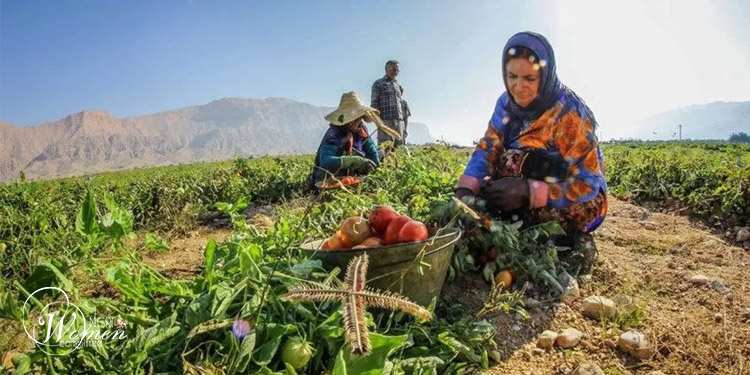
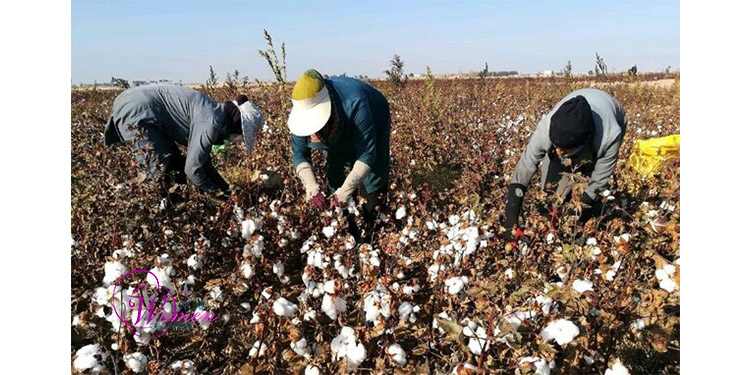
This situation is not limited to women working in factories or manufacturing units. In the country’s underprivileged regions, women who were previously homemakers or searching for stable jobs have now been pushed into seasonal, backbreaking agricultural labor, work that, rather than being a sign of economic empowerment, reflects the deepening cost-of-living crisis within families.

According to the Statistical Center of Iran in the spring of 2026, Kurdistan Province, with a misery index of over 111 percent, and West Azerbaijan, with an index of around 104 percent, were among the provinces with the highest misery indices. This index, which combines inflation and unemployment rates, highlights the simultaneous pressure of rising prices and limited job opportunities on households.

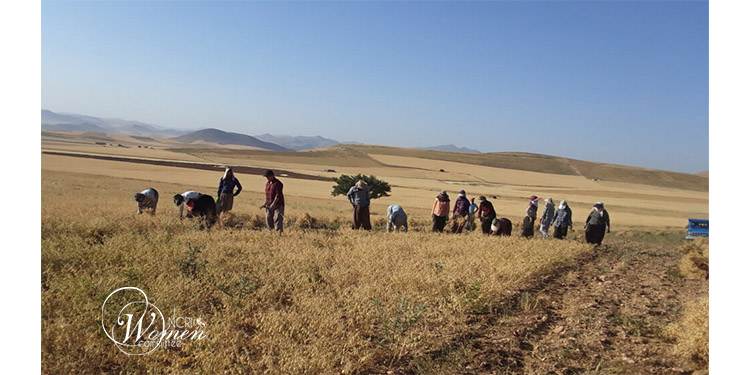
A report from the cities of Saqqez and Bukan, in the Kurdish-populated regions of western Iran, offers a clear picture of this reality: women who set out for the fields before sunrise, work for hours in the summer heat, and then return home to shoulder the burden of domestic chores and family care. They are not only invisible in the formal labor market, but a major portion of their work goes entirely uncounted in economic calculations.

Kurdistan and West Azerbaijan provinces are striking examples of regions where economic pressure is palpably felt. Their placement among the areas with the highest misery indices points to the simultaneous strain of unemployment and inflation, two factors that directly impact low-income households and push family members, particularly women, into temporary and seasonal labor.
Working to Survive: Iranian Women Between Poverty, Exhaustion, and Lack of Labor Protection

Below are the accounts of three such women, published on the state-run Eqtesad 24 website on August 26, 2026:

A Day That Begins at 3 AM

Maryam, 40, is one of the women who spent almost the entire harvest season working in the fields. She says that a single income is no longer enough to cover living expenses, forcing families to send every capable member into the workforce.

“One of my kids is studying for the university entrance exam,” she says. “The cost of living has skyrocketed. No matter how much my husband works, we still fall short. That’s why I had no choice but to start working, too.”

Maryam’s husband also speaks of their grueling daily routine: “Our day starts around three in the morning. Preparing food, packing our things, and getting to the shuttle is a routine my wife and I go through before sunrise.”

According to him, the workers get on the shuttle around four in the morning and reach the fields after a long commute. Work begins in the morning and continues until evening, a long day broken only by brief meal breaks.

He describes his and his wife’s situation like this: “With this kind of workload, we have no patience or energy left to even talk, let alone how worn out our bodies are.”

The Shift That Never Ends

Yet, the end of field work does not mean the end of the workday for these women. Many female seasonal workers step straight into a second shift upon returning home, an unpaid shift that includes cooking, cleaning, caring for children, and preparing for the next day.

Nasrin is one of these women. Describing the hours after returning from the fields, she says: “When I get home, the kids are waiting. I have to cook dinner, handle the housework, and get ready for tomorrow. Most of the time, I’m so exhausted I just want to fall asleep, but I simply can’t.”

This situation is a clear example of what social studies refer to as the “double burden” on women, women who work outside the home to generate income while also carrying the main responsibility for domestic duties.

In many low-income families, an increase in the number of working members does not necessarily translate into improved well-being. In practice, the surging costs of food, healthcare, education, and housing have forced families to work longer hours and send more members into the workforce simply to maintain a bare minimum standard of living.

Working With the Body, Not at a Desk

Working in chickpea fields and with other agricultural crops is heavy, exhausting labor. Hours of bending over, walking under the sun, carrying the harvest, and working non-stop take a massive physical toll on the workers.

Shirin, who has worked in this sector for years, says: “You only realize how hard the work is when you’ve been out in the fields for a few days in a row. You leave early in the morning and come back in the evening. Your whole body aches, but if you miss even one day, you lose that day’s wages.”

Because their income depends entirely on showing up to work every single day, many Iranian Women are deprived of any chance to take time off or rest. For these women, a single sick day or a day of rest can mean losing a crucial part of the family’s essential income.
Working to Survive: Iranian Women Between Poverty, Exhaustion, and Lack of Labor Protection

The Gap Between Nominal Wages and Real Income

Based on accounts from local workers, daily wages during the harvest season may seem significant at first glance, but a major portion of that money goes toward commuting costs, payments to labor contractors, and buying food.

Sara, who works in these fields, says part of the daily wage is deducted for shuttle transport and secondary expenses. As a result, the amount of money a worker actually takes home at the end of the day falls far short of the advertised rate.

This gap between nominal wages and real income becomes even more critical in an inflationary environment, as even a relative increase in wages does not necessarily lead to an improvement in a household’s living conditions.

Hidden Sufferings and Modern Slavery: A Look at the Situation of Female Workers in Iran

The Road: The Danger Before the Work Even Begins

The hardship of this work isn’t confined to the fields. Many seasonal workers are forced to commute long distances in the pre-dawn darkness just to reach their job sites. The exhaustion built up from daily commutes, long travel distances, and poor transportation conditions are all part of the hidden risks of this type of employment, hazards that are rarely reflected in official stats and reports.

The True Face of Women’s Economic Participation

The story of the women of Saqqez and Bukan shows that the increased presence of women in the labor market, in today’s Iranian society under the rule of corrupt mullahs, does not mean expanding opportunities or improving their status. This presence is the direct result of economic pressure, inflation, the spread of poverty, and the declining livelihood capacity of families.

Women who start their day at three or four in the morning, work for hours under the sun, and still shoulder household responsibilities after returning home are, in reality, paying the price of the economic crisis with their health, time, and physical burnout.

What remains largely unseen amidst all this is the urgent need of Iranian Women for sustainable employment, legal protections, insurance, job security, and a wage that can provide them with at least a dignified life without imposing such a heavy burden.

Perhaps the most important message of this narrative is that a rising number of working women under such conditions is an alarm bell signaling the deepening cost-of-living crisis and the spread of poverty among Iranian families, a crisis in which Iranian Women are often the first victims and the last to have their voices heard.
Tags: PovertyWomen Heads of Household
ShareTweetPinShareSendShareShare

Related Posts

The Hidden Victimization and Exploitation of Widows in Iran

July 23, 2026
The Hidden Victimization and Exploitation of Widows in Iran

Exploitation of widows in Iran Introduction: The survival of the mullahs' regime rests on two fundamental pillars: overt suppression in society and institutionalized misogyny within its laws. The...

Read moreDetails

Erased After Loss: The Untold Story of Widows in Iran

July 21, 2026
Erased After Loss: The Untold Story of Widows in Iran

Inside Iranian Regime's System of Discrimination Against Widows Welcome to another episode of podcasts of the Women's Committee of the National Council of Resistance of Iran. Imagine waking...

Read moreDetails

Widows in Iran: An Analysis of Legal Challenges and the Structure of Discrimination

July 17, 2026
Widows in Iran: An Analysis of Legal Challenges and the Structure of Discrimination

Introduction: In the political and legal structure governing Iran, misogyny and gender discrimination have been institutionalized as a fundamental principle, heavily impacting the fabric of family and society....

Read moreDetails

The Ineffectiveness of Population Policies in Iran: Economy, Aging, and the Overlooked Rights of Women

July 10, 2026
The Ineffectiveness of Population Policies in Iran: Economy, Aging, and the Overlooked Rights of Women

Abstract: A compilation of official data, media reports, and disclosures published in April, May, and June 2026 demonstrates that Iran is grappling with a multi-layered demographic crisis. This...

Read moreDetails

Iran’s Escalating Water Crisis: Energy Imbalance, Popular Protests, and the Role of Women

June 19, 2026
Iran's Water Crisis: Energy Imbalance, Popular Protests, and the Role of Women- Part 2

The water crisis in Iran has transcended a mere natural challenge, evolving into a human, environmental, and economic catastrophe. While the regime has for years attempted to attribute...

Read moreDetails

Documents

Call for Immediate Action to Halt the Death Sentence of Arghavan Fallahi

Sign our Statement to Halt the Death Sentence of 25-Year-Old Political Prisoner Arghavan Fallahi

July 10, 2026

Statement Calling for Immediate Action to Halt the Death Sentence of 25-Year-Old Political Prisoner Arghavan Fallahi We express our profound...

The Ineffectiveness of Population Policies in Iran: Economy, Aging, and the Overlooked Rights of Women

The Ineffectiveness of Population Policies in Iran: Economy, Aging, and the Overlooked Rights of Women

July 10, 2026

Abstract: A compilation of official data, media reports, and disclosures published in April, May, and June 2026 demonstrates that Iran...

Crushed by Design: Structural Crises and Inequitable Policies Push Female-Headed Households to the Edge

Crushed by Design: Structural Crises and Inequitable Policies Push Female-Headed Households to the Edge

May 18, 2026

Introduction Life for the Iranian people under the religious dictatorship is fraught with hardship and peril from every perspective. Whether...

Monthlies

July 2026 Report: Death Sentences for Women Rising Up to Overthrow the Mullahs' Regime
Monthlies

July 2026 Report: Death Sentences for Women Rising Up to Overthrow the Mullahs’ Regime

July 31, 2026
June 2026 Report: Working Iranian Women Erased from Labor Market
Monthlies

June 2026 Report: Working Iranian Women Erased from Labor Market

July 5, 2026
May 2026 Report: The Enduring Resistance of Iranian Women
Monthlies

May 2026 Report: The Enduring Resistance of Iranian Women

May 31, 2026
April 2026 Report: Mass Arrests of Women: Targeted Repression in Time of Crisis
Monthlies

April 2026 Report: Mass Arrests of Women in Iran

April 30, 2026

Articles

Working to Survive: Iranian Women Between Poverty, Exhaustion, and Lack of Labor Protection

Working to Survive: Iranian Women Between Poverty, Exhaustion, and Lack of Labor Protection

August 28, 2026

For many Iranian Women, losing a job or failing to find sustainable employment is not just about being unemployed; it...

Victims at Home: Report on 15 Women Killed in One Month

Victims at Home: Report on 15 Women Killed in One Month

August 26, 2026

Misogynistic laws lie at the root of violence against women in Iran Victims at Home: Report on 15 Women Killed...

Iran Healthcare Workers Protest Against Severe Livelihood and Structural Crises

Iran Healthcare Workers Protest Against Severe Livelihood and Structural Crises

August 19, 2026

In the summer of 2026, an Iran healthcare workers protest wave highlights how the country’s health system faces chronic financial...

The Fallen for Freedom

Mojgan Mahdavi: From U.S. Academia to the Frontlines of the Iranian Resistance
The Fallen for Freedom

Mojgan Mahdavi: From U.S. Academia to the Frontlines of the Iranian Resistance

August 21, 2026
Mehrnoush Esfandiari, a 32-year-old mother from Gazanak
The Fallen for Freedom

Mehrnoush Esfandiari

August 20, 2026
Nasrin Shahrabi: A Lifetime Dedicated to Fighting Religious Fascism in Iran
The Fallen for Freedom

Nasrin Shahrabi: A Lifetime Dedicated to Fighting Religious Fascism in Iran

August 19, 2026
Zeinab Moayyedi, known fondly as "Mahboubeh" by her family, was born in 1998
The Fallen for Freedom

Zeinab Moayyedi (Mahboubeh)

August 19, 2026

ABOUT US

NCRI Women Committee

We work extensively with Iranian women outside the country and maintain a permanent contact with women inside Iran. The Women’s Committee is actively involved with many women’s rights organizations and NGO’s and the Iranian diaspora.
The committee is a major source of much of the information received from inside Iran with regards to women. Attending UN Human Rights Council meetings and other international or regional conferences on women’s issues and engaging in a relentless battle against the Iranian regime’s misogyny are part of the activities of members and associates of the committee.

CATEGORIES

  • Activities
  • Articles
  • Documents
  • Famous Women
  • Heroines in Chain
  • IWD Conferences
  • IWD Speeches
  • IWD Videos
  • Maryam Rajavi
  • Maryam Rajavi Speeches
  • Monthlies
  • Podcast
  • Reference Library
  • Solidarity
  • Statements
  • The Fallen for Freedom
  • Videos
  • Women in History
  • Women in Leadership
  • Women of Iranian Resistance
  • Women's News

BROWSE BY TAG

Child marriage coronavirus education execution forced hijab Gender Gap Generation Equality Honor killings Iran Teachers Maryam Akbari Monfared Nurses Plan on Women's Rights and Freedoms Poverty Prisoners Protests rural women Saba Kord Afshari The girl child Violence against women Women's Leadership Women Heads of Household Zeinab Jalalian

The copyright of all the material published on this website has been registered under © 2016 the Women’s Committee of the National Council of Resistance of Iran. To obtain permission to copy, redistribute or publish the material published on this website, you should write to the NCRI Women’s Committee. Please include the link of the original article on our website, women.ncr-iran.org.

Welcome Back!

Login to your account below

Forgotten Password?

Retrieve your password

Please enter your username or email address to reset your password.

Log In

Add New Playlist

No Result
View All Result
  • Home
  • News
    • Women’s News
    • Articles
    • Statements
  • Publications
    • Monthlies
    • Documents
    • Reference Library
  • About Us
    • The NCRI Women’s Committee
    • Gender Equality
    • Women’s Platform
  • Maryam Rajavi
    • Maryam Rajavi
    • Maryam Rajavi Speeches
    • Ten Point Plan for Iran
    • The Plan on Women’s Rights and Freedoms
  • Vanguards
    • The Fallen for Freedom
    • Heroines in Chain
    • Women of Iranian Resistance
    • Famous Women
    • Women in History
  • Events
    • IWD Conferences
    • Activities
    • IWD Speeches
    • Solidarity
  • Video
    • Videos
    • IWD Videos
  • Podcast
  • DONATE
  • Contact us
  • فارسی
  • عربی
  • Français

The copyright of all the material published on this website has been registered under © 2016 the Women’s Committee of the National Council of Resistance of Iran. To obtain permission to copy, redistribute or publish the material published on this website, you should write to the NCRI Women’s Committee. Please include the link of the original article on our website, women.ncr-iran.org.