
Every year, October 5, World Teachers’ Day, provides an opportunity to recognize millions of teachers around the world and to reaffirm the reality that quality education is impossible without supporting teachers.
According to Education at a Glance 2025, the average statutory salary for teachers with 15 years of experience in OECD countries ranges from approximately $55,725 per year at the pre-primary level to $63,925 at the upper-secondary level. In these countries, teachers’ actual earnings at the primary and secondary levels average around 83 to 91 percent of the earnings of people with university-level education.
Even in wealthy countries, teachers’ circumstances are far from ideal. In Iran, however, the issue unfolds in a different context: high inflation, declining purchasing power, housing and living costs, delays or discrepancies in the payment of certain benefits, differences among types of educational employment contracts, and the need for most teachers to take on a second job.
For a teacher, the question is how much remains from the monthly pay slip after paying rent or housing installments, food, transportation, medical expenses, children’s education, and other essential costs.
For women teachers, the issue has additional dimensions.
This article examines reports and published accounts concerning the situation of teachers in Iran and addresses some of the most significant economic, financial, employment, and livelihood challenges facing teachers, particularly women teachers.
Women Teachers: One Formal Job and One Invisible Shift
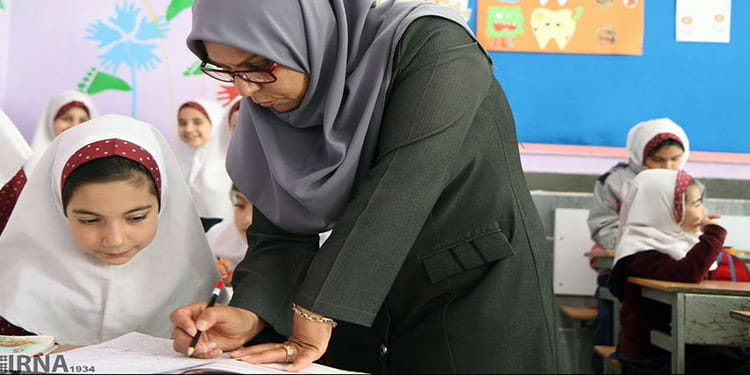
For women teachers, livelihood concerns cannot be explained solely by the amount shown on a monthly pay slip.
Many women, after completing their school day, also assume responsibilities at home, including childcare, household duties, or caring for elderly family members.
This part of their work is generally not reflected in their pay.
The situation of many women teachers can therefore be described simply as follows:
First shift: Educational work for a salary
Second shift: Unpaid domestic and caregiving work
Third shift: A second job, when income is insufficient to cover living expenses
Under such circumstances, economic pressure can become multilayered for women teachers.
What Happens to Purchasing Power?
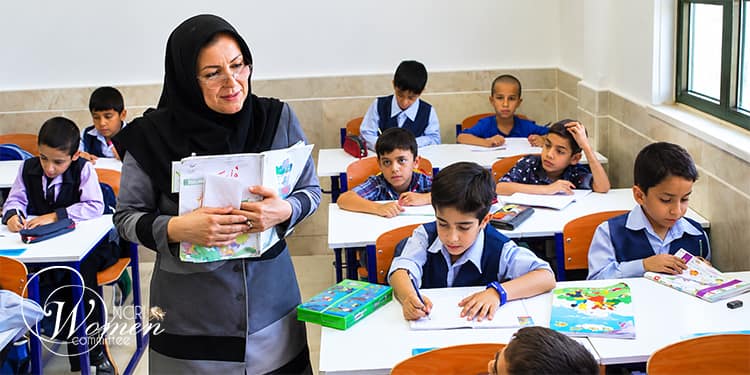
One of the main challenges facing teachers in Iran is the gap between nominal wage increases and rising living costs.
In recent years, increases in the wages of government employees have been regularly addressed in annual budgets. Under inflationary conditions, however, a wage increase can improve living standards only if it keeps pace with the rising cost of essential goods and services.
For example, reports concerning the 2026 budget proposed a graduated increase in government employees’ wages, with higher percentage increases for lower-income groups. At the same time, economic reports have warned about the gap between wage growth and inflation.
“A teacher who performs the sacred work of educating and raising the next generation earns 180 million rials (approx. $70) a month, while the minimum wage for employees has reached 400 million rials.
“A teacher does not only have transportation expenses. In Tehran, a teacher may have to travel from one part of the city to southern Tehran, or from the south to western Tehran. In some cities, teachers have to travel several kilometers to reach rural areas. Who pays for these costs? A teacher who works online and uses the national student network also has to pay for internet access. Who covers that expense?
“These are not one or two minor expenses that can simply be overlooked. They cannot easily be calculated. When we say that a teacher’s income is 180 million rials, we must ask whether this amount is enough to run a household. Can a family afford its basic necessities, transportation costs, and other living expenses for an entire month on such an income? A teacher’s income is not even enough for pocket money.” (Jahan-e Sanat, September 30, 2026)
When Teaching Is Not Enough to Make a Living
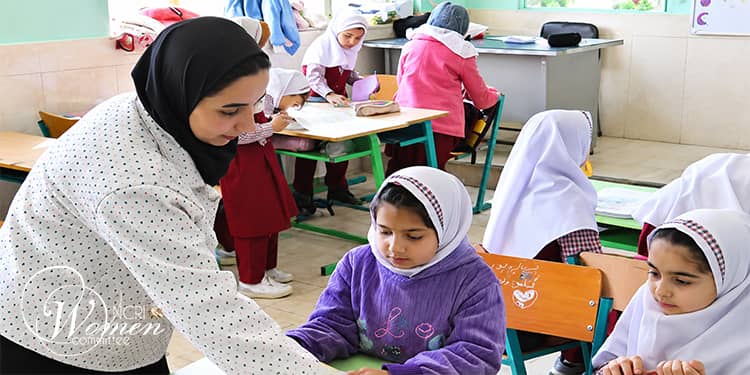
One indication of the economic pressure facing teachers is the need for most of them to take on a second or even a third job.
This is not a new phenomenon. Media reports about teachers holding multiple jobs have been published for years, and more recent reports have also highlighted cases of teachers turning to private tutoring or other forms of work to supplement their income.
Having a second job does not simply mean working a few extra hours.
After the school day ends, a teacher must prepare for the next class, review assignments, assess students, and keep professional knowledge up to date. When these hours are devoted to a second job, time for rest and family is also reduced.
Part-Time Teachers: The Most Vulnerable Segment of the Education Workforce
Part-time teachers and other groups do not enjoy the job security and benefits available to permanent employees.
In recent years, the payment of wages and employment status of part-time teachers have repeatedly been raised in media reports.
For workers whose income is lower from the outset and whose job security is more limited, rising housing, food, and medical costs can create significantly greater pressure.
For women, this economic insecurity can also make it more difficult to plan for the future, start a family, have children, or pursue further education.
Teachers Who Pay a Price for Their Professional Demands
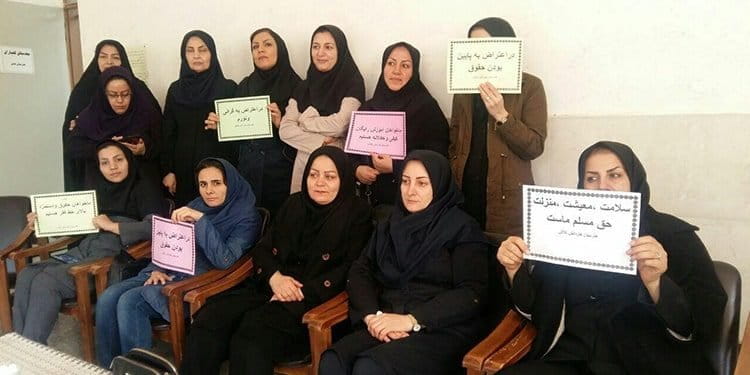
Alongside economic concerns, the situation of some teachers’ union activists represents another dimension of the issue.
In recent years, reports have emerged of summonses, arrests, convictions, and employment restrictions involving a number of teachers and union activists. A 2026 report by the Women’s Committee of the National Council of Resistance of Iran also referred to cases of judicial action against women teachers and union activists.
For example, the report referred to the case of Kowkab Badaghi Pegah, a teacher and union activist in Khuzestan, and the confirmation of her one-year prison sentence.

This aspect of the issue highlights another dimension of teachers’ circumstances: for some, demanding better working and economic conditions is not merely a financial matter and may be accompanied by administrative or judicial consequences.
A Major Contradiction
Society expects teachers to help shape the future of the next generation. Yet teachers themselves must also be able to build a secure future for themselves and their families.
World Teachers’ Day provides an opportunity to ask precisely this question:
If quality education requires motivated, qualified teachers who have economic security, can a strong education system be expected without addressing teachers’ livelihood and employment challenges?
In Iran, reports over the past year concerning wages, the teacher ranking system, part-time teachers, second jobs, staff shortages, retirement, and the Teachers’ Reserve Fund indicate that teachers’ livelihoods remain a significant issue within the education system.
Among these teachers, women face a combination of professional, economic, and family responsibilities that requires particular attention.
World Teachers’ Day is not only a day to recognize those who educate children and young people. It is also a reminder that a teacher’s dignity must be reflected in their wages, job security, working conditions, and economic future.
Teaching should not be a profession that forces people to choose between educating others and making a living.