
Thursday, September 24, 2026
  • English
  • Français
  • فارسی
  • عربى
PODCASTS
NCRI Women Committee Women Resistance Freedom
  • Home
  • NEWS
    • Women’s News
    • Articles
    • Statements
  • PUBLICATIONS
    • Monthlies
    • Documents
    • Reference Library
  • ABOUT US
    • The NCRI Women’s Committee
    • Gender Equality
    • Women’s Platform
  • MARYAM RAJAVI
    • Maryam Rajavi
    • Maryam Rajavi Speeches
    • The Plan on Women’s Rights and Freedoms
    • Ten-Point Plan for the future of Iran
  • VANGUARDS
    • Fallen Trailblazers of Iran’s Freedom
    • Fallen Heroes of Iran Uprisings
    • Heroines in Chain
    • Women of Iranian Resistance
    • Famous Women
    • Women in History
  • EVENTS
    • IWD Conferences
    • Activities
    • IWD Speeches
    • Solidarity
  • VIDEO
    • Videos
    • IWD Videos
  • PODCAST
  • DONATE
  • CONTACT US
No Result
View All Result
NCRI Women Committee Women Resistance Freedom
  • Home
  • NEWS
    • Women’s News
    • Articles
    • Statements
  • PUBLICATIONS
    • Monthlies
    • Documents
    • Reference Library
  • ABOUT US
    • The NCRI Women’s Committee
    • Gender Equality
    • Women’s Platform
  • MARYAM RAJAVI
    • Maryam Rajavi
    • Maryam Rajavi Speeches
    • The Plan on Women’s Rights and Freedoms
    • Ten-Point Plan for the future of Iran
  • VANGUARDS
    • Fallen Trailblazers of Iran’s Freedom
    • Fallen Heroes of Iran Uprisings
    • Heroines in Chain
    • Women of Iranian Resistance
    • Famous Women
    • Women in History
  • EVENTS
    • IWD Conferences
    • Activities
    • IWD Speeches
    • Solidarity
  • VIDEO
    • Videos
    • IWD Videos
  • PODCAST
  • DONATE
  • CONTACT US
No Result
View All Result
NCRI Women Committee
No Result
View All Result
Home Articles
Low Pay and Mounting Pressure Are Deepening Iran’s Nursing Crisis

Low Pay and Mounting Pressure Are Deepening Iran’s Nursing Crisis

September 24, 2026
in Articles, Women's News
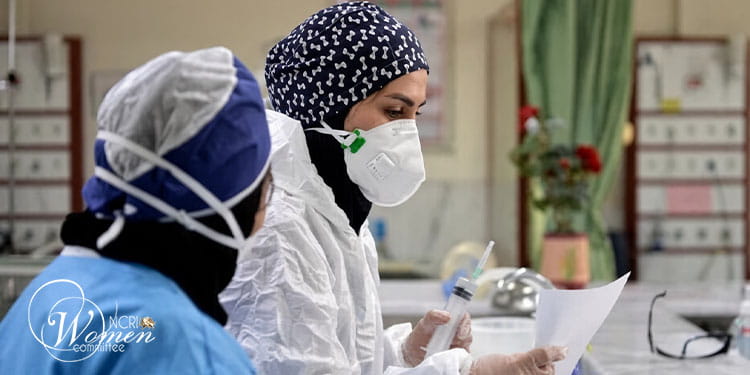
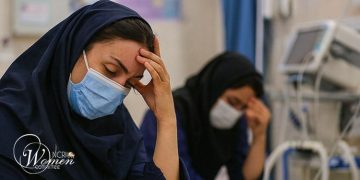
The nursing crisis in Iran has deepened significantly in recent years, with the country’s nursing workforce and broader healthcare system facing increasingly difficult conditions. Reports and documented data published by state-affiliated media reveal a troubling reality: healthcare workers are struggling under severe financial pressure, major disparities in pay, mandatory overtime, and chronic workplace exhaustion.

The crisis cannot simply be attributed to temporary budget shortfalls or administrative shortcomings. It is closely tied to the way the healthcare system is governed and managed. The authorities cannot be separated from responsibility for these conditions, as their failure to address the basic rights and needs of healthcare workers has been a major factor behind the emergence and continuation of the crisis.

Low Wages and Delayed Payments

One of the clearest signs of the nursing crisis and the deteriorating conditions faced by healthcare workers is the widening gap between soaring inflation and their low incomes.

On September 22, 2026, Jahan-e Sanat reported that, amid a broader crisis in the healthcare sector, many nurses earn less than 30 million tomans a month. Given the soaring cost of living, this effectively leaves many of them struggling below the poverty line.

The problem of delayed payments, however, extends beyond nurses and affects the healthcare system as a whole.

Mohammad Sharif-Moghaddam, a nursing organization official, told Jahan-e Sanat that low pay for nurses has been an issue for more than 20 years. He said salaries, take-home pay, and performance-based payments remain low, adding that this is not a new problem but a longstanding and chronic one.

“Nurses have tried every possible avenue over the past 20 years. There is no path they have not taken—from raising their demands and holding rallies to protests and even the unprecedented nationwide strike two years ago,” he said.

Aziz Tahaei-Motlagh, a health economics expert, has warned that various groups of healthcare workers—including general practitioners, physicians completing mandatory service, residents, and young specialists—are facing long and exhausting delays in receiving payments owed to them.

According to him, while larger universities have relatively regular payment schedules, in less-served regions the gap between providing a service and receiving performance-based payments can stretch to several months or even around a year.

A report in Shargh on September 16, 2026, found chronic delays of several months to a year in performance-based payments at medical centers in cities including Ahvaz, Yasuj, Kermanshah, Shahrekord, Kashan, and Qom.

In an inflationary environment, such lengthy delays effectively erode the purchasing power and real value of healthcare workers’ incomes.

Nasrollah Pejmanfar, who chairs a parliamentary committee, also referred to efforts to address the issue, saying: “It is unacceptable for performance-based payments to be made in Tehran after one or two months, while in a province such as Razavi Khorasan, the delay reaches six or seven months.” (Shahraranews, September 20, 2026)

Unprecedented migration of female nurses from Iran
Despite nurses’ dire and disgraceful situation, the clerical regime makes no efforts to recruit new staff.

Staff Shortages, Heavy Workloads, and Nurse Burnout

Heavy workloads are one of the most serious aspects of the nursing crisis and are directly linked to the severe shortage of nurses.

According to figures presented by Ahmad Nejatian, head of Iran’s nursing organization, the country is short of between 100,000 and 120,000 nurses. The average nurse-to-hospital-bed ratio is around one, falling to 0.8 in Tehran, while the desired standard is around 1.8 and the ratio in other countries in the region ranges from 2 to 3.5. (Jahan-e Sanat, September 22, 2026)

This structural shortage has made as much as 80 hours of mandatory overtime per month routine, with nurses sometimes forced to care for eight or nine patients at the same time.

Parvin Kazemi, a nursing system official, has said that nurses’ mandatory working hours exceed 140 hours a month. Unlike many government employees, nurses also do not have access to benefits such as remote work or Thursdays off.

The scale of this exhaustion becomes even clearer when considering that a large part of the nursing workforce consists of women and mothers who, in addition to working demanding night shifts, also carry responsibility for running their households.

These conditions have contributed to declining quality of care and staff departures. Abbas Ebadi, Deputy Minister of Nursing at the Ministry of Health, said that more than 2,150 nurses had left the healthcare system over the previous four years because of heavy workloads and inequalities.

The problem is even more severe in underserved areas, where the nurse-to-population ratio falls to as low as 0.4 in some places, making it increasingly difficult to recruit and retain staff. (Tasnim, August 24, 2025)

Conclusion

The nursing crisis and deteriorating conditions for healthcare workers in Iran are neither isolated incidents nor simply the result of temporary budget shortages. They are the outcome of years of neglect in the healthcare sector and the continued failure to address problems affecting healthcare workers’ livelihoods, working conditions, and job security.

Low wages, lengthy delays in payments, severe staff shortages, and heavy workloads have deepened the nursing crisis and placed increasing pressure on nurses, residents, and other healthcare workers.

The continuation of these conditions has also contributed to growing burnout and the departure of healthcare workers from the system.

Nurses have continued to protest and press for their demands. Across different parts of the country, they have held rallies and gone on strike over low wages, unpaid and delayed payments, staff shortages, and excessive workloads. In some cases, however, these protests have been followed by summonses, contract cancellations, legal proceedings, and administrative or security measures.

In August 2026, a number of nurses at Fayazbakhsh Hospital in Tehran faced such consequences following labor protests.

Despite these pressures, nurses continue to protest, with their main demands ranging from improved economic conditions and timely payment of outstanding wages to reduced workloads and adequate staffing.

The continuation of these protests reflects the persistence of problems that nurses have been warning about for years—and that remain unresolved.
Tags: NursesPoverty
ShareTweetPinShareSendShareShare

Related Posts

Working to Survive: Iranian Women Between Poverty, Exhaustion, and Lack of Labor Protection

August 28, 2026
Working to Survive: Iranian Women Between Poverty, Exhaustion, and Lack of Labor Protection

For many Iranian Women, losing a job or failing to find sustainable employment is not just about being unemployed; it marks the beginning of a cycle of economic...

Read moreDetails

Iran Healthcare Workers Protest Against Severe Livelihood and Structural Crises

August 19, 2026
Iran Healthcare Workers Protest Against Severe Livelihood and Structural Crises

In the summer of 2026, an Iran healthcare workers protest wave highlights how the country’s health system faces chronic financial backlogs, severe staffing shortages, and widespread labor discontent....

Read moreDetails

The Hidden Victimization and Exploitation of Widows in Iran

July 23, 2026
The Hidden Victimization and Exploitation of Widows in Iran

Exploitation of widows in Iran Introduction: The survival of the mullahs' regime rests on two fundamental pillars: overt suppression in society and institutionalized misogyny within its laws. The...

Read moreDetails

Widows in Iran: An Analysis of Legal Challenges and the Structure of Discrimination

July 17, 2026
Widows in Iran: An Analysis of Legal Challenges and the Structure of Discrimination

Introduction: In the political and legal structure governing Iran, misogyny and gender discrimination have been institutionalized as a fundamental principle, heavily impacting the fabric of family and society....

Read moreDetails

The Ineffectiveness of Population Policies in Iran: Economy, Aging, and the Overlooked Rights of Women

July 10, 2026
The Ineffectiveness of Population Policies in Iran: Economy, Aging, and the Overlooked Rights of Women

Abstract: A compilation of official data, media reports, and disclosures published in April, May, and June 2026 demonstrates that Iran is grappling with a multi-layered demographic crisis. This...

Read moreDetails

Documents

Sign the Petition: Demand Urgent International Action to Protect Women Prisoners in Iran Iran: Political Prisoner Used as Leverage Against Her Imprisoned Brother

Sign the Petition: Demand Urgent International Action to Protect Women Prisoners in Iran

September 20, 2026

Iran's Women Prisoners: A Human Rights Emergency Demanding Immediate International Action September 2026 To: The UN High Commissioner for Human...

Call for Immediate Action to Halt the Death Sentence of Arghavan Fallahi

Sign our Statement to Halt the Death Sentence of 25-Year-Old Political Prisoner Arghavan Fallahi

July 10, 2026

Statement Calling for Immediate Action to Halt the Death Sentence of 25-Year-Old Political Prisoner Arghavan Fallahi We express our profound...

The Ineffectiveness of Population Policies in Iran: Economy, Aging, and the Overlooked Rights of Women

The Ineffectiveness of Population Policies in Iran: Economy, Aging, and the Overlooked Rights of Women

July 10, 2026

Abstract: A compilation of official data, media reports, and disclosures published in April, May, and June 2026 demonstrates that Iran...

Monthlies

August 2026 Report: The Epic of Women Who Said 'No' to the Executioners!
Monthlies

August 2026 Report: The Epic of Women Who Said ‘No’ to the Executioners!

September 1, 2026
July 2026 Report: Death Sentences for Women Rising Up to Overthrow the Mullahs' Regime
Monthlies

July 2026 Report: Death Sentences for Women Rising Up to Overthrow the Mullahs’ Regime

July 31, 2026
June 2026 Report: Working Iranian Women Erased from Labor Market
Monthlies

June 2026 Report: Working Iranian Women Erased from Labor Market

July 5, 2026
May 2026 Report: The Enduring Resistance of Iranian Women
Monthlies

May 2026 Report: The Enduring Resistance of Iranian Women

May 31, 2026

Articles

Low Pay and Mounting Pressure Are Deepening Iran’s Nursing Crisis

Low Pay and Mounting Pressure Are Deepening Iran’s Nursing Crisis

September 24, 2026

The nursing crisis in Iran has deepened significantly in recent years, with the country’s nursing workforce and broader healthcare system...

Equal Participation of Women in Political Leadership: An Imperative for True Democracy

Equal Participation of Women in Political Leadership: An Imperative for True Democracy

September 14, 2026

September 15, International Day of Democracy, offers a vital moment to evaluate the true benchmarks of freedom, human rights, and...

The Massacre of 1988: An Account by Batoul Majani

The Massacre of 1988: An Account by Batoul Majani

September 12, 2026

The massacre of 1988 remains a secret whose full truth has yet to be revealed. In that massacre, which primarily...

The Fallen for Freedom

Mojgan Mahdavi: From U.S. Academia to the Frontlines of the Iranian Resistance
Fallen Trailblazers of Iran’s Freedom

Mojgan Mahdavi: From U.S. Academia to the Frontlines of the Iranian Resistance

August 21, 2026
Nasrin Shahrabi: A Lifetime Dedicated to Fighting Religious Fascism in Iran
Fallen Trailblazers of Iran’s Freedom

Nasrin Shahrabi: A Lifetime Dedicated to Fighting Religious Fascism in Iran

August 19, 2026
The Unbroken Smile: How Sara Mokhtar, a Former Airline Executive Became the Vanguard of the Iranian Resistance
Fallen Trailblazers of Iran’s Freedom

The Unbroken Smile: How a Former Airline Executive Became the Vanguard of the Iranian Resistance

June 28, 2026
Fereshteh Azhadi: A Life of Resistance, Sacrifice, and Unyielding Commitment
Fallen Trailblazers of Iran’s Freedom

Fereshteh Azhadi

May 1, 2026

ABOUT US

NCRI Women Committee

We work extensively with Iranian women outside the country and maintain a permanent contact with women inside Iran. The Women’s Committee is actively involved with many women’s rights organizations and NGO’s and the Iranian diaspora.
The committee is a major source of much of the information received from inside Iran with regards to women. Attending UN Human Rights Council meetings and other international or regional conferences on women’s issues and engaging in a relentless battle against the Iranian regime’s misogyny are part of the activities of members and associates of the committee.

CATEGORIES

  • Activities
  • Articles
  • Documents
  • Fallen Heroes of Iran Uprisings
  • Fallen Trailblazers of Iran’s Freedom
  • Famous Women
  • Heroines in Chain
  • IWD Conferences
  • IWD Speeches
  • IWD Videos
  • Maryam Rajavi
  • Maryam Rajavi Speeches
  • Monthlies
  • Podcast
  • Reference Library
  • Solidarity
  • Statements
  • Videos
  • Women in History
  • Women in Leadership
  • Women of Iranian Resistance
  • Women's News

BROWSE BY TAG

Child marriage coronavirus education execution forced hijab Gender Gap Generation Equality Honor killings Iran Teachers Maryam Akbari Monfared Nurses Plan on Women's Rights and Freedoms Poverty Prisoners Protests rural women Saba Kord Afshari The girl child Violence against women Women's Leadership Women Heads of Household Zeinab Jalalian

The copyright of all the material published on this website has been registered under © 2016 the Women’s Committee of the National Council of Resistance of Iran. To obtain permission to copy, redistribute or publish the material published on this website, you should write to the NCRI Women’s Committee. Please include the link of the original article on our website, women.ncr-iran.org.

Welcome Back!

Login to your account below

Forgotten Password?

Retrieve your password

Please enter your username or email address to reset your password.

Log In

Add New Playlist

No Result
View All Result
  • Home
  • News
    • Women’s News
    • Articles
    • Statements
  • Publications
    • Monthlies
    • Documents
    • Reference Library
  • About Us
    • The NCRI Women’s Committee
    • Gender Equality
    • Women’s Platform
  • Maryam Rajavi
    • Maryam Rajavi
    • Maryam Rajavi Speeches
    • Ten Point Plan for Iran
    • The Plan on Women’s Rights and Freedoms
  • Vanguards
    • Fallen Trailblazers of Iran’s Freedom
    • Fallen Heroes of Iran Uprisings
    • Heroines in Chain
    • Women of Iranian Resistance
    • Famous Women
    • Women in History
  • Events
    • IWD Conferences
    • Activities
    • IWD Speeches
    • Solidarity
  • Video
    • Videos
    • IWD Videos
  • Podcast
  • DONATE
  • Contact us
  • فارسی
  • عربی
  • Français

The copyright of all the material published on this website has been registered under © 2016 the Women’s Committee of the National Council of Resistance of Iran. To obtain permission to copy, redistribute or publish the material published on this website, you should write to the NCRI Women’s Committee. Please include the link of the original article on our website, women.ncr-iran.org.