Prison Memoirs of Azam Haj Heydari from the book The Price of Being Human – Part Thirteen
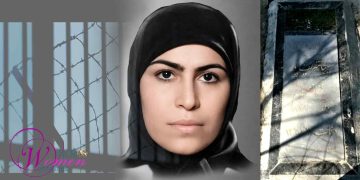
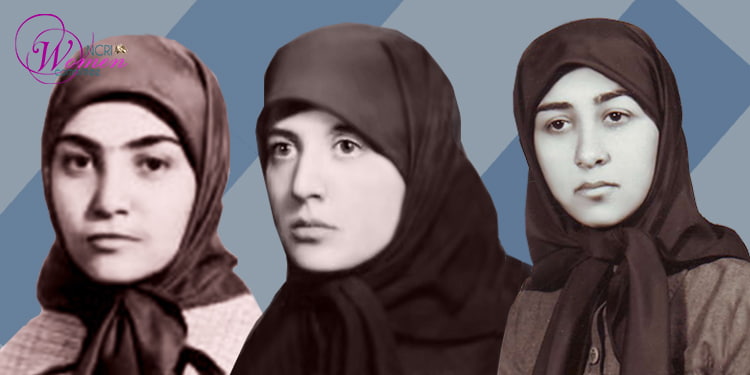
In this installment of Azam Haj Heydari’s prison memoirs, published in The Price of Being Human, the author recounts how imprisoned PMOI women resisted by holding a Nowruz celebration in 1982, an act that resulted in brutal punishment and degrading torture by the regime’s prison guards. She also shares memories of courageous female PMOI members who were later executed, including Masoumeh Azdanlou.[1]
At the time, Azam was a 22–23-year-old teacher who had chosen the path of resistance. She spent five years imprisoned in the Temporary Judiciary Detention Center, Evin Prison, Ghezel Hesar Prison, and Gohardasht Prison, where she endured savage torture at the hands of Khomeini’s Revolutionary Guards.
Who Is the “Hypocrite”?
Despite every effort by the executioners to prevent any celebration, Nowruz 1982 was observed in Room 1 of Ward 240 at Evin Prison, as well as in the other rooms and, as far as I know, in every ward where PMOI prisoners were held.
Our room’s program included several traditional dances, among them Kurdish and Azerbaijani dances. While one of the Kurdish sisters was performing the Kurdish dance, several female guards, including Alizadeh, suddenly stormed into the ward. They grabbed the young woman’s beautiful hair—which she had never cut during her imprisonment and which reached her waist—wrapped it around one of their hands, and tried to drag her out for a beating and torture.
The entire ward immediately resisted.
The three guards pulled from one side while the prisoners pulled from the other. In the end, the guards failed to take her and left humiliated and defeated.
We knew they would not let the matter rest and that we would all have to pay the price. But none of us regretted what had happened because no single person had been identified as the organizer. The prison authorities would have to punish many of us instead of just one.
That is exactly what happened.
Only minutes after the guards left, the loudspeaker called the names of fifteen prisoners for interrogation.
We knew severe beatings awaited them.
They were taken away and did not return for two days. Throughout that time they were subjected to interrogation and brutal torture.
When they were finally brought back, Guard Alizadeh opened the ward door and shoved them inside. They were covered in blood and bruises; their eyes were sunken, and their faces had turned pale.
With obvious hatred toward the PMOI, she sneered:
“Hypocrites! If you enjoy this kind of hospitality, go ahead and celebrate Nowruz again.”
I did not want to let her words go unanswered.
I said:
“Everyone knows who the real hypocrites are.”
She stared at me for a moment and walked away.
I knew what was coming.
I didn’t have to wait long.
Barely a minute later, my name was called over the loudspeaker.
They took me to Ward 209 for interrogation and left me blindfolded in the corridor.
Every interrogator and guard who passed struck me with punches and kicks, throwing me against the wall.
The male guards, determined to humiliate me, also repeatedly subjected me to degrading sexual harassment. Whenever I resisted, they responded by beating me even more viciously.
Some leaned close and whispered obscenities into my ear—filthy insults drawn from the misogynistic culture they served—before bursting into laughter.
When one of them was met with my resistance, he turned to another and said,
“This wild dog needs to be chained up before she calms down.”
From then on they tied my hands behind my back so I would be unable to resist their abuse.
They kept this up for an entire day.
At 2:30 in the morning, they finally returned me to the ward.
As I was being taken back, one of the interrogators turned toward me and said:
“Look at yourself. If you feel like it, you can laugh again. You people play your hypocrite games, but when it’s time to settle accounts, suddenly we’re the torturers.”
To these enemies of humanity, any sign of joy, laughter, or collective activity was an unforgivable offense. They treated every expression of life and solidarity as “hypocrite behavior” deserving the harshest punishment.
They could not tolerate even the smallest display of energy among the prisoners—not even walking.
A PMOI Member Doesn’t Complain
Once, while I was being abused during an interrogation, I asked one of the guards,
“Don’t you have a mother or a sister? How can you do this?”
He exploded with rage.
Shouting, he stepped back and then jumped with both feet onto my stomach.
“I do have a mother and a sister,” he screamed, “but they’re nothing like you…”
The impact felt as though my intestines were about to burst out through my mouth.
I truly thought I was dying.
I lost consciousness.
When I eventually came to—I don’t know how much time had passed—I was still doubled over with agonizing stomach pain and nausea.
Inwardly, I began complaining.
I argued with God.
“God, where are You? What do You do while they commit such terrible crimes? Why don’t You stop them?”
While I was silently complaining, one of the guards came, snatched away my chador, and threw me into a cell in Ward 209.
Lying on the floor in pain, I kept talking to myself, praying, complaining, and pouring out my heart.
Suddenly, I heard tapping from the neighboring cell.
I knew a little Morse code.
I tapped back,
“Who are you?”
The reply came:
“Masoumeh.”
She asked,
“What are you doing?”
I answered,
“Nothing. I was complaining to God about these executioners. I was grumbling because there was no one else to talk to.”
She replied:
“A PMOI member shouldn’t grumble. This is the path we chose ourselves.”
I fell silent.
Ashamed of my own weakness—for reacting the way the clerical regime wanted imprisoned women to react—I said nothing more.
Those few words from this sister left a profound impression on me.
From her, I learned another lesson in endurance and resistance.
I continued tapping in Morse, but there was no further reply.
She had probably been taken away for interrogation.
After that, I never heard another sound from her cell.
Later, after I returned to the ward, I asked the others who this Masoumeh was.
They told me it had been Masoumeh Azdanlou.
On April 2, 1982, after resisting an armed assault by Revolutionary Guards on the PMOI safe house where she was staying in Tehran for several hours, Masoumeh was captured while seriously wounded and unconscious.
The regime initially announced that she had been killed during the clash.
In reality, they immediately took her under torture.
Although she had been shot four times—in the neck, jaw, and arm—her injuries became so severe that after some time she could no longer walk. Speaking and eating also became extremely difficult.
The regime’s objective was to force her, through the most savage torture imaginable, to give a televised confession.
Instead, after months of resistance, they executed her by firing squad on September 30, 1982.
By then she could no longer walk, speak properly, or eat, and her neck had become completely immobile.
In a report by Fataneh Avazpour, which I later found among the archives of the Martyrs Research Unit, she writes that Masoumeh had been gravely wounded at the time of her arrest and that the guards subjected her to torture even though she was pregnant.
The executed political prisoner Nahid Izadkhah Kermani, who was the sister of Masoumeh’s husband and had briefly been placed in Masoumeh’s solitary cell in Ward 209, later recalled:
“Masoumeh’s appearance had changed so drastically that I did not recognize her at first.”
In late June or early July 1982, the guards accidentally transferred Masoumeh to Ward 246 instead of returning her to Ward 209.
She was placed in Room 3.
There, the executed political prisoner Zari Nahidpour, a student at the Iran University of Science and Technology who had been one of Masoumeh’s close friends since their university days, spoke with her and asked about her situation.
Masoumeh said:
“They want my sister Maryam’s (Maryam Rajavi) address. That’s the most important information they’re trying to force out of me. They know I know where she is, and I will stand firm until the end. I will never tell them.”
Until Masoumeh was mistakenly brought to Ward 246 and Zari spoke with her, everyone had believed she had already been executed.
The guards quickly realized their mistake and immediately returned her to Ward 209.
To be continued…
[1] Masoumeh Azdanlou was a senior PMOI member who was captured after an armed confrontation with Revolutionary Guards in Tehran on April 2, 1982. Although critically wounded and pregnant, she was subjected to months of severe torture in an attempt to force a public confession and reveal the whereabouts of other PMOI members. She refused to cooperate and was executed by firing squad at Evin Prison on September 30, 1982, despite being unable to walk, eat normally, or speak clearly because of her injuries.