
Saturday, July 4, 2026
  • English
  • Français
  • فارسی
  • عربى
PODCASTS
NCRI Women Committee Women Resistance Freedom
  • Home
  • NEWS
    • Women’s News
    • Articles
    • Statements
  • PUBLICATIONS
    • Monthlies
    • Documents
    • Reference Library
  • ABOUT US
    • The NCRI Women’s Committee
    • Gender Equality
    • Women’s Platform
  • MARYAM RAJAVI
    • Maryam Rajavi
    • Maryam Rajavi Speeches
    • The Plan on Women’s Rights and Freedoms
    • Ten-Point Plan for the future of Iran
  • VANGUARDS
    • The Fallen for Freedom
    • Heroines in Chain
    • Women of Iranian Resistance
    • Famous Women
    • Women in History
  • EVENTS
    • IWD Conferences
    • Activities
    • IWD Speeches
    • Solidarity
  • VIDEO
    • Videos
    • IWD Videos
  • PODCAST
  • DONATE
  • CONTACT US
No Result
View All Result
NCRI Women Committee Women Resistance Freedom
  • Home
  • NEWS
    • Women’s News
    • Articles
    • Statements
  • PUBLICATIONS
    • Monthlies
    • Documents
    • Reference Library
  • ABOUT US
    • The NCRI Women’s Committee
    • Gender Equality
    • Women’s Platform
  • MARYAM RAJAVI
    • Maryam Rajavi
    • Maryam Rajavi Speeches
    • The Plan on Women’s Rights and Freedoms
    • Ten-Point Plan for the future of Iran
  • VANGUARDS
    • The Fallen for Freedom
    • Heroines in Chain
    • Women of Iranian Resistance
    • Famous Women
    • Women in History
  • EVENTS
    • IWD Conferences
    • Activities
    • IWD Speeches
    • Solidarity
  • VIDEO
    • Videos
    • IWD Videos
  • PODCAST
  • DONATE
  • CONTACT US
No Result
View All Result
NCRI Women Committee
No Result
View All Result
Home Heroines in Chain
February 8, 1982, in Evin Prison: PMOI Women Stand Firm

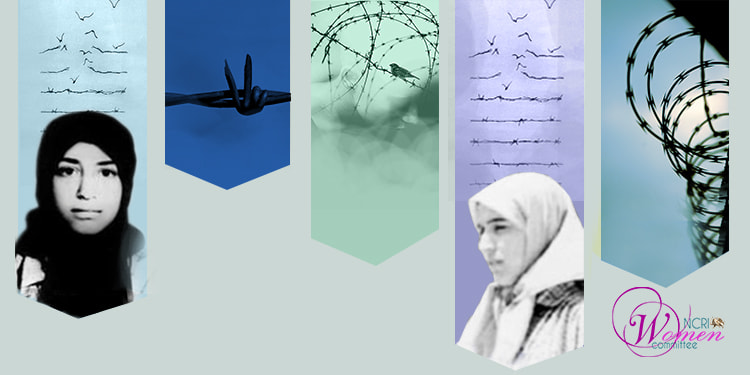
From left, Fatemeh Mahmoud Hakimi (Asef) and Elaheh Orouji

February 8, 1982, in Evin Prison: PMOI Women Stand Firm

July 3, 2026
in Heroines in Chain

Prison Memoirs of Azam Haj Heydari from the book The Price of Being Human – Part Twelve

In the twelfth installment of Azam Haj Heydari’s prison memoirs, originally published in The Price of Being Human, she recalls the events surrounding February 8, 1982, inside Evin Prison and describes how the PMOI women responded to one of the regime’s greatest psychological warfare campaigns.

At the time, Azam was a 22- or 23-year-old schoolteacher who had joined the resistance. She spent five years imprisoned in the Judiciary’s temporary detention center, Evin, Qezel Hesar, and Gohardasht prisons, where she endured brutal torture at the hands of Khomeini’s Revolutionary Guards.

February 8 in Evin Prison

That evening, the guards and interrogators whispered among themselves while mocking and taunting us.

Earlier that day they had taken me to Ward 209 to confront one of my fellow resistance members, Siba Sharifpour, to make me identify her. As I stood blindfolded in the corridor of Ward 209, I noticed the guards behaving in a highly unusual way. They hurried back and forth, speaking quietly to one another, then suddenly bursting into loud laughter and saying, “We have to celebrate.”

I became increasingly anxious. What had happened? I kept trying to peek beneath my blindfold, but I couldn’t make sense of what was going on.

They sent me back to my cell, saying they were busy and would bring me back later. One of them sneered, “Let her go back to her friends so she can join their celebration.”

That night I was filled with dread. Everywhere, the guards wore disgusting grins and took every opportunity to taunt us. From conversations with other prisoners returning from interrogation, it became clear that the same behavior had been taking place in every interrogation branch. The interrogators laughed and joked about handing out sweets, while all of us kept asking each other what had happened.

The following day, when we learned that Ashraf Rajavi, Mousa Khiabani, and their companions had been killed, we finally understood the reason for the guards’ celebration.

Believing they had destroyed the PMOI leadership, the executioners decided to use the tragedy to break the prisoners’ morale. They brought the bodies of the fallen into the yard of Ward 209 and laid them on earthen embankments. Groups of about forty prisoners were marched out, row by row, and forced to look at them.

The notorious prison warden Asadollah Lajevardi held Ashraf’s toddler, Mohammad, in his arms while standing over the bodies. With grotesque laughter, he tried to crush the prisoners psychologically.

At his orders, the martyrs’ bodies had been arranged so that their heads rested on one end of a steel beam balanced like a seesaw.

To torment us further, Lajevardi repeatedly stepped on the opposite end of the beam, lifting their heads into the air. He would hold them there for a few moments before suddenly stepping off, causing the beam to slam back down so that the martyrs’ heads struck the steel with a sickening blow.

Laughing loudly, he shouted:

“Come and see your glorious martyrs! Look how they’ve been destroyed!”

He carefully watched each prisoner’s face, studying our reactions. Over and over, he declared: “Today is our day of celebration—and your day of mourning.”

But the prisoners answered him only with looks of burning contempt. Eventually, even Lajevardi lost his nerve.

He also demanded that the prisoners insult the dead, but instead, many openly paid their respects to them. Some even spat directly in Lajevardi’s face, fully aware that the price would likely be execution by firing squad.

What the clerical regime had intended as a demonstration of its power—and as a means of breaking the resolve of the imprisoned PMOI members and other political prisoners—instead became a powerful act of defiance. The prisoners’ reaction was so overwhelming that the authorities abandoned the plan altogether and stopped bringing additional prisoners to view the bodies.

The Impact of February 8 Inside the Prison Wards

When the television in our ward announced the deaths of Ashraf and Mousa, no one believed it at first.

Then an overwhelming silence settled over the entire ward.

No one moved.

Just then Parvin Haeri returned from interrogation, unaware of what had been broadcast. Normally she walked confidently through the ward with a determined smile, never allowing anything to shake her composure. But that day she stopped in the middle of the corridor, pale and visibly distressed, as though she had sensed that something terrible had happened.

I asked her,

“Parvin, what’s wrong? Why do you look so worried?”

She replied,

“You tell me. Why is everything so quiet?”

She was right.

Silence was what the guards wanted. We deliberately kept the ward lively to deny them that victory. But in those first moments everyone was simply stunned.

The silence did not last long.

It was Dr. Hajar Robat-Karami and Fatemeh Asef, both somewhat older than the rest of us, who finally broke it. They came out of their room and said:

“Silence is exactly what the regime wants. It wants everyone to believe everything is over.”

Parvin immediately joined them.

“That’s exactly what I’ve been thinking,” she said.

Those three women—all of whom would later be executed—lifted the ward out of its paralysis.

Hajar began reciting Ziyarat Ashura, a revered Shi’a devotional text that commemorates the martyrdom of Imam Hussein and expresses solidarity with justice while denouncing oppression. When she reached the passage declaring, “I am an enemy to those who are your enemies, and a friend to those who are your friends,” she deliberately raised her voice.

The numb grief that had frozen the ward quickly gave way to fierce determination.

Everyone felt even more deeply connected to one another.

It seemed as though we had become links in a single unbreakable chain.

The executioners had filmed the horrifying scenes in the yard of Ward 209, intending to show the footage throughout the prison and crush the prisoners’ morale.

Instead, the screenings had the opposite effect.

As soon as the film began, prisoners poured out of every room into the corridors to catch a glimpse of the fallen.

It is impossible to describe those moments.

People sang resistance songs.

They wept.

They embraced one another.

And together they pledged to remain steadfast to the very end on the same path for which Ashraf, Mousa, and their comrades had sacrificed their lives.

A New Wave of Executions

Humiliated by the determination shown by the imprisoned PMOI members during the events of February 8, the executioners took their revenge through even more savage interrogations and torture.

Their campaign of retaliation began immediately.

Mahdokht Mohammadi-Zadeh[1] was tortured continuously for two days.

Fatemeh and Zahra Samimi-Motlagh also endured several days of brutal torture.

The day they called Farah Torabi, Fatemeh, Zahra Samimi-Motlagh, followed by Zahra Nazari and Elaheh Orouji, out of our ward remains unforgettable.

We all knew what awaited them.

They knew it too.

As soon as their names were called, they calmly performed ghosl-e shahadat—the full ritual washing traditionally performed before burial, carried out voluntarily by prisoners who believed they were about to be executed—and prepared themselves.

I will never forget Zahra Samimi-Motlagh’s gentle, innocent face.

No matter the circumstances, her warm smile never left her.

She greeted every hardship with serenity, as though she had just received wonderful news.

When her name was called for execution, she remained completely calm, wearing the same peaceful smile.

We embraced her, kissed her, and wept.

As I said goodbye, she noticed my tears and gently asked,

“Azam, why are you crying? I’m not going somewhere terrible.”

“I’ve chosen the best possible fate, and I’m so happy to see it through.”

“I only hope I can fulfill my responsibility to the very end.”

Those were her final words to us.

She left the ward alongside the others.

Haj Khanom—the mother of the Tavanayan-fard family—brought out a Qur’an and held it above them as they passed beneath it, following a longstanding Iranian custom of blessing someone before a significant journey or farewell.

Each of them kissed the Qur’an.

Then, smiling, they walked out of the ward— as though they were setting off on a joyful journey.

To be continued…


[1] Mahdokht Mohammadi-Zadeh was an orthopedic medical student. In prison she became responsible for providing medical care in our ward, tending to sick prisoners with extraordinary compassion and dedication. Among the documents preserved by the Martyrs Research Unit, I found an account by another political prisoner recalling a conversation with Mahdokht and Sudabeh Reza-Zadeh. Mahdokht said:

“I dream of traveling to Iran’s villages, especially the most remote ones where people have no access to basic services. I want to help the children there and teach them, so they can learn who their true friends and enemies are.”

Mahdokht was executed during the 1988 massacre of political prisoners in Evin Prison, when approximately 30,000 PMOI prisoners and other political detainees were killed.

ShareTweetPinShareSendShare

Related Posts

Iran: Political Prisoner, Arghavan Fallahi, Sentenced to Death

July 2, 2026
Iran: Political Prisoner, Arghavan Fallahi, Sentenced to Death

Arghavan Fallahi, a 25-year-old political prisoner and supporter of the People's Mojahedin Organization of Iran (PMOI/MEK), has been sentenced to death. The verdict was formally conveyed through her...

Read moreDetails

Elham Zeinali

July 2, 2026
Elham Zeinali A Compassionate Nurse and the Pillar of Her Family

A Compassionate Nurse and the Pillar of Her Family Elham Zeinali, a 42-year-old nurse, lost her life after being shot by members of the Revolutionary Guard Corps during...

Read moreDetails

Iran’s Escalating Water Crisis: Energy Imbalance, Popular Protests, and the Role of Women

July 1, 2026
Iran Water Crisis: Water Mafia and Ecosystem Destruction

The Iran water crisis has transcended a mere climatic challenge, evolving into a structural catastrophe marked by severe ecosystem destruction and land subsidence. As examined in previous parts...

Read moreDetails

Iran: 127th Week of “No to Executions Tuesdays” Across 57 Prisons

June 30, 2026
Iran: 127th Week of "No to Executions Tuesdays" Across 57 Prisons

The "No to Executions Tuesdays" campaign marked its 127th week on Tuesday, June 30, 2026, as political prisoners in 57 prisons across Iran continued their weekly hunger strike....

Read moreDetails

Iran: Continued Arbitrary Arrests, Prison Sentences, and Denial of Medical Care for Women Prisoners

June 29, 2026
Continued Arbitrary Arrests, Prison Sentences, and Denial of Medical Care for Women Prisoners

Amid the continued arbitrary arrests following the nationwide protests of January 2026, new reports indicate prison sentences, ongoing detentions, prolonged legal uncertainty, denial of medical care, and the...

Read moreDetails

Documents

Crushed by Design: Structural Crises and Inequitable Policies Push Female-Headed Households to the Edge

Crushed by Design: Structural Crises and Inequitable Policies Push Female-Headed Households to the Edge

May 18, 2026

Introduction Life for the Iranian people under the religious dictatorship is fraught with hardship and peril from every perspective. Whether...

A Report to CSW70: Gender-Based Discrimination Under Iranian Law

A Report to CSW70: Gender-Based Discrimination Under Iranian Law

March 8, 2026

Structural Inequality and State-Sanctioned Oppression of Women Gender-Based Discrimination Under Iranian Law” is the title of the NCRI Women’s Committee’s...

Annual Report 2026: From Protests, to Uprising, and the Role of Iranian Women

Annual Report 2026: From Protests, to Uprising, and the Role of Iranian Women

March 3, 2026

On the eve of International Women’s Day 2026, the NCRI Women’s Committee presents its Annual Report 2026, offering a recap...

Monthlies

May 2026 Report: The Enduring Resistance of Iranian Women
Monthlies

May 2026 Report: The Enduring Resistance of Iranian Women

May 31, 2026
April 2026 Report: Mass Arrests of Women: Targeted Repression in Time of Crisis
Monthlies

April 2026 Report: Mass Arrests of Women in Iran

April 30, 2026
March 2026 Report: How Iranian Women Are Shaping the Resistance
Monthlies

March 2026 Report: Courage Under Fire

April 3, 2026
January 2026 Report: Women at the Core of the Uprising
Monthlies

January 2026 Report: Women at the Core of the Uprising

January 31, 2026

Articles

Iran Water Crisis: Water Mafia and Ecosystem Destruction

Iran’s Escalating Water Crisis: Energy Imbalance, Popular Protests, and the Role of Women

July 1, 2026

The Iran water crisis has transcended a mere climatic challenge, evolving into a structural catastrophe marked by severe ecosystem destruction...

Day 2 of Free Iran 2026: Broad Support for 10-point plan and Criticism of Western Appeasement

Day 2 of Free Iran 2026: Broad Support for 10-point plan and Criticism of Western Appeasement

June 23, 2026

On Sunday, June 21, 2026, the second day of the “Free Iran 2026 – Supporting the Democratic Alternative” conference was...

45 Years of Resistance for a Free Iran; A Future Built on a Democratic Republic

45 Years of Resistance for a Free Iran; A Future Built on a Democratic Republic

June 21, 2026

Free Iran 2026 Summit Brings Together International Political Figures to Emphasize thePath Toward a Democratic Iran On Saturday, June 20,...

The Fallen for Freedom

Elham Zeinali A Compassionate Nurse and the Pillar of Her Family
The Fallen for Freedom

Elham Zeinali

July 2, 2026
The Unbroken Smile: How Sara Mokhtar, a Former Airline Executive Became the Vanguard of the Iranian Resistance
The Fallen for Freedom

The Unbroken Smile: How a Former Airline Executive Became the Vanguard of the Iranian Resistance

June 28, 2026
Shilan Salehi: Iran Regime Extorted 150 Million Tomans for Return of Her Body
The Fallen for Freedom

Shilan Salehi: Iran Regime Extorted 150 Million Tomans for Return of Her Body

June 13, 2026
Parnia Shad Bejarkenari: 23-Year-Old Woman Killed for Freedom in Iran
The Fallen for Freedom

Parnia Shad Bejarkenari: 23-Year-Old Woman Killed for Freedom in Iran

June 13, 2026

ABOUT US

NCRI Women Committee

We work extensively with Iranian women outside the country and maintain a permanent contact with women inside Iran. The Women’s Committee is actively involved with many women’s rights organizations and NGO’s and the Iranian diaspora.
The committee is a major source of much of the information received from inside Iran with regards to women. Attending UN Human Rights Council meetings and other international or regional conferences on women’s issues and engaging in a relentless battle against the Iranian regime’s misogyny are part of the activities of members and associates of the committee.

CATEGORIES

  • Activities
  • Articles
  • Documents
  • Famous Women
  • Heroines in Chain
  • IWD Conferences
  • IWD Speeches
  • IWD Videos
  • Maryam Rajavi
  • Maryam Rajavi Speeches
  • Monthlies
  • Podcast
  • Reference Library
  • Solidarity
  • Statements
  • The Fallen for Freedom
  • Videos
  • Women in History
  • Women in Leadership
  • Women of Iranian Resistance
  • Women's News

BROWSE BY TAG

Child marriage coronavirus education execution forced hijab Gender Gap Generation Equality Honor killings Iran Teachers Maryam Akbari Monfared Nurses Plan on Women's Rights and Freedoms Poverty Prisoners Protests rural women Saba Kord Afshari The girl child Violence against women Women's Leadership Women Heads of Household Zeinab Jalalian

The copyright of all the material published on this website has been registered under © 2016 the Women’s Committee of the National Council of Resistance of Iran. To obtain permission to copy, redistribute or publish the material published on this website, you should write to the NCRI Women’s Committee. Please include the link of the original article on our website, women.ncr-iran.org.

Welcome Back!

Login to your account below

Forgotten Password?

Retrieve your password

Please enter your username or email address to reset your password.

Log In

Add New Playlist

No Result
View All Result
  • Home
  • News
    • Women’s News
    • Articles
    • Statements
  • Publications
    • Monthlies
    • Documents
    • Reference Library
  • About Us
    • The NCRI Women’s Committee
    • Gender Equality
    • Women’s Platform
  • Maryam Rajavi
    • Maryam Rajavi
    • Maryam Rajavi Speeches
    • Ten Point Plan for Iran
    • The Plan on Women’s Rights and Freedoms
  • Vanguards
    • The Fallen for Freedom
    • Heroines in Chain
    • Women of Iranian Resistance
    • Famous Women
    • Women in History
  • Events
    • IWD Conferences
    • Activities
    • IWD Speeches
    • Solidarity
  • Video
    • Videos
    • IWD Videos
  • Podcast
  • DONATE
  • Contact us
  • فارسی
  • عربی
  • Français

The copyright of all the material published on this website has been registered under © 2016 the Women’s Committee of the National Council of Resistance of Iran. To obtain permission to copy, redistribute or publish the material published on this website, you should write to the NCRI Women’s Committee. Please include the link of the original article on our website, women.ncr-iran.org.