
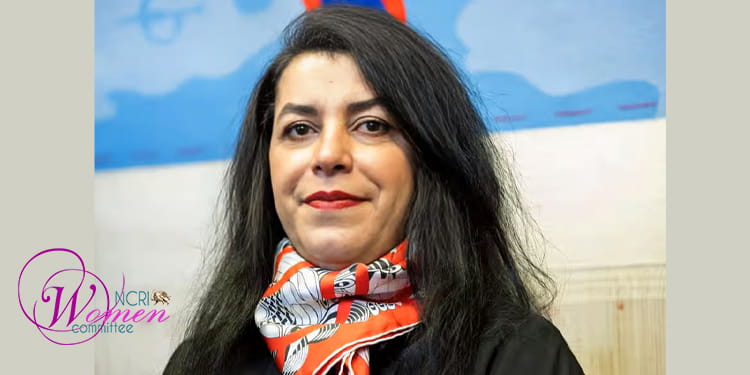
Marjane Satrapi, the prominent Iranian-French author and filmmaker, passed away in Paris at the age of 56. She was the creator of the renowned masterpiece Persepolis.
The French Presidency and the French Academy of Fine Arts paid tribute to this exceptional artist and passionate advocate for freedom in official statements.
Global Acclaim of the “Persepolis” Series in Exposing Oppression
Marjane Satrapi achieved global acclaim with her Persepolis series. This work depicted her childhood in Iran, the regime’s oppression of the people, and her forced migration to Europe. Published in three volumes between 2000 and 2003, the work went on to achieve worldwide success.
The Persepolis animated feature film won the Jury Prize at the Cannes Film Festival in 2007. She dedicated this award to all Iranians.
In subsequent years, she repeatedly supported Iranian freedom seekers, women, and protesting youths. Living in France since 1994, she was a vocal critic of the mullahs’ regime’s policies and took a stand multiple times against the suppression of the Iranian people, particularly women and youth.
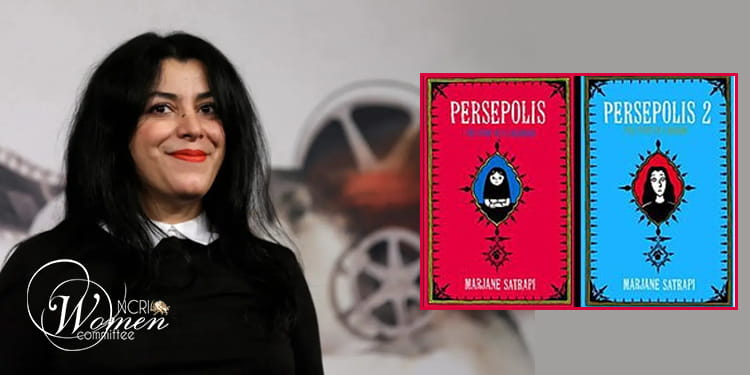
Marjane Satrapi’s Refusal of the Legion of Honour
She was always a severe critic of the Iranian regime. In January 2025, in protest against France’s hypocritical policies toward Iran, Marjane refused to accept the country’s highest civilian distinction, the Legion of Honour. She declared that while the “children of Iran’s rulers” roam freely in Paris, Iranian youths and freedom seekers are denied visas. She took this step in solidarity with the women and youth of Iran.
Narrating the 1988 Massacre in the Second Volume of Persepolis
In the second volume of Persepolis, she addressed the massacre of political prisoners in 1988.
Writing about the massacre ordered by Khomeini in 1988, she quoted her father, explaining that out of fear that the Mujahideen would reach Tehran, the regime gave political prisoners—whom she described as the true heirs of the revolution—the choice to either renounce their ideals or face execution. She wrote that tens of thousands of people were executed during this purge.
The Women’s Committee of the National Council of Resistance of Iran (NCRI) extends its condolences on the untimely passing of this free-spirited author and director. She was a woman artist who became a model of honor and dignity by refusing the Legion of Honour. Her memory will remain alive in the hearts of Iran’s community of free-spirited artists and writers who have stood face-to-face against both the Shah’s and the Mullahs’ dictatorships.