
Friday, July 24, 2026
  • English
  • Français
  • فارسی
  • عربى
PODCASTS
NCRI Women Committee Women Resistance Freedom
  • Home
  • NEWS
    • Women’s News
    • Articles
    • Statements
  • PUBLICATIONS
    • Monthlies
    • Documents
    • Reference Library
  • ABOUT US
    • The NCRI Women’s Committee
    • Gender Equality
    • Women’s Platform
  • MARYAM RAJAVI
    • Maryam Rajavi
    • Maryam Rajavi Speeches
    • The Plan on Women’s Rights and Freedoms
    • Ten-Point Plan for the future of Iran
  • VANGUARDS
    • The Fallen for Freedom
    • Heroines in Chain
    • Women of Iranian Resistance
    • Famous Women
    • Women in History
  • EVENTS
    • IWD Conferences
    • Activities
    • IWD Speeches
    • Solidarity
  • VIDEO
    • Videos
    • IWD Videos
  • PODCAST
  • DONATE
  • CONTACT US
No Result
View All Result
NCRI Women Committee Women Resistance Freedom
  • Home
  • NEWS
    • Women’s News
    • Articles
    • Statements
  • PUBLICATIONS
    • Monthlies
    • Documents
    • Reference Library
  • ABOUT US
    • The NCRI Women’s Committee
    • Gender Equality
    • Women’s Platform
  • MARYAM RAJAVI
    • Maryam Rajavi
    • Maryam Rajavi Speeches
    • The Plan on Women’s Rights and Freedoms
    • Ten-Point Plan for the future of Iran
  • VANGUARDS
    • The Fallen for Freedom
    • Heroines in Chain
    • Women of Iranian Resistance
    • Famous Women
    • Women in History
  • EVENTS
    • IWD Conferences
    • Activities
    • IWD Speeches
    • Solidarity
  • VIDEO
    • Videos
    • IWD Videos
  • PODCAST
  • DONATE
  • CONTACT US
No Result
View All Result
NCRI Women Committee
No Result
View All Result
Home Heroines in Chain
The Battle for the Human Spirit

The Battle for the Human Spirit

July 22, 2026
in Heroines in Chain

Prison Memoirs of Azam Haj-Heydari from the book The Price of Being Human – Part Fifteen

In this installment of The Price of Being Human, which chronicles her years in prison, Azam Haj-Heydari begins the fourth chapter of the book, titled ” The Battle for the Human Spirit.” She explains the theory of notorious prison chief Asadollah Lajevardi regarding PMOI prisoners, and recounts the degrading abuse she endured after being transferred to Gohardasht Prison.

At the time, Azam was a 22–23-year-old schoolteacher who had chosen the path of resistance. She spent five years imprisoned in the Temporary Judiciary Detention Center, Evin, Qezel Hesar, and Gohardasht prisons, where she was subjected to brutal torture by Khomeini’s Revolutionary Guards.

The Strategy of Isolation

It was 1982. As time went on, the authorities intensified the pressure on the prisoners who remained, determined to break them and, as they imagined, bring the PMOI to an end.

Lajevardi’s theory was simple:

“As long as the PMOI prisoners remain together, they will continue to resist. Separate them and place them in solitary confinement, and within a year there won’t be any prisoners left.”

Lajevardi lamented that the regime did not have enough solitary cells for all the prisoners. Their solution was to make prison conditions so harsh and restrictive that even the communal wards would effectively become solitary confinement.

Any form of human contact between prisoners—even exchanging greetings—was treated as a crime. Helping one another was strictly forbidden, and any violation of these rules was met with the harshest punishments and torture.

It was based on this theory that the infamous “Qiyamat Ward” (“Judgment Day Ward”) was established in Qezel Hesar Prison, along with the notorious “cages” and “coffins”—forms of prolonged isolation and sensory deprivation designed to break prisoners psychologically.

In short, Lajevardi’s objective was to strip PMOI prisoners of their humanity.

The horrific, systematic torture methods—such as the cages, the coffins, and the Maskouni Ward (The Residential Unit)[1]—were all created with this goal in mind. The regime wanted prisoners to conclude that every form of collective life, mutual support, and human connection was the source of their suffering. If they wished simply to survive their prison sentence, they had to remain completely alone. Like sheep, they were expected to watch their friends slaughtered before their eyes without caring.

But in practice, it became clear that Lajevardi had never truly understood the PMOI.

Even instinctively, we had grasped one fundamental truth: in those hellish conditions, our very physical survival depended upon our collective life.

If we managed to endure despite all that pressure, it was because we refused to abandon our shared humanity.

We knew that through torture exceeding the limits of human endurance, the executioners might succeed in breaking one individual—but they could never break everyone.

The torturer constantly tries to convince the prisoner:

“You are alone. No one is thinking about you. Everyone has forgotten you. No one hears your voice. Your friends have blamed you to save themselves. Resistance is pointless. It will only destroy you.”

But the moment a prisoner realizes they are not alone—that hearts inside and outside the prison are still beating alongside theirs—they find the strength to resist.

That is why everything we had belonged to everyone.

There were days when we had only a single apple, yet we divided that one apple among ten or fifteen people.

Each day we were given just one sugar cube for our tea. Many of the women would save theirs, collecting them together so that when someone returned from torture, too physically weak to function, we could dissolve the sugar into water and give it to her.

More than the apple or the sugar water helping someone’s body, it strengthened both the prisoner’s spirit and the collective spirit of everyone around her.

Simply knowing that, despite the torture, illness, or years without family visits, she was neither abandoned nor alone—that others would care for her wounds, defend her against the enemy’s blows, and stand beside her—gave a prisoner the strength to remain standing.

Conversely, those who broke under torture often did so not only because of unbearable physical pain, but because they succumbed to the interrogators’ psychological warfare and came to believe they had been isolated from everyone else.

That is why the executioners reacted with almost hysterical fury whenever one prisoner showed even the smallest act of kindness toward another. Such humanity directly contradicted their entire worldview. They could see with their own eyes that what hours of torture and whipping had seemingly destroyed inside one prisoner could begin to grow again through the compassion and solidarity of her fellow prisoners.

A New Prison, A New Terror

Several other women and I had been transferred from Evin to Qezel Hesar as punishment. Every day we were summoned to the prison’s administrative office for interrogation.

One night, around 10:30 p.m., Haji Davoud‘s deputy—a notorious executioner named Ahmad—came to the door of our ward and instructed one of the collaborators, whom we called “the Gestapo,” to tell me to prepare immediately for transfer.

When I reached for my belongings, Ahmad snapped:

“Don’t take anything! You don’t need possessions when you’re going to hell.”

So I was taken out into the cold with nothing at all.

They kept me in the administrative office until well after midnight, mocking me the entire time.

“Don’t be afraid. You’re only going to hell. What’s there to fear?”

“You should make your will.”

“So tell us, hypocrite, what’s in your will?”

“I bet you’ll leave your sugar cube to one hypocrite, your lunch to another one who got tortured, and your dinner to someone else!”

They burst into their disgusting laughter, hoping to provoke me.

As I listened, I found myself thinking how deeply threatened they were by the simple human relationships that existed among us. Instead of discouraging me, their mockery filled me with pride.

Sometime between three and five o’clock in the morning, Ahmad came for me. Alone, he put me into a Paykan sedan, got behind the wheel himself, and drove.

Throughout the drive he repeated:

“Make your will.”

“Sing whatever songs you want.”

“Pray for all the other hypocrites.”

“There won’t be a tomorrow.”

“You’ve only got two hours left.”

“Do whatever you want.”

For several hours they drove around the streets near Qezel Hesar. Although several vehicles were involved, they pretended I was being taken away alone.

Then they began beating me.

“Tell us what you’ve done. You were only recently transferred from Evin—why do they already want you back there? Give us the names of your hypocrite accomplices and save yourself.”

At dawn we arrived at a prison I did not recognize.

Everything looked newly built.

Blindfolded, I felt my way up the stairs with my hands against the walls. I could tell the building wasn’t even finished. The floors were still rough, littered with dirt, stones, and construction debris.

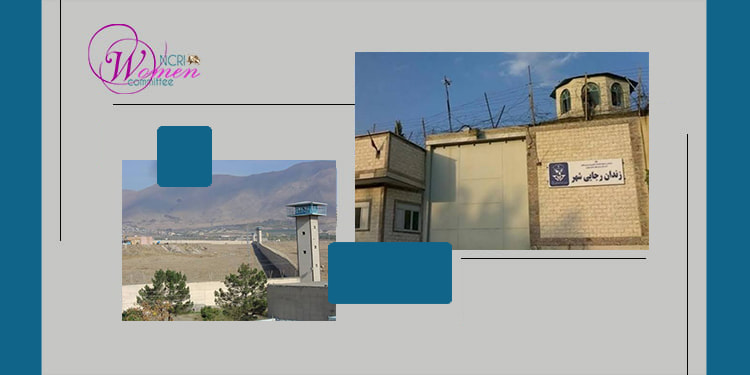
Later I learned this was Gohardasht Prison, newly completed after construction that had begun under the Shah and was finished under Khomeini.

Its roughly one thousand cells had all been filled with prisoners.

When they threw me into my cell, I noticed something terrifying:

At no hour of the day did I hear a single sound from anywhere.

What frightened me most about Gohardasht was the overwhelming feeling that I was completely alone.

Every guard in that ward was a huge, intimidating man whose face radiated hatred, cruelty, and violence. I never felt safe—not even for a moment—to sleep or even sit down.

During the entire two months I spent in that prison as punishment, I remained constantly on alert. I either paced the cell exactly as I had when I first entered or sat silently in a corner, ready for whatever might come.

Sometimes I sensed someone pacing outside my cell door.

The guards all wore sneakers so they could walk silently, hoping to catch prisoners off guard and commit whatever abuse they wished.

But I learned to recognize the sound of their footsteps.

Whenever I heard them approaching, I fixed my eyes on the inspection hatch. When the guard looked through it, he would see that I was awake and fully alert. If he had any vile intentions, I hoped he might think twice.

Even so, on two or three occasions, a depraved guard approached my cell with ill intent. Each time, I drove him away by screaming at the top of my lungs.


[1] Maskouni Ward (literally, “Residential Ward”) was a special punishment unit in Qezel Hesar Prison established under prison chief Haj Davoud Rahmani. Despite its innocuous name, it was designed to isolate, humiliate, and psychologically break political prisoners. Former prisoners have described systematic abuse, prolonged isolation, and, in many cases, sexual violence committed against women held there.


ShareTweetPinShareSendShare

Related Posts

Iran: Political Prisoner Parisa Kamali Denied Medical Care in Yazd Prison

July 23, 2026
Iran: Political Prisoner Parisa Kamali Denied Medical Care in Yazd Prison

Parisa Kamali, an inmate held in Yazd Prison, continues to be denied adequate medical care despite suffering from hyperthyroidism and requiring specialized treatment. Delays in specialist examinations, thyroid...

Read moreDetails

Sahar Bayat

July 23, 2026
Sahar Bayat was killed on January 8, 2026

Sahar Bayat was killed on January 8, 2026, when she was targeted by the regime’s security forces in the Narmak neighborhood of Tehran while returning home with her...

Read moreDetails

The Hidden Victimization and Exploitation of Widows in Iran

July 23, 2026
The Hidden Victimization and Exploitation of Widows in Iran

Exploitation of widows in Iran : Introduction: The survival of the mullahs' regime rests on two fundamental pillars: overt suppression in society and institutionalized misogyny within its laws....

Read moreDetails

Saba Negahban

July 22, 2026
Saba Negahban, known as "Venus," was killed on Friday, January 9, 2026, by direct fire from the regime’s suppressive forces

Saba Negahban, known as "Venus," was killed on Friday, January 9, 2026, by direct fire from the regime’s suppressive forces. Born in 2001, Saba began bodybuilding and fitness...

Read moreDetails

Erased After Loss: The Untold Story of Widows in Iran

July 21, 2026
The Untold Story of Widows in Iran

Inside Iranian Regime's System of Discrimination Against Widows Welcome to another episode of podcasts of the Women's Committee of the National Council of Resistance of Iran. Imagine waking...

Read moreDetails
Next Post
Saba Negahban, known as "Venus," was killed on Friday, January 9, 2026, by direct fire from the regime’s suppressive forces

Saba Negahban

Documents

Call for Immediate Action to Halt the Death Sentence of Arghavan Fallahi

Sign our Statement to Halt the Death Sentence of 25-Year-Old Political Prisoner Arghavan Fallahi

July 10, 2026

Statement Calling for Immediate Action to Halt the Death Sentence of 25-Year-Old Political Prisoner Arghavan Fallahi We express our profound...

The Ineffectiveness of Population Policies in Iran: Economy, Aging, and the Overlooked Rights of Women

The Ineffectiveness of Population Policies in Iran: Economy, Aging, and the Overlooked Rights of Women

July 10, 2026

Abstract: A compilation of official data, media reports, and disclosures published in April, May, and June 2026 demonstrates that Iran...

Crushed by Design: Structural Crises and Inequitable Policies Push Female-Headed Households to the Edge

Crushed by Design: Structural Crises and Inequitable Policies Push Female-Headed Households to the Edge

May 18, 2026

Introduction Life for the Iranian people under the religious dictatorship is fraught with hardship and peril from every perspective. Whether...

Monthlies

June 2026 Report: Working Iranian Women Erased from Labor Market
Monthlies

June 2026 Report: Working Iranian Women Erased from Labor Market

July 5, 2026
May 2026 Report: The Enduring Resistance of Iranian Women
Monthlies

May 2026 Report: The Enduring Resistance of Iranian Women

May 31, 2026
April 2026 Report: Mass Arrests of Women: Targeted Repression in Time of Crisis
Monthlies

April 2026 Report: Mass Arrests of Women in Iran

April 30, 2026
March 2026 Report: How Iranian Women Are Shaping the Resistance
Monthlies

March 2026 Report: Courage Under Fire

April 3, 2026

Articles

The Hidden Victimization and Exploitation of Widows in Iran

The Hidden Victimization and Exploitation of Widows in Iran

July 23, 2026

Exploitation of widows in Iran : Introduction: The survival of the mullahs' regime rests on two fundamental pillars: overt suppression...

Widows in Iran: An Analysis of Legal Challenges and the Structure of Discrimination

Widows in Iran: An Analysis of Legal Challenges and the Structure of Discrimination

July 17, 2026

Introduction: In the political and legal structure governing Iran, misogyny and gender discrimination have been institutionalized as a fundamental principle,...

Iranian Women Trapped by War, Poverty, and Domestic Abuse

Iranian Women Trapped by War, Poverty, and Domestic Abuse

July 14, 2026

The war and intensifying economic crises in recent months have exerted the greatest and most direct pressure on Iranian women,...

The Fallen for Freedom

Sahar Bayat was killed on January 8, 2026
The Fallen for Freedom

Sahar Bayat

July 23, 2026
Saba Negahban, known as "Venus," was killed on Friday, January 9, 2026, by direct fire from the regime’s suppressive forces
The Fallen for Freedom

Saba Negahban

July 22, 2026
Parastou Namavar was fatally shot by Iranian regime forces
The Fallen for Freedom

Parastou Namavar

July 18, 2026
Dina Malek, a 20-year-old woman, was fatally shot by Iranian security forces during the nationwide protests in January 2026
The Fallen for Freedom

Dina Malek

July 16, 2026

ABOUT US

NCRI Women Committee

We work extensively with Iranian women outside the country and maintain a permanent contact with women inside Iran. The Women’s Committee is actively involved with many women’s rights organizations and NGO’s and the Iranian diaspora.
The committee is a major source of much of the information received from inside Iran with regards to women. Attending UN Human Rights Council meetings and other international or regional conferences on women’s issues and engaging in a relentless battle against the Iranian regime’s misogyny are part of the activities of members and associates of the committee.

CATEGORIES

  • Activities
  • Articles
  • Documents
  • Famous Women
  • Heroines in Chain
  • IWD Conferences
  • IWD Speeches
  • IWD Videos
  • Maryam Rajavi
  • Maryam Rajavi Speeches
  • Monthlies
  • Podcast
  • Reference Library
  • Solidarity
  • Statements
  • The Fallen for Freedom
  • Videos
  • Women in History
  • Women in Leadership
  • Women of Iranian Resistance
  • Women's News

BROWSE BY TAG

Child marriage coronavirus education execution forced hijab Gender Gap Generation Equality Honor killings Iran Teachers Maryam Akbari Monfared Nurses Plan on Women's Rights and Freedoms Poverty Prisoners Protests rural women Saba Kord Afshari The girl child Violence against women Women's Leadership Women Heads of Household Zeinab Jalalian

The copyright of all the material published on this website has been registered under © 2016 the Women’s Committee of the National Council of Resistance of Iran. To obtain permission to copy, redistribute or publish the material published on this website, you should write to the NCRI Women’s Committee. Please include the link of the original article on our website, women.ncr-iran.org.

Welcome Back!

Login to your account below

Forgotten Password?

Retrieve your password

Please enter your username or email address to reset your password.

Log In

Add New Playlist

No Result
View All Result
  • Home
  • News
    • Women’s News
    • Articles
    • Statements
  • Publications
    • Monthlies
    • Documents
    • Reference Library
  • About Us
    • The NCRI Women’s Committee
    • Gender Equality
    • Women’s Platform
  • Maryam Rajavi
    • Maryam Rajavi
    • Maryam Rajavi Speeches
    • Ten Point Plan for Iran
    • The Plan on Women’s Rights and Freedoms
  • Vanguards
    • The Fallen for Freedom
    • Heroines in Chain
    • Women of Iranian Resistance
    • Famous Women
    • Women in History
  • Events
    • IWD Conferences
    • Activities
    • IWD Speeches
    • Solidarity
  • Video
    • Videos
    • IWD Videos
  • Podcast
  • DONATE
  • Contact us
  • فارسی
  • عربی
  • Français

The copyright of all the material published on this website has been registered under © 2016 the Women’s Committee of the National Council of Resistance of Iran. To obtain permission to copy, redistribute or publish the material published on this website, you should write to the NCRI Women’s Committee. Please include the link of the original article on our website, women.ncr-iran.org.