
Friday, May 1, 2026
  • English
  • Français
  • فارسی
  • عربى
PODCASTS
NCRI Women Committee Women Resistance Freedom
  • Home
  • NEWS
    • Women’s News
    • Articles
    • Statements
  • PUBLICATIONS
    • Monthlies
    • Documents
    • Reference Library
  • ABOUT US
    • The NCRI Women’s Committee
    • Gender Equality
    • Women’s Platform
  • MARYAM RAJAVI
    • Maryam Rajavi
    • Maryam Rajavi Speeches
    • The Plan on Women’s Rights and Freedoms
    • Ten-Point Plan for the future of Iran
  • VANGUARDS
    • The Fallen for Freedom
    • Heroines in Chain
    • Women of Iranian Resistance
    • Famous Women
    • Women in History
  • EVENTS
    • IWD Conferences
    • Activities
    • IWD Speeches
    • Solidarity
  • VIDEO
    • Videos
    • IWD Videos
  • PODCAST
  • DONATE
  • CONTACT US
No Result
View All Result
NCRI Women Committee Women Resistance Freedom
  • Home
  • NEWS
    • Women’s News
    • Articles
    • Statements
  • PUBLICATIONS
    • Monthlies
    • Documents
    • Reference Library
  • ABOUT US
    • The NCRI Women’s Committee
    • Gender Equality
    • Women’s Platform
  • MARYAM RAJAVI
    • Maryam Rajavi
    • Maryam Rajavi Speeches
    • The Plan on Women’s Rights and Freedoms
    • Ten-Point Plan for the future of Iran
  • VANGUARDS
    • The Fallen for Freedom
    • Heroines in Chain
    • Women of Iranian Resistance
    • Famous Women
    • Women in History
  • EVENTS
    • IWD Conferences
    • Activities
    • IWD Speeches
    • Solidarity
  • VIDEO
    • Videos
    • IWD Videos
  • PODCAST
  • DONATE
  • CONTACT US
No Result
View All Result
NCRI Women Committee
No Result
View All Result
Home Heroines in Chain
Buried Alive in the Boiler Room, by Azam Haj Heydari, Part 4

Buried Alive: Breaking Prisoners in the Boiler Room

April 30, 2026
in Heroines in Chain

Prison Memoirs of Azam Haj Heydari from the book The Price of Being Human – Part Four

In this installment of Azam Haj Heydari’s prison memoirs, published in The Price of Being Human, the author recounts her confinement in the prison boiler room and later in the Judiciary Prison—spaces deliberately designed to degrade and break prisoners under inhumane conditions.

At the time, Azam was a young teacher in her early twenties who had stepped onto the path of resistance. She spent five years in detention centers and prisons, including the Judiciary Detention Center, Evin, Qezel Hesar, and Gohardasht, where she endured brutal torture at the hands of Khomeini’s Guards.

The Prison Boiler Room

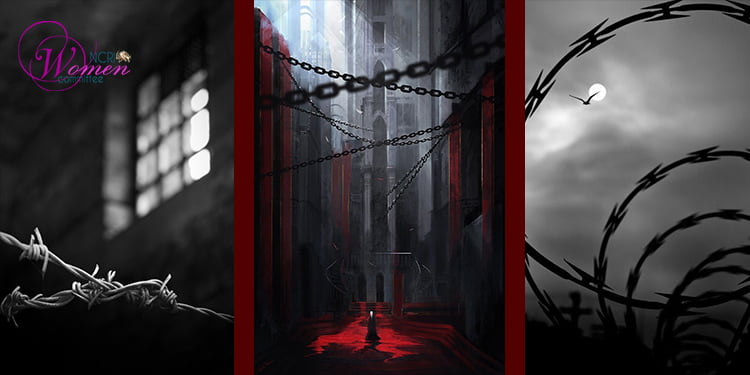
For twenty days, I didn’t even know which prison I was in. They didn’t take me to a regular cell. Instead, they threw me into the prison’s boiler room, a cramped, dark, filthy space unfit even for keeping animals.

It was a tiny chamber crawling with vermin—rats, cockroaches, and other pests—where there was no possibility of basic living. Black, foul-smelling water flowed across the floor. The air was suffocatingly hot. The summer heat of Tehran, combined with the heat, fumes, and smoke from the machinery, made the environment unbearable.

On top of all that, the room was pitch-dark and filled with the constant, deafening roar of engines and equipment. It was a place that stripped away even the smallest possibility of rest. Worst of all, no matter how much I shouted or pounded on the door, no one responded.

In that space, I couldn’t sit, couldn’t lie down, couldn’t even eat. After two days of hunger, they threw some kind of food at me in a filthy, dented tin container. They weren’t feeding me—they were trying to humiliate me, to break me, to force me into submission by treating me like an animal.

I refused to eat. For the entire week I was there, I didn’t touch the food. I survived only by drinking a little water from a tap in the room.

Despite becoming physically weak, I kept repeating to myself: “Enemy of humanity, I will never surrender!” That phrase became my source of strength.

After a week, the interrogators came and took me—blindfolded—to another location for questioning. There, they tried to terrify me into submission. One would grab my arm and say, “Watch out, you’ll fall! Don’t hit the wall! Walk slowly!” Others whispered ominously about the terrible fate awaiting me. They said things like, “Don’t worry, we’ll give you water before your execution,” while blasting the sounds of screams, cries, and tortured prisoners.

“This is the fate of all dissidents,” they said. “But you can still save yourself.”

After a while, I realized that my sister Mahin was being interrogated somewhere nearby. They were demanding information about me—from her—while I was already in their hands.

Transfer to Judiciary Prison: Filth and Disease

After a series of interrogations, I was transferred to the Judiciary Prison cells, which housed ordinary inmates, many arrested for drug-related charges. The environment there was extremely filthy and contaminated.

Within a week, due to the complete lack of hygiene, I developed a severe skin infection and fungal disease. During the twenty days I spent there, we were not taken to showers even once. We had no change of clothes and no access to basic hygiene supplies. We couldn’t even wash the clothes we were wearing. Filth was everywhere.

If one person got sick, the illness quickly spread to others. Skin infections were rampant. My condition became so severe that my legs developed open sores, and I could barely walk. I had to sit all day with my legs stretched out to prevent them from rubbing together and worsening the wounds.

The guards saw my condition, but when I asked for something as basic as soap, they ignored me. Every time I requested even the simplest necessity, they gave the same response:

“First say who you are. Then we’ll decide what to do with you. Maybe we’ll give you something, maybe not. If you’re one of them, you deserve to die. If you’re not, then say so!”

This was their answer to everything.

The Old Woman in the Cell

Our ward, as I mentioned, had previously held ordinary prisoners, but they had been removed before we arrived. Only one woman remained in a cell across from mine.

She had a deeply worn, sorrowful face. She looked seventy or eighty, but she was no more than fifty.

From morning to night, she clung to the bars of her cell, crying. I tried several times to speak with her through the bars—asking why she had been imprisoned—but she didn’t answer. I asked her name—still nothing. She only cried.

Eventually, the sound of her grief broke me too. I found myself crying along with her. She had been abandoned in that cell, completely alone, with no one paying her any attention.

Once a day, a guard would come—not to help her, but to hurl the most degrading insults. “You old hag, stay here until you die,” he would say. “You’ve lived too long already. This is what you deserve—unless you talk!”

After many attempts to reach her, she finally agreed to speak. When I asked what she had done, she said: “My child, no one has believed me—why would you?”

I insisted, and she finally told me: “They’ve accused my son-in-law of theft because he resigned from the committee[1] and supports the opposition. They’ve fabricated a case against him. Now they’re saying I helped him escape and that I know where he is. I’ve been here for four months. He’s in hiding. Every day they insult me—you hear it yourself. They tell me to reveal his whereabouts if I want to be freed.”

She continued: “In these four months, they’ve taken me to the bath only three times. My whole body is infested with lice.”

To be continued…


[1] Committee or Komiteh was an organization founded after the 1979 Revolution that served as substitutes for some of the governmental institutions no longer functioning after the fall of the shah, such as security and police.

ShareTweetPinShareSendShare

Related Posts

April 2026 Report: Mass Arrests of Women

April 30, 2026
April 2026 Report: Mass Arrests of Women: Targeted Repression in Time of Crisis

April 2026 Report: Mass Arrests of Women: Targeted Repression in Time of Crisis April saw a surging wave of mass arrests and targeted repression against Iranian women, marking...

Read moreDetails

Iranian Regime Executes 24-Year-Old Woman Victim of Forced Marriage

April 29, 2026
Iranian Regime Executes 24-Year-Old Woman Forced into Child Marriage

A 24-year-old woman and victim of forced marriage has been executed in Tabriz Central Prison. Hanifeh Avandi, a 24-year-old Turk woman from Tabriz, was executed on Sunday, April...

Read moreDetails

O Mothers of Iran: A Manifesto of Unyielding Resistance to Misogynistic Barbarity

April 28, 2026
O Mothers of Iran: A Manifesto of Unyielding Resistance

Through the deeply moving story of the Ebrahimpour family, Massoumeh Raouf delivers, with Ô Mères d’Iran (O Mothers of Iran), a masterful work that transforms grief into an...

Read moreDetails

Female Inmates Join Week 118 of Hunger Strike Despite Threats

April 28, 2026
Female Inmates Join Week 118 of Hunger Strike Despite Threats

Female Inmates Join Week 118 of Hunger Strike Despite Threats The “No to Executions Tuesdays” campaign has announced that, in its 118th consecutive week, prisoners in 56 facilities...

Read moreDetails

Iran Regime Sentences Third Woman to Death Over Protests

April 26, 2026
Iran Regime Sentences Third Woman to Death Over Protests

Iran regime has sentenced Maryam Hodavand, a 45-year-old political prisoner held in women’s ward of Evin Prison, to death for her involvement in the January 2026 nationwide protests.She has...

Read moreDetails

Documents

A Report to CSW70: Gender-Based Discrimination Under Iranian Law

A Report to CSW70: Gender-Based Discrimination Under Iranian Law

March 8, 2026

Structural Inequality and State-Sanctioned Oppression of Women Gender-Based Discrimination Under Iranian Law” is the title of the NCRI Women’s Committee’s...

Annual Report 2026: From Protests, to Uprising, and the Role of Iranian Women

Annual Report 2026: From Protests, to Uprising, and the Role of Iranian Women

March 3, 2026

On the eve of International Women’s Day 2026, the NCRI Women’s Committee presents its Annual Report 2026, offering a recap...

Iranian women Who Lost Their Lives in Iran’s January 2026 Uprising

Iranian Women Who Lost Their Lives in Iran’s January 2026 Uprising

January 25, 2026

Names That Must Not Be Forgotten Iranian women played a central and courageous role in the January 2026 uprising, standing...

Monthlies

April 2026 Report: Mass Arrests of Women: Targeted Repression in Time of Crisis
Monthlies

April 2026 Report: Mass Arrests of Women

April 30, 2026
March 2026 Report: How Iranian Women Are Shaping the Resistance
Monthlies

March 2026 Report: Courage Under Fire

April 3, 2026
January 2026 Report: Women at the Core of the Uprising
Monthlies

January 2026 Report: Women at the Core of the Uprising

January 31, 2026
December 2025 Report: A Year in Review: Iranian Women’s Resistance Against Religious Dictatorship
Monthlies

December 2025 Report: A Year in Review: Iranian Women’s Resistance Against Religious Dictatorship

January 5, 2026

Articles

O Mothers of Iran: A Manifesto of Unyielding Resistance

O Mothers of Iran: A Manifesto of Unyielding Resistance to Misogynistic Barbarity

April 28, 2026

Through the deeply moving story of the Ebrahimpour family, Massoumeh Raouf delivers, with Ô Mères d’Iran (O Mothers of Iran),...

Iran detains women and girls: torture and detention without legal clarity

Iran Regime Arrests Women and Girls: Torture and Detention without Legal Clarity

April 22, 2026

Amid a growing wave of arrests targeting women and teenage girls across multiple Iranian cities, numerous reports have emerged detailing...

Wave of Arrests Targeting Women and Minors Amid Wartime in Iran

Wave of Arrests Targeting Women and Minors Amid Wartime in Iran

April 10, 2026

Following an intensified crackdown amid the recent war, multiple reports indicate a sharp rise in arrests across Iran, with women...

The Fallen for Freedom

Sholeh Sotoudeh (Pregnant)
The Fallen for Freedom

Sholeh Sotoudeh “Shot Dead Alongside Her Unborn Child”

April 19, 2026
Ghazal Aghaei Lindi was killed on January 9, 2026
The Fallen for Freedom

Ghazal Aghaei Lindi

April 16, 2026
Farzaneh Tavakkoli, a resident of Arak, was killed on January 9, 2026
The Fallen for Freedom

Farzaneh Tavakkoli

April 13, 2026
Shabnam Ferdowsi was killed on January 8, 2026, during the nationwide protests
The Fallen for Freedom

Shabnam Ferdowsi

April 12, 2026

ABOUT US

NCRI Women Committee

We work extensively with Iranian women outside the country and maintain a permanent contact with women inside Iran. The Women’s Committee is actively involved with many women’s rights organizations and NGO’s and the Iranian diaspora.
The committee is a major source of much of the information received from inside Iran with regards to women. Attending UN Human Rights Council meetings and other international or regional conferences on women’s issues and engaging in a relentless battle against the Iranian regime’s misogyny are part of the activities of members and associates of the committee.

CATEGORIES

  • Activities
  • Articles
  • Documents
  • Famous Women
  • Heroines in Chain
  • IWD Conferences
  • IWD Speeches
  • IWD Videos
  • Maryam Rajavi
  • Maryam Rajavi Speeches
  • Monthlies
  • Podcast
  • Reference Library
  • Solidarity
  • Statements
  • The Fallen for Freedom
  • Videos
  • Women in History
  • Women in Leadership
  • Women of Iranian Resistance
  • Women's News

BROWSE BY TAG

Child marriage coronavirus education execution forced hijab Gender Gap Generation Equality Honor killings Iran Teachers Maryam Akbari Monfared Nurses Plan on Women's Rights and Freedoms Poverty Prisoners Protests rural women Saba Kord Afshari The girl child Violence against women Women's Leadership Women Heads of Household Zeinab Jalalian

The copyright of all the material published on this website has been registered under © 2016 the Women’s Committee of the National Council of Resistance of Iran. To obtain permission to copy, redistribute or publish the material published on this website, you should write to the NCRI Women’s Committee. Please include the link of the original article on our website, women.ncr-iran.org.

Welcome Back!

Login to your account below

Forgotten Password?

Retrieve your password

Please enter your username or email address to reset your password.

Log In

Add New Playlist

No Result
View All Result
  • Home
  • News
    • Women’s News
    • Articles
    • Statements
  • Publications
    • Monthlies
    • Documents
    • Reference Library
  • About Us
    • The NCRI Women’s Committee
    • Gender Equality
    • Women’s Platform
  • Maryam Rajavi
    • Maryam Rajavi
    • Maryam Rajavi Speeches
    • Ten Point Plan for Iran
    • The Plan on Women’s Rights and Freedoms
  • Vanguards
    • The Fallen for Freedom
    • Heroines in Chain
    • Women of Iranian Resistance
    • Famous Women
    • Women in History
  • Events
    • IWD Conferences
    • Activities
    • IWD Speeches
    • Solidarity
  • Video
    • Videos
    • IWD Videos
  • Podcast
  • Donate
  • Contact us
  • فارسی
  • عربی
  • Français

The copyright of all the material published on this website has been registered under © 2016 the Women’s Committee of the National Council of Resistance of Iran. To obtain permission to copy, redistribute or publish the material published on this website, you should write to the NCRI Women’s Committee. Please include the link of the original article on our website, women.ncr-iran.org.