
Thursday, June 18, 2026
  • English
  • Français
  • فارسی
  • عربى
PODCASTS
NCRI Women Committee Women Resistance Freedom
  • Home
  • NEWS
    • Women’s News
    • Articles
    • Statements
  • PUBLICATIONS
    • Monthlies
    • Documents
    • Reference Library
  • ABOUT US
    • The NCRI Women’s Committee
    • Gender Equality
    • Women’s Platform
  • MARYAM RAJAVI
    • Maryam Rajavi
    • Maryam Rajavi Speeches
    • The Plan on Women’s Rights and Freedoms
    • Ten-Point Plan for the future of Iran
  • VANGUARDS
    • The Fallen for Freedom
    • Heroines in Chain
    • Women of Iranian Resistance
    • Famous Women
    • Women in History
  • EVENTS
    • IWD Conferences
    • Activities
    • IWD Speeches
    • Solidarity
  • VIDEO
    • Videos
    • IWD Videos
  • PODCAST
  • DONATE
  • CONTACT US
No Result
View All Result
NCRI Women Committee Women Resistance Freedom
  • Home
  • NEWS
    • Women’s News
    • Articles
    • Statements
  • PUBLICATIONS
    • Monthlies
    • Documents
    • Reference Library
  • ABOUT US
    • The NCRI Women’s Committee
    • Gender Equality
    • Women’s Platform
  • MARYAM RAJAVI
    • Maryam Rajavi
    • Maryam Rajavi Speeches
    • The Plan on Women’s Rights and Freedoms
    • Ten-Point Plan for the future of Iran
  • VANGUARDS
    • The Fallen for Freedom
    • Heroines in Chain
    • Women of Iranian Resistance
    • Famous Women
    • Women in History
  • EVENTS
    • IWD Conferences
    • Activities
    • IWD Speeches
    • Solidarity
  • VIDEO
    • Videos
    • IWD Videos
  • PODCAST
  • DONATE
  • CONTACT US
No Result
View All Result
NCRI Women Committee
No Result
View All Result
Home Heroines in Chain
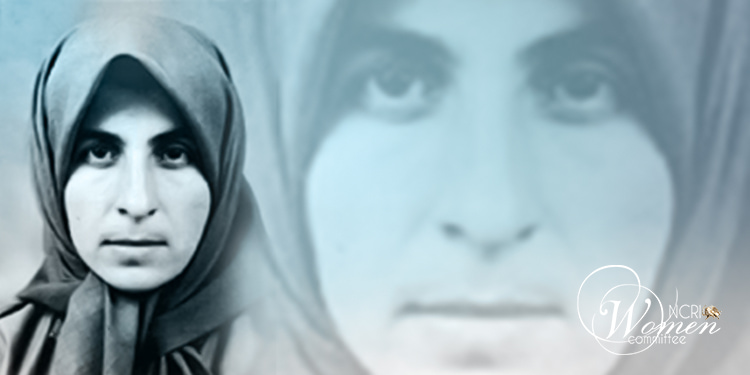
In Memory of Shahnaz Ehsanian, a Comrade from the Prison Years

Shahnaz Ehsanian

In Memory of Shahnaz Ehsanian, a Comrade from the Prison Years

December 21, 2025
in Heroines in Chain

Memoirs of Mehri Hajinejad from “The Last Laughter of Leila”— Part Fifteen

In the previous two installments of Mehri Hajinejad’s prison memoirs from The Last Laughter of Leila, the author, who was a teenage high school student at the time, recounted the harrowing experience of standing just one step away from execution by firing squad. In this installment, Mehri turns her focus to one of her companions from those prison years, Shahnaz Ehsanian[1], and introduces us to this strong woman and her character.

Risking Ourselves to Obtain News

Toward the end of 1984, a large number of sentenced prisoners were transferred to Ghezel Hesar Prison[2] or to prisons in other cities. As a result, the one-hundred-person rooms of Evin Prison were reduced to around forty-five to fifty prisoners, and compared to 1982, we had more space and air. This was despite the fact that during the Shah’s era, no more than ten to fifteen prisoners had been held in these same rooms. [3]

During this period, almost no new prisoners were brought into the ward, and sometimes weeks would pass without news from anywhere. One day we said: let’s do something that forces them, even if as punishment, to summon one of us for interrogation, so we can find out what’s happening in the interrogation branches[4]: whether anyone new has been arrested, so we might get some news of the Organization through them.

God bless Shahnaz Ehsanian, who was famous among the women prisoners for her cheerfulness and high spirits. She said, “Today I’ll do something at lunch, so the informers report me, and they’ll call me in for interrogation.” And that’s exactly what she did.

At lunchtime, she picked up the Tahdig (pot crust)[5] and threw it into the air, shouting, “What kind of food is this?” That was enough. The day after next, Shahnaz was summoned for interrogation. When her name was called, we all burst out laughing; it was clear our trick had worked. Even though we knew Shahnaz would be the one to pay the price. Still, it was worth it for one of us to take a few lashes[6] if it meant getting news from outside.

They kept Shahnaz standing upright in Branch Four[7] until late at night. When she kept asking the interrogator why she had been summoned, he responded by punching her in the head and saying, “You know very well why we called you.” In the end, after landing several punches and kicks, he warned her: “I don’t want to see you criticizing the food again. You wouldn’t be thinking of starting a hunger strike, would you? Try this one more time and we’ll send you to solitary confinement.”[8]

When Shahnaz returned, she told us that several people had been arrested while trying to cross the border.[9] Among them was a woman named Jamileh, originally from northern Iran, who had been released from prison in 1982. Some prisoners had also been brought from Ghezel Hesar back to Evin for interrogation.

No matter how much we thought about it, we couldn’t understand why prisoners would be brought from Ghezel Hesar back to Evin for interrogation. Was it because some of them shared case files with others,[10] and everyone was wondering why their co-defendant had returned to Evin? Later we learned that, due to the so-called “prison organization” scheme and the brutalities that Lajevardi[11] and Rahmani[12] had unleashed in Ghezel Hesar, some of our sisters were dragged back into interrogation once again.

This wasn’t the last time we used this method to gather information.

Another time, Mehri said, “This time I want to go see what’s happening.” She had developed many dark spots in her vision due to liver problems and had become very thin. Jokingly, she repeatedly said in the middle of the room, “Our house was next to a slaughterhouse; you wouldn’t believe the scenes of slaughter people used to see.” The collaborator informers[13] thought she was signaling something coded and immediately reported her. The next day, Mehri’s name was called for interrogation, and exactly the same scenario as Shahnaz’s played out. They were fools and didn’t realize we were doing this deliberately.

Shahnaz Ehsanian

Shahnaz Ehsanian was born into a deprived working-class family in Babol and was active in the Mojahedin neighborhood networks in Tehran. I met her in 1981 after they opened the doors of our rooms in Ward 240 (upper).[14] Shahnaz was vibrant and full of energy. Every ten to fifteen days, she would be summoned, beaten with cables, and return. Honestly, I never asked about her case, so I don’t know why she was tortured so relentlessly. But every time she came back from interrogation, smiling, she would sing:

“Nazeli, speak—
Nazeli did not speak…”[15]

I always shared two things with Shahnaz: one was singing revolutionary songs and organizing commemorations such as June 20[16] and February 8,[17] and the other was walking together after meals. During those walks, we talked about our dreams of joining the Organization and reminisced about the hopeful days of open political activity.[18]

In 1984, Shahnaz and I were separated, and she was transferred to Ghezel Hesar. In 1986, I saw her there again. We made a pact: whoever was released first would arrange the means to leave the country and reconnect with the Organization, so the others could follow. When I was released, this responsibility fell on me—but she was released just one month later, and in the end, we traveled together.

Shahnaz was wounded during Operation Forty Stars,[19] yet despite her injuries and at her own insistence, she took part in Operation Eternal Light,[20] where she was slain.

Shahnaz would always recite this poem whenever she found the chance:

I swore to you, O love,
That I would stake my life for you, O love.
A life is worth nothing on a lesser path,
It is too small a gift, O love…


[1] Shahnaz Ehsanian was from Babol and was active in Mojahedin neighborhood networks in Tehran. Arrested in 1981, her steadfast and spirited presence in prison deeply affected fellow prisoners. After enduring five years of imprisonment and torture, she was released in late October 1986, immediately joined the National Liberation Army, and was killed in 1988 during Operation Eternal Light.

[2] Ghezel Hesar Prison, a notorious prison near Karaj, infamous for executions and torture.

[3] Refers to imprisonment practices during the Pahlavi monarchy (before 1979).

[4] Interrogation branches operated by the Iranian security apparatus.

[5] Tahdig, the crispy rice at the bottom of a pot, culturally prized in Iranian cuisine.

[6] Cable lashes (kabel) were a common torture method in Iranian prisons.

[7] Branch Four was one of the interrogation units in Evin Prison.

[8] Solitary confinement, commonly used as punishment and psychological torture.

[9] Refers to attempts by activists to flee Iran or join opposition forces abroad.

[10] “Shared case file” refers to defendants tried under the same prosecution dossier.

[11] Asadollah Lajevardi, notorious prison official known as the “Butcher of Evin.”

[12] Davoud Rahmani, another senior prison official associated with torture and repression.

[13] A prisoner collaborator who informed on fellow inmates.

[14] Ward 240, an internal section of Evin Prison.

[15] A line from a poem by renowned Iranian poet, Ahmad Shamlou.

[16] June 20, 1981, the start of mass repression against the Mojahedin.

[17] February 8, 1982, marking the killing of Mousa Khiabani and others.

[18] The brief post-revolution period when political activity was still possible.

[19] Operation Forty Stars (Chelcheraq) (June 1988), a PMOI military operation.

[20] Operation Forough Javidan (July 1988), known in English as Eternal Light.
ShareTweetPinShareSendShare

Related Posts

Iran: Baluch Protest Suppressed in Kerman; Women Beaten and Arrested

June 17, 2026
Iran: Baluch Protest Suppressed in Kerman; Women Beaten and Arrested

KERMAN, Iran _ Baluch Protest — On Wednesday, June 17, 2026, the Iranian regime’s repressive military forces violently attacked a peaceful protest by Baluch residents in Pashmoki village,...

Read moreDetails

Water Crisis in Iran: Women Bear the Brunt of Escalating Shortages

June 16, 2026
Water Crisis in Iran: Women Bear the Brunt of Escalating Shortages

From securing family water to coping with poverty and migration, women are the primary victims of Iran’s escalating water crisis. The water crisis in Iran is no longer...

Read moreDetails

125th Week of the “No to Execution Tuesdays” Campaign: Hunger Strike Across 56 Prisons

June 16, 2026
125th Week of the “No to Execution Tuesdays” Campaign: Hunger Strike Across 56 Prisons

The “No to Execution Tuesdays” campaign continued into its 125th week on Tuesday, June 16, 2026, with political prisoners in 56 prisons across Iran participating in a hunger...

Read moreDetails

Feminization of Poverty in Iran Under War and Inflation

June 15, 2026
Feminization of Poverty in Iran Under War and Inflation

Iranian Women's Share of the International Day of Family Remittances; Feminization of poverty in Iran under the shadow of inflation. June 16 has been designated by the United...

Read moreDetails

Iran: Critical Situation of Women Detained During Nationwide Protests

June 15, 2026
Iran: Critical Situation of Women Detained During Nationwide Protests

Reports indicate a worsening situation of the women detained in Langroud Prison in Qom, a facility that has become one of the main detention centers for women arrested...

Read moreDetails
Next Post
Millicent Fawcett: The Steady Voice That Won Britain’s Women the Vote

Millicent Fawcett: The Steady Voice That Won Britain’s Women the Vote

Documents

Crushed by Design: Structural Crises and Inequitable Policies Push Female-Headed Households to the Edge

Crushed by Design: Structural Crises and Inequitable Policies Push Female-Headed Households to the Edge

May 18, 2026

Introduction Life for the Iranian people under the religious dictatorship is fraught with hardship and peril from every perspective. Whether...

A Report to CSW70: Gender-Based Discrimination Under Iranian Law

A Report to CSW70: Gender-Based Discrimination Under Iranian Law

March 8, 2026

Structural Inequality and State-Sanctioned Oppression of Women Gender-Based Discrimination Under Iranian Law” is the title of the NCRI Women’s Committee’s...

Annual Report 2026: From Protests, to Uprising, and the Role of Iranian Women

Annual Report 2026: From Protests, to Uprising, and the Role of Iranian Women

March 3, 2026

On the eve of International Women’s Day 2026, the NCRI Women’s Committee presents its Annual Report 2026, offering a recap...

Monthlies

May 2026 Report: The Enduring Resistance of Iranian Women
Monthlies

May 2026 Report: The Enduring Resistance of Iranian Women

May 31, 2026
April 2026 Report: Mass Arrests of Women: Targeted Repression in Time of Crisis
Monthlies

April 2026 Report: Mass Arrests of Women in Iran

April 30, 2026
March 2026 Report: How Iranian Women Are Shaping the Resistance
Monthlies

March 2026 Report: Courage Under Fire

April 3, 2026
January 2026 Report: Women at the Core of the Uprising
Monthlies

January 2026 Report: Women at the Core of the Uprising

January 31, 2026

Articles

Water Crisis in Iran: Women Bear the Brunt of Escalating Shortages

Water Crisis in Iran: Women Bear the Brunt of Escalating Shortages

June 16, 2026

From securing family water to coping with poverty and migration, women are the primary victims of Iran’s escalating water crisis....

Feminization of Poverty in Iran Under War and Inflation

Feminization of Poverty in Iran Under War and Inflation

June 15, 2026

Iranian Women's Share of the International Day of Family Remittances; Feminization of poverty in Iran under the shadow of inflation....

Iranian Women on the Hidden Front of the War in Iran

Iranian Women on the Hidden Front of the War in Iran

June 12, 2026

Bearing Unequal Burdens Across Livelihoods, Health, and Education in the Recent Conflict The recent war in Iran does not unfold...

The Fallen for Freedom

Shilan Salehi: Iran Regime Extorted 150 Million Tomans for Return of Her Body
The Fallen for Freedom

Shilan Salehi: Iran Regime Extorted 150 Million Tomans for Return of Her Body

June 13, 2026
Parnia Shad Bejarkenari: 23-Year-Old Woman Killed for Freedom in Iran
The Fallen for Freedom

Parnia Shad Bejarkenari: 23-Year-Old Woman Killed for Freedom in Iran

June 13, 2026
Nasim Pouraghaei was killed on the evening of January 8, 2026
The Fallen for Freedom

Nasim Pouraghaei

June 6, 2026
Setayesh Shafiei, The Girl Who Was the Sun
The Fallen for Freedom

Setayesh Shafiei, The Girl Who Was the Sun

June 4, 2026

ABOUT US

NCRI Women Committee

We work extensively with Iranian women outside the country and maintain a permanent contact with women inside Iran. The Women’s Committee is actively involved with many women’s rights organizations and NGO’s and the Iranian diaspora.
The committee is a major source of much of the information received from inside Iran with regards to women. Attending UN Human Rights Council meetings and other international or regional conferences on women’s issues and engaging in a relentless battle against the Iranian regime’s misogyny are part of the activities of members and associates of the committee.

CATEGORIES

  • Activities
  • Articles
  • Documents
  • Famous Women
  • Heroines in Chain
  • IWD Conferences
  • IWD Speeches
  • IWD Videos
  • Maryam Rajavi
  • Maryam Rajavi Speeches
  • Monthlies
  • Podcast
  • Reference Library
  • Solidarity
  • Statements
  • The Fallen for Freedom
  • Videos
  • Women in History
  • Women in Leadership
  • Women of Iranian Resistance
  • Women's News

BROWSE BY TAG

Child marriage coronavirus education execution forced hijab Gender Gap Generation Equality Honor killings Iran Teachers Maryam Akbari Monfared Nurses Plan on Women's Rights and Freedoms Poverty Prisoners Protests rural women Saba Kord Afshari The girl child Violence against women Women's Leadership Women Heads of Household Zeinab Jalalian

The copyright of all the material published on this website has been registered under © 2016 the Women’s Committee of the National Council of Resistance of Iran. To obtain permission to copy, redistribute or publish the material published on this website, you should write to the NCRI Women’s Committee. Please include the link of the original article on our website, women.ncr-iran.org.

Welcome Back!

Login to your account below

Forgotten Password?

Retrieve your password

Please enter your username or email address to reset your password.

Log In

Add New Playlist

No Result
View All Result
  • Home
  • News
    • Women’s News
    • Articles
    • Statements
  • Publications
    • Monthlies
    • Documents
    • Reference Library
  • About Us
    • The NCRI Women’s Committee
    • Gender Equality
    • Women’s Platform
  • Maryam Rajavi
    • Maryam Rajavi
    • Maryam Rajavi Speeches
    • Ten Point Plan for Iran
    • The Plan on Women’s Rights and Freedoms
  • Vanguards
    • The Fallen for Freedom
    • Heroines in Chain
    • Women of Iranian Resistance
    • Famous Women
    • Women in History
  • Events
    • IWD Conferences
    • Activities
    • IWD Speeches
    • Solidarity
  • Video
    • Videos
    • IWD Videos
  • Podcast
  • Donate
  • Contact us
  • فارسی
  • عربی
  • Français

The copyright of all the material published on this website has been registered under © 2016 the Women’s Committee of the National Council of Resistance of Iran. To obtain permission to copy, redistribute or publish the material published on this website, you should write to the NCRI Women’s Committee. Please include the link of the original article on our website, women.ncr-iran.org.