
Memoirs of Mehri Hajinejad from “The Last Laughter of Leila”— Part Fifteen
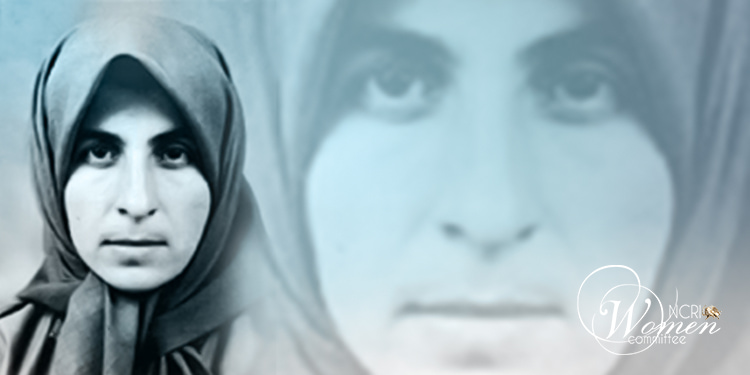
In the previous two installments of Mehri Hajinejad’s prison memoirs from The Last Laughter of Leila, the author, who was a teenage high school student at the time, recounted the harrowing experience of standing just one step away from execution by firing squad. In this installment, Mehri turns her focus to one of her companions from those prison years, Shahnaz Ehsanian[1], and introduces us to this strong woman and her character.
Risking Ourselves to Obtain News
Toward the end of 1984, a large number of sentenced prisoners were transferred to Ghezel Hesar Prison[2] or to prisons in other cities. As a result, the one-hundred-person rooms of Evin Prison were reduced to around forty-five to fifty prisoners, and compared to 1982, we had more space and air. This was despite the fact that during the Shah’s era, no more than ten to fifteen prisoners had been held in these same rooms. [3]
During this period, almost no new prisoners were brought into the ward, and sometimes weeks would pass without news from anywhere. One day we said: let’s do something that forces them, even if as punishment, to summon one of us for interrogation, so we can find out what’s happening in the interrogation branches[4]: whether anyone new has been arrested, so we might get some news of the Organization through them.
God bless Shahnaz Ehsanian, who was famous among the women prisoners for her cheerfulness and high spirits. She said, “Today I’ll do something at lunch, so the informers report me, and they’ll call me in for interrogation.” And that’s exactly what she did.
At lunchtime, she picked up the Tahdig (pot crust)[5] and threw it into the air, shouting, “What kind of food is this?” That was enough. The day after next, Shahnaz was summoned for interrogation. When her name was called, we all burst out laughing; it was clear our trick had worked. Even though we knew Shahnaz would be the one to pay the price. Still, it was worth it for one of us to take a few lashes[6] if it meant getting news from outside.
They kept Shahnaz standing upright in Branch Four[7] until late at night. When she kept asking the interrogator why she had been summoned, he responded by punching her in the head and saying, “You know very well why we called you.” In the end, after landing several punches and kicks, he warned her: “I don’t want to see you criticizing the food again. You wouldn’t be thinking of starting a hunger strike, would you? Try this one more time and we’ll send you to solitary confinement.”[8]
When Shahnaz returned, she told us that several people had been arrested while trying to cross the border.[9] Among them was a woman named Jamileh, originally from northern Iran, who had been released from prison in 1982. Some prisoners had also been brought from Ghezel Hesar back to Evin for interrogation.
No matter how much we thought about it, we couldn’t understand why prisoners would be brought from Ghezel Hesar back to Evin for interrogation. Was it because some of them shared case files with others,[10] and everyone was wondering why their co-defendant had returned to Evin? Later we learned that, due to the so-called “prison organization” scheme and the brutalities that Lajevardi[11] and Rahmani[12] had unleashed in Ghezel Hesar, some of our sisters were dragged back into interrogation once again.
This wasn’t the last time we used this method to gather information.
Another time, Mehri said, “This time I want to go see what’s happening.” She had developed many dark spots in her vision due to liver problems and had become very thin. Jokingly, she repeatedly said in the middle of the room, “Our house was next to a slaughterhouse; you wouldn’t believe the scenes of slaughter people used to see.” The collaborator informers[13] thought she was signaling something coded and immediately reported her. The next day, Mehri’s name was called for interrogation, and exactly the same scenario as Shahnaz’s played out. They were fools and didn’t realize we were doing this deliberately.
Shahnaz Ehsanian
Shahnaz Ehsanian was born into a deprived working-class family in Babol and was active in the Mojahedin neighborhood networks in Tehran. I met her in 1981 after they opened the doors of our rooms in Ward 240 (upper).[14] Shahnaz was vibrant and full of energy. Every ten to fifteen days, she would be summoned, beaten with cables, and return. Honestly, I never asked about her case, so I don’t know why she was tortured so relentlessly. But every time she came back from interrogation, smiling, she would sing:
“Nazeli, speak—
Nazeli did not speak…”[15]
I always shared two things with Shahnaz: one was singing revolutionary songs and organizing commemorations such as June 20[16] and February 8,[17] and the other was walking together after meals. During those walks, we talked about our dreams of joining the Organization and reminisced about the hopeful days of open political activity.[18]
In 1984, Shahnaz and I were separated, and she was transferred to Ghezel Hesar. In 1986, I saw her there again. We made a pact: whoever was released first would arrange the means to leave the country and reconnect with the Organization, so the others could follow. When I was released, this responsibility fell on me—but she was released just one month later, and in the end, we traveled together.
Shahnaz was wounded during Operation Forty Stars,[19] yet despite her injuries and at her own insistence, she took part in Operation Eternal Light,[20] where she was slain.
Shahnaz would always recite this poem whenever she found the chance:
I swore to you, O love,
That I would stake my life for you, O love.
A life is worth nothing on a lesser path,
It is too small a gift, O love…
[1] Shahnaz Ehsanian was from Babol and was active in Mojahedin neighborhood networks in Tehran. Arrested in 1981, her steadfast and spirited presence in prison deeply affected fellow prisoners. After enduring five years of imprisonment and torture, she was released in late October 1986, immediately joined the National Liberation Army, and was killed in 1988 during Operation Eternal Light.
[2] Ghezel Hesar Prison, a notorious prison near Karaj, infamous for executions and torture.
[3] Refers to imprisonment practices during the Pahlavi monarchy (before 1979).
[4] Interrogation branches operated by the Iranian security apparatus.
[5] Tahdig, the crispy rice at the bottom of a pot, culturally prized in Iranian cuisine.
[6] Cable lashes (kabel) were a common torture method in Iranian prisons.
[7] Branch Four was one of the interrogation units in Evin Prison.
[8] Solitary confinement, commonly used as punishment and psychological torture.
[9] Refers to attempts by activists to flee Iran or join opposition forces abroad.
[10] “Shared case file” refers to defendants tried under the same prosecution dossier.
[11] Asadollah Lajevardi, notorious prison official known as the “Butcher of Evin.”
[12] Davoud Rahmani, another senior prison official associated with torture and repression.
[13] A prisoner collaborator who informed on fellow inmates.
[14] Ward 240, an internal section of Evin Prison.
[15] A line from a poem by renowned Iranian poet, Ahmad Shamlou.
[16] June 20, 1981, the start of mass repression against the Mojahedin.
[17] February 8, 1982, marking the killing of Mousa Khiabani and others.
[18] The brief post-revolution period when political activity was still possible.
[19] Operation Forty Stars (Chelcheraq) (June 1988), a PMOI military operation.
[20] Operation Forough Javidan (July 1988), known in English as Eternal Light.