

Marking the International Labor Day 2025
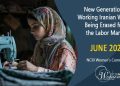
Female workers in Iran, with calloused hands and exhausted bodies, carry the burden of the gender and social inequalities imposed by the clerical regime.
While in the legal system of the clerical regime, women are not recognized as household breadwinners, these women are forced to work long hours beyond the standard working hours in production workshops. In the late evening, they return home to care for their children and ailing family members, carrying out household duties despite their exhaustion.
An Overview of the Situation of Female Workers in Iran
There are no accurate statistics on the number of female workers in Iran, and the available incomplete data is based on the number of workers under the coverage of government agencies.
While many female workers are in informal jobs or home-based occupations, they are the most affected. These workers are often employed under vague or pre-signed blank contracts,[1] often earning less than the legal minimum wage. (Empowerment of the Government and Society Website – February 8, 2022)
Problems and Challenges Faced by Female Workers
Unfair Wages and the Gender Pay Gap
Surviving due to economic hardships, such as expensive housing, healthcare, and education, is a challenge that most people in Iran face under the clerical regime. The minimum monthly wage for 2025 was set at 10 million and 390 thousand tomans (around 111 USD). According to government media, this wage is insufficient to cover the weekly expenses of a three-person family of workers.
Hassan Habibi, a member of the board of directors of the High Council of Workers’ Unions, estimated the real cost of living to be over 50 million tomans (around 530 USD). (Khabar Online – March 16, 2025) (Bahar Website – April 3, 2025)
The price of a minimal food basket has increased by more than 340% in the past four years. Basic items such as sugar, oil, and potatoes have seen increases of over 400%, and red meat prices have increased by more than 800%. (State-run Eṭla’e Ma Website – March 15, 2025)
The price of medicine and healthcare has increased by 400% in the last five years… (as a result) people do not fill their prescriptions. (Arman-e Melli Newspaper – March 3, 2025)
However, female workers, many of whom are head of households, often receive even less than the base wages. ILNA News Agency reported on December 19, 2019, acknowledging that Iran is at the bottom of the list for gender wage inequality.
In workshops in Iran, women are deprived of many of their basic rights; they do not receive wage benefits or enjoy facilities like maternity or breastfeeding leave. (E’temad Newspaper – November 22, 2022)

Informal Employment and Double Oppression of Female Workers
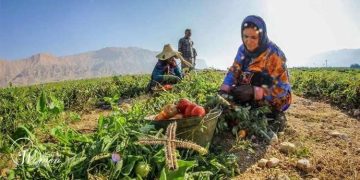
An activist in 2022 estimated the number of female workers in the informal sector at 2 million, who do not even receive the minimum wage and are deprived of job benefits. (Fararu Website – January 11, 2023)
The hidden exploitation of female workers brings huge profits to employers. Many of them, in return for their grueling labor, are forced to accept a monthly salary of only 2 to 3 million tomans (213 to 320 USD). (Fararu Website – January 11, 2023)
Ahmad Amirabadi Farahani, a member of the parliamentary board, described the working conditions of female workers in 2018 as “modern slavery,” stating, “Injustice in some production centers against women in terms of wage payment and long working hours is modern slavery.”
High Work Pressure and Job Insecurity
Female workers, in the absence of appropriate work and protection against exploitation by government employers, are forced to work 12 hours a day or take on night shifts. (IRNA News Agency – April 30, 2024)
Hassan Habibi, a labor activist, stated: “Women face more harm than men due to job insecurity. Some female workers are heads of households, but despite their useful work, they face many employment issues, such as low wages and a lack of maternity leave. Most private sector companies say goodbye to their female workers when they are pregnant.” (ISNA News Agency – July 29, 2024)
Lack of Workplace Safety for Female Workers
According to a March 26, 2025, ILNA report, about 50 workers die each week due to work-related accidents, negligence by employers, and lack of inspector oversight. Based on this report, 1,077 workers died in work accidents in the first half of 2025, which means about 200 workers die each month.
According to the most recent study by the Research Center of the Iranian Parliament, a total of 84,638 workers in Iran suffered work-related accidents during 2021 and 2022 (Iranian calendar years 1400 and 1401), with 3,826 losing their lives. These figures pertain only to insured workers whose cases were recorded by the Social Security Organization.
Additionally, the Iranian Legal Medicine Organization reported that 1,900 individuals died in workplace accidents in 2022 alone. This discrepancy highlights the prevalence of informal labor in Iran and the vast number of workers who remain uninsured. (Hammihan Daily, April 14, 2025)

Female workers generally have neither insurance nor access to transportation and meal services. Some female workers, even after 15 years of employment, have no insurance or contracts, which increases their vulnerability to accidents significantly.
Most female workers work in environments that are not inspectable, or their work falls outside the hours when inspectors are present. Occupational injuries for female workers are on the rise daily.
On December 20, 2022, a van carrying female workers from a cold storage unit in Bahar caught fire, killing five women. They had lit a picnic stove in the van due to the lack of heating, which caused a fire and locked the vehicle doors, leading to their deaths.
On December 31, 2022, a woman at a factory in an industrial park in Yazd drowned in a water basin. There are more work accidents among female workers, but due to the silence of this group within the labor community and the lack of women’s labor unions, these statistics are not announced. (Fararu Website – January 11, 2023)
Earlier, in June 2022, a 26-year-old female worker from Neyshabur was killed when her scarf got caught in a plastic injection machine. She was a mother of two young children. This tragic death occurred due to wearing inappropriate clothing for safety standards.
On May 8, 2022, a 40-year-old female worker died when she was pulled into a machine at a bakery in Babol. A piece of her clothing got caught in the machine, pulling her inside. Unfortunately, she died instantly due to suffocation.
On November 7, 2021, Marzieh Taherian, a 21-year-old woman, also died at the Kavir Textile Factory in Semnan due to wearing inappropriate clothing. Her colleagues reported that her headscarf got caught in the machine, pulling her head into it. (ILNA News Agency – November 7, 2021)
In some workshops, women work without ear protection or safety equipment, exposing them to auditory and neurological damage. Employers, under the pretext of offering higher pay, force female workers to work without insurance. The employer contributes 20%, the worker 7%, and the government 30% to insurance, but no payments are made to the workers in return for their contributions.
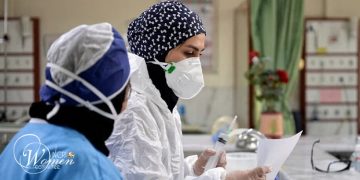
Female workers in pharmaceutical companies are also exposed to various hazards due to chemical and hormonal pollutants. Chemical pollutants damage their lungs, and hormonal pollutants disrupt their physiological systems. Sometimes their faces become covered in excess hair, or high testosterone levels cause other problems. These issues often lead to mental health problems as well.
Female workers endure these issues for wages that may not even reach 3 million tomans per month or for daily wages, where their employment could end at any moment. Meanwhile, their contracts are often pre-signed blank contracts, and they have no rights. Employers do not inform workers of the risks during hiring, and they remain unaware of the dangers they face. (Fararu Website – January 11, 2023)

Lack of Legal Support for Workers
The National Union of Female Workers wrote in May 2022: “Some employers, for illogical and illegal reasons, hire female workers at wages lower than men’s. Women, due to financial need and unemployment, are forced to accept wages below the legal minimum, while discrimination between men and women in equal working conditions is prohibited by labor law.”
Due to widespread corruption within the power structure, the written law holds little weight for women in practice.
Voices of Female Workers
Zahra, 43 years old, is one of millions of Iranian female workers enduring exhausting labor. She lives on the outskirts of Tehran and must travel long distances to get to work. Her face is drawn and sorrowful. She says, “My husband is also a worker. Even though we both work, we cannot meet the expenses of life. One of our salaries only covers the rent. Every day I leave home at 5 a.m. to arrive at work by 8 a.m., and I must work until 7:30 p.m. Despite working as hard as men, we never receive equal wages or benefits. We don’t get overtime pay, and our wages aren’t the same. When we protest, they show us the exit from the factory… After childbirth, we have to say goodbye to our jobs; there is no breastfeeding time, nor any reduction in work hours.” (Jamaran Website – November 24, 2022)
Sudabeh, a mother of two young children, works as an assembly worker in a factory near Tehran. She says, “With the minimum wage I receive, I can’t even afford to enroll my children in daycare. A month’s daycare fees are equal to my entire salary.”
She works more than 50 hours a week, while the labor law limits working hours to 44. Sudabeh has to tolerate these conditions to keep her job. Getting hired again means facing many obstacles. One of the key sections of employment forms in the private sector asks about women’s marital status. Employers prefer to hire women who are either single and don’t plan to marry or whose children are grown, and they don’t plan to have more. (Jamaran Website – November 24, 2022)
Simin, who works in an automotive parts manufacturing company, says, “A female worker is a woman who cries every day at the grave of her dreams. I’ve been working since I was 18. My parents were both disabled after an accident. My brother and I have to cover living expenses. When I started working, the hiring requirement was to be unmarried, and I accepted it. Every year, I’ve become more dependent on my job and its salary. Before I knew it, I was 48 years old, single, and my life was in the hands of my employer.”
The male-dominated atmosphere in industrial workshops has always worked against Simin and her colleagues, such that despite all their qualifications, there’s no progress or salary increase.
Vahideh introduces herself as “a woman” and “a worker.” She works from 7 a.m. to 7 p.m. in the industrial city of Kaveh. She is the only woman among 17 male workers in that section. She says, “Being behind a desk and having an equal view of men and women isn’t very difficult, but being a worker and having that request is hard work.” She has worked in this complex for 9.5 years, and her only wish is to have nights with less fatigue and a fuller wallet. (IRNA News Agency – April 30, 2024)

Addressing the Root of the Problem
In Iran, unlike most countries in the world, the issues faced by female workers cannot be solved by reforms or the formation of unions. The misogynistic dictatorship in power in Iran for the past 46 years has shown in all areas that its only goal is to continue its illegitimate rule and increase its plundering.
With this evil objective, like what happened during the COVID-19 pandemic, when the import of vaccines was banned for the people of Iran, it profits from the suffering, poverty, and hardship of the people, ensuring no one has the energy to revolt.
The only way to help Iranian women is to recognize their organized resistance to overthrow this dictatorship and isolate the regime internationally, so that the people and women of Iran can build the grounds for their prosperity and progress through a democratic revolution.
[1] A “pre-signed blank contract” (known in Persian as a “white-signed contract”) refers to an employment agreement signed by the worker before essential terms such as salary, duration, or job description are filled in, allowing the employer to complete or alter the contract at will. This practice is illegal or exploitative in many jurisdictions and deprives workers of basic protections.