
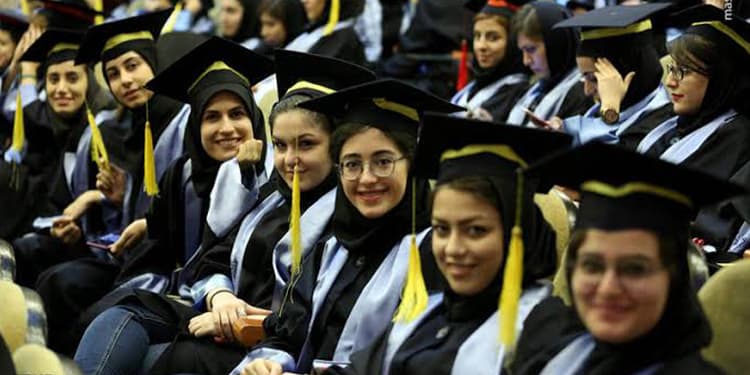
At the beginning of the new academic year, students at universities across Iran are facing a range of problems and restrictions. Security and disciplinary pressures at universities, particularly restrictions imposed on female students, continue alongside rising living costs for students and structural problems in higher education.
For students who study away from their families and in another city, rising costs of accommodation, food, and transportation have added to the challenges of pursuing their education.
At the same time, the declining standing of some universities, the financial difficulties faced by professors, and the migration of faculty members have increased concerns about the quality of higher education and the future of students.
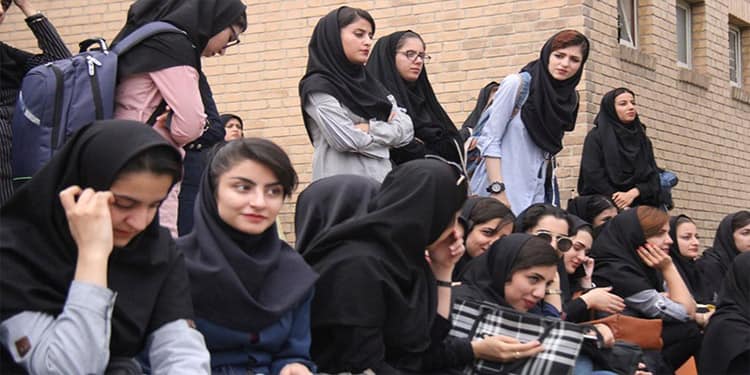
Increased Control Over Female University Students
On the eve of the new academic year, government officials spoke about enforcing guidelines concerning hijab at universities.
Saeed Karami, Deputy for Cultural and Political Affairs at Universities, announced that a directive from the Ministry of Science, Research and Technology and the Ministry of Health and Medical Education concerning the status of hijab at universities would soon be issued. (Mehr News Agency, September 8, 2026)
Abdolhossein Khosropanah, Secretary of the Supreme Council of the Cultural Revolution, also spoke about enforcing mandatory hijab at universities, saying that the Supreme Council of the Cultural Revolution has had regulations in this area for the past 25 years and that various institutions have been tasked with implementing them. According to him, the Ministry of Interior is responsible for overseeing this issue, and executive bodies must implement the regulations concerning hijab.
He also said that at the beginning of the new academic year, students should be reminded to “observe proper attire,” adding that a student “cannot walk around the university dressed as if they were in their bedroom.” (Tasnim News Agency, September 8, 2026)
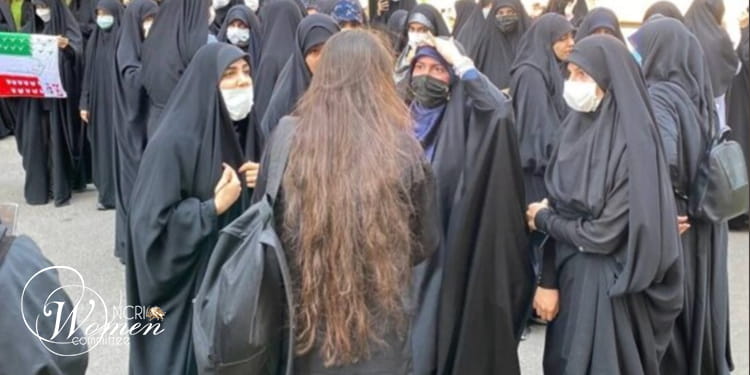
Monitoring clothing and movement, summoning students, and opening disciplinary cases are among the pressures that have been reported at universities in recent years. For female students, these restrictions can extend beyond the educational environment to include life in dormitories and public spaces on university campuses.
100 Disciplinary Cases on the Eve of the New Academic Year
Before the start of the new academic year, reports emerged of dozens of disciplinary cases being opened and rulings being issued to suspend students, bar them from continuing their studies, and expel them.
According to unofficial figures published about universities in Tehran, 16 students at Amirkabir University received suspension orders, and one student was expelled.
At the University of Tehran, more than 10 cases were awaiting the final rulings. At Sharif University of Technology, disciplinary rulings were issued against 40 students, of whom at least 10 received expulsion orders.
Students at K. N. Toosi University of Technology also reported that four students had been barred from continuing their studies for two semesters and that the number of cases under review had increased to more than 20 disciplinary cases. (Khabar Fori website, September 15, 2026)
The Shargh newspaper also reported on September 15, 2026, that more than 100 disciplinary cases had been opened against students.
Expulsion and Imprisonment of Female Students
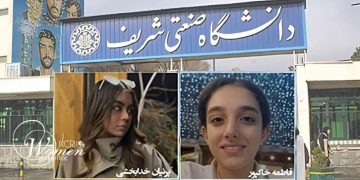
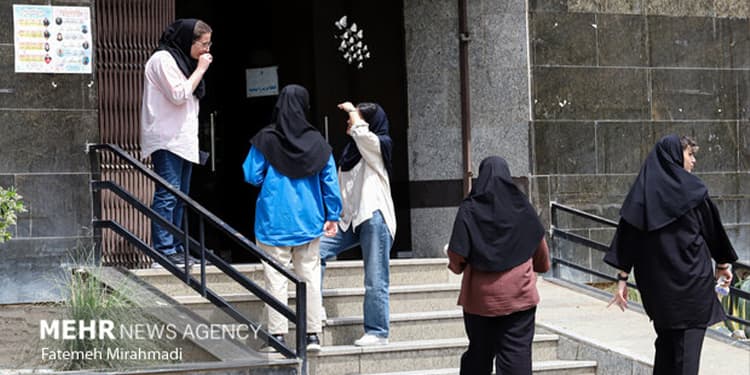
In May and June 2026, the disciplinary committee of Sharif University of Technology issued expulsion orders against seven students, including two female students.
Fatemeh Khakpour, an undergraduate chemistry student at Sharif University of Technology, was expelled. Parnian Khodabakhshi, also a student of engineering and materials science at the same university, was expelled and barred from pursuing her studies for five years.
The expulsion of these students took place on the eve of the reopening of universities.
Imprisoned students in different cities across Iran are also being held in a state of uncertainty or serving prison sentences.
Maryam Javadi, a 27-year-old journalism student from Isfahan, has been detained since June 2025. She has been threatened and subjected to forced confessions and has now been sentenced to five years in prison.
Iranian students have played a leading role in all protest uprisings. Only one month after the January 2026 uprising, Masoud Habibi, the regime’s Deputy Minister of Health for Cultural and Student Affairs, announced that around 100 students had lost their lives during the January 2026 uprising and added that a number of other students remained in detention. (Aftab News, January 30, 2026)
Rising Costs Amid Declining Educational Quality
Alongside disciplinary pressures, economic problems have also become a serious issue in student life.
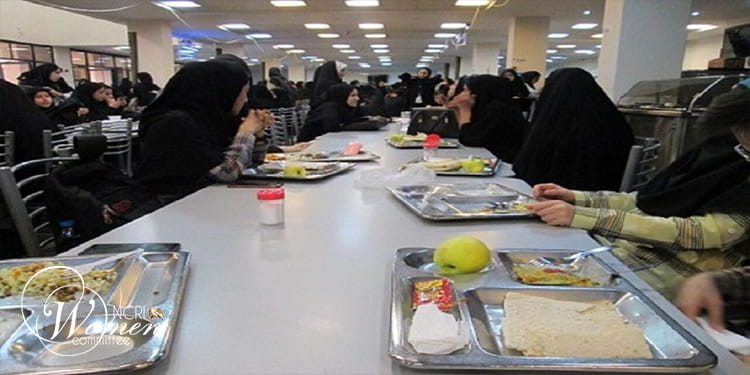
The new student meal plan, which is scheduled to be implemented in September 2026, has raised concerns about the cost and quality of university food.
The secretaries of the student union councils at Tehran University, University of Science and Technology, and Allameh Tabatabaei University have warned about the inadequacy of the allocated budget, the lack of transparency, and the possibility that rising costs will be passed on to students. They have also expressed concern about the impact of the plan on the price and quality of university food.
Under the plan, food subsidies will be allocated to students’ electronic wallets instead of being paid directly to universities, allowing students to purchase their meals from contracted food providers.
A student union activist at Allameh Tabatabaei University also said that the allocated budget is not commensurate with the actual cost of food and is not even sufficient to provide a regular meal in Tehran. (ISNA, July 24 and August 1, 2026)
The increase in food costs is particularly significant for students who study in a city other than where their families live and must cover the costs of accommodation, food, and transportation at the same time.
Economic problems have increased at a time when reports have also been published about the decline in the academic standing of some universities in Iran.
The University of Tehran has fallen 45 places, and the University of Tabriz has fallen 108 places in university rankings, while significant declines in the rankings of Sharif University of Technology and Amirkabir University have also been reported. (Khabar Online, June 28, 2026)
Internet disruptions and shutdowns, filtering, the mandatory holding of online classes, and financial problems have been cited as factors affecting the educational and research activities of universities.
As a result, at the beginning of the new academic year, students are facing not only higher costs but also concerns about the quality of education and their academic and research opportunities.
Faculty Crisis and Declining Academic Capacity at Universities
Another part of the problems facing higher education concerns the situation of university faculty members.
Delays in the payment of salaries and outstanding claims owed to professors and university staff have been protested in recent months. University professors issued a statement criticizing delays in implementing the law on restoring faculty members’ salaries and warned that if their full salaries were not paid by September 22, they would suspend their educational, research, and administrative activities beginning September 23. (Khabar Online, August 31, 2026)
Under the best circumstances, the salary of an experienced professor in Iran does not even reach $1,000, while university professors in some countries in the region receive salaries of between $5,000 and $10,000 and have access to greater welfare and research facilities. (Khabar Online, July 11, 2026)
At the same time, the migration of faculty members has become one of the serious problems facing universities in Iran.
Saeed Semnanian, a professor at Tarbiat Modares University, has claimed that approximately 12,000 Iranian faculty members have left the country over the past 10 years.
According to published statistics, between the 2018-2019 and 2023-2024 academic years, approximately 1,500 of the roughly 6,000 professors in engineering and technical fields at Iran’s leading universities have emigrated, representing about 25 percent of professors in these fields.
At the Faculty of Mechanical Engineering at the University of Tehran, some 10 professors have retired and emigrated or did not return to the country after completing research fellowships. (IRNA, November 20, 2025)
The continued departure of faculty members and the economic problems faced by professors directly affect the quality of education for students.
Female University Students Continue to Stand Against Pressure
Taken together, these developments present a picture of a difficult academic year: security and disciplinary restrictions, control over clothing and the university environment, rising student living costs, and declining academic capacity at universities.
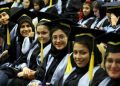
Amid these circumstances, female students have continued to maintain an active presence at universities and in student protests. For them, university has not been merely a place of study, but also a space for protesting restrictions and discrimination.
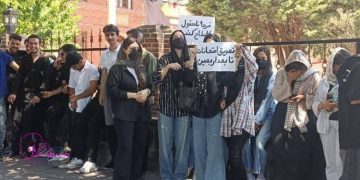
Female students took part in student protest gatherings in March, June and July 2026 at several universities across the country.
The continued student protests, despite threats, arrests, and disciplinary pressure, reflect the determination of Iran’s courageous students to change the existing conditions and seek an end to the rule of religious dictatorship.