
Iran’s UN Seat Belongs to Its People, Rally Participants Declare in New York
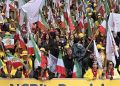
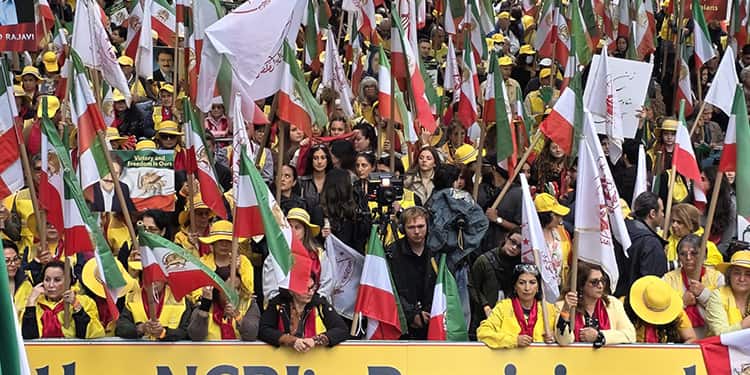
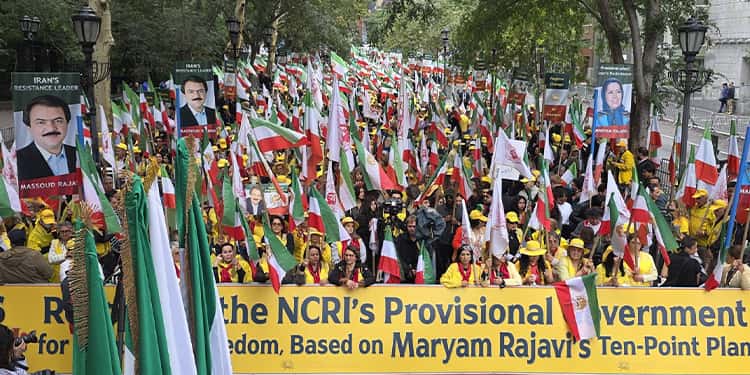
NEW YORK, Sept. 22-23, 2026 – Thousands of freedom-loving Iranians and supporters of the Iranian Resistance gathered outside United Nations headquarters for two days, to protest the reception of Masoud Pezeshkian, arguing that the Iranian regime’s president does not represent the people of Iran.
Demonstrators called for accountability for decades of repression, executions, terrorism, hostage-taking, and crimes against humanity.
The two-day rally also served as a protest against what participants described as the continued occupation of Iran’s UN seat by a religious dictatorship that has faced repeated condemnation in international human rights forums. Speakers and participants emphasized that Iran belongs to its people and that the country should be represented on the international stage by a democratic alternative rather than by a regime responsible for decades of repression and violence.
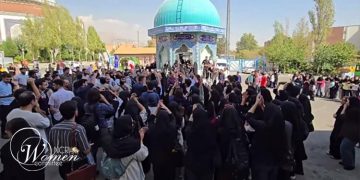
Women were highly visible throughout the rally, with participants from different age groups and backgrounds. Many had traveled from across the United States, Canada, and other countries to join the demonstrations and show solidarity with political prisoners, victims of executions, and those resisting repression inside Iran.
Among those addressing the gathering were were Lt. Gen. Keith Kellogg, former U.S. Special Envoy for Ukraine, Gen. Wesley Clark, former US Supreme Allied Commander Europe, Carla Sands, former U.S. Ambassador to Denmark, Senator Robert Torricelli, Former U.S. Ambassador to Morocco Marc Ginsberg, former New York Mayor Rudy Giuliani, NCRI US representative Sona Samsami, Rev. Adrienne Dannhauser, and Rev. Dr. Chloe Breyer, alongside other political figures, community leaders, and Iranian activists.
The political centerpiece of the gathering was Maryam Rajavi’s messages. Speaking directly to world leaders, she contended that granting a platform at the United Nations to officials responsible for crimes against humanity and genocide makes a mockery of the very values of human rights, justice, and peace that the organization is meant to uphold.
The President-elect of the NCRI challenged the Iranian regime’s claim to represent the nation at the United Nations. “Iran’s seat belongs to the people of Iran and to their legitimate Resistance for peace, freedom, and a democratic republic,” she declared in her message to the first day’s gathering.
On the second day, she reiterated that “The people of Iran want neither war nor dictatorship. They want freedom, a democratic republic, and the right to decide their own future.”
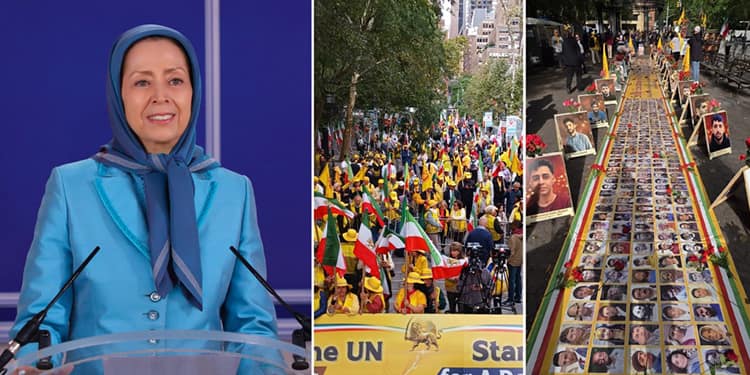
Maryam Rajavi argued that democratic change must be achieved by the Iranian people and their organized Resistance, not through foreign intervention. She also called for international recognition of the Iranian people’s struggle and for accountability mechanisms to address decades of human rights violations committed by the ruling establishment.
Former U.S. Ambassador Carla Sands emphasized the importance of supporting the Iranian people and their democratic opposition. “Only the indigenous force on the ground can deliver lasting change and peace,” she told the crowd. Highlighting the role of women in the Resistance, she praised the movement’s record of female leadership and described it as an example of the democratic future many Iranians seek.
Ambassador Sands concluded with a stark appeal to the international community: “Stand with the executioners or those facing the gallows. Stand with a failed dictatorship or with an organized democratic resistance.”
During the second day of the rally, Sona Samsami, the NCRI’s representative in the United States, highlighted the growing activities of Resistance Units inside Iran and the contributions of a new generation of activists. “Courageous young women and men are challenging the machinery of repression, breaking the atmosphere of fear, and keeping the flame of organized resistance alive,” she said. She also drew attention to the plight of political prisoners and called for international action to address ongoing executions and human rights abuses.
Religious leaders participating in the event also expressed solidarity with the Iranian people. Rev. Adrienne Dannhauser, an Episcopal priest, condemned state repression and the misuse of religion to justify violence. “Dictatorship does not work because it is a usurpation and corruption of God’s power, whether exercised in the name of religion, monarchy, or any other ideology,” she said, while voicing support for a free, democratic, and secular republic in Iran.
Rev. Dr. Chloe Breyer, Executive Director of the Interfaith Center of New York, focused on human dignity, justice, and the sacrifices made by generations of Iranian protesters. Addressing political prisoners and families who have lost loved ones, she expressed hope that their perseverance would contribute to a more democratic future and urged continued support for those struggling for freedom and human rights in Iran.
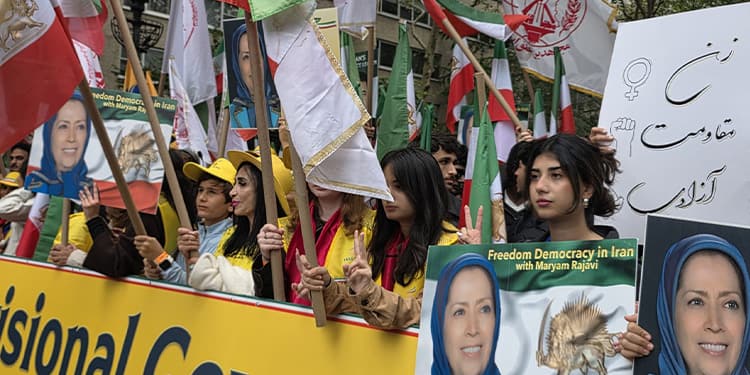
Throughout the rally, participants repeatedly voiced support for political prisoners and condemned the growing number of executions in Iran. Many carried banners demanding accountability for human rights violations and calling on the international community to stand with the Iranian people rather than their oppressors.
A defining chant of the rally was, “No to the oppressor, whether the Shah or the (mullahs’) Leader.” Resonating throughout the plaza, it captured the demonstrators’ firm rejection of both monarchical and clerical dictatorships and their call for a democratic republic based on popular sovereignty.
Participants also voiced strong backing for Maryam Rajavi’s Ten-Point Plan, asserting that the path to a free and democratic Iran lies neither in the hands of the ruling theocracy nor in foreign military intervention, but in the will of the Iranian people and the efforts of their organized resistance.
As the UN General Assembly continued inside the United Nations headquarters, demonstrators outside sought to deliver a clear message: the regime represented by Masoud Pezeshkian does not speak for the Iranian people. Instead, they argued, the future of Iran lies in the hands of a population determined to achieve democracy, accountability, equality, and freedom through its organized Resistance.
Central to that message was the visible presence of women and girls, whose participation reflected their continuing role at the forefront of the struggle for a democratic Iran.