
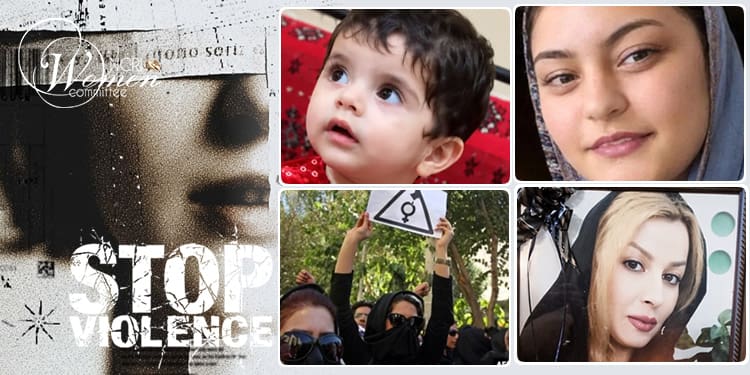
The Hidden Crisis of Domestic Violence in Iran
Violence against women in Iran is deeply institutionalized and structurally supported by state laws. According to official figures released by the Legal Medicine Organization, tens of thousands of Iranian women fall victim to domestic violence annually and seek medical services.
However, experts note that the true figures are vastly higher, as many victims choose not to report abuse due to a lack of legal protection and social stigma.
Statistics, though incomplete and sometimes censored, paint a worrying picture of violence against women.
- Borna reported on October 13, 2019, that in our country, one in every twenty women experiences domestic violence by her spouse. Considering that the female population in Iran is at least 40 million, this implies that approximately 2 million women have been subjected to domestic violence.
- According to the last official statistics on violence against women in Iran, 66% of Iranian women experience some form of violence at least once in their lives (Fatemeh Ghasempour, Head of the Center for Women and Family Research, interview with ISNA, November16, 2018). This rate is twice the global average of 33%. Nevertheless, government-affiliated press consistently downplays these figures.
- Mohammad Reza Mahboobfar, an expert in social pathology, stated: “Iran ranks first in domestic violence, and today no home in Iran is safe.” (Jahan-e Sanat, November 19, 2020)
- In 2021, official statistics on domestic violence, including spousal and child abuse, recorded around 75,000 cases (Salam No, July 26, 2022).
- Simin Kazemi, sociologist, notes the lack of data on the extent of violence against women: “The results of the only nationwide study conducted in 2004 were destroyed before public release. Therefore, the only available data comes from scattered studies with small sample sizes. It seems there is a will to prevent any statistics on violence against women from being accessible, perhaps assuming that denying reality could invalidate the need for violence prevention.” (Ham-Mihan, October 21, 2023)
- Zahra Behrouz Azar, Deputy for Women and Family Affairs, announced in June 2025: “The rate of violence and spousal abuse against women is thirty times higher than against men, yet these statistics remain classified.” (Shargh, October 11, 2025)
Compounding this crisis, explosive poverty and the collapse of livelihoods—driven by systemic economic devastation and the plundering of national wealth—serve as primary catalysts for soaring domestic abuse.
“Economic pressures and social inequality are the root causes of many domestic homicides. These factors operate through mechanisms such as chronic stress caused by livelihood problems (unemployment, inflation, declining purchasing power, and job insecurity), reducing impulse control and emotional regulation.” (ILNA News Agency, October 26, 2025)
Because women often lack financial independence, economic safety nets, or equal property and employment rights, they are trapped in abusive environments with no viable way to sustain themselves. Iran lacks comprehensive national data collection or systemic governmental support.
Zahra Eftekharzadeh, founder of the non-governmental safe shelter “Athena,” discusses the rise of domestic violence in Iran, the lack of official statistics, and the challenges of supporting women experiencing violence: “We are witnessing an increase in domestic violence, but no official institution in Iran has taken responsibility for collecting accurate data in this area, nor have there been extensive studies. Without national policy and a dedicated budget, it is impossible to obtain a realistic picture of domestic violence.” (Shargh, October 11, 2025)
Furthermore, a long-proposed bill on “Ensuring Women’s Security Against Violence” has completely failed after 15 years of extensive revisions and prolonged disputes within the regime, ultimately being withdrawn altogether by the government. (Fararu August 26, 2025)
Severe Closure of Safe Shelters and Critical Lack of Infrastructure
Women and girls fleeing physical abuse, humiliation, and life-threatening environments face a catastrophic collapse of support infrastructure. Recent reports from September 2026 highlight a sharp wave of closures among non-governmental safe shelters: out of 15 non-governmental safe shelters and six centers previously in development, only 5 non-governmental safe shelters now remain across the entire country, with most struggling with severe financial distress and facing imminent closure.
Key updates regarding safe shelter conditions include:
- Between 2023 and 2026, 7 of the original 28 safe shelters had already shut down, followed by the closure of another 16 houses and centers. Today, only 5 safe shelters remain for Iran’s population of 45 million women.
- These centers face extreme operational restrictions: they lack direct admission, meaning a fleeing woman cannot walk in independently but must secure a court referral, police escort, and judicial clearance.
- Because a married woman legally cannot leave the family home without her husband’s permission, she likewise cannot access a safe house without judicial and familial consent.
- Government-run safe shelters—now rebranded under the name “Hami Sara” (Support Shelters)—operate with total opacity, offering no public transparency regarding their operations or capacity. Meanwhile, non-governmental shelters face extreme budget cuts, minimal state assistance, and intense security pressures.
Structural Impunity and the Surge in Femicides
Women in Iran face pervasive insecurity both inside and outside the home. Independent and state-documented data point to a terrifying upward trend in femicides.
Initial estimates indicated that the average number of honor killings in Iran was between 375 and 450 per year. (ISNA, December 7, 2019)
According to data compiled from state media reports by the Women’s Committee of the National Council of Resistance of Iran (NCRI)—which represent a minimal baseline due to heavy censorship and family intimidation—femicides have risen sharply:
- 105 women were killed in 2023.
- 160 women were killed in 2024.
- 192 women were killed in 2025.
Sociologists and experts note that these killings are rooted in structural inequalities and institutionalized impunity. A prime driver of this crisis is Iran’s legal framework, which views fathers and paternal grandfathers as the ” wali-e dam” (guardian of blood), effectively exempting them from capital punishment (qisas) for killing their children.
This dynamic is starkly visible in notorious high-profile cases:
- Romina Ashrafri: The 14-year-old girl was decapitated in her sleep by her father in 2020 after courts returned her to him despite her explicit pleas that he would kill her. Her father was sentenced to only 9 years in prison and released after two years.
- Mona Heidari: A victim of child marriage at age 12, she was murdered at 17 by her husband (who was also her cousin), who paraded her severed head in public. The perpetrator received a mere 8 years in prison and was released shortly after due to the pardon of the victim’s family.
- Fatemeh Soltani: In a case documented in August 2026, a father who stabbed his 17-year-old daughter to death outside her workplace was similarly sentenced to just 8 years of imprisonment.
As noted by international fact-finding bodies, perpetrators benefit from “structural impunity,” where men who murder their wives or daughters routinely receive lenient sentences of a few years, while women protesting compulsory hijab or state repression face heavy prison terms, torture, and capital punishment.
The systematic rise in domestic violence and femicide in Iran is not merely a matter of individual prejudice; it is legally and politically anchored in a clerical regime that codifies discrimination. With laws enforcing male guardianship, unequal testimony weight, and severe restrictions on divorce, the state treats women as second-class citizens. As long as this apparatus and its medieval penal code remain in power, Iranian women will continue to face systemic peril both in the public sphere and within the walls of their own homes.
Forced and Early Marriage of Young Girls
Child marriage in Iran is legal and commonplace; forced and early marriage of girls is one of the most flagrant manifestations of violence against teenage girls under the misogynistic rule of the mullahs.
In Iran, girls can legally be married off at the age of 13. Fathers are legally allowed to marry off their daughters as young as 9 years old with the approval of a judge. In Iran, not only is the marriage of young girls possible, but this practice is explicitly recognized and legally legitimized in the country’s Civil Code.
In 2018, the regime’s parliament rejected a proposed bill to raise the minimum marriage age for girls to 16 under the pretext that its contents were “against Islamic law and social norms” and “in conflict with the teachings of Islam.” This form of violence against women in Iran leaves children vulnerable, underscoring the reality that under the mullahs’ regime, even young girls are deprived of appropriate legal protection.
The Mullahs’ Regime Violates the Convention on the Rights of the Child
The National Statistics Center (NSC) announced that Iran ranks second after Guinea on child marriages. The legal age of marriage is 12 in Guinea and 13 in Iran. (The state-run Saednews.com, November 27, 2021)
The law sets the legal age of criminal accountability for girl children in Iran at 9 and the mandatory veiling code forces them to cover their hair since the first day of school at age 6.
This stands in direct contradiction to the Convention on the Rights of the Child (CRC), to which the Iranian regime acceded in 1994. Under the Convention, a child is explicitly defined as any individual under 18 years of age, and state parties are obliged to protect children from all forms of abuse, including early marriage. However, through ideological and fundamentalist interpretations, the misogynistic clerical regime has not only failed to adhere to the provisions of this convention but has also provided the legal mechanism to violate it.
Statistics on Child Marriage in Iran
Statistics published by the regime’s National Statistics Center (NSC) in 2021 revealed the marriage of 9,753 girls aged 10 to 14 in the spring of 2021 alone. (ISNA News Agency, November 22, 2021) According to data from official government sources, between 2016 and 2021, more than 131,000 girls under the age of 15 were forced into marriage. (Bahar website, March 30, 2022)
In 2022, an additional 26,974 young girls suffered the same fate. In that same year, 1,390 girls under the age of 15 became mothers. (Rokna News Agency, October 21, 2024)
Mohammad Reza Mahboubfar, a social harm researcher, referred to the official figures released by the Statistical Center of Iran as merely “the tip of the iceberg of child marriage statistics.” He added that the actual number of child marriages is five to six times higher than the officially declared figures. (Rokna, July 25, 2021) In another interview, he revealed: “Currently, 100 marriages of girls under 15 years old are registered in the country every 24 hours.” (Arman-e Melli newspaper, July 27, 2021)
On March 4, 2019, Ali Kazemi, advisor to the Judiciary’s Legal Deputy, announced that between 500,000 and 600,000 children were married in Iran within a single year. (Entekhab newspaper, March 4, 2019)
Facing growing public backlash against early marriages, the Iranian regime stopped releasing statistics and data regarding child marriage and the number of infants born to underage mothers in 2024. (Etemad newspaper – September 8, 2024)
Nevertheless, child marriage continues to spread at an alarming rate, particularly driven by expanding poverty across Iran.
Child marriage in Iran is an organized, state-sponsored crime. This phenomenon has flourished under the shadow of Sharia laws and the rule of Velayat-e Faqih (absolute clerical rule), forming an integral component of the regime’s apparatus for controlling society and suppressing women.
Consequences of Child Marriage
For these young girls, marriage marks not the beginning of life, but the end of childhood.
Their education is abruptly halted, they are isolated from society, and they are subjected to physical and sexual violence. Thousands become pregnant at a very young age, putting their physical and mental health at grave risk. Many suffer from severe depression, and a number of them end their lives through suicide. Tragically, a number of these defenseless, victimized young girls—who are victims of both child marriage and domestic violence—end up facing the painful end of the execution gallows in the misogynistic mullahs’ prisons!
Child Abuse – 55 Percent of Victims Are Young Girls
One of the lesser-reported dimensions of systemic violence in Iran is child abuse and violence against young girls. Reports indicate that child abuse in Iran is a growing phenomenon that ranks at the top of social harms. (Asr-e Iran, June 10, 2019)
State-run media and officials from the State Welfare Organization acknowledged the alarming upward trend of this phenomenon in 2024 and 2025. Due to discriminatory laws and the complete absence of any protective safety net, young girls constitute the most vulnerable victims of this systemic violence.
Hassan Mousavi Chalak, Deputy Chief of the State Welfare Organization, announced that in the past year alone, more than one million calls regarding domestic violence were logged by the Social Emergency Service. Stating that girls are more exposed to child abuse than boys, he revealed that 55 percent of reported child abuse cases pertain to girls (Khabar Online, May 5, 2025).
Sexual Abuse at Home
According to a report by the Shargh daily newspaper regarding the performance of the Society for Protecting the Rights of the Child in 2025, “child sexual abuse” remains one of the most recurring subjects in legal cases. These range from abuse committed by family members and third parties to online sexual exploitation and harassment.
These reports—continuation of shocking statistics from previous years, including over 5,200 registered complaints of incest in 2016 and prior reports by ISNA news agency indicating an average victim age of 10 to 12 in incestuous father-daughter rapes—demonstrate that home remains an unsafe place for children.
In 2025, delayed action, destruction of evidence in the initial hours, fear of social stigma, and lack of access to specialized legal representation continued to enable abusers to escape punishment.
The Law Protects the Abuser
Under the clerical regime’s rule, domestic violence and child abuse are the direct result of the legal structure.
By refusing to establish protective mechanisms, the mullahs’ regime violates Article 19 of the UN Convention on the Rights of the Child. Agencies such as the Social Emergency Service and the Welfare Organization play a virtually symbolic role due to a lack of budget and authority, intervening only after a tragedy has already occurred.
Iran’s custody laws and judicial oversight prioritize “paternal rights” over the safety of the child, thereby paving the way for repeated violence against children.
In one deeply agonizing case in Zanjan, Ava Yar-Gholi, a first-grade elementary school student, was brutally murdered by her drug-addicted father. Despite the mother’s financial and moral competence, the regime’s misogynistic laws granted custody to the father, directly setting the stage for this crime. The footprint of the regime’s discriminatory laws against women is evident in numerous other cases of child abuse and child murder, including the cases of Niyan Chaliyani, as well as Narin and Ailin in Sanandaj.
Execution of Women: The Human Cost of State Violence
An examination of the execution of women in Iran reveals a horrifying picture of structural violence against women. According to published statistics, the ruling clerical regime in Iran ranks first in the world in the execution of women. This comes as a significant portion of these executions are never officially announced by judicial authorities or state media.
The true number of women executed in Iran is undoubtedly higher than the recorded figures, which have emerged despite censorship, state secrecy, and months-long communication blackouts.
Many executed women in Iran are not only victims of the death penalty, but also victims of a systemic framework that perpetuates child marriage, forced marriage, violence against women, and the denial of effective legal protection.
Another group of victims includes women convicted in drug-related cases. A detailed examination of these cases reveals that many of these women turned to such acts under conditions of extreme poverty to feed their children. In contrast, organized drug trafficking networks, tied directly to the Revolutionary Guard Corps (IRGC) and backed by vast financial resources and influence, enjoy complete impunity.
The experience of recent decades demonstrates that whenever the regime faces deep internal crises, it intensifies the use of the death penalty and state repression. Currently, several female political prisoners, including Arghavan Fallahi and Zahra Tabari, are facing death sentences.
On one hand, the clerical regime seeks to instill terror, intimidate society, and prevent the spread of popular protests by escalating executions. On the other hand, fearing domestic backlash and international consequences, it carries out many of these executions secretly and without official announcement.
In its annual report, Amnesty International stated that the ruling dictatorship in Iran recorded the highest number of executions globally, with at least 2,159 executions in 2025. According to the organization, this figure represents the highest recorded annual execution count worldwide since 1981.
Flogging: A Medieval Tool to Suppress and Humiliate Female Protesters
The clerical regime continues to issue flogging sentences for dissidents and protesters, executing these sentences against women in many instances. A review of documented cases in recent years demonstrates that flogging is enforced not only as a supplementary punishment, but in some instances even before the completion of a prison term or on the eve of a prisoner’s release. The following documented cases reflect the execution of these sentences:
- Neda Dadehjani and Setayesh Sarabi: On August 22, 2026, a sentence of 31 lashes each was carried out against these two female protesters (detained during the January 2026 protests) at the Qorveh Criminal Court. Immediately after receiving the lashes, they were transferred to Sanandaj Prison to serve their prison terms.
- Roshanak Molaii Alishah: A 25-year-old woman arrested for defying compulsory hijab, she received 14 lashes on November 23, 2024, at Qarchak Prison—just prior to her release.
- Laleh Vahhabi: On July 25, 2023, a sentence of 74 lashes was executed against this 35-year-old woman, arrested during the February 2023 protests, at the Sentence Enforcement Office in Talesh, Gilan Province.
- Zahra Teymouri: A psychology graduate from the University of Tehran (arrested on September 25, 2022), she received 74 lashes in February 2023 following four months of imprisonment, before being placed under electronic monitoring home arrest to serve the remainder of her one-year sentence.
Compulsory Hijab: An Official and Organized Tool for the Suppression of Women
One day prior to International Women’s Day in 1979, the enforcement of compulsory hijab for female employees in government offices was announced. Since then, the Iranian regime has transformed the compulsory Hijab into an instrument to control and suppress women by enacting numerous laws and bills and utilizing law enforcement, judicial, administrative, and economic mechanisms.
Article 8 of the regime’s Constitution also institutionalized interference in the private lives of citizens under the guise of religion by legalizing “promoting virtue and preventing vice.” In 2014, with the passage of the “Law in Support of Promoters of Virtue and Preventers of Vice,” the climate of repression intensified, followed by numerous reports of acid attacks and assaults on women under the pretext of hijab.
The murder of Mahsa Amini in September 2022 while in custody of the Guidance Patrol (morality police) sparked nationwide protests that lasted for six months. Following this uprising, women’s resistance against the compulsory hijab expanded, prompting the regime to formulate the new “Chastity and Hijab” law to contain it.
In April 2023, the return of the morality patrols ushered in a new form of repression. This mechanism included the use of closed-circuit cameras and facial recognition technology, the confiscation of national ID cards, and the imposition of pressure on banks, hospitals, metro stations, airports, cinemas, and businesses. Women and girls faced deprivation of services, dismissal from universities and jobs, fines, imprisonment, and humiliating punishments simply for not covering their hair.
Following its approval by the parliament and endorsement by the Guardian Council in 2024, the new “Chastity and Hijab” law—despite the temporary suspension of its official implementation due to fears of social repercussions—effectively served as the basis for intensified pressure on women from the moment of its proposal and adoption.
The Chastity and Hijab law does not target women alone; it also holds families, employers, universities, businesses, and providers of public and virtual services accountable for enforcing the compulsory hijab. Punishments range from heavy fines to long-term prison sentences, and in some cases, charges such as “corruption on earth” (mofsed-e fel-arz) can lead to the death penalty. These regulations even encompass girls aged 9 to 15.
The law also assigns extensive duties to ministries and government institutions, expanding gender segregation in universities, administrative and educational centers, recreational facilities, and even parts of hospitals. Under this law, observing the hijab can become a prerequisite for employment, the continuation of professional activities, and the acquisition of certain licenses, while virtual space activities are also subject to punishment.
Alongside these laws, the regime announced in 2025 the creation of a “Chastity and Hijab Situation Room” and the activation of 80,000 “promoter of virtue” forces—an approach signifying the expansion of a decentralized and unaccountable network to control women. Concurrently, under the guise of combating “corruption and depravity” as a national security concern, the regime lays the groundwork for arbitrary arrests and extrajudicial measures.
Together, these laws and measures transcend a mere dress code, transforming the compulsory hijab into an expansive network of social control, economic deprivation, gender discrimination, and punishment. This network impacts various aspects of women’s lives, as well as their families and society at large, standing in direct contradiction to the principles of equality, individual freedoms, and women’s fundamental rights.
Mistreatment of Human Rights Defenders and Female Political Prisoners
The ruling repressive regime in Iran utilizes every available tool to silence dissent. Naturally, in a system where misogyny is institutionalized, this repression and deprivation takes on an even more severe dimension against female prisoners. The arbitrary arrest, torture, and long-term imprisonment of human rights defenders are only part of the price paid by women who stand up for basic human rights.
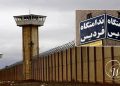
One of the most glaring dimensions of this repression is the deliberate violation of the principle of separation of crimes. By sending female political prisoners to notorious facilities like Qarchak Prison, a facility originally built as an abandoned poultry farm, completely lacking standard infrastructure, the regime employs dangerous tactics. In these prisons, security authorities incite or leverage violent and common-crime inmates against political prisoners, using them as proxies to harass, exert maximum pressure, and even physically eliminate dissidents.
Slow death through medical deprivation is another systematic policy employed by the regime to neutralize or kill its opponents. To date, dozens of female prisoners have lost their lives solely due to a lack of medical care, intentional delays in transferring them to outside medical facilities, and denial of access to medication.
It must be emphasized that these substandard and unsafe conditions are not limited to specific facilities but are widespread across all prisons nationwide. The lack of clean drinking water, poor food quality, unsanitary conditions, infestations of insects and rodents, denial of medical care, extreme overcrowding, forcing inmates to sleep on bare floors without basic bedding, and outbreak of contagious diseases are common realities for female prisoners in all prisons throughout Iran.
In major facilities such as Evin and Qarchak, these nationwide practices are enforced with particular severity, where authorities systematically subject female political prisoners to cut-off telephone lines, family visit bans, medical neglect, and the substitution of proper treatment with heavy sedatives.
Beyond these deadly physical conditions, when faced with the resilience of female protesters, the misogynistic regime systematically resorts to sexual and gender-based violence as a deliberate tool to break their resistance.