

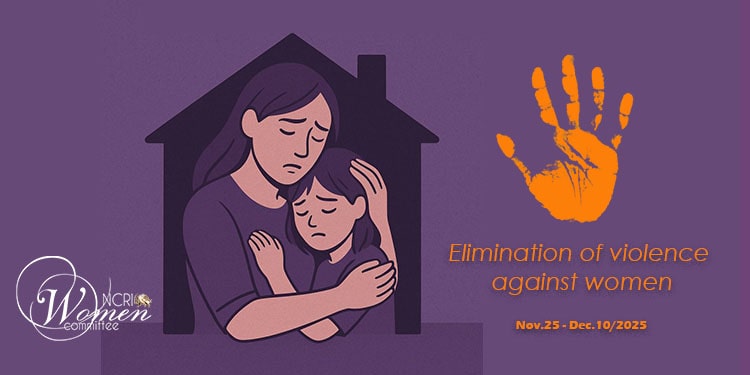
Safe Shelters in Iran are temporary passages that, although seemingly symbols of refuge and support, in practice reflect the inefficiency of government policies and structural weaknesses in state laws. Limited capacity, pressure to return women to violent environments, lack of financial support and effective oversight, and continuous threats to non-governmental centers all indicate that women experiencing violence remain in serious danger.
Women and girls who have suffered fear, terror, insecurity, humiliation, and verbal abuse, and who leave home to survive—wandering parks and streets while facing numerous other risks—often do not even know that a safe shelter exists where they can seek refuge, because their number is very limited, these safe shelters operate in obscurity and struggle to survive.
According to sociologist Simin Kazemi: “The number of safe shelters compared to the population of women at risk of violence is negligible, and the mechanisms for accessing these services are also difficult. The government hesitates to establish safe shelters and support women at risk for two main reasons. One is ideological: entering the field of violence prevention is seen as conflicting with the preservation of the family institution, and thus all government efforts—even in reluctantly supporting victims—focus on returning women to the same family where the violence occurred. The other reason is the adoption of neoliberal economic policies, in which support budgets are considered redundant and unnecessary and are therefore reduced.” (Ham-Mihan, October 21, 2023)
Prohibited Numbers: The Hidden Reality of Domestic Violence in Iran
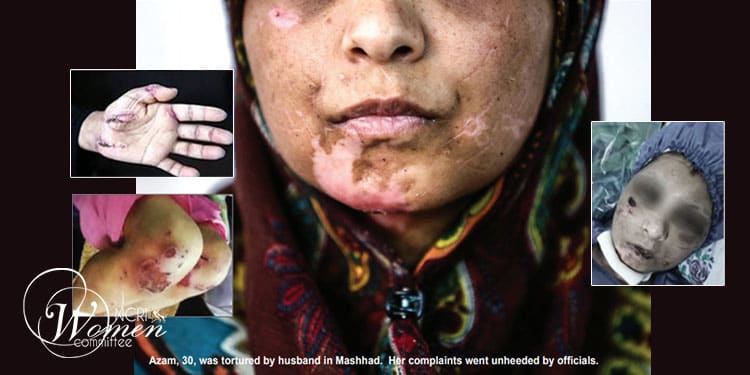
Statistics, though incomplete and sometimes censored, paint a worrying picture of violence against women. Borna reported on October 13, 2019, that in our country, one in every twenty women experiences domestic violence by her spouse. Considering that the female population in Iran is at least 40 million, this implies that approximately 2 million women have been subjected to domestic violence.
According to the latest official statistics on violence against women in Iran, 66% of Iranian women experience some form of violence at least once in their lives (Fatemeh Ghasempour, Head of the Center for Women and Family Research, interview with ISNA, November16, 2018). This rate is twice the global average of 33%. Nevertheless, government-affiliated press consistently downplays these figures.
Mohammad Reza Mahboobfar, an expert in social pathology, stated: “Iran ranks first in domestic violence, and today no home in Iran is safe.” (Jahan-e Sanat, November 19, 2020)
In 2021, official statistics on domestic violence, including spousal and child abuse, recorded around 75,000 cases (Salam No, July 26, 2022).
Simin Kazemi, sociologist, notes the lack of data on the extent of violence against women: “The results of the only nationwide study conducted in 2004 were destroyed before public release. Therefore, the only available data come from scattered studies with small sample sizes. It seems there is a will to prevent any statistics on violence against women from being accessible, perhaps assuming that denying reality could invalidate the need for violence prevention.” (Ham-Mihan, October 21, 2023)
Zahra Behrouz Azar, Deputy for Women and Family Affairs, announced in June 2025: “The rate of violence and spousal abuse against women is thirty times higher than against men, yet these statistics remain classified.” (Shargh, October 11, 2025)
Zahra Eftekharzadeh, founder of the non-governmental safe shelter “Athena,” discusses the rise of domestic violence in Iran, the lack of official statistics, and the challenges of supporting women experiencing violence: “We are witnessing an increase in domestic violence, but no official institution in Iran has taken responsibility for collecting accurate data in this area, nor have there been extensive studies. Without national policy and a dedicated budget, it is impossible to obtain a realistic picture of domestic violence.” (Shargh, October 11, 2025)
Law in Favor of Violence: Misogynistic Structures in Iran’s Legal System
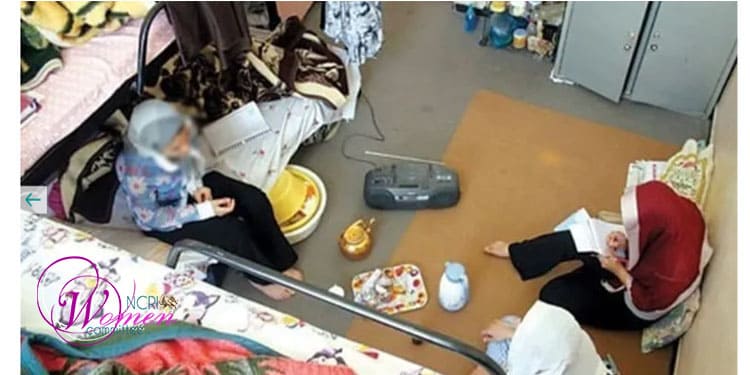
Violence against women in Iran reflects legal and governmental structures that support misogyny and limit accountability for perpetrators. In practice, existing laws often leave women more vulnerable to domestic violence rather than protecting them.
The “Bill for Ensuring Women’s Security Against Violence” has been under consideration for 14 years but has still not been passed. (Fararu – October 19, 2025)
Even using the word “violence” has been one reason the bill was rejected. Ashraf Geramizadegan, Lawyer and legal and parliamentary advisor to the Deputy Minister of Women and Family Affairs, said: “Including the word ‘violence’ in the bill led some to claim it has a ‘feminist’ perspective.” (Shargh – November 6, 2025)
When punishments do not fit the crime, perpetrators see that serious consequences are unlikely. In many cases, court rulings are not only ineffective but also encourage offenders. Romina Ashrafi’s father (the girl whose father beheaded her) is an example of this mindset; he openly stated that if he killed his daughter, he would only face a maximum of 10 years in prison. Even this sentence was not fully served, he was released after just 2 years.
Houses with Closed Doors: The Difficult Path for Women to Safe Shelters
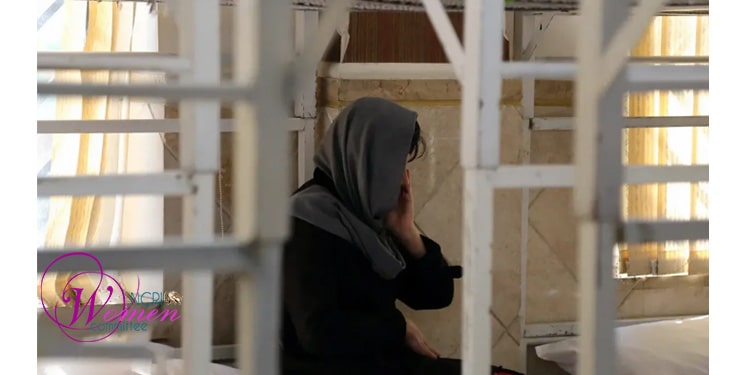
Until 2014, there were essentially no safe shelter in Iran. From 2014, when permission was granted to establish governmental and non-governmental safe shelters, until 2017, 28 shelters were opened. Both their number and the conditions for admission are very limited and difficult for at-risk and homeless women. (Fararu – October 21, 2023)
Safe shelters do not accept women directly. A woman who feels her life is at risk cannot go directly to a safe shelter; she must be accompanied by law enforcement, coordinated through a judicial officer, and her domestic violence claim must be verified. (Behzisti – December 16, 2020)
Only women who have obtained family court permission can access government-run safe shelters under the supervision of Welfare organization.
When a woman cannot leave her home without her husband’s permission, she also cannot seek refuge in a safe shelter without it. (Deutsche Welle – March 3, 2022)
In December 2014, Farid Barati, then Deputy for Social Harm Prevention at Welfare organization, warned that the volume of women seeking safe shelters in the country was alarming.
Mehr News Agency reported on June 19, 2022, that only 8 government-run safe shelters are active in Iran, each with a capacity for about 5 women. In total, only about 135 women can simultaneously use these services—an extremely small number compared to millions of women experiencing violence in Iran.
Salman Hosseini, head of the Social Emergencies Center at Welfare organization, stated that 28 safe shelters operate in 25 provinces, and despite the increase in domestic violence, more shelters are needed. (Shargh – October 11, 2025) Notably, six provinces have no safe shelters at all, and the number of safe shelters has not increased over the 11 years from 2014 to 2025
Mahmoud Aligu, Director-General of Social Harm Prevention at Welfare organization, said: “Safe shelters across the country, operated with the support of NGOs since 2016, currently include 8 government and 20 non-government shelters. These safe shelters are the only centers where mothers and children can stay together for 4 to a maximum of 8 months, with daughters of any age and sons up to 12 years old.” (Mehr News Agency – June 19, 2022)
According to the instructions of the Welfare Organization, women experiencing violence can stay in safe shelters for 2 to 4 months. (Behzisti – December 16, 2020)
Even in private safe shelters, women can only stay for one year before having to leave. (Fararu – October 21, 2023)
Fariba Darvishi, head of the Social Harm Victims Office at Welfare organization,
said: “The limited capacity of safe shelters in the country only allows for the care of 10% of women experiencing violence.” (Faratab – August 13, 2025)
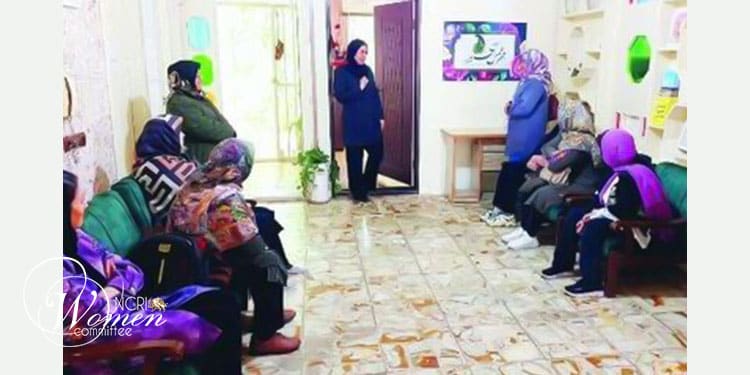
Closure of Safe Shelters; The Continuation of Violence in an Official Disguise
Safe shelters, which are supposed to serve as the last refuge for women at risk of physical and psychological harm, are themselves limited and vulnerable. Over the past three years, the attention of the Welfare Organization to the activities of non-governmental safe shelters has effectively dropped to zero. This situation has made it difficult for these shelters to survive and continue operating, reducing hopes of establishing new branches.
From autumn 2021 to May 2024, a period of 32 months, five non-governmental safe shelters were closed due to government pressures: Saraye Ghazal (in Navab Street), Khorshid House (in the Darvazeh Ghar area), Noor-e-Sepid-e Hedayat Institute (in Shoosh Square), Women’s Night Shelter (in the Darvazeh Ghar area), and Doctors Without Borders (in the Molavi Street area). These five centers, established by people and non-governmental associations, provided services to women in need. (Salamat News – May 14, 2024)
Non-governmental safe shelters face budget shortages, security threats, and arbitrary pressures from authorities. Even centers established with public support and charitable organizations are at risk of closure. These restrictions not only limit supportive services but also reduce the motivation of activists to establish new centers. (Shargh – October 11, 2025)
The founder of the non-governmental safe shelter “Athena” says: “Over these years, we have only fought to survive. We had to keep our flame low to prevent the safe shelter from being shut down. If our voices were louder, they would not have allowed us to continue from the very beginning.” (Shargh – October 11, 2025)
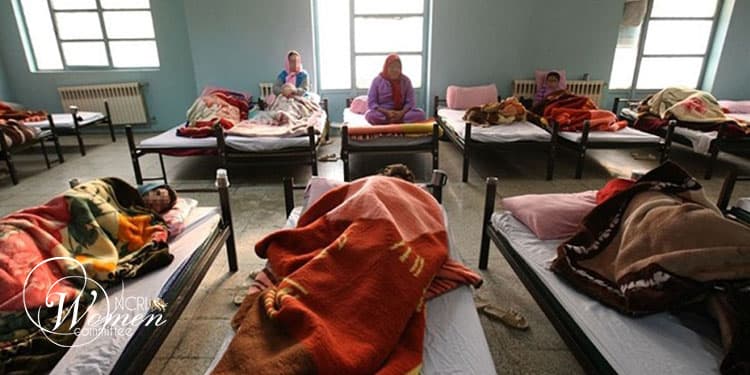
Only Regime Change Can End Gender Violence
These data clearly show that the domestic violence crisis in Iran stems from the misogynistic laws and structures of the regime. The cycle of violence against women in Iran will not be broken unless its primary cause—the misogynistic clerical regime—is directly confronted.
Unlike in many other countries, violence against women in Iran is not due to managerial weakness, budget shortages, deficiencies in social services, or lack of education. The root of the problem lies in the regime’s structure itself and the misogynistic laws that produce and reproduce this violence. The government’s neglect in curbing violence on one hand, and its increasing spread on the other, precisely stems from this reality.
In clearer terms, the problem is neither managerial incompetence, nor lack of funding and staff, nor ignorance, what truly lies at the heart of the matter — the essence of it all — is the regime’s institutionalized misogyny, the root from which all these tragedies arise.
For this reason, the only full and genuine solution to this crisis, as the women of Iran and the people as a whole believe, is the struggle to completely uproot this misogynistic regime. Without regime change, the cycle of violence against women in Iran will continue, leaving many without recourse or refuge.