
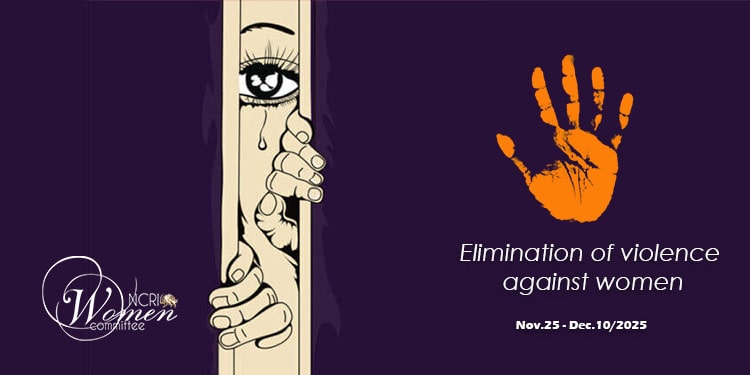
Explosive poverty and the collapse of people’s livelihoods—resulting from an exhausted and devastated economy caused by anti-people policies, plundering, and looting of national wealth by Iran’s clerical regime, including the Islamic Revolutionary Guard Corps (IRGC)—are among the main factors behind the rise in violence against women.
As a result, every year we witness increasing domestic violence, femicide, child abuse, forced marriages of girls—particularly young girls—driven by severe poverty and other social harms under laws that discriminate against women in Iran.
Beyond the inefficiency of statistical systems in Iran, the regime’s lack of transparency and deliberate minimization of social harm prevent an accurate assessment of the real situation. Therefore, figures and statistics published by government sources should be considered cautiously, as the actual numbers are likely far higher.

Explosive Poverty: Livelihood Collapse in Iran
In the past three years (2022–2025), Iran’s economy has faced a combination of runaway inflation, chronic recession, declining purchasing power, and an unprecedented, explosive spread of poverty—a situation described by international organizations as the “economic collapse of household welfare.”
UNICEF, in its 2024 annual report on Iran, stated that more than 32 million Iranians—over one-third of the population—especially women and children, live below the poverty line or face food insecurity.
Data from Iran’s Parliament Research Center indicate that by the end of 2023, more than 30% of the population, equivalent to roughly 25–30 million people, were living below the poverty line, with the poverty line rising over 68% compared to the previous year. According to the International Monetary Fund, Iran’s annual inflation remained in the 40–45% range in 2024–2025, while food and rental inflation in some provinces exceeded 70% (Asianews Iran, July 2025).
Fatemeh Mohajerani, spokesperson for the Pezeshkian government, acknowledged the rising poverty line: “Based on economic and regional indicators, the poverty line in 2024 is estimated at 6,128,739 Tomans per person.”(57.55USD) In 2023, it was about 3,798,000 Tomans(35.66 USD) per person per month, indicating a 30% consolidation of poverty (ISNA News Agency, October 21, 2025).
Hadi Mousavi Nik, a faculty member of the Parliament Research Center, referring to the depth of poverty in Iran, stated: “Over 4 million people in the country cannot even afford daily food” (Khabar Online, October 30, 2025).
Salam Sotoudeh, a member of the Parliament from Mahabad, said on January 7, 2025: “The household budget has shrunk, inflation, high prices, and unemployment are rampant. More than 25 million citizens live below the poverty line nationwide.”

Domestic Violence Driven by Explosive Poverty
This dire and explosive situation has forced Iranian households to spend the majority of their income on essential goods. According to the Statistical Center of Iran, the share of food in household expenses exceeded 50% in 2023. Rising food insecurity, reduced social insurance coverage, and the declining purchasing power of workers and retirees have created a dangerous combination of economic deprivation and psychological stress. When families can no longer meet their basic needs, cycles of tension, violence, and social collapse are triggered.
Therefore, the real consequence of Iran’s devastated economy is the weakening of families’ economic and psychological foundations—creating feelings of frustration, instability, and insecurity across society, and fostering high-risk behaviors, including domestic violence and the breakdown of family bonds.
Some media outlets have explicitly identified “economic pressures and social inequality” as the root causes of many domestic homicides.
“Women and men under economic and livelihood pressures experience decreased psychological resilience, which can lead to increased domestic violence and self-harm.” (Eghtesad24, September 12, 2025)
“Economic pressures and social inequality are the root causes of many domestic homicides. These factors operate through mechanisms such as chronic stress caused by livelihood problems (unemployment, inflation, declining purchasing power, and job insecurity), reducing impulse control and emotional regulation.” (ILNA News Agency, October 26, 2025)
Poverty as a Social and Psychological Phenomenon
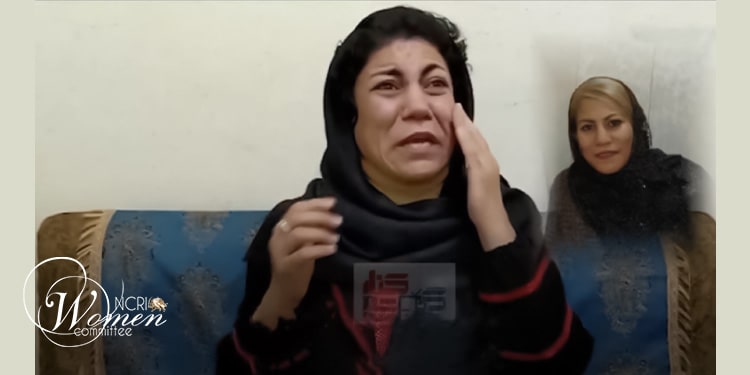
Psychologists and sociologists interviewed by the media also emphasize that poverty is not merely an economic phenomenon, but a social and psychological one that affects people’s thoughts, feelings, and behaviors, gradually pushing society toward being “socially sick.” Increased anxiety and depression due to economic pressure not only harms individual health but also undermines social capital, reduces trust, and ultimately increases violence.
Cases such as a father killing his child due to lack of money or substance abuse, or a man murdering his wife over financial disputes, all have their roots in poverty, which increasingly engulfs society. While murders in any society fall into various categories, root-cause analysis shows that poverty is one of the main drivers of domestic violence and domestic homicides. (Taadol Newspaper, November 7, 2023)
Alireza Sharifi Yazdi, a sociologist and social psychologist, describing the causes of domestic violence against women in Iranian society, stated: “Studies show that 96% of domestic violence is directed at women and 4% at men. This reflects the conditions women experience in families and why violence is mostly against women. The first reason is the country’s current extraordinary situation. We are in a feverish society, and every economic move creates economic pressure on society, resulting in psychological pressure on families. Most men feel entitled to release the psychological stress they endure in society onto women in their households.”
All violence against women at home or in society is grounded in the misogynistic laws established under Iran’s theocratic regime. In Iran, the law, executive branch, and judicial branches are all structured against women, leaving them without any protection from violence. Consequently, domestic and social violence against women escalates daily, becoming more brutal with each passing day. The only solution to confront and eliminate violence against women in Iran is overthrow of a regime whose very fabric is woven with misogyny.