
Wednesday, August 5, 2026
  • English
  • Français
  • فارسی
  • عربى
PODCASTS
NCRI Women Committee Women Resistance Freedom
  • Home
  • NEWS
    • Women’s News
    • Articles
    • Statements
  • PUBLICATIONS
    • Monthlies
    • Documents
    • Reference Library
  • ABOUT US
    • The NCRI Women’s Committee
    • Gender Equality
    • Women’s Platform
  • MARYAM RAJAVI
    • Maryam Rajavi
    • Maryam Rajavi Speeches
    • The Plan on Women’s Rights and Freedoms
    • Ten-Point Plan for the future of Iran
  • VANGUARDS
    • The Fallen for Freedom
    • Heroines in Chain
    • Women of Iranian Resistance
    • Famous Women
    • Women in History
  • EVENTS
    • IWD Conferences
    • Activities
    • IWD Speeches
    • Solidarity
  • VIDEO
    • Videos
    • IWD Videos
  • PODCAST
  • DONATE
  • CONTACT US
No Result
View All Result
NCRI Women Committee Women Resistance Freedom
  • Home
  • NEWS
    • Women’s News
    • Articles
    • Statements
  • PUBLICATIONS
    • Monthlies
    • Documents
    • Reference Library
  • ABOUT US
    • The NCRI Women’s Committee
    • Gender Equality
    • Women’s Platform
  • MARYAM RAJAVI
    • Maryam Rajavi
    • Maryam Rajavi Speeches
    • The Plan on Women’s Rights and Freedoms
    • Ten-Point Plan for the future of Iran
  • VANGUARDS
    • The Fallen for Freedom
    • Heroines in Chain
    • Women of Iranian Resistance
    • Famous Women
    • Women in History
  • EVENTS
    • IWD Conferences
    • Activities
    • IWD Speeches
    • Solidarity
  • VIDEO
    • Videos
    • IWD Videos
  • PODCAST
  • DONATE
  • CONTACT US
No Result
View All Result
NCRI Women Committee
No Result
View All Result
Home Articles
Widows in Iran: An Analysis of Legal Challenges and the Structure of Discrimination

Widows in Iran: An Analysis of Legal Challenges and the Structure of Discrimination

July 17, 2026
in Articles

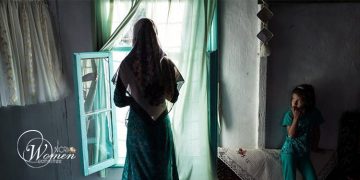
Introduction: In the political and legal structure governing Iran, misogyny and gender discrimination have been institutionalized as a fundamental principle, heavily impacting the fabric of family and society. In the midst of this crisis, widows in Iran and female-headed households remain among the most vulnerable segments of society. Following the loss of a spouse, they are suddenly abandoned within a government support vacuum and subjected to a barrage of the regime’s medieval laws. This article examines the legal dimensions and contradictory statistics surrounding the crisis of widows in Iran.

Discriminatory Laws and Rejecting International Widows’ Day for Widows in Iran

In the Iranian legal system, where gender-based discrimination is deeply entrenched, women are not recognized as heads of household. As a result, when a woman becomes a widow, she is not only burdened with the emotional weight of her loss, but is also thrust into a web of economic, social, and legal challenges. In this context, widowhood becomes more than a personal tragedy—it is treated as a social stigma.

Widowed women are often marginalized and excluded from full participation in society. They face a host of legal obstacles, particularly in areas such as inheritance, child custody, property ownership, and access to insurance. The legal framework is overwhelmingly designed in favor of men, leaving widows vulnerable to systemic injustice and discrimination.

The Iranian regime does not even recognize International Widows’ Day on its calendar.

Contradictory Statistics and Lack of Transparency

According to the state-run Jahan-e Sanat newspaper, September 21, 2020, there are approximately 5.1 million widowed or divorced women in Iran. Previously, Shargh newspaper (July 4, 2011) had reported this number as 6 million.

According to the National Statistical Center of Iran and the 2006 national census, the number was 1.89 million—six times the number of widowed men.

In 2017, 15,000 widowed girls under the age of 15 were reported.

Female Heads of Households

According to the Donya-e-Eqtesad economic news site (May 3, 2025), the number of female heads of households has surpassed 6 million, with half lacking any form of insurance. In addition to running their households, these women are deprived of basic social support and are exposed to hidden forms of violence and dependency.

Social and Cultural Conditions

Under the ruling system, women are not officially recognized as heads of households, and widowhood is considered a “social disaster.” Widowed women are often marginalized and excluded from social participation.

According to Etemad newspaper (June 23, 2018), over 90% of widows do not remarry—this is largely due to social, cultural, and familial pressures rather than personal choice. This is especially true given that, under Iranian law, women lose custody of their children upon remarriage.

The Main Problems and Challenges Faced by Widows in Iran

Widows in Iran, in a society shaped by patriarchal laws and a misogynistic regime, face compounded hardships following divorce or the death of a spouse. On one hand, they must deal with the trauma of separation and prepare themselves for a new life situation. On the other, they must endure legal, economic, and cultural pressures imposed by the ruling misogynist system.
Widows in Iran: An Analysis of Legal Challenges and the Structure of Discrimination

Economic and Social Problems of Widowed and Divorced Women

Poverty, Unemployment, and Lack of Support

Widowed women are often responsible for providing for their families, but insufficient financial support from the government has led to a crisis in their lives. According to Negar Akbari-Zargar, a member of the Iranian Psychological Association, these women are often exploited in the workplace, hired at wages below standard, and due to a lack of awareness about their rights, accept any job under any condition. They work in poor conditions, suffer abuse, and remain silent out of fear of unemployment. (State-run Asr-e Iran website – June 22, 2020)

Post-Divorce Hardships According to a Social Worker


Anvar Samadi-Rad, a sociologist, lists the main post-divorce issues for women in this order:

71% of divorced and widowed women with children are single parents. Only 16% are employed, and most rely on the help of others to meet basic living needs. (State-run Qods Online website – March 3, 2013)

Widowed and divorced women in Iran even face housing challenges. 39% of them struggle to find housing or are unable to stay in hotels or guesthouses. Patriarchal attitudes and economic difficulties are the main obstacles preventing them from renting or purchasing a home. (State-run Qods Online website – March 3, 2013)

Social and Cultural Challenges

Social Perception, Discrimination, and Its Psychological and Behavioral Consequences

Discrimination and Society’s Negative Perception


In addition to grieving the loss of their spouses, widowed women face societal pressures and the difficult role of becoming heads of households while lacking job opportunities. This social discrimination leads to their isolation, restrictions on social engagement, and even control over their personal behavior. (Asr-e Iran – June 22, 2020)

Increased Exposure to Social Harm


According to Akbari-Zargar, rising divorce rates, inflation, unemployment, and lack of skills among these women place them at risk of being forced into street vending, begging, or unsafe jobs. Many are still young and have several children, yet are compelled to join the workforce quickly, without adequate skills or social support.

Lack of Financial Independence and Familial Interference


One of the root causes of problems for these women is their lack of financial independence and low wages. Along with economic hardship, interference from family members in personal decisions (such as commuting, housing, remarriage, etc.) places additional pressure on them.

They are even exploited in the workplace—faced with inappropriate proposals or offers of temporary marriages (sigheh), because society views them as vulnerable and unprotected. ( Asr-e Iran – June 22, 2020)

Widows in Iran: An Analysis of Legal Challenges and the Structure of Discrimination

Legal Challenges

Widows face numerous legal obstacles, including those related to inheritance, child custody, property ownership, and insurance.

The government’s laws are largely written to favor men, and widows fall victim to this institutionalized discrimination. Abdolsamad Khorramshahi, a women’s rights activist, states that there is no specific law to support this group—or if such a law exists, it is not enforced. ( ISNA – June 23, 2022)

Psychological and Physical Pressures


Economic and social pressures, along with the lack of mental health support and counseling, lead to depression, anxiety, and other psychosomatic issues among widows.

According to Akbari-Zargar, women who are alone or without guardians suffer from tension headaches, cardiovascular diseases, diabetes, and mental health disorders such as obsessive thoughts, anxiety, and depression. ( Asr-e Iran – June 22, 2020)

Conclusion

As the stories above reveal, the plight of widowed women in Iran is not just a reflection of isolated social issues—it is the manifestation of a far-reaching catastrophe for which the clerical regime bears direct and deliberate responsibility. In a system where the highest priority is to preserve the regime at any cost, the judiciary and state institutions not only fail to protect women but actively profit from their systematic repression and humiliation.

For widows, losing a husband is just the beginning. What follows is a storm of legal, familial, social, and economic pressures—from losing custody of their children to the father-in-law, to being denied a fair share of inheritance; from being branded as “second-hand” in future marriages to facing sexual harassment at work. These are not isolated hardships but interconnected forms of violence embedded in the laws and the official culture of the clerical regime.

Therefore, true liberation for widowed women in Iran cannot come through minor legal reforms or cultural awareness campaigns. It can only be achieved through the overthrow of the clerical regime and its replacement with a democratic republic based on popular sovereignty.

The free world must stand in solidarity with the courageous women who, despite the risks, rise up to fight this regime. We call on the international community—and particularly the global women’s rights movement—to support us in the Women’s Committee of the National Council of Resistance of Iran in this vital struggle.
Tags: Generation EqualityPovertyViolence against womenWomen Heads of Household
ShareTweetPinShareSendShareShare

Related Posts

State Killing in Iran: 3 Members of a Family Killed in Arbitrary Shooting

July 29, 2026
State Killing in Iran: 3 Members of a Family Killed in Arbitrary Shooting

Maryam Aslani, Somayeh Tavakkoli, and Mehdi Tavakkoli were killed in state killing, after being directly targeted in an arbitrary shooting carried out by intelligence forces of the Revolutionary...

Read moreDetails

The 1988 Massacre: The Greatest Unpunished Crime Against Humanity

July 28, 2026
The 1988 Massacre: The Greatest Unpunished Crime Against Humanity

The Glorious Epic of Resistance by PMOI Women in the Anti-Human Clerical Regime's Prisons The massacre of over 30,000 political prisoners in the summer of 1988 is recorded...

Read moreDetails

The Hidden Victimization and Exploitation of Widows in Iran

July 23, 2026
The Hidden Victimization and Exploitation of Widows in Iran

Exploitation of widows in Iran Introduction: The survival of the mullahs' regime rests on two fundamental pillars: overt suppression in society and institutionalized misogyny within its laws. The...

Read moreDetails

Erased After Loss: The Untold Story of Widows in Iran

July 21, 2026
The Untold Story of Widows in Iran

Inside Iranian Regime's System of Discrimination Against Widows Welcome to another episode of podcasts of the Women's Committee of the National Council of Resistance of Iran. Imagine waking...

Read moreDetails

Iranian Women Trapped by War, Poverty, and Domestic Abuse

July 14, 2026
Iranian Women Trapped by War, Poverty, and Domestic Abuse

The war and intensifying economic crises in recent months have exerted the greatest and most direct pressure on Iranian women, placing them on the frontline of vulnerability as...

Read moreDetails
Next Post
Iran: 7th Day of Hunger Strike by Nirvana Torbati Nejad in Gorgan Prison

Iran: 7th Day of Hunger Strike by Nirvana Torbati Nejad in Gorgan Prison

Documents

Call for Immediate Action to Halt the Death Sentence of Arghavan Fallahi

Sign our Statement to Halt the Death Sentence of 25-Year-Old Political Prisoner Arghavan Fallahi

July 10, 2026

Statement Calling for Immediate Action to Halt the Death Sentence of 25-Year-Old Political Prisoner Arghavan Fallahi We express our profound...

The Ineffectiveness of Population Policies in Iran: Economy, Aging, and the Overlooked Rights of Women

The Ineffectiveness of Population Policies in Iran: Economy, Aging, and the Overlooked Rights of Women

July 10, 2026

Abstract: A compilation of official data, media reports, and disclosures published in April, May, and June 2026 demonstrates that Iran...

Crushed by Design: Structural Crises and Inequitable Policies Push Female-Headed Households to the Edge

Crushed by Design: Structural Crises and Inequitable Policies Push Female-Headed Households to the Edge

May 18, 2026

Introduction Life for the Iranian people under the religious dictatorship is fraught with hardship and peril from every perspective. Whether...

Monthlies

July 2026 Report: Death Sentences for Women Rising Up to Overthrow the Mullahs' Regime
Monthlies

July 2026 Report: Death Sentences for Women Rising Up to Overthrow the Mullahs’ Regime

July 31, 2026
June 2026 Report: Working Iranian Women Erased from Labor Market
Monthlies

June 2026 Report: Working Iranian Women Erased from Labor Market

July 5, 2026
May 2026 Report: The Enduring Resistance of Iranian Women
Monthlies

May 2026 Report: The Enduring Resistance of Iranian Women

May 31, 2026
April 2026 Report: Mass Arrests of Women: Targeted Repression in Time of Crisis
Monthlies

April 2026 Report: Mass Arrests of Women in Iran

April 30, 2026

Articles

The 1988 Massacre: The Greatest Unpunished Crime Against Humanity

The 1988 Massacre: The Greatest Unpunished Crime Against Humanity

July 28, 2026

The Glorious Epic of Resistance by PMOI Women in the Anti-Human Clerical Regime's Prisons The massacre of over 30,000 political...

The Hidden Victimization and Exploitation of Widows in Iran

The Hidden Victimization and Exploitation of Widows in Iran

July 23, 2026

Exploitation of widows in Iran Introduction: The survival of the mullahs' regime rests on two fundamental pillars: overt suppression in...

Widows in Iran: An Analysis of Legal Challenges and the Structure of Discrimination

Widows in Iran: An Analysis of Legal Challenges and the Structure of Discrimination

July 17, 2026

Introduction: In the political and legal structure governing Iran, misogyny and gender discrimination have been institutionalized as a fundamental principle,...

The Fallen for Freedom

Shiva Bordbar Javid
The Fallen for Freedom

Shiva Bordbar Javid

August 4, 2026
Fatemeh Alizadeh, a 28-year-old pregnant woman
The Fallen for Freedom

Fatemeh Alizadeh

July 29, 2026
Sahar Bayat was killed on January 8, 2026
The Fallen for Freedom

Sahar Bayat

July 23, 2026
Saba Negahban, known as "Venus," was killed on Friday, January 9, 2026, by direct fire from the regime’s suppressive forces
The Fallen for Freedom

Saba Negahban

July 22, 2026

ABOUT US

NCRI Women Committee

We work extensively with Iranian women outside the country and maintain a permanent contact with women inside Iran. The Women’s Committee is actively involved with many women’s rights organizations and NGO’s and the Iranian diaspora.
The committee is a major source of much of the information received from inside Iran with regards to women. Attending UN Human Rights Council meetings and other international or regional conferences on women’s issues and engaging in a relentless battle against the Iranian regime’s misogyny are part of the activities of members and associates of the committee.

CATEGORIES

  • Activities
  • Articles
  • Documents
  • Famous Women
  • Heroines in Chain
  • IWD Conferences
  • IWD Speeches
  • IWD Videos
  • Maryam Rajavi
  • Maryam Rajavi Speeches
  • Monthlies
  • Podcast
  • Reference Library
  • Solidarity
  • Statements
  • The Fallen for Freedom
  • Videos
  • Women in History
  • Women in Leadership
  • Women of Iranian Resistance
  • Women's News

BROWSE BY TAG

Child marriage coronavirus education execution forced hijab Gender Gap Generation Equality Honor killings Iran Teachers Maryam Akbari Monfared Nurses Plan on Women's Rights and Freedoms Poverty Prisoners Protests rural women Saba Kord Afshari The girl child Violence against women Women's Leadership Women Heads of Household Zeinab Jalalian

The copyright of all the material published on this website has been registered under © 2016 the Women’s Committee of the National Council of Resistance of Iran. To obtain permission to copy, redistribute or publish the material published on this website, you should write to the NCRI Women’s Committee. Please include the link of the original article on our website, women.ncr-iran.org.

Welcome Back!

Login to your account below

Forgotten Password?

Retrieve your password

Please enter your username or email address to reset your password.

Log In

Add New Playlist

No Result
View All Result
  • Home
  • News
    • Women’s News
    • Articles
    • Statements
  • Publications
    • Monthlies
    • Documents
    • Reference Library
  • About Us
    • The NCRI Women’s Committee
    • Gender Equality
    • Women’s Platform
  • Maryam Rajavi
    • Maryam Rajavi
    • Maryam Rajavi Speeches
    • Ten Point Plan for Iran
    • The Plan on Women’s Rights and Freedoms
  • Vanguards
    • The Fallen for Freedom
    • Heroines in Chain
    • Women of Iranian Resistance
    • Famous Women
    • Women in History
  • Events
    • IWD Conferences
    • Activities
    • IWD Speeches
    • Solidarity
  • Video
    • Videos
    • IWD Videos
  • Podcast
  • DONATE
  • Contact us
  • فارسی
  • عربی
  • Français

The copyright of all the material published on this website has been registered under © 2016 the Women’s Committee of the National Council of Resistance of Iran. To obtain permission to copy, redistribute or publish the material published on this website, you should write to the NCRI Women’s Committee. Please include the link of the original article on our website, women.ncr-iran.org.