
Monday, October 26, 2026
  • English
  • Français
  • فارسی
  • عربى
PODCASTS
NCRI Women Committee Women Resistance Freedom
  • Home
  • NEWS
    • Women’s News
    • Articles
    • Statements
  • PUBLICATIONS
    • Monthlies
    • Documents
    • Reference Library
  • ABOUT US
    • The NCRI Women’s Committee
    • Gender Equality
    • Women’s Platform
  • MARYAM RAJAVI
    • Maryam Rajavi
    • Maryam Rajavi Speeches
    • The Plan on Women’s Rights and Freedoms
    • Ten-Point Plan for the future of Iran
  • VANGUARDS
    • Women in Leadership
    • Fallen Trailblazers of Iran’s Freedom
    • Fallen Heroes of Iran Uprisings
    • Heroines in Chain
    • Women of Iranian Resistance
    • Famous Women
    • Women in History
  • EVENTS
    • IWD Conferences
    • Activities
    • IWD Speeches
    • Solidarity
  • VIDEO
    • Videos
    • IWD Videos
  • PODCAST
  • DONATE
  • CONTACT US
No Result
View All Result
NCRI Women Committee
No Result
View All Result
Home Heroines in Chain
Prison Memoirs and the Resistance of PMOI Women Prison Memoirs of Azam Haj Heydari from the book The Price of Being Human – Part 14

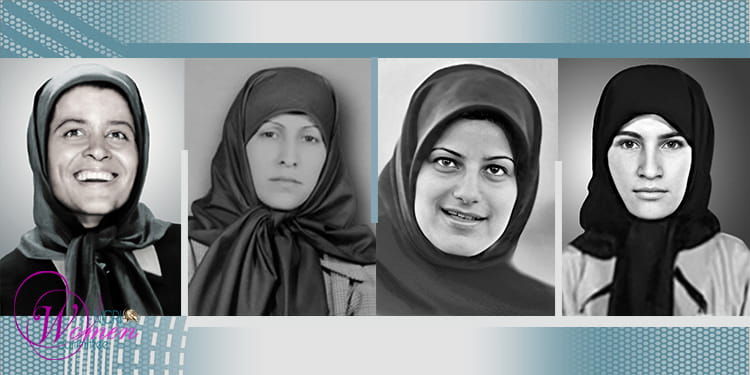
Heroines in chains, from left to right: Razieh Ayatollahzadeh Shirazi, Zohreh Einol-Yagheen, Azam Attarzadeh, Maryam Golzadeh Ghafouri

Prison Memoirs and the Resistance of PMOI Women

July 16, 2026
in Heroines in Chain

Prison Memoirs of Azam Haj Heydari from the book The Price of Being Human – Part Fourteen

In this installment of Azam Haj Heydari’s prison memoirs, published in The Price of Being Human, the author continues recounting the experiences of imprisonment and the resistance of PMOI women. She describes her fellow prisoners’ defiance in the face of one of Evin Prison’s most ruthless executioners and recalls the tragic fate of a young woman whose story remained with her forever.

At the time, Azam was a 22–23-year-old teacher who had chosen the path of resistance. She spent five years imprisoned in the Temporary Judiciary Detention Center, Evin Prison, Ghezel Hesar Prison, and Gohardasht Prison, where she endured brutal torture at the hands of Khomeini’s Revolutionary Guards.

Defying One of Evin Prison’s Most Ruthless Executioners

Because any form of collective activity was forbidden, the prison guards would storm into the ward almost every day under one pretext or another. By beating the prisoners, they tried to create an atmosphere of fear and terror so that no one would even think of celebrating holidays or holding gatherings.

One of their most degrading methods of breaking the resistance of female prisoners was to accuse them of so-called “moral offenses” and then publicly flog them in front of everyone.

One day, they brought a wooden bench into the ward and placed it in the middle of the room. They called the names of several prisoners, including Zohreh Einol-yaqin and Razieh Ayatollahzadeh Shirazi, intending to flog them there in front of the entire ward.

Hourieh Beheshti-Tabar stood up and said:

“If you want to flog us and torture us, then do it. That’s your profession. But this is too much—to flog people while slandering them with false moral accusations and resorting to such despicable methods.”

The guards had not expected anyone to challenge them.

They shouted back:

“So you’re one of them too!”

They then attacked Hourieh like wild animals, raining punches and kicks on her.

Because of the torture she had already endured, Hourieh’s eyesight had deteriorated severely and she relied on very strong prescription glasses. During the beating, her glasses were knocked off, leaving her almost unable to see.

The guards mocked her, tossing her from one side to another like a ball while laughing grotesquely, taking pleasure in the prisoners’ anguish.

Despite everything, Hourieh never lost her composure.

Afterward, the executioners forced her onto the bench to flog her.

But Hourieh’s courage inspired everyone in the ward.

In protest, all the prisoners turned to face the wall.

Not a single woman agreed to watch her fellow prisoners being flogged.

Enraged by this act of solidarity, the executioners summoned a riot squad led by Mojtaba Halvaei, one of the most ruthless executioners in Evin Prison.

Halvaei—whom we had nicknamed “the Gorilla”—burst into the ward with his strike force of twenty to thirty heavily built Revolutionary Guards.

Together with the collaborator prisoners, they attacked us with whips, batons, fists, and kicks, trying to force us to turn around and watch our friends being whipped.

For two continuous hours, they beat the prisoners.

Several of their own batons broke from the force of the blows as they struck prisoners’ heads and arms. Several women lost consciousness.

Yet they failed.

Not one of us agreed to become a spectator to our comrades’ torture.

Through their collective resistance, the prisoners defeated the executioners.

A Tragic Fate

Among all the stories I witnessed in prison, the tragic fate of one young woman has remained engraved in my memory more deeply than almost any other.

One night, unable to sleep, I was walking around the ward when I noticed a girl I did not recognize, as I had only recently been transferred there.

She was unusually quiet, which immediately caught my attention.

She was tall and extraordinarily beautiful, but a profound sadness and suffering had dimmed her youthful face.

That night I saw her wandering among the sleeping prisoners, and something about her behavior seemed unusual.

Her hands rested on her hips, and she appeared to be searching for someone in particular.

Whenever she reached a sleeping prisoner, she would bend down to look closely at her face before moving on.

She looked no older than sixteen or seventeen.

I quietly followed her, watching to see what she was doing.

Suddenly, she bent over one of the prisoners, placed both hands around her throat, and began to strangle her.

Terrified, I immediately grabbed her hands, embraced her, kissed her, and gently tried to calm her down.

Almost immediately she relaxed.

She squeezed my hands tightly, rested her head on my shoulder, and cried silently for nearly an hour.

Several prisoners woke up, including Maryam Golzadeh Ghafouri, who had been the intended victim, and Azam Taqdareh.

They looked at us and silently gestured to me, though I did not understand what they meant.

I was surprised.

If they knew her and knew she was capable of something like this, why did they simply go back to sleep without reacting?

Deeply moved by her condition, I tried to encourage her to speak.

Eventually she told me her name was Nadereh.

What she then described became one of the most heartbreaking stories I ever heard in prison.

She told me how the psychological trauma of witnessing her sister Tahereh being repeatedly sexually assaulted in front of her eyes had shattered her mind.

The memory that haunted her most was seeing her sister tied to a radiator inside the ward while those assaults took place.

Whenever those memories overwhelmed her, she would search among the prisoners for her sister.

Unable to find her, she would suddenly imagine she was face to face with the executioners who had brutalized Tahereh.

As she herself explained,

“I would try to tear the executioner’s throat apart.”

The “Trial”

In 1982, I was finally taken before what they called a court, where I was supposedly tried and sentenced.

The so-called Sharia judge was Ayatollah Mohammad Mohammadi Gilani, one of Khomeini’s most notorious executioners.

A gigantic Revolutionary Guard with an intimidating appearance also stood in the room, supposedly as a witness.

I believe he was really there simply to frighten the accused.

The entire “trial” consisted of little more than a few questions, a barrage of insults, punches, kicks, and beatings.

The whole show lasted no more than ten minutes.

ShareTweetPinShareSendShareShare
Next Post
Women Political Prisoners Face Intensifying Crackdown

Iran: Women Political Prisoners Face Intensifying Crackdown

Recent Posts

Iran Drops to 144th in Gender Gap Index; State Media Admits to the Crisis

Iran Drops to 144th in Gender Gap Index; State Media Admits to the Crisis

October 25, 2026
Marzieh Jalali, 37, Killed During the 2026 Uprising in Isfahan

Marziyeh Jalali

October 23, 2026
Back to the General Ward: Breaking the Prisoners’ Silence

Back to the General Ward: Breaking the Prisoners’ Silence

October 21, 2026
Denial of Medical Care to Female Prisoners Poses Serious Health Risks

Denial of Medical Care to Female Prisoners Poses Serious Health Risks

October 21, 2026
Femicide in Iran: When the Law Grants Killers Impunity Instead of Protecting Women

Femicide in Iran: When the Law Grants Killers Impunity Instead of Protecting Women

October 21, 2026
No to Execution Tuesdays Campaign in Week 143: Prisoners Strike in 66 Prisons

No to Execution Tuesdays Campaign in Week 143: Prisoners Strike in 66 Prisons

October 20, 2026
The Journey of women's leadership in the Iranian Resistance

From a Strategic Paradigm Shift to a Vanguard Movement

October 19, 2026
Hunger in Iran: Women and Children Pay the Price

Hunger in Iran: Women and Children Pay the Price

October 19, 2026

ABOUT US

NCRI Women Committee

We work extensively with Iranian women outside the country and maintain a permanent contact with women inside Iran. The Women’s Committee is actively involved with many women’s rights organizations and NGO’s and the Iranian diaspora.
The committee is a major source of much of the information received from inside Iran with regards to women. Attending UN Human Rights Council meetings and other international or regional conferences on women’s issues and engaging in a relentless battle against the Iranian regime’s misogyny are part of the activities of members and associates of the committee.

CATEGORIES

  • Activities
  • Articles
  • Documents
  • Fallen Heroes of Iran Uprisings
  • Fallen Trailblazers of Iran’s Freedom
  • Famous Women
  • Heroines in Chain
  • IWD Conferences
  • IWD Speeches
  • IWD Videos
  • Maryam Rajavi
  • Maryam Rajavi Speeches
  • Monthlies
  • Podcast
  • Reference Library
  • Solidarity
  • Statements
  • Videos
  • Women in History
  • Women in Leadership
  • Women of Iranian Resistance
  • Women's News

BROWSE BY TAG

Child marriage coronavirus education execution forced hijab Gender Gap Generation Equality Honor killings Iran Teachers Maryam Akbari Monfared Nurses Plan on Women's Rights and Freedoms Poverty Prisoners Protests rural women Saba Kord Afshari The girl child Violence against women Women's Leadership Women Heads of Household Zeinab Jalalian

The copyright of all the material published on this website has been registered under © 2016 the Women’s Committee of the National Council of Resistance of Iran. To obtain permission to copy, redistribute or publish the material published on this website, you should write to the NCRI Women’s Committee. Please include the link of the original article on our website, https://wncri.org

Welcome Back!

Login to your account below

Forgotten Password?

Retrieve your password

Please enter your username or email address to reset your password.

Log In

Add New Playlist

No Result
View All Result
  • Home
  • News
    • Women’s News
    • Articles
    • Statements
  • Publications
    • Monthlies
    • Documents
    • Reference Library
  • About Us
    • The NCRI Women’s Committee
    • Gender Equality
    • Women’s Platform
  • Maryam Rajavi
    • Maryam Rajavi
    • Maryam Rajavi Speeches
    • Ten Point Plan for Iran
    • The Plan on Women’s Rights and Freedoms
  • Vanguards
    • Fallen Trailblazers of Iran’s Freedom
    • Fallen Heroes of Iran Uprisings
    • Heroines in Chain
    • Women of Iranian Resistance
    • Famous Women
    • Women in History
  • Events
    • IWD Conferences
    • Activities
    • IWD Speeches
    • Solidarity
  • Video
    • Videos
    • IWD Videos
  • Podcast
  • DONATE
  • Contact us
  • فارسی
  • عربی
  • Français

The copyright of all the material published on this website has been registered under © 2016 the Women’s Committee of the National Council of Resistance of Iran. To obtain permission to copy, redistribute or publish the material published on this website, you should write to the NCRI Women’s Committee. Please include the link of the original article on our website, https://wncri.org