
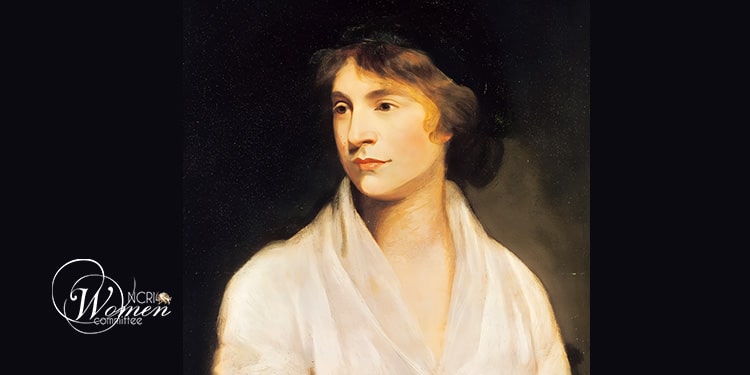
Mary Wollstonecraft (April 27, 1759 – September 10, 1797) was a groundbreaking English writer, philosopher, and one of the earliest advocates for women’s rights. Often hailed as the founder of modern feminism, Wollstonecraft’s bold ideas challenged the gender norms of the 18th century and laid the foundation for future movements toward equality.
Born in London, Wollstonecraft overcame poverty, limited education, and social constraints to become one of the most influential voices of her time. Her most famous work, A Vindication of the Rights of Woman (1792), argued that women were not naturally inferior to men but appeared so only because they lacked access to education. This revolutionary text called for equal opportunities for women in education, work, and society, ideas that were centuries ahead of their time.
Beyond her feminist philosophy, Wollstonecraft was also a novelist, educator, and translator. Her earlier work, Thoughts on the Education of Daughters (1787), explored how education could empower women to lead meaningful lives. She also wrote Mary: A Fiction (1788) and Letters Written During a Short Residence in Sweden, Norway, and Denmark (1796), a blend of travel writing and personal reflection that remains admired for its emotional depth and literary style.
As a woman who lived by her principles, Wollstonecraft defied societal expectations, earning both criticism and admiration. Her legacy lived on through her daughter, Mary Shelley, author of Frankenstein, and through generations of women inspired by her courage to demand equality.
Mary Wollstonecraft remains a trailblazer in women’s history, a fearless writer whose vision of gender equality continues to resonate in the modern world.