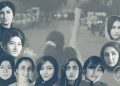
From the memoir by Hengameh Haj Hassan
In Part 13 of Face to Face with the Beast, Hengameh Haj Hassan described the prisoners’ collective tricks to foil Haj Davood’s cruelty—turning confiscations and punishments into occasions for organized resistance. In this installment she recalls how the women resisted when the regime began banning even simple handicrafts and shared pastimes.
Nothing Allowed
In Ghezel Hesar, the women made all kinds of beautiful, sometimes truly artistic handicrafts with the simplest materials. They molded small sculptures and flowers from bread dough and colored them with ball-point ink, placing them in tiny tooth-pottery jars as if delicate flowers sat inside a glass frame.
They unraveled yarn from worn sweaters or torn socks to weave and embroider lovely handiwork. Knitting needles were improvised from two opened safety pins. From stones and date seeds they strung necklaces, rosaries, and little decorative objects to give as gifts—when possible—to their families or their children outside.

But because these activities were a form of resistance—because prisoners drew spirit and morale from them—the regime banned them to tighten the pressure. They started with newspapers and magazines, then moved on to books of all kinds, then even religious texts, and finally the Quran.
Sometimes they found a pretext to justify a ban and blamed us for it. For example, when we solved the crossword together they accused us of organizing and “having cells,” and snatched away the newspaper crossword page. Later they claimed we were making political analyses from the papers and banned newspapers altogether—even government papers.
They also confiscated religious books, saying we were reading them in an organized way and “interpreting” them against the state. The Quran was the last book they could not easily justify taking away—how could the so-called Islamic Republic prevent people it claimed to be guiding from reading the Quran? It was an embarrassment for them, but shameless as they were, they did it anyway.

After a while they banned handicrafts too. They could seize books or Qurans and carry them off, but they could not seize the inner life in each prisoner so easily. Handiwork came from that inner life.
When the guards took away the newspapers and crossword pages, Manijeh said, “Don’t worry—that’s my problem! They want to get at our morale; we’ll show them!” That night she produced a far larger, livelier crossword she had designed herself, filling it with all sorts of humorous clues.
From then on making crosswords became one of her main activities—she never stopped, and her puzzles were more entertaining than the newspaper ones.
Sometimes in the yard you would see a woman slowly rubbing a stone against a wall while one or two others stood guard to warn if a spy approached. They had a signal or a name they used among themselves; after a few days a beautiful object would emerge from the stone.
The girls made handicrafts in secret and with mutual help so that the regime could not crush them. They always found another way to keep fighting.
In short: whatever method the regime used to apply pressure, the women neutralized it with a substitute, though this resistance came at a price—torture, solitary confinement, and other punishments.

Footnotes
Crossword / shared activities: Solving crosswords, reading papers, or sharing books were treated by guards as signs of “organization” (i.e., political cells), giving them an excuse to punish prisoners.
Manijeh: A fellow prisoner who organized morale-boosting activities (crosswords, crafts) and became known for creating elaborate, hidden pastimes that helped sustain the group’s spirits.