
Friday, October 16, 2026
  • English
  • Français
  • فارسی
  • عربى
PODCASTS
NCRI Women Committee Women Resistance Freedom
  • Home
  • NEWS
    • Women’s News
    • Articles
    • Statements
  • PUBLICATIONS
    • Monthlies
    • Documents
    • Reference Library
  • ABOUT US
    • The NCRI Women’s Committee
    • Gender Equality
    • Women’s Platform
  • MARYAM RAJAVI
    • Maryam Rajavi
    • Maryam Rajavi Speeches
    • The Plan on Women’s Rights and Freedoms
    • Ten-Point Plan for the future of Iran
  • VANGUARDS
    • Fallen Trailblazers of Iran’s Freedom
    • Fallen Heroes of Iran Uprisings
    • Heroines in Chain
    • Women of Iranian Resistance
    • Famous Women
    • Women in History
  • EVENTS
    • IWD Conferences
    • Activities
    • IWD Speeches
    • Solidarity
  • VIDEO
    • Videos
    • IWD Videos
  • PODCAST
  • DONATE
  • CONTACT US
No Result
View All Result
NCRI Women Committee Women Resistance Freedom
  • Home
  • NEWS
    • Women’s News
    • Articles
    • Statements
  • PUBLICATIONS
    • Monthlies
    • Documents
    • Reference Library
  • ABOUT US
    • The NCRI Women’s Committee
    • Gender Equality
    • Women’s Platform
  • MARYAM RAJAVI
    • Maryam Rajavi
    • Maryam Rajavi Speeches
    • The Plan on Women’s Rights and Freedoms
    • Ten-Point Plan for the future of Iran
  • VANGUARDS
    • Fallen Trailblazers of Iran’s Freedom
    • Fallen Heroes of Iran Uprisings
    • Heroines in Chain
    • Women of Iranian Resistance
    • Famous Women
    • Women in History
  • EVENTS
    • IWD Conferences
    • Activities
    • IWD Speeches
    • Solidarity
  • VIDEO
    • Videos
    • IWD Videos
  • PODCAST
  • DONATE
  • CONTACT US
No Result
View All Result
NCRI Women Committee
No Result
View All Result
Home Articles
Poverty- When Mothers Manage Hunger: Shrinking Food Budgets for Women and Children in Iran

When Mothers Manage Hunger: Shrinking Food Budgets for Women and Children in Iran

October 15, 2026
in Articles, Women's News

Poverty and deprivation move from the margins to the mainstream

For many countries, World Food Day and the International Day for the Eradication of Poverty serve as reminders of governments’ commitments to ensuring the minimum necessities of life. In contemporary Iran, these occasions do not inspire hope for a better future; rather, they expose the grim reality of 48 years under a ruthless dictatorship—one that has stripped Iranians of their right to self-governance and squandered their wealth to prolong its tyranny.

In Iran, poverty and malnutrition are no longer problems confined to a limited segment of society, such as people living in deprived neighborhoods, the unemployed, workers, or rural communities. As a result of the regime’s destructive policies, teachers and nurses are now living in extreme poverty, while even doctors and engineers struggle to make ends meet with constant anxiety over basic daily expenses.

The soaring costs of food, housing, healthcare, and education have affected a large proportion of the working class, retirees, rural residents, women heads of household, and people holding multiple jobs, pushing much of the middle class into poverty.

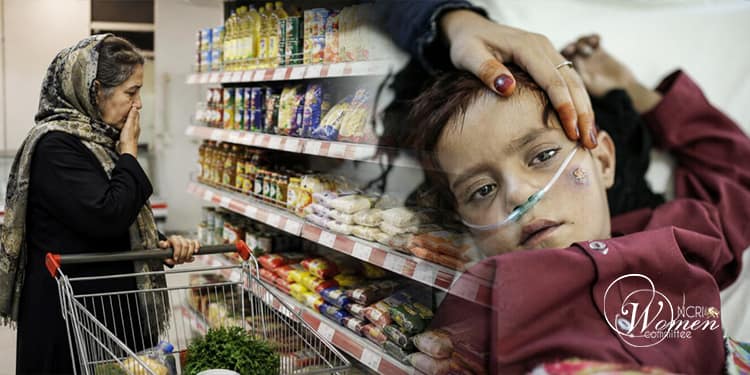
In this crisis, women, who suffer from systematic gender discrimination enshrined in law, and children are among the most vulnerable. Children’s physical and mental development is sacrificed to empty dinner tables, while women bear the burden of insecure, poorly paid work alongside the unpaid responsibility of caring for their families.
When Mothers Manage Hunger: Shrinking Food Budgets for Women and Children in Iran

Official Admissions of Widespread Malnutrition

Evidence of this situation can even be found in official and government-affiliated reports.

On August 3, 2026, the Mehr News Agency, citing the Deputy Minister for Welfare and Economic Affairs at the regime’s Labor Ministry, reported that more than 262,000 children aged five to 59 months were suffering from malnutrition. The Donya-e Eghtesad website also reported on July 9, 2026, that more than 180,000 children under the age of five were malnourished.

These figures represent only those identified through government programs. Millions of children living in deprived urban areas and rural communities, as well as undocumented children and others, are never included in the regime’s screening programs. Yet even these incomplete figures are sufficient to show that child malnutrition is no longer a marginal warning sign.

The expansion of the electronic food voucher[1] program paints a similar picture.

On August 18, 2026, Iran Online reported that the number of people eligible for food vouchers had risen from approximately 72.5 million to 87.5 million. This figure effectively demonstrates that the need for assistance to cover basic food expenses is no longer confined to a poor minority but has become a need affecting virtually the entire population.

Such admissions reveal a widening gap between the incomes of Iranian people and the cost of staying alive. In reality, these measures amount to little more than handouts in rials to the public, financed against a backdrop of massive dollar-denominated theft of the nation’s wealth through various means.

Soaring Prices, Food Deprivation, and the Normalization of Hunger

On September 23, 2026, Arman-e Emrooz reported that Iran ranked 90th out of 167 countries in the food security index.

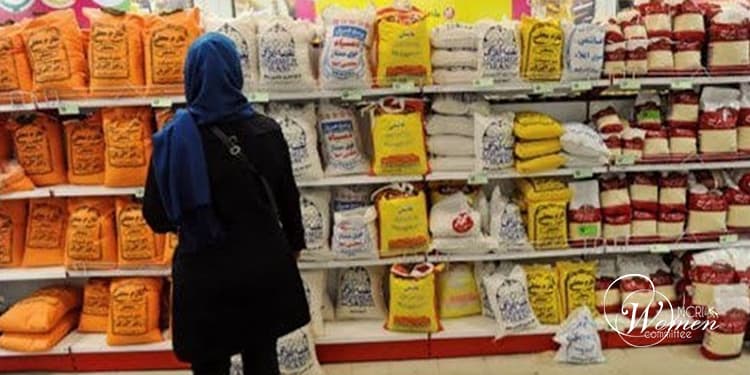
On September 22, 2026, Tose’e Irani reported that year-on-year inflation for food and beverages had reached 127.5 percent in August. The cost of a schoolchild’s snack accounts for approximately 24 percent of a worker’s monthly income.

On June 5, 2026, the Tabnak website reported on the increasingly empty pockets and dinner tables of Iranian households as the prices of basic commodities surged, citing figures from the regime’s statistics agency. Within a single month, egg prices had risen by 45.2 percent, chicken by 25 percent, solid vegetable oil by 16.7 percent, and liquid cooking oil by 15.5 percent. The same report put year-on-year inflation at 431.3 percent for solid vegetable oil, 342.9 percent for eggs, and 287.4 percent for chicken.

For many households, removing meat, chicken, fruit, and dairy products from their diets has become an everyday reality.

A report published by Fararu on September 14, 2026, drawing on Tose’e Irani, presented distressing accounts from the Mokhtari, Shush, and Darvazeh Ghar neighborhoods. Residents were buying bread on credit, queuing for discarded chicken parts, and witnessing declining dairy sales as shopkeepers could no longer afford to extend credit to customers. These are not signs of a society on the brink of a conventional famine. They are signs of hunger becoming normalized in a country where food is available in the market but remains unaffordable for millions.

On September 10, 2026, the Siyasat-e Rooz newspaper published a report titled “Tehran: Where Even Having a Job No Longer Guarantees Escape from Poverty.” It placed the national poverty line at approximately 32 million tomans and Tehran’s poverty line at 62.5 million tomans, while putting the minimum wage for a married worker at around 24 million tomans.

In labor reports published in 2025 and 2026, the ILNA news agency also highlighted the vast gap between wages and the cost of basic living expenses. The estimated cost of a household subsistence basket stood at 71.3 million tomans in May 2026 and had risen to 90 million tomans by August of the same year.

Under these conditions, having a job no longer means escaping poverty. Many households rely on second jobs, overtime, borrowing, or selling their possessions. Others cut back on food, healthcare, and education simply to make it to the end of the month.

In September 2026, the state-affiliated Siyasat-e Rooz newspaper wrote that the issue was not merely a question of wages but of the purchasing power of millions of households. The minimum wage for workers in 2026 had been raised by 60 percent, yet year-on-year inflation in August was reported at approximately 89 percent, while inflation for food and beverages had exceeded 127 percent.

For a woman heading a household who is unemployed or dependent on informal work, the challenge extends far beyond figures on paper. Every day, she must confront the prices of meat, chicken, rice, dairy products, rent, medicine, transportation, and her children’s education, struggling to meet her family’s most basic needs.
When Mothers Manage Hunger: Shrinking Food Budgets for Women and Children in Iran

Women and Children: Victims of Poverty

In this crisis, women are both victims of poverty and the hidden pillars of family survival. In a report titled “Women’s Economic Participation Rate Is Just 13.4 Percent,” Farhikhtegan Online reported that the female unemployment rate stood at around 15 percent, nearly twice the rate for men, and that 64 percent of women’s employment in 2025 was concentrated in the services sector.

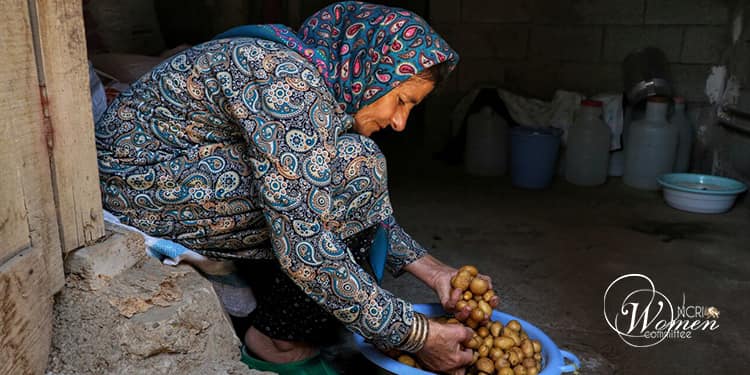
On August 27, 2026, Eghtesad24 published a report on seasonal women workers in Saqqez and Bukan, showing how women are forced to take on difficult, insecure jobs without adequate support to make up for household income shortfalls. These jobs are followed by a second, unpaid shift at home.

Data from UN Women’s Empowerment and Gender Data Hub for Iran, updated in 2025, also show that women and girls aged 15 and older spend 22.5 percent of their time on unpaid care and domestic work, compared with 4.5 percent for men.

Poverty, therefore, means far more than reduced income for women. It means physical exhaustion, exclusion from stable employment, economic dependence, the burden of caregiving, relentless anxiety about their children’s future, and suffering that remains invisible in official statistics.

For children, poverty today can become deprivation tomorrow. Malnutrition in the early years of life can lead to brain damage, disability, and the perpetuation of intergenerational poverty.

A report published by Hamvatan on September 2, 2026, highlighted the link between financial hardship and education, citing domestic reports that put the number of children out of school at 919,855. When families are forced to choose between rent, bread, medicine, school clothes, and hidden education costs, children lose more than a meal. They lose opportunities for their future as well. Girls are particularly vulnerable because the laws governing Iran define them as dependent on men in virtually every sphere, placing them among those most at risk of being deprived of education.
When Mothers Manage Hunger: Shrinking Food Budgets for Women and Children in Iran

The Regime’s Share of the Budget and the People’s Dinner Table

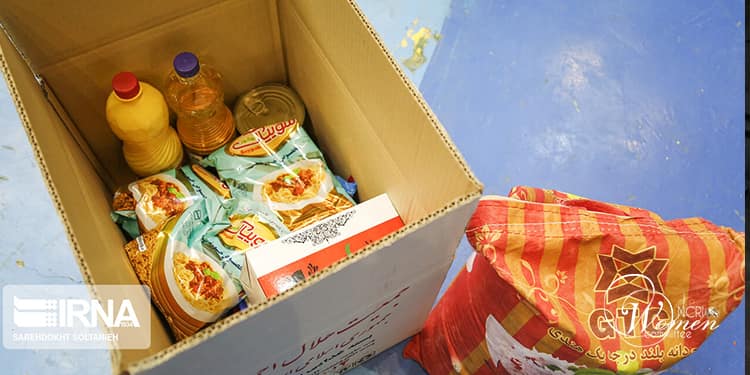
As household food supplies continue to shrink, the central question concerns the government’s priorities. Instead of creating jobs and narrowing the gap between incomes and the cost of living, the regime takes refuge in food voucher programs and free food baskets while directing the country’s resources toward missile and nuclear programs, expanding its regional influence, and supporting proxy forces.

Within the budgetary structure, military and security institutions consistently receive a substantial share of public resources, while wages, pensions, food vouchers, education, healthcare, and support for women and children fall further behind inflation. This is where the budget for power expands as the budget for people’s lives contracts. Missiles and security projects advance, while milk, eggs, bread, meat, medicine, and school supplies move further beyond the reach of millions of families.

It is therefore clear that poverty and hunger in Iran today are not natural disasters but the consequences of a series of deliberate political, economic, and budgetary choices. As long as the country’s resources are directed toward displays of power, repression, nuclear and missile programs, and proxy networks rather than the well-being of its people, no food voucher program can restore food security.

The right to food, the right of children to grow and develop, the right of women and men to live with dignity, and the right to freedom from poverty are fundamental rights. In a wealthy country such as Iran, guaranteeing these rights is a basic governmental responsibility and one of the most fundamental conditions of political legitimacy.

No illegitimate government will last forever. The expiration date of the religious dictatorship that traveled from the Middle Ages into the age of communications had already passed when it first came to power. Yet Iran’s courageous women and young people, whose bravery and determination are embodied in the Resistance Units and the uprising’s rebellious forces, are admired by people around the world. They will soon turn this page of history as well.


[1] Electronic food vouchers: A monthly purchasing credit intended to cover part of a household’s essential food needs. Under the current program, one million tomans per person per month is allocated. The credit can be used to purchase items such as rice, cooking oil, chicken, red meat, eggs, milk, yogurt, cheese, legumes, pasta, sugar, and, in some phases, fruit and vegetables. At current market prices, for example, a one-million-toman food voucher covers only about 55 eggs. Nothing more.
Tags: Poverty
ShareTweetPinShareSendShareShare

Related Posts

Women Teachers in Iran Struggle with Inflation and Low Wages

October 4, 2026
Women Teachers in Iran Struggle with Inflation and Low Wages

Every year, October 5, World Teachers’ Day, provides an opportunity to recognize millions of teachers around the world and to reaffirm the reality that quality education is impossible...

Read moreDetails

September 2026 Report: The Crisis of Education in Iran Threatens Schoolgirls’ Fundamental Rights and Future

September 30, 2026
September 2026 Report: The Crisis of Education in Iran Threatens Schoolgirls’ Fundamental Rights and Future

As the new academic year (2026–2027) begins, official regime media reports present an alarming picture of the crisis of education in Iran, marked by a steep drop in...

Read moreDetails

Low Pay and Mounting Pressure Are Deepening Iran’s Nursing Crisis

September 24, 2026
Low Pay and Mounting Pressure Are Deepening Iran’s Nursing Crisis

The nursing crisis in Iran has deepened significantly in recent years, with the country’s nursing workforce and broader healthcare system facing increasingly difficult conditions. Reports and documented data...

Read moreDetails

Working to Survive: Iranian Women Between Poverty, Exhaustion, and Lack of Labor Protection

August 28, 2026
Working to Survive: Iranian Women Between Poverty, Exhaustion, and Lack of Labor Protection

For many Iranian Women, losing a job or failing to find sustainable employment is not just about being unemployed; it marks the beginning of a cycle of economic...

Read moreDetails

The Hidden Victimization and Exploitation of Widows in Iran

July 23, 2026
The Hidden Victimization and Exploitation of Widows in Iran

Exploitation of widows in Iran Introduction: The survival of the mullahs' regime rests on two fundamental pillars: overt suppression in society and institutionalized misogyny within its laws. The...

Read moreDetails

Documents

Sign the Petition: Demand Urgent International Action to Protect Women Prisoners in Iran Iran: Political Prisoner Used as Leverage Against Her Imprisoned Brother

Sign the Petition: Demand Urgent International Action to Protect Women Prisoners in Iran

September 20, 2026

Iran's Women Prisoners: A Human Rights Emergency Demanding Immediate International Action September 2026 To: The UN High Commissioner for Human...

Call for Immediate Action to Halt the Death Sentence of Arghavan Fallahi

Sign our Statement to Halt the Death Sentence of 25-Year-Old Political Prisoner Arghavan Fallahi

July 10, 2026

Statement Calling for Immediate Action to Halt the Death Sentence of 25-Year-Old Political Prisoner Arghavan Fallahi We express our profound...

The Ineffectiveness of Population Policies in Iran: Economy, Aging, and the Overlooked Rights of Women

The Ineffectiveness of Population Policies in Iran: Economy, Aging, and the Overlooked Rights of Women

July 10, 2026

Abstract: A compilation of official data, media reports, and disclosures published in April, May, and June 2026 demonstrates that Iran...

Monthlies

September 2026 Report: The Crisis of Education in Iran Threatens Schoolgirls’ Fundamental Rights and Future
Monthlies

September 2026 Report: The Crisis of Education in Iran Threatens Schoolgirls’ Fundamental Rights and Future

September 30, 2026
August 2026 Report: The Epic of Women Who Said 'No' to the Executioners!
Monthlies

August 2026 Report: The Epic of Women Who Said ‘No’ to the Executioners!

September 1, 2026
July 2026 Report: Death Sentences for Women Rising Up to Overthrow the Mullahs' Regime
Monthlies

July 2026 Report: Death Sentences for Women Rising Up to Overthrow the Mullahs’ Regime

July 31, 2026
June 2026 Report: Working Iranian Women Erased from Labor Market
Monthlies

June 2026 Report: Working Iranian Women Erased from Labor Market

July 5, 2026

Articles

Poverty- When Mothers Manage Hunger: Shrinking Food Budgets for Women and Children in Iran

When Mothers Manage Hunger: Shrinking Food Budgets for Women and Children in Iran

October 15, 2026

Poverty and deprivation move from the margins to the mainstream For many countries, World Food Day and the International Day...

Girl Children in Iran: A Childhood Besieged by Poverty, Child Marriage, and Violence

Girl Children in Iran: A Childhood Besieged by Poverty, Child Marriage, and Violence

October 10, 2026

International Day of the Girl Child is an opportunity to highlight the fundamental rights of all children to education, security,...

Executions of Women in Iran in 2026: The Human Cost of State Violence

Executions of Women in Iran in 2026: The Human Cost of State Violence

October 8, 2026

Mothers, Child Brides, and Victims; 54 Killed in 12 Months As the World Day Against the Death Penalty is observed,...

The Fallen for Freedom

Noushin Namvar: A Woman’s Glorious Battle for Liberation
Fallen Trailblazers of Iran’s Freedom

Noushin Namvar: A Woman’s Glorious Battle for Liberation

October 3, 2026
Mojgan Mahdavi: From U.S. Academia to the Frontlines of the Iranian Resistance
Fallen Trailblazers of Iran’s Freedom

Mojgan Mahdavi: From U.S. Academia to the Frontlines of the Iranian Resistance

August 21, 2026
Nasrin Shahrabi: A Lifetime Dedicated to Fighting Religious Fascism in Iran
Fallen Trailblazers of Iran’s Freedom

Nasrin Shahrabi: A Lifetime Dedicated to Fighting Religious Fascism in Iran

August 19, 2026
The Unbroken Smile: How Sara Mokhtar, a Former Airline Executive Became the Vanguard of the Iranian Resistance
Fallen Trailblazers of Iran’s Freedom

The Unbroken Smile: How a Former Airline Executive Became the Vanguard of the Iranian Resistance

June 28, 2026

ABOUT US

NCRI Women Committee

We work extensively with Iranian women outside the country and maintain a permanent contact with women inside Iran. The Women’s Committee is actively involved with many women’s rights organizations and NGO’s and the Iranian diaspora.
The committee is a major source of much of the information received from inside Iran with regards to women. Attending UN Human Rights Council meetings and other international or regional conferences on women’s issues and engaging in a relentless battle against the Iranian regime’s misogyny are part of the activities of members and associates of the committee.

CATEGORIES

  • Activities
  • Articles
  • Documents
  • Fallen Heroes of Iran Uprisings
  • Fallen Trailblazers of Iran’s Freedom
  • Famous Women
  • Heroines in Chain
  • IWD Conferences
  • IWD Speeches
  • IWD Videos
  • Maryam Rajavi
  • Maryam Rajavi Speeches
  • Monthlies
  • Podcast
  • Reference Library
  • Solidarity
  • Statements
  • Videos
  • Women in History
  • Women in Leadership
  • Women of Iranian Resistance
  • Women's News

BROWSE BY TAG

Child marriage coronavirus education execution forced hijab Gender Gap Generation Equality Honor killings Iran Teachers Maryam Akbari Monfared Nurses Plan on Women's Rights and Freedoms Poverty Prisoners Protests rural women Saba Kord Afshari The girl child Violence against women Women's Leadership Women Heads of Household Zeinab Jalalian

The copyright of all the material published on this website has been registered under © 2016 the Women’s Committee of the National Council of Resistance of Iran. To obtain permission to copy, redistribute or publish the material published on this website, you should write to the NCRI Women’s Committee. Please include the link of the original article on our website, https://wncri.org

Welcome Back!

Login to your account below

Forgotten Password?

Retrieve your password

Please enter your username or email address to reset your password.

Log In

Add New Playlist

No Result
View All Result
  • Home
  • News
    • Women’s News
    • Articles
    • Statements
  • Publications
    • Monthlies
    • Documents
    • Reference Library
  • About Us
    • The NCRI Women’s Committee
    • Gender Equality
    • Women’s Platform
  • Maryam Rajavi
    • Maryam Rajavi
    • Maryam Rajavi Speeches
    • Ten Point Plan for Iran
    • The Plan on Women’s Rights and Freedoms
  • Vanguards
    • Fallen Trailblazers of Iran’s Freedom
    • Fallen Heroes of Iran Uprisings
    • Heroines in Chain
    • Women of Iranian Resistance
    • Famous Women
    • Women in History
  • Events
    • IWD Conferences
    • Activities
    • IWD Speeches
    • Solidarity
  • Video
    • Videos
    • IWD Videos
  • Podcast
  • DONATE
  • Contact us
  • فارسی
  • عربی
  • Français

The copyright of all the material published on this website has been registered under © 2016 the Women’s Committee of the National Council of Resistance of Iran. To obtain permission to copy, redistribute or publish the material published on this website, you should write to the NCRI Women’s Committee. Please include the link of the original article on our website, https://wncri.org