
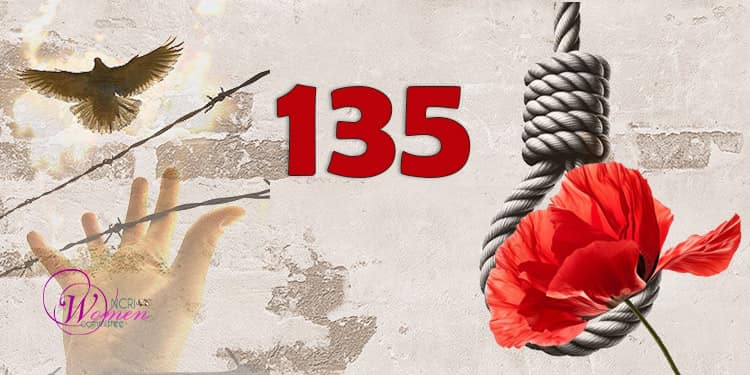
The nationwide “No to Executions Tuesdays” campaign continued into its 135th week, driven by the steadfast resolve of prisoners across the country and the joining of new facilities.
On Tuesday, August 25, 2026, resilient prisoners in 61 prisons nationwide went on a protest hunger strike to condemn the escalating wave of executions and systematic repression.
With a group of prisoners joining from Nur Prison in Mazandaran Province, the total number of participating facilities in the campaign reached 61.
Surging Executions and Tightening Judiciary Control
In their statement for the 135th week, members of the “No to Executions Tuesdays” campaign highlighted the worsening economic hardship faced by the public due to the government’s crisis-generating policies. They declared that instead of resolving these crises, the ruling regime has turned to suppressing society and carrying out daily executions of protesting youth and political prisoners to quell public dissent.
“These days, the economic situation of the people grows worse by the day as a result of the regime’s incompetence, anti-popular measures, and crisis-ridden policies,” the statement reads. “On the other hand, rather than addressing the crises, the regime does nothing but suppress society. To prevent protests, they refuse to halt executions, particularly those of protesting youth and political prisoners, and every day we witness the execution of another of these loved ones.”
According to figures provided in the campaign’s statement, 378 individuals have been executed by the regime’s judiciary since the beginning of 1405 [March 21, 2026]. Furthermore, the total number of executions since Masoud Pezeshkian’s administration took office has surpassed 4,000.
Other excerpts from the statement on the campaign’s 135th week note:
“Over the past week, two political prisoners arrested during the January protests, Ghaem Hosseini in Isfahan Prison and Majid Adineh in Karaj Central Prison, were hanged. At the same time, death sentences for several other political prisoners have been issued or upheld. These include the confirmation of the death penalty for Arghavan Fallahi in Evin Women’s Prison, Rasoul Rezaei in Vakilabad Prison in Mashhad, and Mohammad Reza Majidi-Asl, who was transferred from Greater Tehran Prison to Ghezel Hesar.”
Addressing recent personnel and structural shifts in the judiciary under the mullah’s regime, the statement emphasized that these changes were made with the direct interference of security agencies. They pose a direct, severe threat to the lives of all prisoners and death-row inmates, especially given the unjust nature of proceedings, where prisoners are denied the right to a lawyer of their choice and access to independent judicial bodies.
The Resilience of Prisoners and a Message of Solidarity with Society
In another section of the statement, the campaign stressed the continuation of resistance behind bars and its connection to street protests:
“In response, however, the No to Executions Tuesdays’ campaign and resilient prisoners continue to hold the line. This week, a group of inmates at Nur Prison in Mazandaran Province joined the campaign. These prisoners pin their only hope on their collective power, on the public, and on the awakened consciences that tirelessly stand and fight against the killing machine.
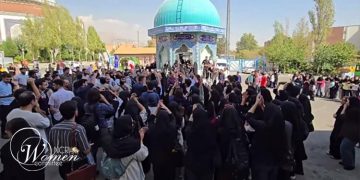
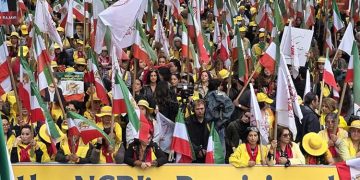
We express our heartfelt gratitude to the retirees and everyone who raises the call of ‘No to Execution’ in gatherings, streets, and neighborhoods. The teachers’ ‘No to Execution’ appeal also deserves the full support of workers and other social groups. We commend the teachers who have been pioneers and trailblazers in voicing and sustaining this path. Every classroom should teach children that the true principle always belongs to the right to life and living, not death and execution.”
List of the 61 Prisons Participating in the Week 135 Hunger Strike (August 25, 2026):
Evin Prison (Men’s and Women’s Wards), Ghezel Hesar Prison (Units 2, 3, and 4), Karaj Central Prison, Fardis Prison in Karaj, Greater Tehran Prison, Qarchak Prison, Khorin Prison in Varamin, Chubindar Prison in Qazvin, Ahar Prison, Arak Prison, Langarud Prison in Qom, Khorramabad Prison, Borujerd Prison, Yasuj Prison, Asadabad Prison in Isfahan, Dastgerd Prison in Isfahan, Sheiban Prison in Ahvaz, Sepidar Prison in Ahvaz (Men’s and Women’s Wards), Nezam Prison in Shiraz, Adelabad Prison in Shiraz (Men’s and Women’s Wards),
Firozabad Prison in Fars, Dehdasht Prison, Zahedan Prison (Men’s and Women’s Wards), Borazjan Prison, Ramhormoz Prison, Behbahan Prison, Bam Prison, Yazd Prison (Men’s and Women’s Wards), Kahnuj Prison, Tabas Prison, Birjand Central Prison, Mashhad Prison, Gorgan Prison, Sabzevar Prison, Gonbad-e Kavus Prison, Qaemshahr Prison, Rasht Prison (Men’s and Women’s Wards), Rudsar Prison, Haviq Prison in Talesh, Azbaram Prison in Lahijan, Dizelabad Prison in Kermanshah, Ardabil Prison, Tabriz Prison, Urmia Prison, Salmas Prison, Khoy Prison, Naqadeh Prison, Miandoab Prison, Mahabad Prison, Bukan Prison, Saqqez Prison, Baneh Prison, Marivan Prison, Sanandaj Prison, Kamyaran Prison, Ilam Prison, Kerman Prison, Borujen Prison, Neyshabur Prison, Gachsaran Prison, and Nur Prison.
About the “No to Executions Tuesdays” Campaign
Now in its third year, the “No to Executions Tuesdays” campaign has become the most widespread, enduring, and impactful protest movement within Iran’s prisons. Despite intensified security pressures, constant threats, communication restrictions, and punitive measures against participants, the protest movement has not been silenced.
In recent weeks, as more prisoners from various facilities joined in, its scope has widened, spreading the protest against executions to 61 prisons across Iran. A significant portion of the striking inmates consists of female political prisoners serving their sentences in the women’s wards of Evin Prison, Qarchak Prison in Varamin, Sepidar Prison in Ahvaz, Adelabad Prison in Shiraz, Zahedan Prison, Yazd Prison, and Rasht Prison.