
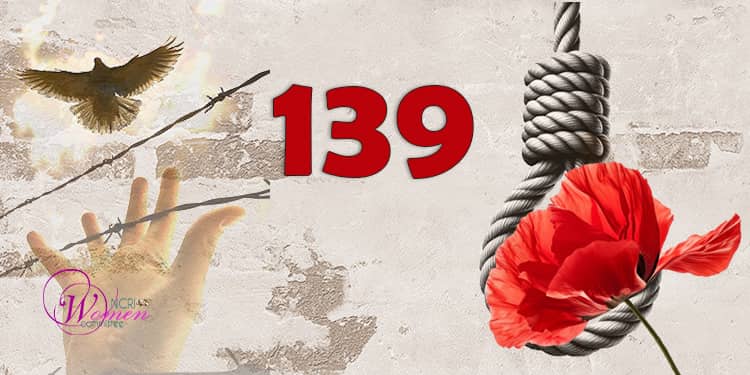
During the 139th week of the No to Execution Tuesdays’ campaign, prisoners in 64 prisons across Iran staged a hunger strike on Tuesday, September 22, 2026, once again declaring their opposition to the issuance and implementation of death sentences.
The ongoing protest comes as prisoners participating in the campaign have faced security pressure, threats, restrictions on communication with the outside world, and punitive measures in recent weeks. Despite these pressures, participants have continued the campaign and each week, used hunger strikes to reaffirm their opposition to the death penalty and their defense of the right to life.
The continuation of this protest for 139 consecutive weeks and its expansion to 64 prisons demonstrate the persistence of an organized protest within Iran’s prisons against the death penalty.
No to Execution Tuesdays: The Voice of Prisons Against Executions and Repression
The No to Execution Tuesdays’ campaign has entered a broader phase amid reports from human rights organizations of continued executions and the issuance of death sentences in Iran.
Last week, three young protesters were sentenced to death and 45-year-old Rezvan Asgharzadeh, a mother of six, was executed at Dastgerd Prison in Isfahan on drug-related charges.
Published figures indicate that the number of recorded executions since March 21, 2026, has reached at least 448.
Two More Prisons Join the Hunger Strike
Another section of the No to Execution Tuesdays campaign statement refers to Bandar Abbas Prison and Ziabers Prison in Somesara, Gilan Province, joining the Tuesday hunger strike.
The statement said that with the participation of Bandar Abbas Prison and Ziabers Prison in Somesara, the number of prisons taking part in the campaign has reached 64.
About the No to Executions Tuesdays Campaign
The No to Executions Tuesdays Campaign, now in its third year, has become the most widespread, enduring, and influential protest movements inside Iran’s prisons. Despite intensified security pressure, persistent threats, restrictions on communication, and punitive measures against participants, the protest movement has not been stopped.
A significant number of the striking inmates consists of female political prisoners serving their sentences in the women’s wards of Evin Prison, Qarchak Prison in Varamin, Sepidar Prison in Ahvaz, Adelabad Prison in Shiraz, Zahedan Prison, Yazd Prison, and Rasht Prison.