
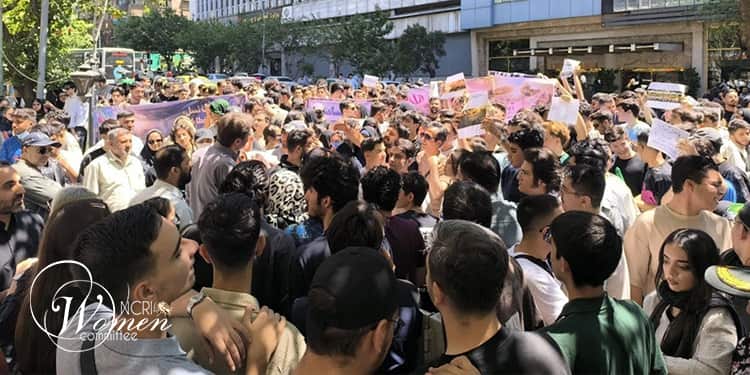
This generation will not back down for empty promises and repetitive rhetoric
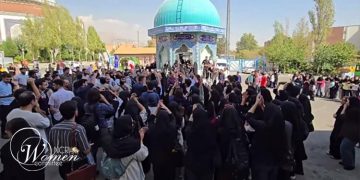
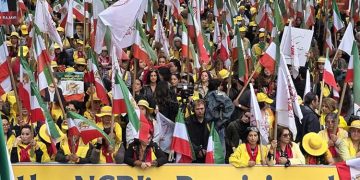
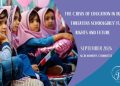
Iranian students in Tehran, Mashhad, and Hamadan staged protests on Tuesday, June 2, 2026. Gathering outside the Ministry of Education, they protested recent changes to the Konkur (university entrance exam) regulations, academic records, and the methodology of factoring in GPA context. They subsequently marched toward the Supreme Council of the Cultural Revolution.
The students are protesting the new educational policies. They announced that they will continue their protests until they receive a clear response to their demands.
Schoolgirls, along with their classmates, chanted slogans such as: ‘Students are awake, they loathe discrimination!’ ‘We’ve heard plenty of promises but seen no justice!’ and ‘Students will die but will not accept humiliation!’.
Some of the students at the rally declared: “We are waiting for results; we are not going anywhere, and we will stay right here. This generation is not one to back down with empty promises and repetitive rhetoric; it will pursue its rights.”
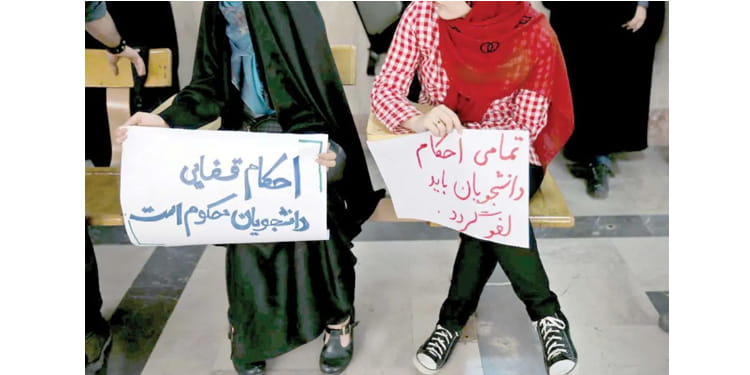
Escalating Pressure on Students at Tehran Universities
A fresh wave of summonses, case fabrications, suspensions, and disciplinary rulings against students across several major Iranian universities has been reported by the Shargh daily. According to this report, just four days after universities reopened in February/March 2026—following a two-month closure—students were bombarded with calls and text messages notifying them of disciplinary cases being opened against them. Now, in June 2026, following another three-month closure due to the war, authorities have resumed tracking those previous cases and are actively fabricating new ones.
This report delves into detail regarding the disciplinary rulings issued against students at Sharif University of Technology, Melli University, Iran University of Science and Technology, and the University of Tehran.
At Sharif University of Technology, seven students have been expelled, and more than 20 students have been suspended for one to three semesters. At the Melli University, the educational portals of 20 to 25 students have been deactivated, cutting off their access. Furthermore, disciplinary cases have been fabricated against more than 100 students at Iran University of Science and Technology, while 150 to 200 students at the University of Tehran are currently forced to write their defense statements.
Sara, a student at the University of Tehran, commented on the situation: “The calls are entirely combined with threats. They target the students’ personal vulnerabilities, threatening to create academic hurdles or ban them from entering the campus. They explicitly told a student who ranked first in the Konkur exam: ‘If you don’t cooperate, you might never be allowed to enter the university again.’”
The regime’s Ministry of Science has so far maintained its silence on the matter, offering no response to these repressive measures against students. (Shargh Daily – May 31, 2026)
Drowning in political and economic crises, the regime appears to have once again resorted to escalating restrictions on the country’s younger generation.
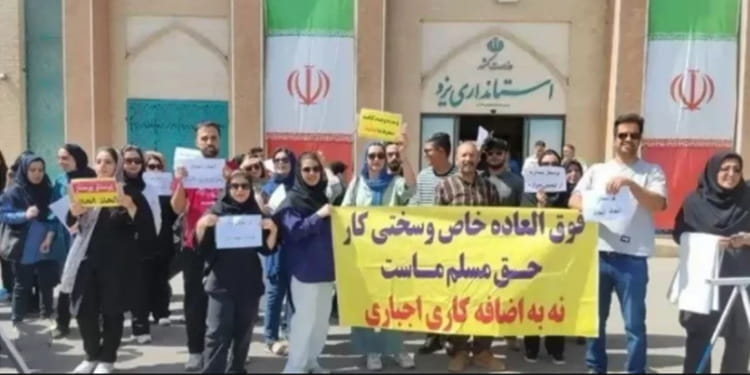
Nurses’ Protest in Yazd
On May 29, 2026, nurses in the city of Yazd, the capital of Yazd province, staged a protest outside the Governor’s Office. The protesters, a vast majority of whom were female nurses, declared that they have not received their tariff implementation arrears and overtime pay for approximately six months.
According to a report by the state-run ILNA news agency on May 30, 2026, a protesting nurse emphasized that most healthcare staff live below the poverty line, stating: “The main burden of healthcare services falls on the shoulders of nurses, yet astronomical salaries go to others. We are exhausted by wage discrimination and injustice.”
Do you know what the poverty line is in Iran?
Various figures have been announced in this regard. According to an elisted labor activist, based on expert reports and field calculations: “In cities like Tehran, the relative poverty line has surpassed 60 million Tomans, and the livelihood basket equals this exact figure. This comes at a time when the average salary of workers, government employees, and retirees hovers around 17 million Tomans.” (Mehr News Agency – February 28, 2026)