
Prison Memoirs of Mehri Hajinejad – Part Four
In the previous three parts of Mehri Hajinejad’s prison memoirs, which appear in Leila’s Final Smile, the author—then a teenage student—recounted her arrest and interrogations at Evin Prison, followed by memories of her brave cellmates. In this part, she recalls other comrades, including Leila Arfaei—one of her most courageous friends—as well as Elaheh Mohabat and Soudabeh Baghaii.
The Arrival of Leila Arfaei
One night in January 1982, I was in Room 1 of the upper ward of Section 240. After lights-out, the prison guard opened the door and pushed a new prisoner into our cell. The rooms were packed to the brim, especially at night, so we usually slept in shifts. That night, I was sitting near the door with Faezeh and Mahshid when the guard shoved the new girl in so forcefully that she fell right onto us.
In the darkness, we only managed to ask her name. She whispered softly, “Leila.” That was all; we couldn’t talk more because everyone else was asleep.
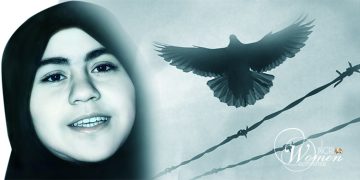
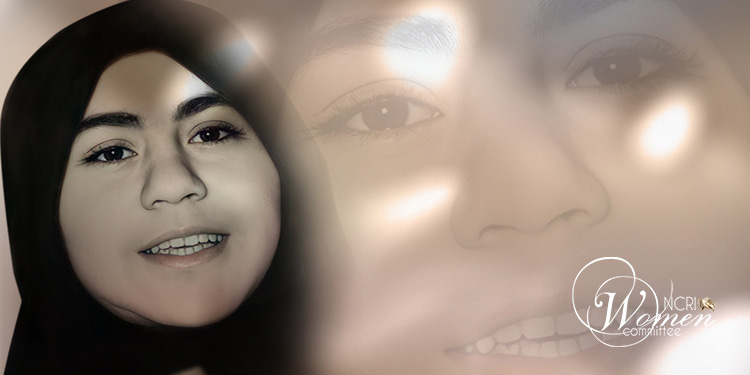
Her full name was Leila Arfaei (Sheida),[1] a young woman with dark eyes, unibrows, and a face that always seemed to be smiling.
Leila’s family was Azerbaijani, living in Tehran. She had been arrested along with a teammate during a clash with the Revolutionary Guards, where her comrade was reportedly killed. Before being brought to our ward, Leila Arfaei had endured fifteen days of continuous torture and interrogation. Her case was considered “closed,” and her death sentence had already been announced. She was simply waiting for the day they would call her name.
Despite it all, Leila Arfaei was lighthearted and free; she showed no fear of death. But for me, still using a false name and forced to watch my cellmates disappear one by one, every day was a new kind of pain. So, each morning that passed without her name being called, I thanked God from the depths of my heart and offered a prayer of gratitude, hoping—perhaps foolishly—that the guards were too busy to remember her.
During the months after June 20, 1981, Leila had gone through tremendous struggles and changes, growing into a mature and steadfast member of the resistance. Whenever she found a quiet moment, she would tell me stories of those days, how she slept under bridges, how she escaped raids and checkpoints time after time.
With each passing day, I let myself believe she might survive—that perhaps her death sentence wasn’t final after all. But whenever she spoke of the torture and the interrogations she endured during those fifteen days, my fragile hope shattered again. Sometimes I would joke, “Maybe you’re just waiting for me to get my sentence so we can go on this journey together.”
Leila fasted every day. Once, I asked her, “Why do you fast so often?” She smiled and said, “Because I don’t have much time left. I missed so many days (of Ramadan) while hiding after June 20th. I need to make them up.”
Every morning, Leila, Mahshid, Zohreh, and I formed our little exercise team. She was lively, precise, and remarkably tidy; her energy was contagious. What struck me most about her was her iron will. Whatever she decided to do, she did. From her composure and strength, I could tell how much she had grown since those difficult post-June days.
She often spoke as though she had already made peace with death. “I think I’ve lived long enough,” she told me one day. Then, recalling her daring activities after June 20th, she said, “I had six months of freedom after that day, and I’m happy with what I managed to do.”
I admired her courage deeply and wished I could be as brave—out there, free, like her.
Every afternoon, a few of us would gather to share happy memories and laugh together. We called this our “Read and Laugh” session. Sometimes we’d turn even the absurdities of prison life into jokes. Our little circle was full of energy and warmth.
Leila’s Final Smile
It was May 6, 1982. We were still sitting around the lunch mat, already laughing as we began our “Read and Laugh” program early. That day, Mahshid’s mischievous stories had made us laugh so hard that Leila’s face turned red, her eyes filled with tears of laughter. We were clutching our sides, unable to stop giggling.
Suddenly, the door opened. One of the female guards—Hosseini—appeared and motioned to Leila.
“Leila Arfaei, get up. Come with me.”
The laughter froze on our lips.
Leila? Where was she being taken?
I threw my arms around her and kissed her tear-streaked face. My voice failed me, I didn’t know what to say. I watched in disbelief as that vulture-like woman prepared to lead her away.
Leila calmly told her, “Just a moment, I’ll come.” Then she ran, performed her ablutions, prayed, covered her head with her chador, and walked toward the door. Zohreh, Mahshid, and I followed her as far as the bars allowed, then stood in heavy silence as she disappeared from view.
No one else in the room knew how serious her case was; only the three of us knew she would not return.
Half an hour later, Hosseini returned, her owl-like face even colder than before. “Give me Leila’s things,” she said flatly.
That’s when I knew. My light, my graceful dove, had taken flight.
We gathered her belongings, but I kept her washcloth as a keepsake.
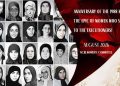
Leila never came back. The regime didn’t even announce her execution. Now, only a photo of her remains, her radiant face smiling in the PMOI’s memorial list. Every time I look at it, I remember her last smile.
A Red Flower on Her Heart
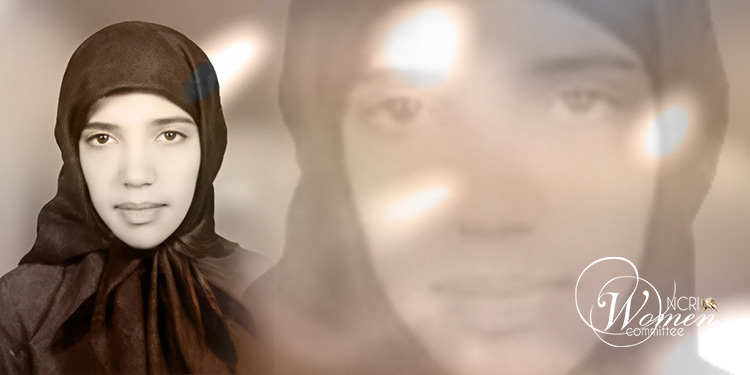
Elaheh Mohabbat and Soudabeh Baghaei[2], two of my friends from the infirmary ward, were both teenage students from eastern Tehran. They were young supporters of the movement and had been arrested two days after I was. Both were only seventeen.
They had been brutally tortured, and we all knew they would soon be executed. I’ll never forget Elaheh’s calm beauty and Soudabeh’s innocent eyes. They were inseparable: two souls in one body.
One day, Nourbakhsh, the guard in charge of the ward, was standing at the entrance holding a red rose. When she saw Elaheh, she said mockingly, “I want to give you this flower.”
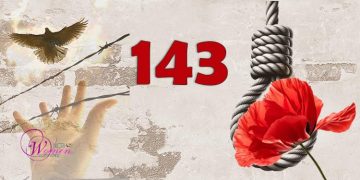
Elaheh looked her straight in the eye and said, “Are you giving me this today so you can plant a bullet like a red rose in my heart tomorrow?”
Nourbakhsh fell silent, realizing the cruelty of her own words.
Each time names were called for interrogation, we silently prayed that Elaheh and Soudabeh’s names wouldn’t be among them—because once they left, they never returned.
Soudabeh often hummed softly to herself:
Dawn has come, dawn has come,
The fire has reached the fields of night…
The bell of departure has sounded,
And the children of freedom march on…
Whenever I looked at those two tender flowers, I dreaded the day they’d be gone.
And eventually, that day came. One autumn morning in 1981, their names were called together.
Elaheh and Soudabeh never returned.
Just as Elaheh had foretold, the executioners planted their red flowers—bullets—into the pure, beating hearts of two seventeen-year-old girls whose lives were filled with love for their people and their cause.
[1] Leila Arfaei (Sheida) – A courageous young supporter who worked with the PMOI’s student branch. She was executed in October 1982 at the age of 17 for supporting the PMOI.
[2] Soudabeh Baghaei – A 17-year-old student executed on November 30, 1981, in Tehran for standing by her beliefs. Her brother, Mohammad Baghaei, a 27-year-old metallurgy student and PMOI publication staff, was killed in October 1981 in an armed clash with regime forces.