
Wednesday, July 8, 2026
  • English
  • Français
  • فارسی
  • عربى
PODCASTS
NCRI Women Committee Women Resistance Freedom
  • Home
  • NEWS
    • Women’s News
    • Articles
    • Statements
  • PUBLICATIONS
    • Monthlies
    • Documents
    • Reference Library
  • ABOUT US
    • The NCRI Women’s Committee
    • Gender Equality
    • Women’s Platform
  • MARYAM RAJAVI
    • Maryam Rajavi
    • Maryam Rajavi Speeches
    • The Plan on Women’s Rights and Freedoms
    • Ten-Point Plan for the future of Iran
  • VANGUARDS
    • The Fallen for Freedom
    • Heroines in Chain
    • Women of Iranian Resistance
    • Famous Women
    • Women in History
  • EVENTS
    • IWD Conferences
    • Activities
    • IWD Speeches
    • Solidarity
  • VIDEO
    • Videos
    • IWD Videos
  • PODCAST
  • DONATE
  • CONTACT US
No Result
View All Result
NCRI Women Committee Women Resistance Freedom
  • Home
  • NEWS
    • Women’s News
    • Articles
    • Statements
  • PUBLICATIONS
    • Monthlies
    • Documents
    • Reference Library
  • ABOUT US
    • The NCRI Women’s Committee
    • Gender Equality
    • Women’s Platform
  • MARYAM RAJAVI
    • Maryam Rajavi
    • Maryam Rajavi Speeches
    • The Plan on Women’s Rights and Freedoms
    • Ten-Point Plan for the future of Iran
  • VANGUARDS
    • The Fallen for Freedom
    • Heroines in Chain
    • Women of Iranian Resistance
    • Famous Women
    • Women in History
  • EVENTS
    • IWD Conferences
    • Activities
    • IWD Speeches
    • Solidarity
  • VIDEO
    • Videos
    • IWD Videos
  • PODCAST
  • DONATE
  • CONTACT US
No Result
View All Result
NCRI Women Committee
No Result
View All Result
Home Articles
Ebrahim Raisi, the architect of the massacre of political prisoners must face justice

Ebrahim Raisi, the architect of the massacre of political prisoners must face justice

August 17, 2021
in Articles

The souls of the victims’ relatives were massacred simultaneously with their loved ones

Ebrahim Raisi, the architect of the massacre of political prisoners, must face justice.

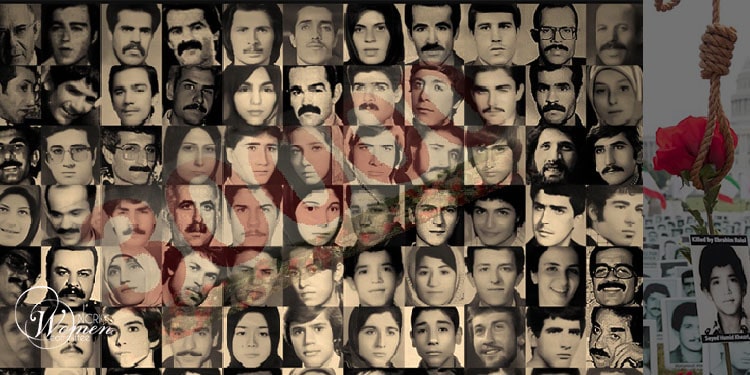
The summer of 1988 marked the massacre of some 30,000 political prisoners in Iran, including many young women and girls. Death commissions were the architect of this massacre.

As a member of the Death Commissions, the clerical regime’s new president, Ebrahim Raisi, is one of the main perpetrators of the genocide and the crime against humanity in Iran in 1988. He must be prosecuted and brought to justice.

Ebrahim Raisi, the clerical regime’s new president, was a member of the “Death Commission,” which became the architect of the massacre.

Hence, a leader can be boldly called one of the main founders of genocide and crimes against humanity, whose trial and confrontation with justice is essential.

Preparations for the massacre started in the fall of 1987

The massacre of political prisoners in Iran was a project, which started around the fall of 1987 and winter of 1988 by classifying and segregating the prisoners.

By March 1988, it was still unclear why the prisoners were being classified and relocated from one prison to the other.

Although the prisoners had the first-hand experience of torture and mistreatment by the prison guards, it did not occur to any of them that they might be massacred, including those serving their prison terms.

In the same period, the Supreme Judicial Council frequently convened for urgent meetings, which was also a sign of preparation for new measures.

The massacre began on July 19, 1988

On July 19, 1988, many prisoners were transferred from general wards to solitary confinement. The massacre officially began on July 19, 1988.

On July 27, 1988, it was officially announced that there would be no visits for two months and that the families of the prisoners should not go to visit their children.

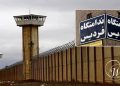
On Thursday, July 28, 1988, the “Death Commission” officially began its work in Evin.

The first series of women executed in the 1988 massacre, from left to right: Jasomeh Heydari-Zadeh, Nasrin Rajabi, Hakimeh Rizvandi, Farah Eslami

The first series of women executed on July 20, 1988

A note about women prisoners in the Prison of Ilam explains, “On July 20, 1988, the Revolutionary Guards moved Farah Eslami, Hakimeh Rizvandi, Marzieh Rahmati, Nasrin Rajabi, and Jasomeh Heydari out of prison on the pretext that Ilam Prison was unsafe and that they needed to be transferred to a safe place. At that time, we thought they had been transferred to Kermanshah or Tehran prisons. But then we found out the next day that the prisoners had been taken to a hill around Salehabad and executed by firing squads.”

Victims of the 1988 massacre, from left, Fereshteh Hamidi, Fariba Ahmadi, Farahnaz Ahmadi, Maryam Saghari Khodaparast, Maliheh Aghvami.

Mass executions of women

According to reports about the women detained in Evin Prison, the prison authorities summoned Ashraf Fadaei, Monir Abedini, Mojgan Sorbi, Fereshteh Hamidi, and about 20 other female prisoners from ward 2 on July 27, 1988, to be questioned. They also summoned some female prisoners from ward 3. The prisoners returned a few hours later and said that they had been asked the same old questions about their positions and the length of their sentences. They had also seen an automatic rifle installed right across from the door.

At 11 p.m., the names of Maryam Saghari Khodaparast, Zahra Falahatpisheh, Fariba Omoumi, and Homa Radmanesh were announced from the ward’s loudspeaker, and prison guards rushed them out of the ward.

At midnight, some prisoners were released from solitary confinement. Nobody knew what was going on yet, but these people never came back.

On the morning of Thursday, July 28, 1988, after the Death Commission began its work in Evin, several women from solitary confinement in Evin were hanged. One of them was Soheila Mohammad Rahimi.

On Thursday, August 4, 1988, several other women, including Maliheh Aghvami, were executed in Evin. On the same day, Fariba and Farahnaz Ahmadi were executed in Isfahan.

Some very sick prisoners were also among those executed.

Tayyebeh Khosrow Abadi had congenital paralysis. Zahra Bijanjyar’s vision had been severely impaired due to the blows of cables to her head. Leila Dashti had a brain tumor.

Of course, the number of the massacred political prisoners is not limited to these examples.

On August 13, 1988, more than 70 political prisoners were hanged in Gohardasht Prison of Karaj between 7.30 a.m. and 9 p.m.

Hundreds of political prisoners in Evin Prison were executed on Sunday, August 14, and Monday, August 15, 1988.

Female students among those executed

The average age of prisoners executed in the 1988 massacre shows that many were 16 or 17 years old and students at the time of the arrest.

A member of the Death Commission told Montazeri: “We also have about twenty or so people who were about 16-17 years old when they came to prison, and now they are twenty-three or four years old …”

This conversation took place during the meeting of the Death Commission with Montazeri on August 15, 1988, in the midst of the massacre. Its audio file was disclosed in 2016.

Leila Hajian, Soheila Hamidi, Roya Khosravi, Mehri Derakhshannia, and Soheila Shams are among those who were 16 years old at the time of the arrest.

Soodabeh Rezazadeh, Mahtab Firoozi, Farahnaz Moslehi, and Parvin Bagheri were also young women arrested at 15.

Victims of the 1988 massacre: from left to right, Fatemeh and Esmat Adab Avaz, Forouzan Abdi, Razieh Ayatollah Zadeh, Effat Esmaili, and Nasrin Shojaii

Female students and specialists among those executed

According to eyewitnesses, in the 1988 massacre, the focus was on students, especially educated women. Hence, many of the victims were students and university graduates, including:

Houria Beheshti Tabar with two master’s degrees and one bachelor’s degree from universities in Tehran

Parvin Haeri was a graduate student of linguistics from Tehran University

Razieh Ayatollah Zadeh Shirazi was a physics student

Forouzan Abdi was a student of physical education in Tehran and a member of the Iranian women’s national volleyball team

Dr. Shurangiz Karimian was a medical student

Fazilat Allameh was a student of Electrical Engineering

Simin Behbahani Dehkordi and Zahra Shab Zendedar were medical students at Taleghani Medical Complex, Tehran

Azam Taghdareh was a student of Chemical Engineering at the School of Science and Technology, Tehran

Maryam Golzadeh Ghafouri and Fariba Omumi were students of mathematics at Tehran University

Mahin Ghorbani was a physics student at Tehran’s Teacher Training University

Mina Azkia was a student a Tehran’s Teacher Training University

Nayyereh Fath’alian, Effat Esmaili, Soodabeh Mansouri, Soodabeh Shahpar, and Homa Radmanesh were also university students in Tehran

Execution of families

According to reports from former prisoners, dozens of brothers and sisters were executed in Evin and Gohardasht prisons alone. They included:

Nahid and Hamid Tahsili, brother and sister

Fariba and Farahnaz Ahmadi, sisters

Massoumeh, Hossein, and Mostafa Mirzaei, a sister and two brothers, were executed. Massoumeh’s husband was also executed.  

Between five or six members from the families of ‌ Gholami, Adab Avaz, Hariri, Rahimnejad, Shojaei, Davoodi, Borhani in various cities.

The souls of the victims’ relatives were simultaneously massacred

One of the most painful aspects of the massacre of political prisoners has been its impact on their mothers, fathers, wives, children, and relatives.

Several mothers suffered a stroke as soon as they heard the news of their children’s execution, and some went insane.

Many mothers do not believe in the execution of their children, even after receiving a bag and a will.

Safdar Azadmehr’s mother died of a stroke after hearing the news of his execution.

Safdar’s sister committed suicide out of grief.

A witness to the massacre describes another example and says, “The authorities called a mother and said that your son has been released, come one day and take your son from the Zanjan Committee (prison). The mother informed all the neighbors. With the help of neighbors, she decorated a car with flowers. She quickly arranged an elaborate welcoming party for her son. Then she went to the Zanjan Committee at the appointed time. But instead of seeing her son, they handed her the bag of his son and the address of his grave. From then on, the mother did not speak or react. She just stared at a distant spot and slowly shed tears.”

An unpunished crime

Iran’s history witnesses a blatant massacre that has not yet received justice.

Its masterminds and perpetrators have not yet been tried or punished.

Many unspoken scenes and memories of the witnesses of this great human tragedy have not been recorded yet, and many mothers do not even know about the burial place of their loved ones.

In this regard, the direct role of Ebrahim Ra’isi, the new president of the mullahs’ regime, is undeniable.

He is the architect of the massacre of political prisoners and must be brought to justice at all costs.

History will never forget or forgive the crimes of these criminals.

Tags: executionGeneration EqualityPrisonersViolence against women
ShareTweetPinShareSendShare

Related Posts

Five Christian Converts, Including Two Women, Sentenced to 55 Years in Prison

July 8, 2026
Christian Converts in Iran Sentenced to 55 Years in Prison

The Tehran Appeals Court has upheld heavy prison sentences totaling 55 years for five Christian converts in Iran, including two women. On Sunday, July 5, 2026, the Tehran...

Read moreDetails

The Women the Regime Fears Most: Terminal Fragility and the Clerical Dictatorship

July 7, 2026
The Women the Regime Fears Most: Terminal Fragility and the Clerical Dictatorship

The Women the Regime Fears Most: Terminal Fragility and the Clerical Dictatorship Welcome to another episode of podcasts or the Women's Committee of the National Council of Resistance...

Read moreDetails

JINNEWS: An Account of Women Prisoners’ Resistance in Iran Amid Repression and Discrimination

July 7, 2026
JINNEWS: An Account of Women Prisoners’ Resistance in Iran Amid Repression and Discrimination

Turkey’s JINNEWS, one of the region’s well-known news outlets covering women’s issues and human rights, published a report on June 24, 2026, on the situation of women prisoners...

Read moreDetails

Iran: Death and Jail Sentences for Two Women Arrested During January Uprising

July 6, 2026
Iran: Death and Jail Sentences for Two Women Arrested During January Uprising

Mahnaz Chardouli, who was arrested during the January uprising, has been sentenced by the Tehran Revolutionary Court to death and 10 years in prison. Her fiancé, Mehdi Nazer,...

Read moreDetails

Iran: Female Lawyer in Shiraz Sentenced to 6 Years in Jail

July 4, 2026
Female lawyer sentenced to 6 years in Prison Defense Counsel Silenced: Two Human Rights Attorneys Arrested

Another lawyer remains in detention without final disposition of her case Elham Zeraatpisheh, a female lawyer, has been sentenced by Branch 1 of the Revolutionary Court in Shiraz...

Read moreDetails
Next Post
End of Atena Daemi’s hunger strike; message challenges Raisi, the regime

End of Atena Daemi’s hunger strike; her message challenges Raisi, the regime

Documents

Crushed by Design: Structural Crises and Inequitable Policies Push Female-Headed Households to the Edge

Crushed by Design: Structural Crises and Inequitable Policies Push Female-Headed Households to the Edge

May 18, 2026

Introduction Life for the Iranian people under the religious dictatorship is fraught with hardship and peril from every perspective. Whether...

A Report to CSW70: Gender-Based Discrimination Under Iranian Law

A Report to CSW70: Gender-Based Discrimination Under Iranian Law

March 8, 2026

Structural Inequality and State-Sanctioned Oppression of Women Gender-Based Discrimination Under Iranian Law” is the title of the NCRI Women’s Committee’s...

Annual Report 2026: From Protests, to Uprising, and the Role of Iranian Women

Annual Report 2026: From Protests, to Uprising, and the Role of Iranian Women

March 3, 2026

On the eve of International Women’s Day 2026, the NCRI Women’s Committee presents its Annual Report 2026, offering a recap...

Monthlies

June 2026 Report: Working Iranian Women Erased from Labor Market
Monthlies

June 2026 Report: Working Iranian Women Erased from Labor Market

July 5, 2026
May 2026 Report: The Enduring Resistance of Iranian Women
Monthlies

May 2026 Report: The Enduring Resistance of Iranian Women

May 31, 2026
April 2026 Report: Mass Arrests of Women: Targeted Repression in Time of Crisis
Monthlies

April 2026 Report: Mass Arrests of Women in Iran

April 30, 2026
March 2026 Report: How Iranian Women Are Shaping the Resistance
Monthlies

March 2026 Report: Courage Under Fire

April 3, 2026

Articles

JINNEWS: An Account of Women Prisoners’ Resistance in Iran Amid Repression and Discrimination

JINNEWS: An Account of Women Prisoners’ Resistance in Iran Amid Repression and Discrimination

July 7, 2026

Turkey’s JINNEWS, one of the region’s well-known news outlets covering women’s issues and human rights, published a report on June...

Iran Water Crisis: Water Mafia and Ecosystem Destruction

Iran’s Escalating Water Crisis: Energy Imbalance, Popular Protests, and the Role of Women

July 1, 2026

The Iran water crisis has transcended a mere climatic challenge, evolving into a structural catastrophe marked by severe ecosystem destruction...

Day 2 of Free Iran 2026: Broad Support for 10-point plan and Criticism of Western Appeasement

Day 2 of Free Iran 2026: Broad Support for 10-point plan and Criticism of Western Appeasement

June 23, 2026

On Sunday, June 21, 2026, the second day of the “Free Iran 2026 – Supporting the Democratic Alternative” conference was...

The Fallen for Freedom

Elham Zeinali A Compassionate Nurse and the Pillar of Her Family
The Fallen for Freedom

Elham Zeinali

July 2, 2026
The Unbroken Smile: How Sara Mokhtar, a Former Airline Executive Became the Vanguard of the Iranian Resistance
The Fallen for Freedom

The Unbroken Smile: How a Former Airline Executive Became the Vanguard of the Iranian Resistance

June 28, 2026
Shilan Salehi: Iran Regime Extorted 150 Million Tomans for Return of Her Body
The Fallen for Freedom

Shilan Salehi: Iran Regime Extorted 150 Million Tomans for Return of Her Body

June 13, 2026
Parnia Shad Bejarkenari: 23-Year-Old Woman Killed for Freedom in Iran
The Fallen for Freedom

Parnia Shad Bejarkenari: 23-Year-Old Woman Killed for Freedom in Iran

June 13, 2026

ABOUT US

NCRI Women Committee

We work extensively with Iranian women outside the country and maintain a permanent contact with women inside Iran. The Women’s Committee is actively involved with many women’s rights organizations and NGO’s and the Iranian diaspora.
The committee is a major source of much of the information received from inside Iran with regards to women. Attending UN Human Rights Council meetings and other international or regional conferences on women’s issues and engaging in a relentless battle against the Iranian regime’s misogyny are part of the activities of members and associates of the committee.

CATEGORIES

  • Activities
  • Articles
  • Documents
  • Famous Women
  • Heroines in Chain
  • IWD Conferences
  • IWD Speeches
  • IWD Videos
  • Maryam Rajavi
  • Maryam Rajavi Speeches
  • Monthlies
  • Podcast
  • Reference Library
  • Solidarity
  • Statements
  • The Fallen for Freedom
  • Videos
  • Women in History
  • Women in Leadership
  • Women of Iranian Resistance
  • Women's News

BROWSE BY TAG

Child marriage coronavirus education execution forced hijab Gender Gap Generation Equality Honor killings Iran Teachers Maryam Akbari Monfared Nurses Plan on Women's Rights and Freedoms Poverty Prisoners Protests rural women Saba Kord Afshari The girl child Violence against women Women's Leadership Women Heads of Household Zeinab Jalalian

The copyright of all the material published on this website has been registered under © 2016 the Women’s Committee of the National Council of Resistance of Iran. To obtain permission to copy, redistribute or publish the material published on this website, you should write to the NCRI Women’s Committee. Please include the link of the original article on our website, women.ncr-iran.org.

Welcome Back!

Login to your account below

Forgotten Password?

Retrieve your password

Please enter your username or email address to reset your password.

Log In

Add New Playlist

No Result
View All Result
  • Home
  • News
    • Women’s News
    • Articles
    • Statements
  • Publications
    • Monthlies
    • Documents
    • Reference Library
  • About Us
    • The NCRI Women’s Committee
    • Gender Equality
    • Women’s Platform
  • Maryam Rajavi
    • Maryam Rajavi
    • Maryam Rajavi Speeches
    • Ten Point Plan for Iran
    • The Plan on Women’s Rights and Freedoms
  • Vanguards
    • The Fallen for Freedom
    • Heroines in Chain
    • Women of Iranian Resistance
    • Famous Women
    • Women in History
  • Events
    • IWD Conferences
    • Activities
    • IWD Speeches
    • Solidarity
  • Video
    • Videos
    • IWD Videos
  • Podcast
  • DONATE
  • Contact us
  • فارسی
  • عربی
  • Français

The copyright of all the material published on this website has been registered under © 2016 the Women’s Committee of the National Council of Resistance of Iran. To obtain permission to copy, redistribute or publish the material published on this website, you should write to the NCRI Women’s Committee. Please include the link of the original article on our website, women.ncr-iran.org.