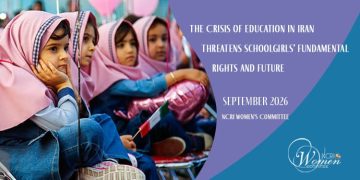


World Children’s Day is meant to be a moment to reflect on the future of children, the very individuals who should shape a bright tomorrow. Yet in Iran, this day has become a reminder of the suffering of millions of children. Iranian children are deprived of joy, play, and education, and instead confronted with economic poverty, malnutrition, child marriage, forced labor, and widespread psychological and physical harm. This tragedy unfolds despite Iran being one of the richest countries in the world in terms of natural resources—resources looted and plundered by a corrupt ruling elite.
Childhood Under the Scorching Sun
On a hot summer afternoon, as cars stop at a red light, a small pleading voice breaks through the traffic noise:
“Ma’am, buy gum. It’s really tasty. It feels good in the summer—you won’t get thirsty.”
A thin little girl, wearing worn-out clothes and with a sunburnt face, holds out a pack of chewing gum. With a fragile smile, she tries to present herself as a “successful vendor,” rather than a child in distress.
This is just one of thousands of images of child laborers, children who have lost their right to play and to study, forced instead to help secure the family’s minimal survival in the streets or in hidden workshops. These children have been pushed into adulthood, unaware of it.
According to UNICEF law, child labor is prohibited, and education, play, and health are their fundamental rights.

Statistics From Regime Officials: Admissions of a Deepening Crisis
More than 20 years after Iran signed the Convention on the Rights of the Child, not only has the crisis of child labor remained unresolved, but a new generation of exploited children has emerged. The regime still has no accurate data on the number of children subjected to various forms of exploitation.
Hamshahri newspaper wrote on September 5, 2022: “Despite 13 separate institutions being responsible for addressing child labor, it is astonishing that no single authority is held accountable for this social crisis.”
In another report on December 3, 2022, the same newspaper noted that some social activists estimate the number of child laborers at up to seven million.
Even eight years earlier, when poverty was significantly less severe, regime parliament member Nahid Tajeddin stated: “Some experts on urban economic issues estimate the number of child laborers in Iran to be between 3 and 7 million.” (Tasnim, September 27, 2017)
Another newspaper reported that 38% of Iranian children live below the poverty line, in households whose income is insufficient to meet basic needs. (Ham-Mihan, May 17, 2025)
Hassan Mousavi Chelek, Deputy for Social Health at the Welfare Organization, admitted: “One quarter of child laborers are girls.” (Tasnim, June 11, 2025)

Girls in Child Labor: Three Times More Vulnerable
There are no official statistics on the number of girls in child labor, but field studies indicate that their numbers are increasing. Child laborers, especially girls, face high levels of physical and sexual abuse. (ILNA, January 21, 2025)
According to research findings, girls have suffered more than boys in the following areas:
- Illness: 32.4% of girls vs. 21.5% of boys
- Accidents: 49.3% vs. 29.2%
- Sexual abuse: 12.7% vs. 2.75%
- Beatings and insults: 26.8% vs. 11.8% (Hamshahri, December 3, 2022)
Many girls cut their hair short to resemble boys in order to feel safer. (ISNA, May 3, 2021) These girls face exploitation, malnutrition, and severely unsafe working conditions.

A Generation Growing Up Without School
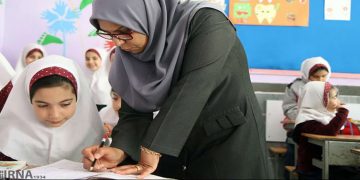
Education is the only pathway for children to escape the cycle of poverty. Yet in Iran, deprivation from schooling expands every year. Child labor is the primary cause of school dropout.
While the regime refuses to publish transparent data, Shargh newspaper reported on February 3, 2025: “One out of every 22 Iranian children is deprived of education.”
Mohammad-Mehdi Seyyed-Nasseri, child rights international researcher, stated:
“About 40% of child laborers in Iran either do not attend school or have dropped out because of work.” (Shargh, January 22, 2025)
Farshad Ebrahimpour, member of Parliament’s Education Commission, admitted in October 2024 that two million children did not register for school that year, adding that “economic hardship has prevented both parents and students from reaching the point of enrollment.” (ILNA, September 5, 2025)
University of Tehran professor, Gholamali Afrooz, stated in November 2024 that only 70% of students entering elementary school eventually complete high school.
Thirty percent drop out before graduating and enter the labor market prematurely. (ILNA, September 5, 2025)

The Malnutrition Crisis: A Trap for The Next Generation
Child malnutrition is a silent but widespread catastrophe. It not only destroys physical health but also reduces learning capacity and school participation, locking future generations into the cycle of poverty.
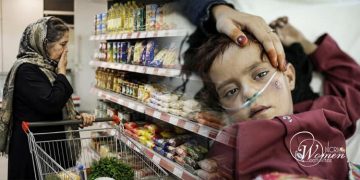
Hadi Mousavi-Nik, former Secretary-General for Social Welfare Studies at the Ministry of Labor, stated: “57% of Iran’s population suffers from malnutrition, including 14.5 million children, nearly 10 million of whom are under 12.” (Navad Eghtesadi, July 10, 2023)
A faculty member at Yasuj University of Medical Sciences stated that: “Malnutrition is the direct or indirect cause of 60% of deaths among Iranian children.” (Ettelaat, November 26, 2023)
Another study showed: 20% of child laborers suffer from malnutrition,13% live in female-headed households, and 22% belong to families affected by addiction. (Fararu, October 9, 2025)

Death at School: The Echo of a Collapsing Education System
Between October and November 2025, four disturbing cases occurred in Iranian schools:
- In Zanjan, a student suffered cardiac arrest and died after corporal punishment and being forced to run. (October 1, 2025)
- In Shiraz, a student died by suicide at home after being disciplined. (October 4, 2025)
- In Mashhad, a ten-year-old student suffered cardiac arrest in class and died. (October 13, 2025)
- In Ilam, a nine-year-old student died suddenly during recess. (October 25, 2025)
According to Eghtesad Online (November 3, 2025), these four incidents, in just one month, reflect a severe deterioration in children’s physical and mental health under a collapsing educational structure.

The Only Path to Iranian Children’s Welfare and Security
Children in Iran grow up under crushing poverty, injustice, malnutrition, and violence, while the ruling regime hides statistics and turns its back on reality. Structural poverty, institutionalized corruption, and the plundering of national wealth have condemned Iranian children to a future filled with death and deprivation.
The path to a bright future for Iran’s children is not through patching up the regime’s broken structures, but through its complete overthrow. The overthrow of this anti-human and child-killing regime is essential to restore education, health, welfare, and safety to Iranian children. Only through a movement toward freedom and justice can they be rescued from the cycle of oppression and granted the future they deserve.