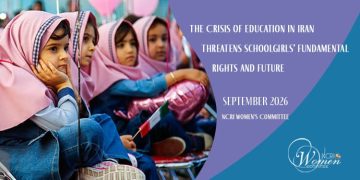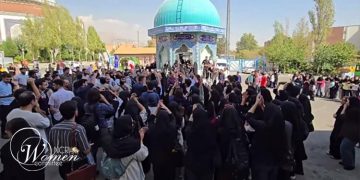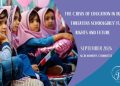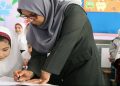


A significant proportion of participants in Iran’s nationwide January protests were high school students and minors. A government official acknowledged that in some provinces, as many as 45 percent of those protesting were under the age of 20. In certain schools, entire classrooms reportedly took part in the demonstrations.
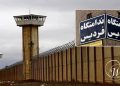
Today, countless families wander between detention centers, security facilities, and prisons in search of their children—hoping for news, or for the chance to see them for only a few brief minutes.
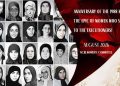
In many classrooms across the country, desks now sit empty. Each vacant seat represents a life cut short: Nazanin Zahra Salehi, 13; Mahdieh Abbasi, 16; Souda Akrami-Fard, 16; Anila Aboutalebian, 8; Tina Hosseini, 16; Nahal Jafari, 13; Sana Tousangi, 12; Sajedeh Karimi, 17; Setayesh Samadi, 16; Fa’ezeh Izadi, 16; Ainaz Rahimi Hajiabadi, 13; Ala Qashqaei, 15; Sedigheh Dabiri Abkenari, 17; Ghazal Demarchli, 17; Parian Hossein-Chenari, 16; Yalda Mohammadhani, 17; Paria Ahmadi, 16; Shiva Bordbar Javid, 15; Parnia Khalaji, 17; Melika Shahmoradi, 16; Niousha Hamidi, 15; Nirvana Ahmadi, 15; Bahar Shadmehri, 17; Samira Khani, 12; Kimia Kamiab, 17; Nazanin Esmi-Khani, 17; Parnian Dabiri-Abkenari, 16; and Arnika Dabbagh, 15, a national swimming champion.
These are not merely names. Each represents a stolen future and an unfinished dream. The presence of these young girls on the front lines of January protests underscores the emergence of a politically conscious and defiant generation—one demanding nothing more than freedom and human dignity.

Official Acknowledgment of Youth Participation
The scale of teenage involvement became clearer when government officials themselves were compelled to comment. Ehsan Amini-Rad, spokesperson for the Parliament’s Education Commission, stated: “In some provinces, reports indicate that up to 45 percent of the protest population consisted of individuals under 20 years of age, and in certain schools, an entire class participated in the unrest.” He added that nationwide, approximately 17 percent of participants were minors, the majority of them students (ILNA, February 18, 2026).
Mohammad Habibi, a member of the Teachers’ Coordination Council, previously reported that approximately 200 students were killed during the January protests.
Iran’s Minister of Justice has also acknowledged that a number of detainees under the age of 18 remain in custody (Tabnak, February 18, 2026).
The detention of children and adolescents under 18 constitutes a clear violation of fundamental child rights principles and Iran’s binding international obligations.
Reports of Torture and Sexual Violence Against Detained Minors
According to reports published on social media and by independent outlets, detained students have faced fabricated charges and coerced confessions. In detention centers, authorities have allegedly employed severe methods of torture to extract confessions, including electric shocks to sensitive parts of the body, beatings, the use of pliers, attempted penetration with metal rods, and simulated drowning using water and soaked cloths.
These abuses are reported to be systematic and not confined to a single city, although only a fraction of cases have reached public awareness.
On February 16, reports emerged that two sisters, aged 15 and 17, died following rape and torture in detention facilities. Their father was subsequently arrested in Tehran’s Khavaran district.
Security Crackdown in Schools
Following the January Protests, security measures in schools have intensified. Reports indicate that intelligence agents and plainclothes officers have entered schools nationwide, creating an atmosphere of surveillance and intimidation. In some cases, efforts have reportedly been made to sow distrust between teachers and students.
Such policies not only undermine the right to safe education but also impose profound psychological harm on an entire generation growing up under constant scrutiny.
Children Among Those Sentenced to Death
At least 30 protesters, including eight minors, have reportedly been sentenced to death. A further 22 individuals, among them two 17-year-olds, remain at risk of execution. Trials have allegedly relied on confessions extracted under torture and have violated due process standards, including denial of access to counsel of choice.
In a statement issued on February 20, 2026, United Nations experts called on Iranian authorities to disclose the fate and whereabouts of detainees, victims of enforced disappearance, and those missing since the protests, and to halt the issuance and implementation of death sentences related to the demonstrations.
In an Urgent Action statement dated February 20, 2026, Amnesty International called for an immediate stop to the executions of January protesters. According to Amnesty, “Children and young people constitute a significant proportion of those caught in the state’s machinery of repression following the January protests. They have been denied effective legal representation and subjected to torture and other ill-treatment, as well as incommunicado detention to extract forced confessions.”
Amnesty International has further warned that the true number of individuals at risk of execution may be substantially higher. The organization has called for coordinated international action to pressure Iranian authorities to halt proceedings that appear designed to expedite executions.
UNICEF is deeply concerned about reports indicating that children who were arrested in connection with the recent protests in Iran remain in detention.