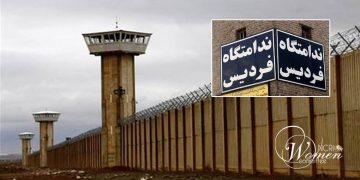


Mrs. Maryam Rajavi has called on the United Nations Security Council to take urgent action to prevent the execution of prisoners linked to recent protests and to secure the release of all political prisoners and those detained in the latest crackdown.
Judicial threats issued by Iranian authorities have continued in the aftermath of the nationwide uprising in January. In recent days, amid their growing concerns over renewed unrest, the authorities have intensified repression and carried out a new wave of arrests.
On February 9, 2026, the Telegram channel of Fars News Agency, which is affiliated with the Revolutionary Guard Corps (IRGC), reported the arrests of Azar Mansouri, Badr al-Sadat Mofidi, and several other figures described as “reformists” by security and judicial bodies. According to the report, the charges against them include “undermining national unity,” “taking positions against the Constitution,” “coordinating with enemy propaganda,” “promoting capitulation,” “diverting political groups,” and “establishing covert subversive networks.”
Meanwhile, the lawyer of Narges Mohammadi announced that the human rights activist, after 59 days in detention, contacted him from a security detention facility in Mashhad to inform him of her sentence.
Under the ruling, Narges Mohammadi has been sentenced to six years in prison on charges of “assembly and collusion,” and an additional 18 months for “propaganda against the state.” She has also been handed a two-year travel ban and a two-year internal exile to the town of Khosf as supplementary punishment.
Speaking in Berlin, Maryam Rajavi reiterated her call for immediate intervention by the UN Security Council to halt executions related to the protests and to secure the release of all political prisoners and recent detainees.
She stated that the regime’s judiciary is issuing unjust and indefensible sentences out of fear of another nationwide uprising. Arrests are expanding.
Prison and internal exile sentences imposed on women, along with the harsh and degrading conditions they face behind bars, are utterly unacceptable.
The UN Security Council must dispatch a fact-finding delegation to visit the regime’s prisons and meet directly with detainees, especially women, and demand answers from Ali Khamenei and Gholam-Hossein Mohseni Ejeii: What crime have these prisoners committed?
Mrs. Rajavi further asserted: Everyone knows the truth. All political prisoners should be free and it is Khamenei, Ejeii, and the officials of this repressive judiciary who should be imprisoned and stand before justice, defending their record in an open court of law.