

Welcome to the first podcast of the NCRI Women’s Committee in 2026. And it is, quite an intense start to the year. The first days of January have been anything but quiet. Not. It really confirms that the upheaval from late last year has entered a new and much more decisive phase of confrontation.
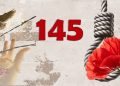
It really has. The new year just began with this eruption of anti-regime protests across Iran, and the movement has well, it’s escalated so rapidly. It’s spread to at least 145 cities. And our latest reports are suggesting that number is actually climbing closer to 150. It’s just a massive geographic footprint.
It’s huge. It is. And for you, our listener, the mission of this deep dive is really essential. We’re going to try to compile the recent events, drawing just from the sources we’ve gathered to highlight the, the critical and defining role women have played in leading this uprising. Right.
We need to go beyond the headlines and really analyze why their leadership is so central right now. So, okay, let’s unpack the scale first because the scope of this is it’s a crucial detail. It is. The sources are really emphasizing that this isn’t just a regional thing. Yeah.
It’s not confined to one province or one ethnic group. It’s universal. It is. And what’s fascinating is the, strategy. It’s like a strategy of saturation.
It has spread across every single province, turning streets, universities, bazaars, even residential neighborhood into, you know, simultaneous arenas of direct confrontation. Which has to be a strategic nightmare for the authorities. Oh, absolutely. Right. It fractures their ability to repress everyone at once.
They’re stretched thin across the entire country. And the message coming out of these confrontations, it’s not reformist. It’s revolutionary. I mean, you look at the key slogans and they are completely unambiguous about the goal. Yeah.
You hear the fundamental demands like death to Khamenei, death to the dictator. Very direct. It’s challenging the head of the whole structure but I think if you want to understand the sort of the sheer determination right now, have to listen to this unifying chant that’s become a rallying cry. Which one is that? This year is the year of sacrifice. Seyyed Ali (Khamenei) will be overthrown.
It’s a declaration. It’s a commitment to see this through within a specific time frame. Wow. But what’s also interesting when you connect that geographical spread to the political message is that the conversation about Iran’s future is broadening.
It’s not just about the current regime anymore. That’s a great point. Our sources are confirming this shift. We’ve seen much broader political slogans emerge in cities like Tabriz and Mashhad. For instance, the chant, death to the oppressor, whether Shah or the mullah’s leader.
Now that’s a powerful political statement. It is. It unites people who oppose the old authoritarianism with those fighting the current one. And we heard an even more explicit version from the students. Right?
From Allameh Tabatabaii University, the cry was neither monarchy nor the mullahs. Leadership, freedom, and equality. Exactly. It signals a profound desire for something completely new. A democratic system built on rights.
And when we talk about freedom and equality, we have to pivot to the, well, the defining characteristic of this whole uprising. The visible undeniable leadership from women. Exactly. Our reports confirm that young women and girls, they aren’t just participants. They are allowed.
They’re outspoken. And in a lot of these demonstrations, they are the functional majority. They’re leading the chance. And this is a very tactical leadership role. Their courage is strategically important because it just directly challenges the regime’s security narrative that these are, you know, marginal protests or driven by outsiders.
Right. When women are visibly leading, it grounds the movement in domestic demands for basic rights. We have some really specific, memorable examples of this defiance from the sources. Yeah. Take the demonstration in Sherra Court.
It was a huge gathering, lots of women. Okay. But the one act that just captured the spirit of that day was the image of a young woman standing completely alone. In front of the water cannon. I saw that image.
Yes. She stood directly in front of a water cannon, refusing to move, openly defying and humiliating the forces. It’s a critical psychological blow. It really is. And the political sophistication is just as stunning.
Even when the supreme leader tried to dismiss everyone as rioters, the women fought back. They did. In Sao Tiran in the Nazi Bah District, our sources saw a brave woman carrying a placard that just read I am not a rioter. Such a simple act but it’s a direct public refutation of state propaganda. Turns the regime’s own language back on itself.
Then we also saw how, the deepest personal pain, the loss of life was channeled into organized resistance. You mean in Elam province? Specificly in Malekhshahi. Funeral processions for victims quickly turned into massive protest marches. And significantly, those marches were amplified by huge numbers of young women and girls.
And they were chanting things like, I will kill the one who killed my brother. Incredible defiance. So the regime’s attempt to suppress dissent by killing a protester literally resulted in doubling the number of protesters in the streets. This level of organization, particularly among young women, it naturally brings us to the universities. And the sources note this is the linkage the authorities fear most.
They are terrified of it. The convergence of popular demonstrations and the student movement, it’s a rational fear. Why is that? Well, the students provide intellectual capital, communication networks and a dedicated organized core that can sustain momentum, especially female students. We saw specific examples of this at the all female Al Zara University in Tehran.
Which is supposed to be an ideological symbol of the regime’s control over women’s education. Right. And for those students to join the uprising, chanting anti regime slogans, that’s a profound ideological failure for the establishment. And resistance went from the campus right into their dorms. At Mello University, female students initiated a nighttime demonstration inside their dormitory compound on December 31.
Making descent unavoidable but that organizing of course provoked a severe immediate reaction. Precisely. Later that night at 11:15 p. M. Plainclothes agents and security forces raided the women’s dormitory at Mellow University.
Yes, the timing was designed to shock and intimidate. It’s an attack on their most protected private space and it led directly to arrests. At least three female students were detained. But instead of silencing them it just triggered more protest. Immediately, other students gathered outside chanting, shameless, shameless, and death to the dictator.
And this repression was happening across the city. Six other women arrested in Tehran were transferred to Evan Prison on December 31. The speed of those transfers tells you everything. The priority is to isolate and punish female leadership as quickly as possible. And it didn’t spare the youth.
We have a documented case of a teenage girl violently arrested and now she’s being held in Yasuj Prison. Beyond arrests, there’s just the sheer violence. In Isfahan, security forces attacked and pepper sprayed women who were just sitting peacefully on the floor in Naghsh-e Jahan Square. Which is such a famous historic public square. It is.
Attacking peaceful women in such a symbolic location. It’s not crowd control. It’s an overt act of political violence designed to destroy dignity and reclaim public space for the state. So shifting to the current status, as of today, January 8, the resistance is not letting up. And now there’s immense economic pressure.
Indeed. We have to talk about the strikes. The sources detail complete strikes by the bazaaris and merchants in dozens of cities. And for anyone listening who might not know, the bazaaries are the traditional merchant class. They are the bedrock of the economy.
Historically, often conservative supporters of the system. So when hubs like Tehran’s Grand Bazaar, Saqqez, Sanandaj, when they close their doors, it signals the opposition is now systemic. It’s economic. All while clashes are still ongoing in cities like Abdanan and Shahrekord. The resistance continues.
But that resistance of course comes at a devastating price. We have to acknowledge the sacrifice. We do. As of today, Thursday, January 8, the identities of 44 people killed during this uprising have been confirmed. And the new lists of martyrs announced today include those killed in places like Neyshabur.
Crucially, the sources confirm that among those 44 martyrs announced so far, there is at least one woman and two teenagers, just 16 and 17 years old. And that woman martyr killed today in Neyshabur is a profound tragic symbol of this leadership role. It’s an unprecedented moment, really. The regime’s foundational weakness, its total reliance on controlling women, has become the very thing through which its power is now being contested. This deep dive has shown that security forces are prioritizing the disruption of female and student resistance, above all else.
They know if that network holds, the resistance will sustain itself. And for those you listening who want to stay connected and amplify this struggle, we really encourage you to visit our website, wncri.org. By visiting wncri.org, you can support the vital work of the NCRI Women’s Committee. Their mission is to promote the struggle of women for freedom and democracy in Iran.
Thank you for joining us, and we’ll bid you a nice farewell until the next one.