
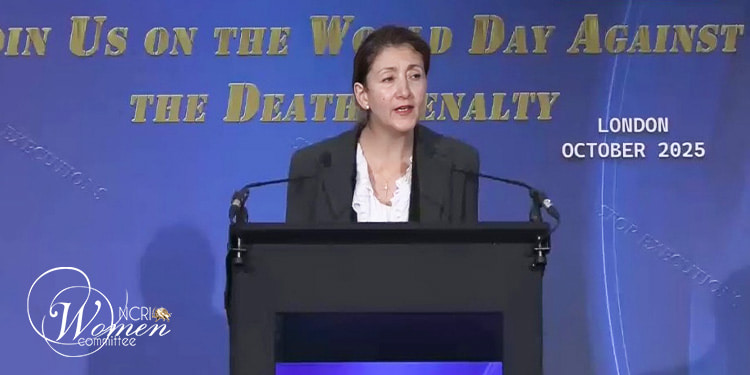
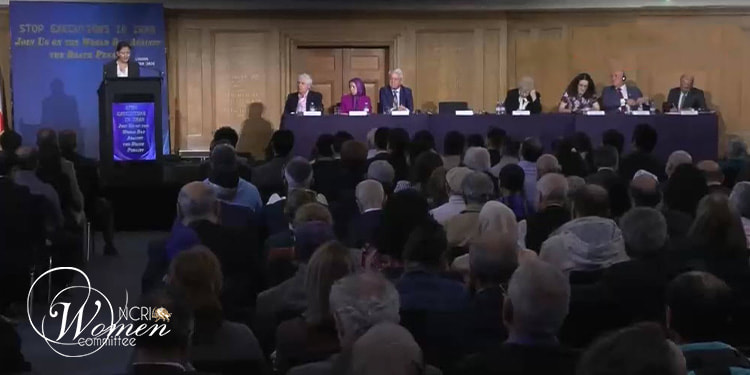
On Saturday, October 11, 2025, coinciding with the World Day Against the Death Penalty, a conference was held at the historic Church House in London.
Speakers included Baroness O’Loan, Mrs. Maryam Rajavi, the President-elect of the National Council of Resistance of Iran (NCRI); John Bercow, former Speaker of the UK House of Commons; Ingrid Betancourt, former Colombian presidential candidate; Theresa Villiers, former UK government minister; along with several other political figures, members of parliament, and human rights advocates.
The main themes of the speeches at this event focused on condemning human rights violations and the growing number of executions in Iran, calling for the halt of death sentences against political prisoners for supporting the PMOI/MEK, the designation of the Revolutionary Guard Corps (IRGC) as a terrorist organization, and the prosecution of Ali Khamenei and other regime leaders for crimes against humanity and genocide.
What follows is the full text of Ingrid Betancourt’s speech at this conference:
Honoring Human Dignity, Condemning Injustice
It is an honor to be with you today in this Church House, a place steeped in history where the United Nations Security Council first met to defend peace, freedom, and human dignity in the darkest hours of the last century.
On this World Day Against the Death Penalty, we gather not only to denounce an instrument of barbarism, but to affirm the sanctity of human life and the power of conscience, principles that no regime, however brutal, will ever be able to destroy.
Today in Iran, 17 men, prisoners of conscience, freedom fighters, human beings of extraordinary courage, await execution.
Their crime? To think. To claim justice, dignity, and freedom. To support the MEK, the Iranian opposition movement fighting for the people’s right to choose democracy.
The MEK: A Moral Force Beyond Politics
For more than six decades, the MEK has carried the torch of liberty through oppression, imprisonment, and exile, confronting two dictatorships: the Shah’s monarchy and the theocracy that followed.
That is why we always say: “No Shah, No Mullahs.”
This long struggle, very, very long struggle, six decades, explains why the MEK is not merely a political movement; it is a moral force rooted in values that transcend time and borders. The regime fears them so deeply because truth always threatens and defeats tyranny.
Our 17 Heroes: Voices of Courage
Our 17 now facing death are the voices of courage in a land silenced by fear. They have endured years of imprisonment, torture, deprivation, and solitary confinement, yet their spirit remains unbroken.
Their defiance reminds us that freedom is never granted; it is won.
That justice is never offered, it is demanded.
So, as they stand on the threshold between life and death, the question before all of us here is not only about their fate; it is also about ours.
Will the world remain silent while the innocents are condemned? Or will we rise, speak, and act so that their right to live becomes a turning point in the global struggle for freedom?
The Power of Resistance: “No to Execution Tuesdays”
Our 17 heroes are not alone. Across Iran, thousands more languish in prison for daring to think freely. Yet even behind bars, the human spirit refuses to yield.
From within prison walls, a remarkable movement has emerged: “No to Execution Tuesdays.”
Every Tuesday, for twenty consecutive months, prisoners have refused food, turning hunger into a weapon to accuse their executioners. They have transformed a day of horror into one of resistance, dignity, solidarity, and hope.
Each Tuesday, while the regime seeks to kill and silence, these prisoners speak out and affirm their commitment to justice, not through violence but through moral strength.
Maryam Akbari Monfared: A Beacon of Defiance
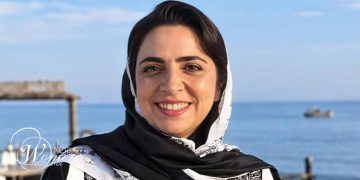
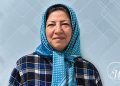
Among them there is a name I want the world to cherish. That name is Maryam Akbari Monfared.
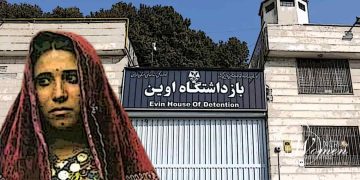
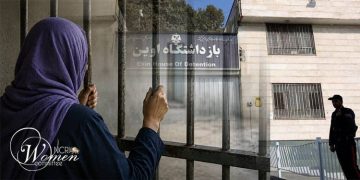
She has spent sixteen years in prison, separated from her three daughters, who have grown into young women without their mother’s embrace. Her crime again: supporting the dream of a democratic Iran and seeking justice for her four siblings, three brothers and one sister, executed by the regime for the crime of being member of the MEK.
Two of them were among the 30,000 political prisoners massacred in 1988, a genocide investigated and denounced by the UN.
When her original 15-year sentence ended, the regime fabricated new charges and extended her ordeal. Yet, from the depths of her cell, Maryam continues to inspire courage. Listen to her.
She once wrote, “In these years, I have endured many sufferings, yet my brothers and my sister who lost their lives remain the shining stars of love and hope in my family. From them, I have learned the strength to endure pain and hardship.”
And yet in another letter, she declares, “Justice stands stronger than love, even higher than a mother’s love for her children. And precisely because I love my children, I have risen in the name of justice.”
Let’s meditate in these words because these words are not words of despair. They are the moral testimony of a woman who has turned grief into strength and pain into purpose. Mariam Akbari Monfared and our 17 on death row are truly the conscience of Iran.
Her words turn grief into strength, pain into purpose. Maryam Akbari Monfared and our 17 are the conscience of Iran.
Their courage is pure. Their truth, too inconvenient to the regime and their example, absolutely vital for us. Us living in the comfort zone of the free countries. Let us, therefore, not be silent accomplices to their erasure.
Let us remember them, not out of sorrow, not out of pity, but out of moral power because it is utterly right to claim for their innocence. My friends, their defiance also carries a profound political message for all of us here.
A Moral Obligation for the Free World
For too long, the international community has looked away, placing short-term interests, trade, diplomatic expediency above human rights, and in particular above the rights of the people of Iran.
Today, we must be clear: the death penalty in Iran is not a judicial procedure; It is an inhumane, uncivilized, barbaric political weapon, wielded to instill fear and suppress dissent.
Those condemned today are members of a movement that represents the hope and the alternative to dictatorship.
Their sense of belonging is what drives their heroic commitment. Yes, they have been offered a way out to save their lives by denying their support to the MEK and work as proxies to the regime. But they have said no. No, because the MEK is the democratic option they dream of. Because they know it is the only chance of an orderly transition to democracy when the fall of the Iranian tyranny comes, and they know that the democratic coalition it has inspired under the leadership of Maryam Rajavi, is the only way out.
We all know here that Maryam Rajavi’s vision of a free, democratic, secular, nonviolent, non-nuclear Iran stands as the moral and political antithesis of the regime’s cruelty and corruption, exporting terrorism, exporting tyranny to the world through a criminal net fueled by blood and by drug money. We all know that.
So, to support the MEK, to defend our 17 prisoners, to speak for Maryam Akbari Monfared is therefore not only a moral obligation, it’s a survival imperative for each of us.
Hope Beyond the Walls
My dear friends, as I stand here in this whole of conscience, I think and I know you think too of the faces of the 17, our 17, on death row, the face of Maryam Akbari Monfared, and of thousands more whose names we may never know.
And I wonder, what does it mean when the world hears of injustice and does nothing? Surely, silence in the face of execution is more than complicity.
It is breaking off our bonds to each other as human beings. Yet, there is spark inside every one of us, spark of outrage, spark of compassion that refuses to be extinguished, and that spark is hope.
When one mother endures years of separation and torture and yet raises her voice from within prison walls, that is hope. When prisoners fast on Tuesdays, though their bodies are weak and yet the resolve is strong, that is hope.
The Promise of Freedom
So, there is hope. Today, let us make a promise to them all, to those 17, and to all who suffer in prison for nothing more than truth and belief.
Let’s promise them that we will never forget them, that we will carry your story to every parliament, every diplomatic table, every street corner, that we will press for your freedom, for your dignity, for your life, and that we will demand with our voices, our votes, our actions that no person be executed for wishing freedom. Because the measure of our humanity is seen when we stand up for the powerless, for those whom fear has silenced, for those who are crushed under the boots of tyrants.
And the day will come, and I truly believe this, when the blood of martyrs becomes the seed of freedom for all the powerless. When each life saved becomes a victory for the most destitute of all of us.
So let us leave here today determined, not merely to condemn but to act, not just to mourn injustice, but to eradicate it.
And when the dawn of a free Iran breaks, when the world rises beyond walls of oppression, those 17, our 17, will not be the last names to be recalled.
They will be the first names engraved in the foundations of their, your, our new land of liberty.
Thank you.