
Saturday, May 30, 2026
  • English
  • Français
  • فارسی
  • عربى
PODCASTS
NCRI Women Committee Women Resistance Freedom
  • Home
  • NEWS
    • Women’s News
    • Articles
    • Statements
  • PUBLICATIONS
    • Monthlies
    • Documents
    • Reference Library
  • ABOUT US
    • The NCRI Women’s Committee
    • Gender Equality
    • Women’s Platform
  • MARYAM RAJAVI
    • Maryam Rajavi
    • Maryam Rajavi Speeches
    • The Plan on Women’s Rights and Freedoms
    • Ten-Point Plan for the future of Iran
  • VANGUARDS
    • The Fallen for Freedom
    • Heroines in Chain
    • Women of Iranian Resistance
    • Famous Women
    • Women in History
  • EVENTS
    • IWD Conferences
    • Activities
    • IWD Speeches
    • Solidarity
  • VIDEO
    • Videos
    • IWD Videos
  • PODCAST
  • DONATE
  • CONTACT US
No Result
View All Result
NCRI Women Committee Women Resistance Freedom
  • Home
  • NEWS
    • Women’s News
    • Articles
    • Statements
  • PUBLICATIONS
    • Monthlies
    • Documents
    • Reference Library
  • ABOUT US
    • The NCRI Women’s Committee
    • Gender Equality
    • Women’s Platform
  • MARYAM RAJAVI
    • Maryam Rajavi
    • Maryam Rajavi Speeches
    • The Plan on Women’s Rights and Freedoms
    • Ten-Point Plan for the future of Iran
  • VANGUARDS
    • The Fallen for Freedom
    • Heroines in Chain
    • Women of Iranian Resistance
    • Famous Women
    • Women in History
  • EVENTS
    • IWD Conferences
    • Activities
    • IWD Speeches
    • Solidarity
  • VIDEO
    • Videos
    • IWD Videos
  • PODCAST
  • DONATE
  • CONTACT US
No Result
View All Result
NCRI Women Committee
No Result
View All Result
Home Heroines in Chain
Face to Face with the Beast (21)

Shekar Mohammadzadeh

Face to Face with the Beast (21)

October 9, 2025
in Heroines in Chain

From the memoir by Hengameh Haj Hassan

In this part of Hengameh Haj Hassan’s prison memoirs — she was a nurse at Sina Hospital in Tehran in 1981 — published in Face to Face with the Beast, the author recounts her reunion with her dearest friend, Shekar Mohammadzadeh, who had endured the unbearable torture known as the Residential Unit. She also describes a new method the torturers devised to destroy the human spirit.

Reunion with My Beloved Shekar

Night fell, and just as we had guessed, it happened — they called out the names of our ten-person group and lined us up behind the ward door. A newly arrived female guard asked, “Which one of you is Hengameh?”

“I am,” I said.

She didn’t respond — just looked at me, as if to make sure I was there. Then she said coldly, “Due to failure to follow ward regulations, you’re being transferred to Ward 8.”

I wanted to shout for joy. Oh God — I’m going to see Shekar!

I could barely contain myself from screaming it aloud.

We started toward Ward 8. I wanted to run, but we had to keep in line. As soon as the door opened and we stepped inside, the whole ward exploded in joy!

Oh God — most of the girls from Ward 7 were here!

My shoes were in my hands, my chador had slipped off and tangled around my feet, and girls were rushing toward us from every direction — hugging, kissing, laughing. But my eyes were searching only for Shekar. The crowd was too thick to move through.

Then, through the crush of bodies, at the far end of the circle, near Cell 3, I saw her — Shekar — standing on her tiptoes, waving so I could see her, shouting my name, though I couldn’t hear her over the noise. She was crying.

Without thinking I screamed, “Shekar!” and dropped everything I was holding, trying to push my way toward her.

My chador was no longer slowing me down. Shekar, too, was forcing her way through the crowd toward me.

In a single instant, we reached each other —

Dear God… the moment I had dreamed of for three years!

We threw our arms around each other. Shekar buried her head on my shoulder, sobbing uncontrollably, repeating my name over and over, louder and louder:

“Hengameh! Hengameh! You were my only friend! You were my only friend!”

Then she suddenly turned toward the others, crying out:

“She’s my only friend! My only friend!”

I was startled — and for the first time noticed what was happening around us. The other prisoners had quietly formed a circle around us, silently weeping.

The only reason I could hear Shekar’s voice so clearly was because of that silence.

She clung to me, still crying. I wrapped my arm around her shoulders; she gripped my arm tightly with both her hands. I guided her toward the wall beside Cell 3, where she had been standing.

The others gently stepped aside, giving us space, and drifted away. No one else came near.

We sat down.

“Are you okay?” I asked, studying her face.

She looked pale and exhausted. She had lost a lot of weight. Her hair was tied back in a ponytail — the same hair I used to style for her, then mess up just to annoy her.

It was still neat and clean.

I reached out, tousled her hair again, and repeated, “Are you okay?”

She gave me a faint, tearful smile — still looking at me with disbelief and worry — and nodded.

One of the girls passing by glanced at us, smiled kindly, and went on. Shekar followed her with her eyes, then whispered to me, “Hengameh… don’t trust them. Don’t trust anyone.”

Then, her voice breaking with fear and despair, she added, as if remembering something:

“They wanted to bring my mother here. Can you imagine? My poor mom — here! Oh God…”

Tears streamed down her face again.

I stroked her cheek. “Shekar, what happened? What did they do to you? Who wanted to bring your mother here?”

“These people!” she said.

It was clear something inside her had been deeply shaken — she was trapped in terror, sorrow, and confusion.

I changed the subject, started talking about old friends, our families, and the funny memories we shared — our midnight sandwiches before exams, the stolen cups of tea in the dormitory, Mrs. Gilak and Mrs. Khosravi, the teachers we used to tease.

I reminded her of the time I climbed the mulberry tree, got caught, and she and Sousan ran off — after I’d picked all those berries for them and hadn’t eaten a single one myself!

We both burst out laughing. For the first time, Shekar was sitting up straight, smiling across from me.

But the others in the ward were behaving strangely — they didn’t come near us.

The Torturers’ New Experiment in Breaking People

I stood up to gather my things and said, “I’ll be right back. Let’s eat dinner together — bring whatever you’ve got! I’ve got nothing yet.”

As I walked away, a woman named Jila called me softly.

I didn’t know her; we hadn’t been in the same ward before. She had been imprisoned with Shekar.

She was crying.

“Do you know what’s happened?” she whispered.

“We never thought Shekar would get better — or that she’d ever laugh, say hello, or speak again.

But today… she came back to life. Our kind nurse!

She came back to life today.

After they took her to the residential unit, she only cried. She’d sit for hours facing the wall, never saying a word to anyone. Those filthy tavvabs surrounded her — we couldn’t even get close.

She wouldn’t talk to them either. She was terrified of everyone.

But they wouldn’t leave her alone — waiting, watching for the moment she’d finally give in.”

Those vultures! The same vultures I knew so well — now circling, waiting for Shekar’s corpse.

I couldn’t believe it. Could the Shekar I knew have ended up like those who came out of the residential unit — hollow, broken shells of themselves?

But it was true. She had lost her emotional balance.

Still, they hadn’t managed to destroy her completely. Despite all the torture, Shekar hadn’t forgotten Massoud or the Mojahedin. It was that memory — that belief — that kept her alive.

Later, once I wanted to understand how much she had been forced to interact with the traitors and tavvabs who surrounded her, I asked,

“Shekar, what did you say to those people who were always around you? I just want to know.”

She turned to me, surprised, her voice hurt and reproachful:

“Hengameh… you think I became a traitor?”

She fell silent for a moment, then, as if she owed me an answer, continued:

“They tried to make me one of them. Sure, I wasn’t well, but I knew who they were and what they wanted — why they were suddenly being kind to me. I didn’t talk to them.

I never betrayed anyone — and I never will. Don’t you believe me?”

“I do,” I said.

When she saw that I meant it, she turned her gaze away — and went on talking.

To be continued…

ShareTweetPinShareSendShare

Related Posts

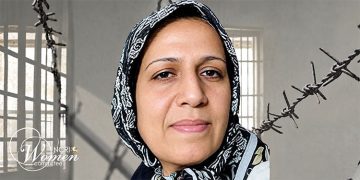
From Behind Bars, Brave PMOI Political Prisoner Marks Founders’ Anniversary

May 29, 2026
Systematic Denial of Care Risks Life of Female Political Prisoner in Iran From Behind Bars, Brave PMOI Political Prisoner Marks Founders' Anniversary

‘Physical Death Does Not Destroy an Ideology’ - Parisa Kamali YAZD PRISON, Iran — Parisa Kamali, a political prisoner serving an eight-and-a-half-year sentence in Yazd, has released a...

Read moreDetails

The Crimson Diary Under the Daily Shadow of Femicide in Iran

May 29, 2026
The Crimson Diary Under the Daily Shadow of Femicide in Iran

What follows is merely a horrifying glimpse into leaked news from an incredibly brief period—from mid to late May 2026. Looking at this timeline is enough to shock...

Read moreDetails

Iran: Pressure Ramped Up on Female Political Prisoners in Evin Prison

May 29, 2026
Iran Regime Intensifies Pressure on Female Political Prisoners in Evin Prison

Female political prisoners in Evin Prison, particularly those participating in the “No to Executions Tuesdays” campaign, have faced a new wave of restrictions and security pressure in recent...

Read moreDetails

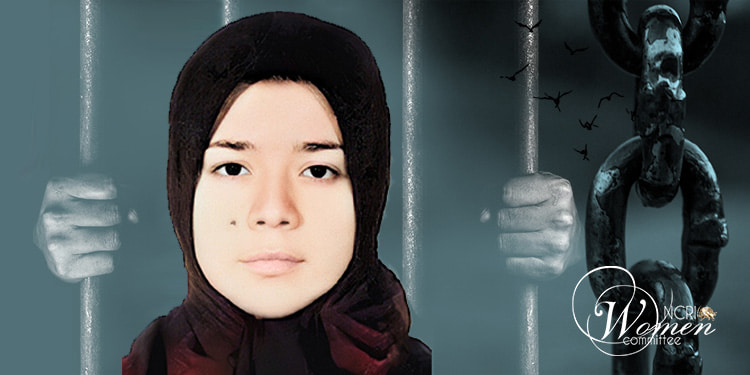
Iran: Two Political Prisoner Sisters Sentenced to 16 Years in Jail

May 28, 2026
Iran Regime Sentences 2 Political Prisoner Sisters to 16 Years in Prison

The Iranian regime has sentenced two imprisoned sisters, Kimia Davoudi and Tara Davoudi, to a combined 16 years in prison following their arrest during the nationwide protests of...

Read moreDetails

Turning Survival into Resistance

May 28, 2026
Turning Survival into Resistance - by Azam Haj Heydari, Part 8

Prison Memoirs of Azam Haj Heydari from the book The Price of Being Human — Part Eight In this installment of the prison memoirs of Azam Haj Heydari,...

Read moreDetails
Next Post
Septima Poinsette Clark: The “Mother of the Civil Rights Movement”

Septima Poinsette Clark: The “Mother of the Civil Rights Movement”

Documents

Crushed by Design: Structural Crises and Inequitable Policies Push Female-Headed Households to the Edge

Crushed by Design: Structural Crises and Inequitable Policies Push Female-Headed Households to the Edge

May 18, 2026

Introduction Life for the Iranian people under the religious dictatorship is fraught with hardship and peril from every perspective. Whether...

A Report to CSW70: Gender-Based Discrimination Under Iranian Law

A Report to CSW70: Gender-Based Discrimination Under Iranian Law

March 8, 2026

Structural Inequality and State-Sanctioned Oppression of Women Gender-Based Discrimination Under Iranian Law” is the title of the NCRI Women’s Committee’s...

Annual Report 2026: From Protests, to Uprising, and the Role of Iranian Women

Annual Report 2026: From Protests, to Uprising, and the Role of Iranian Women

March 3, 2026

On the eve of International Women’s Day 2026, the NCRI Women’s Committee presents its Annual Report 2026, offering a recap...

Monthlies

April 2026 Report: Mass Arrests of Women: Targeted Repression in Time of Crisis
Monthlies

April 2026 Report: Mass Arrests of Women in Iran

April 30, 2026
March 2026 Report: How Iranian Women Are Shaping the Resistance
Monthlies

March 2026 Report: Courage Under Fire

April 3, 2026
January 2026 Report: Women at the Core of the Uprising
Monthlies

January 2026 Report: Women at the Core of the Uprising

January 31, 2026
December 2025 Report: A Year in Review: Iranian Women’s Resistance Against Religious Dictatorship
Monthlies

December 2025 Report: A Year in Review: Iranian Women’s Resistance Against Religious Dictatorship

January 5, 2026

Articles

The Crimson Diary Under the Daily Shadow of Femicide in Iran

The Crimson Diary Under the Daily Shadow of Femicide in Iran

May 29, 2026

What follows is merely a horrifying glimpse into leaked news from an incredibly brief period—from mid to late May 2026....

Aziz Rezaei: Mother of Resistance, Teacher of Steadfastness

Aziz Rezaei: Mother of Resistance, Teacher of Steadfastness

May 22, 2026

In the contemporary history of Iran, there are names that live not merely as memories, but as paths. The name...

Iranian student Shabnam Madadzadeh recounts prison abuse: My brother was tortured before my eyes

Iranian Student Recounts Prison Abuse: My Brother Was Tortured before My Eyes

May 14, 2026

On May 10, 2026, the Daily Mail published an interview with Iranian student Shabnam Madadzadeh, a former political prisoner, member...

The Fallen for Freedom

White-Clad in the Line of Fire: Samin Rostami
The Fallen for Freedom

White-Clad in the Line of Fire: Samin Rostami

May 20, 2026
Killed by Two Bullets to the Heart and Leg: Fatemeh Abdollahi
The Fallen for Freedom

Killed by Two Bullets to the Heart and Leg: Fatemeh Abdollahi

May 17, 2026
Fereshteh Azhadi: A Life of Resistance, Sacrifice, and Unyielding Commitment
The Fallen for Freedom

Fereshteh Azhadi

May 1, 2026
Mahin Khiabani: A Life of Defiance Until the Final Breath
The Fallen for Freedom

Mahin Khiabani

May 1, 2026

ABOUT US

NCRI Women Committee

We work extensively with Iranian women outside the country and maintain a permanent contact with women inside Iran. The Women’s Committee is actively involved with many women’s rights organizations and NGO’s and the Iranian diaspora.
The committee is a major source of much of the information received from inside Iran with regards to women. Attending UN Human Rights Council meetings and other international or regional conferences on women’s issues and engaging in a relentless battle against the Iranian regime’s misogyny are part of the activities of members and associates of the committee.

CATEGORIES

  • Activities
  • Articles
  • Documents
  • Famous Women
  • Heroines in Chain
  • IWD Conferences
  • IWD Speeches
  • IWD Videos
  • Maryam Rajavi
  • Maryam Rajavi Speeches
  • Monthlies
  • Podcast
  • Reference Library
  • Solidarity
  • Statements
  • The Fallen for Freedom
  • Videos
  • Women in History
  • Women in Leadership
  • Women of Iranian Resistance
  • Women's News

BROWSE BY TAG

Child marriage coronavirus education execution forced hijab Gender Gap Generation Equality Honor killings Iran Teachers Maryam Akbari Monfared Nurses Plan on Women's Rights and Freedoms Poverty Prisoners Protests rural women Saba Kord Afshari The girl child Violence against women Women's Leadership Women Heads of Household Zeinab Jalalian

The copyright of all the material published on this website has been registered under © 2016 the Women’s Committee of the National Council of Resistance of Iran. To obtain permission to copy, redistribute or publish the material published on this website, you should write to the NCRI Women’s Committee. Please include the link of the original article on our website, women.ncr-iran.org.

Welcome Back!

Login to your account below

Forgotten Password?

Retrieve your password

Please enter your username or email address to reset your password.

Log In

Add New Playlist

No Result
View All Result
  • Home
  • News
    • Women’s News
    • Articles
    • Statements
  • Publications
    • Monthlies
    • Documents
    • Reference Library
  • About Us
    • The NCRI Women’s Committee
    • Gender Equality
    • Women’s Platform
  • Maryam Rajavi
    • Maryam Rajavi
    • Maryam Rajavi Speeches
    • Ten Point Plan for Iran
    • The Plan on Women’s Rights and Freedoms
  • Vanguards
    • The Fallen for Freedom
    • Heroines in Chain
    • Women of Iranian Resistance
    • Famous Women
    • Women in History
  • Events
    • IWD Conferences
    • Activities
    • IWD Speeches
    • Solidarity
  • Video
    • Videos
    • IWD Videos
  • Podcast
  • Donate
  • Contact us
  • فارسی
  • عربی
  • Français

The copyright of all the material published on this website has been registered under © 2016 the Women’s Committee of the National Council of Resistance of Iran. To obtain permission to copy, redistribute or publish the material published on this website, you should write to the NCRI Women’s Committee. Please include the link of the original article on our website, women.ncr-iran.org.