This episode of the NCRI Women’s Committee podcast highlights the pervasive and systemic nature of the Iranian regime’s repression against women through a pattern of targeted arrests, inhumane detention conditions, judicial abuse, and collective punishment, often directed at families of dissidents and those seeking justice.
Here’s how this pervasive, systemic repression is put in force:
- Targeting Families and Collective Punishment: The regime systematically targets the families of political prisoners and justice-seeking relatives, indicating a “continued campaign of repression” and a “broader pattern of suppression”.
- Leila Saremi, daughter of an executed political prisoner and mother of an imprisoned protester, was arrested without a legal warrant, and taken into custody during the raid. Her arrest and reported torture are seen as a “deliberate form of psychological pressure” and “white torture” to compel her son, Farzad Moazami, into forced confessions.
- The regime also took Leila Saremi hostage to force her daughter, Rozita Moazami Goodarzi, to surrender, demonstrating a clear act of “collective punishment and hostage-taking”.
- The family of Masoud Jamei also faced severe torture as a means to pressure him, with his wife, Zeinab Hazbapur, and their three children (Nahid, Delal, and Roghieh) arrested and tried for ties with an opposition group.
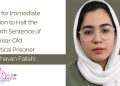
- Arghavan Fallahi, a 24-year-old political prisoner, has been held incommunicado for over six months, with her family having no information about her whereabouts or health. Her father, Nasrollah Fallahi, himself a political prisoner, described her detention as cruel uncertainty and abuse, including torture to fabricate a case.
- Hoda Mehreganfar and her father were arrested without a warrant and remain detained without bail, facing prolonged legal uncertainty.
- Arbitrary Arrests and Lack of Due Process: Many arrests occur without legal warrants, and detainees are often denied basic rights.
- Leila Saremi was arrested without a legal warrant.
- Forough Khosravi, a school teacher, was arrested by IRGC agents without her presence during a prior raid and later without a formal summons, despite her complaints being dismissed by the prosecutor.
- Rozita Moazami Goodarzi’s home was raided without a judicial warrant, and no legal basis for her arrest was disclosed.
- Sahar Soltani, a children’s rights advocate, was arrested, and no official charges or reasons for her detention have been made public.
- Sara Gowhari, an Afghan student, was arrested while conducting independent research without any clear reason given.
- Inhumane Detention Conditions and Denial of Medical Care: Prisoners are subjected to severe conditions, including torture, solitary confinement, and denial of essential medical treatment.
- Leila Saremi was placed in a solitary cell immediately after arrest and is reportedly enduring torture and has been deprived of communication and legal representation.
- Arghavan Fallahi was subjected to interrogation and torture in solitary confinement and denied family visits, with concerns raised about her severe neurological migraines and lack of medication.
- Massoumeh Asgari, a retired teacher, and Massoumeh Nassaji (Farah) were sent to solitary confinement after protesting inhumane prison conditions, including dire hygiene and poor nutrition. Asgari suffers from multiple chronic health conditions but has been denied necessary medical treatment. Nassaji, a 62-year-old political prisoner, was subjected to 48 days of solitary confinement and denied a lawyer, despite her health issues.
- Hoda Mehreganfar is in critical condition due to a recurring cyst and has been denied access to specialized healthcare despite medical warnings, with the supervising judge rejecting her transfer.
- Reyhaneh Ansarinejad, a labor rights activist, was barred from hospital transfer for an urgent thyroid ultrasound because she refused to be taken in handcuffs, a condition she views as degrading. She was forced to sign a waiver for medical treatment and suffers from severe pain without specialized care.
- Judicial Abuse and Prolonged Detention: The judiciary is depicted as complicit in repression, with cases stalled, excessive bail demands, and charges designed to suppress dissent.
- Forough Khosravi’s complaint against IRGC agents who raided her home was dismissed by the prosecutor, clearing them of wrongdoing. She was also previously expelled from university after protests, a pattern seen among those who challenge the regime.
- Eight teachers’ union activists, including five female teachers (Fatemeh Yazdani, Mitra Nikpour, Zahra Azizi, Leila Afshar, and Shahnaz Rezaei Sharifabadi), were sentenced to combined prison terms for “membership in a hostile group” and “propaganda against the state”.
- An “exorbitant bail” of 2 billion tomans was set for Arghavan Fallahi’s temporary release, despite her being held incommunicado.
- Massoumeh Asgari’s trial date has not been set for a year, illustrating how “prolonged pre-trial detention” is a “systematic tool of repression”.
- Hoda Mehreganfar’s legal case has been stalled for months, with no court date in sight, which is used as “sustained psychological pressure”.
- Sara Gowhari faces charges of “propaganda against the state” for conducting independent research.
- Executions and Lack of Transparency: The regime carries out executions, sometimes without disclosing the identity of the person or the charges, highlighting a complete lack of transparency from the judiciary. Several women have been executed, including for drug-related charges or qisas (retribution-in-kind).
This comprehensive pattern of actions—from the initial arrests to the conditions of detention, the judicial processes, and the targeting of family members—demonstrates that the repression against women in Iran is not isolated but a deliberate and systemic strategy by the regime to silence dissent and intimidate those who challenge its authority. Human rights organizations are actively called upon by various groups to intervene.