

At a time when women’s voices were drowned out in a male-dominated society, Fakhrozma Arghun stepped into the scene with unwavering resolve and a sharp pen. She wasn’t only one of Iran’s first female journalists, but also a tireless educator, a poetic innovator, and a pioneering advocate for women’s rights. A woman who believed deeply in the power of education and the capabilities of Iranian women, she paved a road that many others would later walk.
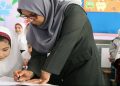
Born in 1898 in Tehran to a family steeped in culture and politics, Fakhrozma Arghun was encouraged to study and grow. She soon became a familiar name in girls’ schools, teaching French at prominent institutions such as Dār al-Moʿallemāt and Nobāvagān. But teaching within classroom walls was not enough for her.
She was the first employed woman to serve as the Deputy for Girls’ Education in the Ministry of Culture and Education.
Fakhrozma Arghun believed Iranian women needed their own voice in the public sphere. That conviction led her to journalism—she became editor-in-chief of Āyandeh-ye Irān (The Future of Iran), and in 1935, she founded Nâmeh-ye Bānuvān (The Women’s Letter), a magazine dedicated to education, social rights, and women’s independent identity.
She also co-founded the groundbreaking Jam’iyat-e Nesvan-e Vatankhah (Society of Patriotic Women) a progressive association that held literacy classes, art workshops, play readings, and even offered social work services for underprivileged women.

Fakhrozma Arghun managed an adult education school for many years and, despite numerous challenges and the heavy financial burden, she never agreed to shut it down.
Years later, her daughter—the celebrated poet Simin Behbahani—recalled:
“Strangely, mother would stubbornly cut back on our food and clothing just to pay for that (adult education) school.”
It was this spirit of sacrifice and reform that shaped Simin’s own path as a poet and social crusader.
But Fakhrozma was more than just a teacher and journalist. She was also a prolific poet with over 150 poems to her name, and a skilled musician who played traditional Persian instruments. Her artistic intuition and her liberating vision for women shaped every aspect of her life. At a time when womanhood was often equated with silence and servitude, she taught, she wrote, she fought—and she became a role model.
Fakhrozma Arghun retired in 1958 and died in 1966. Though her name may not be as widely known as her daughter’s, Fakhrozma Arghun’s imprint on Iran’s social, cultural, and educational transformation is undeniable. Women like her were the silent but strong pillars of a more equal future—and who’s to say how many young women today owe their voice to the quiet roar she once set in motion?