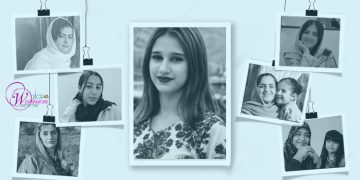
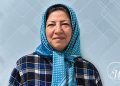
The passionate young woman who sacrificed her life for the freedom of her homeland
Ghazaleh Chalabi was born on August 3, 1989, in Amol, a city in northern Iran. She was a mountaineer and an athlete, often saying that she felt empowered by nature. Her energy and passion for life were infectious.
Ghazaleh Chalabi had studied banking management and worked as an accountant at a private company alongside her aunt. She was also active on social media, and after the death of Jina Mahsa Amini in mid-September 2022, Ghazaleh was consumed by the news, repeatedly asking, “What did they do to that poor girl?” When the news of Mahsa’s passing was confirmed on September 16, 2022, Ghazaleh wept bitterly, saying, “But she was wearing her hijab!”
From that moment until her death, Ghazaleh couldn’t rest. She was determined to show her defiance and demand for freedom.
Ghazaleh Chalabi took to the streets in Amol, participating in the first call for protests. On September 21, 2022, in her last phone call with her family, she reassured them, “Don’t worry.”
Five days into the nationwide uprising, on September 21, 2022, security forces shot Ghazaleh Chalabi as she was filming scenes from the protests. Her mobile phone, still in her hand, recorded the moment she was struck by a bullet. The video shows a member of the Revolutionary Guard Corps (IRGC) firing at protesters and Ghazaleh falling to the ground. People rushed to her side.

A man answered Ghazaleh’s phone after she had been shot and informed her mother that she had been taken to 17 Shahrivar Hospital. Security forces had deliberately targeted Ghazaleh’s head.
Ghazaleh Chalabi spent five days in a coma, during which her mother visited her daily, though authorities confiscated her phone to prevent any pictures from being shared or news of the regime’s crime from reaching the media.
Later, Ghazaleh’s mother revealed that during her time in the hospital, the family was under constant pressure and threats from security forces.
Before her death, Ghazaleh had twice signed organ donation cards, wishing for her organs to be donated to those in need after her passing. While her family wanted to honor this wish, the regime’s prosecutor denied the request, fearing that her name would be celebrated for this act of kindness.
Ghazaleh Chalabi’s body was buried six days after she died in a remote corner of Imamzadeh Ghasem cemetery in Amol. Yet, the site has become a gathering place for the people of Amol, who stop to pay their respects, reciting prayers or placing flowers on her grave. This show of solidarity infuriated the regime’s forces, who tore down the cemetery’s fence and replaced it with a wall.

On the 40th day after Ghazaleh Chalabi’s death, widespread protests erupted in Amol, marking another chapter of the 2022 uprising. The people of Iran, especially women, will never forget the sacrifices of Ghazaleh Chalabi and others who lost their lives in the struggle for freedom. They remain steadfast in their determination to overthrow the regime and establish a government that truly represents the people.
They will continue her path, and her sacrifice ensures the inevitable victory of Iran’s revolution.