
Friday, April 17, 2026
  • English
  • Français
  • فارسی
  • عربى
PODCASTS
NCRI Women Committee Women Resistance Freedom
  • Home
  • NEWS
    • Women’s News
    • Articles
    • Statements
  • PUBLICATIONS
    • Monthlies
    • Documents
    • Reference Library
  • ABOUT US
    • The NCRI Women’s Committee
    • Gender Equality
    • Women’s Platform
  • MARYAM RAJAVI
    • Maryam Rajavi
    • Maryam Rajavi Speeches
    • The Plan on Women’s Rights and Freedoms
    • Ten-Point Plan for the future of Iran
  • VANGUARDS
    • The Fallen for Freedom
    • Heroines in Chain
    • Women of Iranian Resistance
    • Famous Women
    • Women in History
  • EVENTS
    • IWD Conferences
    • Activities
    • IWD Speeches
    • Solidarity
  • VIDEO
    • Videos
    • IWD Videos
  • PODCAST
  • DONATE
  • CONTACT US
No Result
View All Result
NCRI Women Committee Women Resistance Freedom
  • Home
  • NEWS
    • Women’s News
    • Articles
    • Statements
  • PUBLICATIONS
    • Monthlies
    • Documents
    • Reference Library
  • ABOUT US
    • The NCRI Women’s Committee
    • Gender Equality
    • Women’s Platform
  • MARYAM RAJAVI
    • Maryam Rajavi
    • Maryam Rajavi Speeches
    • The Plan on Women’s Rights and Freedoms
    • Ten-Point Plan for the future of Iran
  • VANGUARDS
    • The Fallen for Freedom
    • Heroines in Chain
    • Women of Iranian Resistance
    • Famous Women
    • Women in History
  • EVENTS
    • IWD Conferences
    • Activities
    • IWD Speeches
    • Solidarity
  • VIDEO
    • Videos
    • IWD Videos
  • PODCAST
  • DONATE
  • CONTACT US
No Result
View All Result
NCRI Women Committee
No Result
View All Result
Home Articles
women's role in 1979 Revolution Women at the Vanguard: Iran’s 1979 Anti-Monarchy Revolution and the Shah’s Downfall

1979 Revolution: Iranian women take a stride forward

February 10, 2024
in Articles

The anniversary of the 1979 Revolution which toppled the Shah’s monarchic regime in Iran, is a reminder of Iranian women’s extensive role and impact in that era which is considered a leap forward in the history of the struggles of Iranian women.

The widespread participation of Iranian women in recent uprisings is reminiscent of their role during the 1979 revolution against the monarchic dictatorship in Iran. The current uprising and the leading role of women in it, is a continuation of their participation in 1979 Revolution and in fact prior to that.

Iranian and Western historians who have studied the social and political developments in Iran during the past 150 years attest that the patriarchal historians have often overlooked Iranian women’s heroism, registering and documenting very little.

In fact, the very little that has been registered is what dictators or misogynist history have been unable to erase or distort. But even this much speaks volumes about the trailblazing role women have played in Iranian politics, art, and science since the Constitutional Revolution in 1906 and despite various injustices, restrictions and obstacles they faced.

The most important indicator of the impact of women as a force of change in any social movement in Iran or elsewhere has been their willingness to be present in the scene and pay a high price including their lives.

It is from this standpoint that we look at the anti-dictatorial 1979 Revolution in Iran and the impressive role women played in it. And without a double, that role was influenced by the presence of progressive women in the Mojahedin (PMOI/MEK) and the Fedayeen movements and the social activities of mothers of political prisoners and execution victims of the Shah regime during the 1970s.

We look at the lives of two of these leading young women, Fatemeh Amini and Mehrnoush Ebrahimi, who sacrificed their lives in fight against the Shah and became role models for female intellectuals and university students who were willing to make a sacrifice for the change to happen.

Fatemeh Amini

Fatemeh Amini 1979 Revolution

Fatemeh Amini began her political activities by establishing a progressive women’s organization. After completing her university degree, she started her career as a teacher and was introduced to the Mojahedin (PMOI/MEK) organization.

After a 1971 raid by Shah’s intelligence and military forces on Mojahedin’s bases in Tehran, some 90% of the organization’s leadership and members were arrested and many later executed.

After these arrests, Amini took the responsibility of organizing and mobilizing the families of these and other political prisoners to stage protests and activities against the Shah regime. Her activities resulted in her arrest in 1974 and she was taken to the infamous Evin prison for interrogation.

Amini was tortured for five and a half months. She was flogged all over her body; some parts of her body were tortured with an electrical broiler, and as a result, she became paralyzed.

Amini resisted and did not reveal any information to her torturers, not even her identity. Amini was killed under torture on August 16, 1975. She was the first female Mojahed to sacrifice her life for freedom and equality.

Mehrnoush Ebrahimi
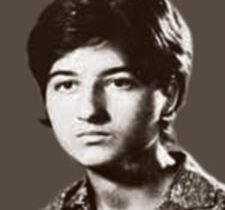
Mehrnoosh Ebrahimi 1979 Revolution

Mehrnoush Ebrahimi was a medical student in 1966 when she became acquainted with the Fedayee movement. She worked in a hospital until 1971 before becoming a full-time Fedayee organization member and going underground.

Shortly after, Shah’s secret agents surrounded and attacked the house where she and another Fedayee member were residing in. Ebrahimi and her fellow Fedayee bravely resisted the attack but were murdered by Shah’s agents. She was the first female Fedayee to give her life for freedom and equality.


Women’s extensive participation in the 1979 Revolution against the Shah

In the mid-1970s, the mothers and families of political prisoners and those whose sons and daughters had been executed by the Shah formed the very early core of resistance groups. They became known as the “mothers of the martyrs.”

These mothers and families constantly stood in front of Shah’s prisons to protest the injustices and demanded the release of all political prisoners. Their message of resistance and protest were soon assimilated throughout society.

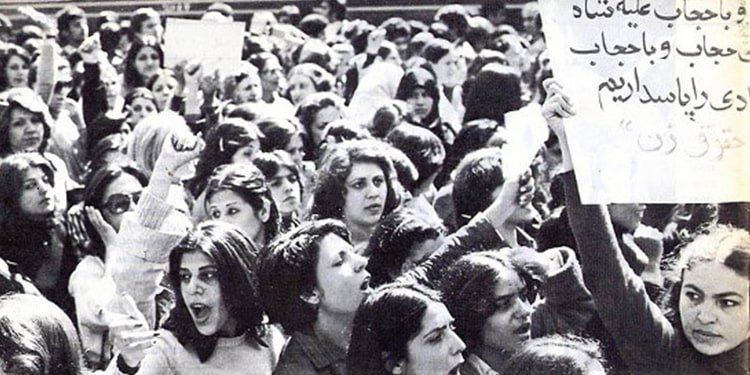
The final months preceding the 1979 Revolution saw vast participation of young women and girls in all cities across the country.

Extensive participation of female college and high school students in the demonstrations in step with men, gradually attracted the older generation of women, i.e. their mothers, to the protests. This was major stride forward for Iranian women.

These women came to the streets and cried out their demand for freedom. The scope of participation by women was unprecedented in the Iranian history until then.

In fact, women emerged as a serious new force in the 1979 Revolution who played a remarkable role. Their previously-suppressed potentials had been released. They could not be stopped and were everywhere in step with men.

Women were the first to confront the new fundamentalist regime

But the 1979 revolution introduced an unanticipated and catastrophic contradiction for women: Iranian women during the 1979 revolution were demanding more freedom and democracy. However, the political power, assumed by Khomeini and his super reactionary mullahs, were not only curbing the existing freedoms but gradually introduced new policies to further constrain, contain, and restrict women. Khomeini enforced the new policies via very repressive measures.

The new religious dictatorship decided to push women back inside their homes, made “forming families” their primary responsibility and introduced very restrict and mandatory hijab (veil) for all women, including those who were not followers of Islam.

Two weeks after the 1979 revolution, Khomeini issued a decree demanding that all family institutions (protective of women’s rights) be closed and laws protecting women be removed. A few days later, he issued another decree to nullify other laws that secured women’s social services employment.

One month into the 1979 revolution, the daily Kayhan reported of a “large crowd of thousands of women protesting against forced hijab.” But the peaceful protest was violently dispersed by Khomeini’s fundamentalist supporters.

PMOI defends women’s freedom of choice of clothing

On March 11, 1979 and against Khomeini’s wishes, the Mojahedin issued a position statement about “The Hijab Concern,” that stated: “… Any form of forced hijab is unacceptable. … Our revolution’s message should be freedom and emancipation of all sectors of the society including different ideologies, genders, and ethnicities … Our revolution must not deny women any of their political, legal, and social rights.”

The women’s struggle against forced hijab, segregation and other repressive measures that began in the early days after the revolution became more intensive during the following months.

A new phenomenon emerges

The Mojahedin and other progressive women became very active. They would arrange for book stands on the streets and city squares and campuses to sell and distribute the Mojahedin books and newspapers.

They would lock their hands to provide protection for unveiled girls, they would bravely argue and debate policies that restricted the freedoms, and so on. Many of these women and young girls were targets of barbaric attacks by Khomeini thugs. Nevertheless, these women and girls broke many of the social taboos and false beliefs that constrained their freedoms.

This generation of women later participated in the June 20, 1981 peaceful demonstration where they were either shot dead or wounded and arrested as Khomeini ordered the Revolutionary guards to open fire on peaceful demonstrators. Many of these women were fatally shot during the protest and thousands more were arrested and later tortured and executed.

This time, these women were at the forefront of all protests and resistance, inside the dungeons or outside, something that subsequently evolved into women’s participation in the movement’s leadership.

Iran, under the mullahs, is known for its repressive and systematic measures against women. At the same time, Iranian women have proven their leading role in demanding and bringing about change. The world has an obligation to acknowledge and recognize that bravery, resistance, and strong character that are so dominantly evident in sounds and images of the recent uprising.

Of course, Iranian women’s leading role in social change and revolution is not spontaneous. Still, it is rooted in the fights and struggles for freedom and equality during the past 150 years. Undoubtedly, Iranian women will be the primary force in overthrowing Iran’s religious dictatorship and turning a page in history.
Tags: Generation EqualityProtests
Share37TweetPinShareSendShare

Related Posts

Week 116 of “No to Executions Tuesdays” Amid Internet Shutdown

April 14, 2026
Week 116 of “No to Executions Tuesdays” Amid Internet Shutdown

The “No to Executions Tuesdays” campaign has entered its 116th consecutive week, marked by the ongoing weekly hunger strikes of prisoners across 56 prisons in Iran. The campaign...

Read moreDetails

115th Week of ‘No to Execution Tuesdays’ Continues After Execution of Six Veteran Members

April 7, 2026
115th Week of ‘No to Execution Tuesdays’ Continues After Execution of Six Veteran Members

The “No to Execution Tuesdays” campaign, marked by weekly hunger strikes led by prisoners, has now entered its 115th week. This milestone comes amid the execution of six...

Read moreDetails

Mothers Who Gave Their Lives for Freedom during January 2026 Uprising in Iran

April 6, 2026
Mothers Who Gave Their Lives for Freedom during January 2026 Uprising in Iran

Among those killed during the January 2026 uprising in Iran there are mothers whose names stand out—women who took to the streets for the freedom of Iran and...

Read moreDetails

March 2026 Report: Courage Under Fire

April 3, 2026
March 2026 Report: How Iranian Women Are Shaping the Resistance

How Iranian Women Are Shaping the Resistance March 2026 Report - The struggle of Iranian women has long moved in step with the country’s broader fight for freedom....

Read moreDetails

113th Week of “No to Execution Tuesdays” Campaign Across 56 Prisons as Concerns Mount Over Conditions of Female Prisoners

March 24, 2026
113th Week of “No to Execution Tuesdays” Campaign Across 56 Prisons

The “No to Execution Tuesdays” campaign has announced the continuation of a coordinated hunger strike by prisoners in 56 prisons across Iran for the 113th consecutive week. The...

Read moreDetails
Next Post
1979 anti-monarchy revolution: the Unbreakable Spirit of Iranian Women

1979 anti-monarchy revolution: the Unbreakable Spirit of Iranian Women

Leave a Reply Cancel reply

Your email address will not be published. Required fields are marked *

Documents

A Report to CSW70: Gender-Based Discrimination Under Iranian Law

A Report to CSW70: Gender-Based Discrimination Under Iranian Law

March 8, 2026

Structural Inequality and State-Sanctioned Oppression of Women Gender-Based Discrimination Under Iranian Law” is the title of the NCRI Women’s Committee’s...

Annual Report 2026: From Protests, to Uprising, and the Role of Iranian Women

Annual Report 2026: From Protests, to Uprising, and the Role of Iranian Women

March 3, 2026

On the eve of International Women’s Day 2026, the NCRI Women’s Committee presents its Annual Report 2026, offering a recap...

Iranian women Who Lost Their Lives in Iran’s January 2026 Uprising

Iranian Women Who Lost Their Lives in Iran’s January 2026 Uprising

January 25, 2026

Names That Must Not Be Forgotten Iranian women played a central and courageous role in the January 2026 uprising, standing...

Monthlies

March 2026 Report: How Iranian Women Are Shaping the Resistance
Monthlies

March 2026 Report: Courage Under Fire

April 3, 2026
January 2026 Report: Women at the Core of the Uprising
Monthlies

January 2026 Report: Women at the Core of the Uprising

January 31, 2026
December 2025 Report: A Year in Review: Iranian Women’s Resistance Against Religious Dictatorship
Monthlies

December 2025 Report: A Year in Review: Iranian Women’s Resistance Against Religious Dictatorship

January 5, 2026
November 2025 Report: Under the Clerical Regime, Nowhere Is Safe for Women in Iran
Monthlies

November 2025 Report: Under the Clerical Regime, Nowhere Is Safe for Women in Iran

November 30, 2025

Articles

Mothers Who Gave Their Lives for Freedom during January 2026 Uprising in Iran

Mothers Who Gave Their Lives for Freedom during January 2026 Uprising in Iran

April 6, 2026

Among those killed during the January 2026 uprising in Iran there are mothers whose names stand out—women who took to...

Amid the harshest trials and tribulations, your inspiring voice made my steps more steadfast

Amid the harshest trials and tribulations, your inspiring voice made my steps more steadfast

April 5, 2026

A letter from Vahid Bani Amerian to Aziz, the mother of the martyred Rezaeis Ms. Zahra Norouzi, who is known...

Ferdows Mahboubi (Mother Mosanna): 50 Years of Dedication to PMOI

Ferdows Mahboubi (Mother Mosanna): 50 Years of Dedication to PMOI

April 2, 2026

Ferdows Mahboubi (Mother Mosanna), one of the steadfast supporters of the People's Mojahedin Organization of Iran (PMOI), passed away in...

The Fallen for Freedom

Ghazal Aghaei Lindi was killed on January 9, 2026
The Fallen for Freedom

Ghazal Aghaei Lindi

April 16, 2026
Farzaneh Tavakkoli, a resident of Arak, was killed on January 9, 2026
The Fallen for Freedom

Farzaneh Tavakkoli

April 13, 2026
Shabnam Ferdowsi was killed on January 8, 2026, during the nationwide protests
The Fallen for Freedom

Shabnam Ferdowsi

April 12, 2026
Samaneh Mirzaei, a resident of Tehran, was killed on January 9, 2026
The Fallen for Freedom

Samaneh Mirzaei

April 10, 2026

ABOUT US

NCRI Women Committee

We work extensively with Iranian women outside the country and maintain a permanent contact with women inside Iran. The Women’s Committee is actively involved with many women’s rights organizations and NGO’s and the Iranian diaspora.
The committee is a major source of much of the information received from inside Iran with regards to women. Attending UN Human Rights Council meetings and other international or regional conferences on women’s issues and engaging in a relentless battle against the Iranian regime’s misogyny are part of the activities of members and associates of the committee.

CATEGORIES

  • Activities
  • Articles
  • Documents
  • Famous Women
  • Heroines in Chain
  • IWD Conferences
  • IWD Speeches
  • IWD Videos
  • Maryam Rajavi
  • Maryam Rajavi Speeches
  • Monthlies
  • Podcast
  • Reference Library
  • Solidarity
  • Statements
  • The Fallen for Freedom
  • Videos
  • Women in History
  • Women in Leadership
  • Women of Iranian Resistance
  • Women's News

BROWSE BY TAG

Child marriage coronavirus education execution forced hijab Gender Gap Generation Equality Honor killings Iran Teachers Maryam Akbari Monfared Nurses Plan on Women's Rights and Freedoms Poverty Prisoners Protests rural women Saba Kord Afshari The girl child Violence against women Women's Leadership Women Heads of Household Zeinab Jalalian

The copyright of all the material published on this website has been registered under © 2016 the Women’s Committee of the National Council of Resistance of Iran. To obtain permission to copy, redistribute or publish the material published on this website, you should write to the NCRI Women’s Committee. Please include the link of the original article on our website, women.ncr-iran.org.

Welcome Back!

Login to your account below

Forgotten Password?

Retrieve your password

Please enter your username or email address to reset your password.

Log In

Add New Playlist

No Result
View All Result
  • Home
  • News
    • Women’s News
    • Articles
    • Statements
  • Publications
    • Monthlies
    • Documents
    • Reference Library
  • About Us
    • The NCRI Women’s Committee
    • Gender Equality
    • Women’s Platform
  • Maryam Rajavi
    • Maryam Rajavi
    • Maryam Rajavi Speeches
    • Ten Point Plan for Iran
    • The Plan on Women’s Rights and Freedoms
  • Vanguards
    • The Fallen for Freedom
    • Heroines in Chain
    • Women of Iranian Resistance
    • Famous Women
    • Women in History
  • Events
    • IWD Conferences
    • Activities
    • IWD Speeches
    • Solidarity
  • Video
    • Videos
    • IWD Videos
  • Podcast
  • Donate
  • Contact us
  • فارسی
  • عربی
  • Français

The copyright of all the material published on this website has been registered under © 2016 the Women’s Committee of the National Council of Resistance of Iran. To obtain permission to copy, redistribute or publish the material published on this website, you should write to the NCRI Women’s Committee. Please include the link of the original article on our website, women.ncr-iran.org.