

Authors: Guðrún C. Emilsdóttir and Ása Fanney Gestsdóttir
One of the grand events of the centennial of women’s suffrage in Iceland was an international conference, held on 22 and 23 October 2015 in Harpa.
Many excellent lecturers from various countries stepped into the pulpit and told us about interesting global issues concerning women in one way or another. The program was diverse and hopefully we’ll be able to tell you more about it later. The conference guests, who also came from all over the world, were also interesting and coffee and lunch breaks gave an opportunity to get to know them better. Among these guests were two Iranian women, who had a lot to say about women’s rights in Iran, or rather their lack of rights. We got Elham Zanjani and Elaheh Arj to tell us more about what is happening in Iran and about their fight for the increased rights and freedom of women in Iran.
The antecedent of the revolution
Women’s situation in Iran has not always been as bad as it is today. Before the revolution in 1979, women were more or less free to travel about at will; they did not have to cover their hair and they had the right to vote. The country was in an economic upswing. At that time the monarchy was in power under the control of Mohammad Reza Shah Pahlavi (from 1941), but he had had a good relationship with the USA. On the other hand, public discontent with the direction things were taking started surfacing a few years before the fall of the royal family. Many people felt that western influence were too prominent, the economy was backsliding and people also felt that Shah Palavi’s behaviour towards his nation was becoming increasingly dictatorial and he was accused of corruption, violence, oppression, etc. Gradually a resistance movement started forming, consisting of people on the left wing of politics, diverse Islamic associations and students against the Shah government, and Elaheh took part in this resistance. After a series of strikes and protests Shah Pahlavi was forced to flee the country and the opposition took control. This is the background when Ayatollah Khomeini was invited to return home in 1979, because he was considered the most likely candidate to return the nation to Islamic values. It appears that Khomeini’s power was underrated – many people thought he was only returning home to his village, where he would live quietly through his last days. He was not considered any threat and the opposition believed he would be easy to set aside later. The reality turned out different. On 1 April 1979 the monarchy was formally ended following a referendum establishing whether Iran would become an Islamic theocracy, with Khomeini at the forefront as the supreme leader.
The ideology favoured by Khomeini was the so-called Vilayat-e Faqih (e. Guardianship of the Islamic Jurists). This entails that the supreme leader is the person responsible for implementing what the Islamic faith preaches in the country, thereby effectively controlling the people who live there. Therefore he holds most of the power.
TeheranThe revolution eats its children
Many people from the resistance movement had been in prison themselves a few days before the revolution and been in danger of being tortured or executed. Now things were turned around: in the aftermath of the revolution, many people were arrested and executed. But above everything else the revolution had a direct effect on women, since according to Khomeini’s interpretation of the Islamic faith, women should stay at home, rear children and take care of their husbands. Women were immediately ordered to cover their hair. They could not be elected president. Universities were closed, as they were the root of evil where all western things festered and female students were in the majority. This is why women needed to be tamed and forced into submission. When the universities were reopened, women were barred from around 70 subjects. Subjects like engineering, physics and such are not considered to be of benefit to them, as they are meant to stay at home and take care of the children.
The authorities have thus by and by pushed women back into the home and taken away their rights, one by one. The legal age for women to marry was 18 years before the revolution. Soon this age was moved down to 13 years. They have no legal status and they have next to no rights before court. They cannot even travel without the permission of their husband. The only thing that women have more of than men in Iran is suppression and oppression.
Things have gotten worse in recent years. The legal age for the marriage of women and girls has yet again been lowered, this time down to 9 years. Girls younger than 9 years of age can even be given away to be married if the father gives his agreement and by court verdict. Every year it is estimated that around 45 thousand child brides have not reached 12 years in age.
Since Khomeini came into power, women have been forbidden to sing in public. During the last two years laws against female artists have multiplied and become stricter. These days women are hardly allowed to perform anymore, neither to sing nor to play an instrument, or for any other cultural purpose. Listening to a female voice simply is diabolic and could lead to arousing meaningless pleasure, Khomeini said and Khamenei, the current supreme leader, goes even further: “if the voice is not variegated (has frequent high and low notes) and the listener does not listen with indecent thoughts of pleasure and the voice does not in any way contribute to corruption, then it is permitted. On the other hand, if it entails any trace of corruption or arouses lust, then it is forbidden.” Of course such bans lead to the further isolation of women, as they no longer are considered a good choice for the teaching of musical instruments, for example, since it is difficult to listen to a woman who never performs on stage. Women have also been barred from sport events, as they are not allowed to enter the stadiums.
The latest ploy is the current preparation of laws intended to turn women into baby machines and domestic slaves.
Street life in TeheranWhat can we do? What can Iranian women do?
When asked, Elham and Elaheh say that the solution is to be found in the opposition of women themselves. Iranian women have always been culturally stronger and historically more progressive. They have been fighting for over 150 years and have put three large revolutions behind them. There is a reason why the first victim of new authorities always are women, since they pose a threat to the system.
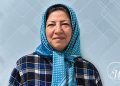
Elaheh was a member of the student resistance movement when the revolution was made in 1979. The universities were closed and she was arrested along with many of her friends, many of whom were executed. She herself had to flee the country and leave her family behind. She cannot be in contact with her family without being in danger of being followed or that something will happen to her family. Elham was born around the time when Elaheh took part in the resistance movement, not in Iran but in Canada, where she had a happy childhood. Her parents had fled Iran shortly before she was born. As she grew older her thoughts turned increasingly to Iran and to the injustice that women have to live with there. This led her after the age of twenty to go to Camp Ashraf, which was based on the Iraqi side of the border between Iraq and Iran. This is where the members of PMOI (People‘s Mojahedin Organization of Iran), the main opposition of the Iranian government, had been given some land after the revolution, but the American army was also based there. Elham wanted to help her countrymen in this way, especially the women, who were forced to flee the country. USA handed over the control over the camp to the Iraqis in 2009, which had terrible repercussions. The Iraqis wanted to be rid of the refugees and started to systematically bring this into action by giving them little aid, starving them and finally by attacking the camp. Elham suffered great injuries on her hands and feet during this attack. This led her to return home to Canada, where she recovered and later she started giving lectures about the circumstances of Camp Ashraf and eventually Camp Liberty, where the refugees were later moved. You can read her story here.
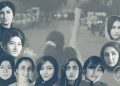
Neither of them can ever go back to Iran, at least not while the current government is in power. But they will not give up. They say that women are in the frontline. Women in Iran have had enough and they want to bring about changes. People are afraid to express their opinions, but there is a great turmoil under the surface and any little occurrence encourages women to take to the streets to protest. They realise the danger but do not see any other way. Around 120,000 people from the resistance movement have been executed, 30% thereof were women. Female prisoners are raped in order to get them to talk. Virgin girls and women are also raped before they are executed, since thus the gates of heaven will be closed to them forever. Everything is done in order to extinguish women’s opposition. A number of police departments exist for diverse violations. The violations do not have to be serious; one lady was arrested at a wedding for not having covered her hair sufficiently; another was sentenced í 13 years in prison for drawing a picture of the parliament members as animals and as a result she was forced to go through an investigation of her virginity, since she had touched a male lawyer by shaking his hand; activists who have shown the merest opposition in the online media have received up to 10 years in prison as a result.
Iranian women have never really succumbed to such oppression. Because of everything they have been put through, they have become even stronger – they are the ones who are at the forefront in today’s protests. They want to be able to let their hair loose, to be free and to wear whatever they want.
This is the story of Iran, where every single family is connected to the resistance movement in some way, which is why the fight must continue. Elham and Elaheh presently take part in the work of an association based in Paris, called The National Council of Resistance of Iran (NCRI). The association is run by a woman named Maryam Rajavi, who was one of the leaders of the student resistance movement when the revolution took place and who lost two sisters to execution, one of them being 8 months pregnant. Roughly 52% of the council members are women. The council believes that state and church/religion should be separated and that women should have equal rights to men in all aspects of life. Equality should be the foundation of society.
On the International day of women, on March 7, an assembly was held in Berlin, under the title: For Tolerance and Equality against Fundamentalism and Misogyny, funded by NCRI. Around 20.000 women from 40 countries in five continents visited the assembly. The main lecturer Maryam Rajavi said: “Today the central responsibility of saving the Middle East from the evils of fundamentalism rests on the shoulders of women. In this struggle their biggest weapon, the most important role and the best resource is the strong solidarity to be found among them.” Most of the other lecturers also seemed to be of the opinion that this council, which is led by an Iranian woman and who fights against the fundamentalism of the ayatollahs in Teheran, was the primary hope and the only realistic solution people could support in a democratic way.
Conclusion
Fundamental religion is a global issue, Elham and Elaheh say. If the rise of fundamentalism is not stopped, it will soon be on our doorstep. No agreement should be made with the Iranian government without demanding that executions be stopped. Why does Europe ignore this? Iceland can and should be in the frontline to protest against oppression and executions. The Icelandic government maintains that Iceland is such a small country and as such has little influence, which is not correct – you have to start somewhere.
This article was first published in the Icelandic feminist webmagazine knuz.is in Icelandic. Translation: Kristín Vilhjálmsdóttir. Any further publication is allowed only if the original site of publication is mentioned alongside.