
The Journey of Women’s Leadership in the Iranian Resistance
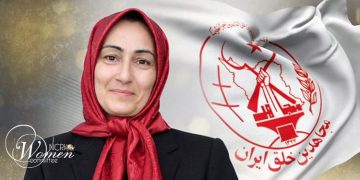
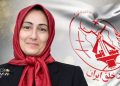
The period between October 18 and October 22 marks a pivotal milestone in the history of the Iranian Resistance movement, representing a strategic, cultural, and political transformation in the struggle against religious fundamentalism. On October 18, 1989, Maryam Rajavi assumed the leadership of the People’s Mojahedin Organization of Iran (PMOI/MEK) as its Secretary-General.
Four years later, on August 28, 1993, the National Council of Resistance of Iran (NCRI) elected her as the President-elect for the transitional period of transferring sovereignty to the Iranian people, a decision officially made public on October 22, 1993.
This sequence of events initiated an unprecedented historical trajectory that shattered the traditional barriers of gender discrimination and positioned women at the forefront of the revolutionary movement against the misogynistic clerical regime in Tehran.
Challenging Misogyny Through Structural Overhaul
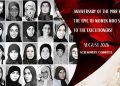
Maryam Rajavi’s assumption of leadership within the PMOI in October 1989 was a direct challenge to the fundamentalist ideology of the ruling mullahs. Built upon decades of sacrifice by tens of thousands of women who had endured torture and execution under both the Shah’s dictatorship and the clerical regime, this decision marked an affirmative strategy to unleash the potential of women as the primary force for democratic change.
To achieve true equality, Maryam Rajavi instituted fundamental changes across the movement:
- Structural Overhaul: Opening equal opportunities for women in all fields of political, organizational, and operational command previously dominated by men.
- Cultural and Ideological Transformation: Challenging gender-based categorization and stereotypes that frame women as “weak.”
- Liberation of Men: Cultivating a new generation of men within the movement who actively renounced patriarchal hegemony, embraced women’s leadership and hegemony, and developed relationships based on genuine human equality and mutual respect.
This transformation demonstrated that combating a religious dictatorship whose core tenets are rooted in misogyny requires a vanguard force that completely rejects gender discrimination in practice and ideology. Crucially, the rise of women’s leadership led to the profound emergence of men liberated from patriarchal visions, forging an environment of genuine equality, brotherhood and shared responsibility.
Hegemony of an All-Female Leadership Council
Upon her public announcement as NCRI President-elect on October 22, 1993, Maryam Rajavi transferred her organizational responsibilities within the PMOI to an all-woman Leadership Council made up of 24 competent women. This structural shift affirmed that women’s leadership was not merely a managerial adjustment or an inclusion into masculine power structures, but a qualitative transformation of power itself.
Within the NCRI, women came to hold more than 50 percent of the seats, occupying leading positions across diplomatic, political, social, and cultural spheres.
Throughout her tenure, Maryam Rajavi has championed a tolerant, democratic interpretation of Islam that directly contrasts and counters the regime’s reactionary and fundamentalist version of Islam, as outlined in her published works such as Women, the Force for Change and Tolerant Islam vs. Extremism. She also introduced a Ten-Point Plan for a free, democratic, and non-nuclear Iran that guarantees gender equality and abolishes the death penalty.
Perseverance in Ashraf and the Creation of the 1,000-Woman Central Council
The real-world resilience of this leadership model was tested during a 14-year period of perseverance in Ashraf (National Liberation Army base near the Iran-Iraq border) and Camp Liberty (Iraq). Faced with military attacks, ground assaults, missile bombardments, and an oppressive siege by the clerical regime and its puppet government in Iraq, women commanders led the organization through extreme geopolitical adversity.
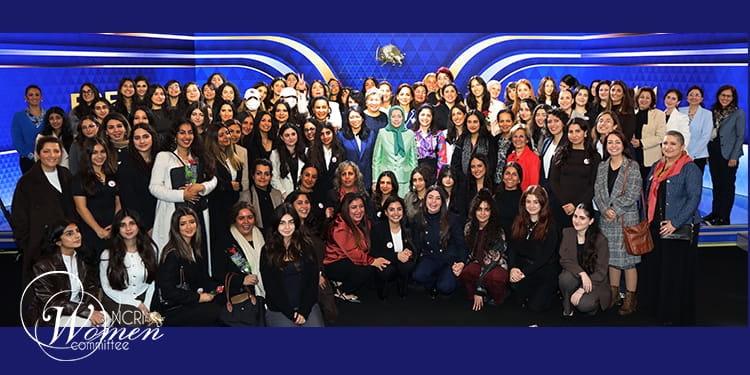
By 2014, this organizational maturity led to the establishment of the PMOI Central Council, composed of 1,000 pioneering women. This council serves as a concrete operational model of collective leadership, selfless dedication, and moral resilience. The 1,000 vanguard women of the Central Council overcame historic self-doubt, adopting the principle of “we can and we must”. They replaced personal ambitions, rivalries, and objectifying cultural standards with solidarity, sisterhood, and shared responsibility.
From Vanguard Leadership to Nationwide Uprisings
The systematic empowerment of women within the organized resistance exerts a direct impact on Iranian society and Iranian diaspora abroad. Facing severe economic, social, and political repression under the mullahs’ rule, Iranian women have evolved into a compressed force ready to push for fundamental change, actively joining and expanding PMOI Resistance Units across the country.
This historical continuum manifested clearly during successive nationwide uprisings:
- 2009 Uprising: Women emerged as key organizers on the ground, leading protests across major cities and prompting international observers to recognize their leading presence.
- 2017–2018 and 2019 Uprisings: Women spearheaded protest networks and Resistance Units, openly confronting the repressive apparatus of the Revolutionary Guard Corps (IRGC).
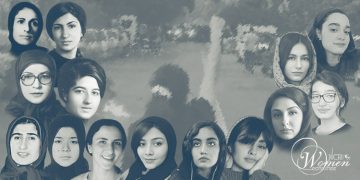
- 2022 Nationwide Uprising: Sparked by the tragic death of Zhina (Mahsa) Amini, the uprising saw Iranian women at the absolute forefront, leading slogans for the overthrow of the regime and demanding a democratic republic.
- 2026 Uprisings: Continuing this unbroken trajectory, women maintained their vanguard role at the helm of ongoing anti-regime protests and domestic resistance networks.
The clerical regime itself has repeatedly acknowledged the pivotal role of women and the PMOI in organizing these uprisings. In recent court proceedings in Tehran targeting 104 members of the Iranian Resistance, one of the primary formal charges leveled by the regime’s prosecutor was the movement’s acceptance of women’s leadership—a clear indication that this model directly threatens the regime’s ideological existence.
Conclusion
The journey that began on October 18, 1989, with Maryam Rajavi assuming the leadership of the PMOI, and continued with her election as NCRI President-elect on October 22, 1993, established a progressive model of gender parity in the political arena.
The movement which began with the emergence of one woman in the leadership of the organization has maintained its dynamic growth, spreading to the emergence of hundreds of qualified and competent leaders on all levels of the organization.
This evolution has directly impacted Iranian society, where one can prominently witness the leading role of women in all uprisings to overthrow the regime. Evolving from organizational structures to the 1,000-woman Central Council and expanding into nationwide Resistance Units led by women, this movement has demonstrated that women are the decisive force capable of defeating the religious dictatorship and bringing democracy and equality to Iran.