
Misogynistic laws lie at the root of violence against women in Iran
Victims at Home: Report on 15 Women Killed in One Month: The roots of the tragedies of violence against women in Iran cannot be reduced to individual or family prejudices.
The misogynistic laws of the clerical regime portray men as the absolute owners of women’s lives and blood. Under the regime’s penal code, a father, as the legal guardian of a murder victim, is exempt from qesas, or retributive punishment. Article 1105 of the Civil Code, meanwhile, defines the leadership of the family as an exclusive prerogative of men.
Under this system, the testimony of two women is equivalent to that of one man, and a woman subjected to severe domestic violence must prove that her life is at risk in order to obtain a divorce. Such efforts are often ignored by regime judges until a killing occurs. The result is a legal framework that effectively gives men license to retaliate against women in response to social or family pressures.
These anti-women laws have contributed to a shocking upward trend in so-called honor killings. Data compiled from state media by the Women’s Committee of the National Council of Resistance of Iran reveal the depth of the tragedy. According to these figures, the number of women killed rose from 105 cases in 2023 to 160 in 2024 and reached at least 192 cases in 2025. Unofficial academic reports have previously estimated that between 375 and 450 women in Iran are victims of so-called honor and family killings each year.
The Political Roots of the Tragedy and Systematic Censorship
Social tragedies in Iran have deeply political roots. The ruling regime is one of the few governments in the world that has refused to sign the Convention on the Elimination of All Forms of Discrimination against Women and has built the foundations of its power on the structural repression of women. In a system where violating compulsory veiling is treated as a national security offense and women are detained and humiliated every day over their clothing, it is only natural that the machinery of violence against women is also fueled in the home and society.
Yet these devastating figures do not tell the whole story. These cases are only those that have emerged through the crude filter of media censorship, the suffocating climate in the provinces, and repeated internet disruptions. The figures published by state media represent only the tip of the iceberg. Every name in this report represents dozens of other voiceless women who lose their lives behind the high walls of censorship and the lack of information, without their names ever being recorded.
Iranian society knows well that the main cause of these tragedies is the clerical structure and its medieval laws. The issue is not individual prejudice, but a regime that has institutionalized violence against women, a structure under which, as long as it remains in power, no woman or girl in Iran will be safe.
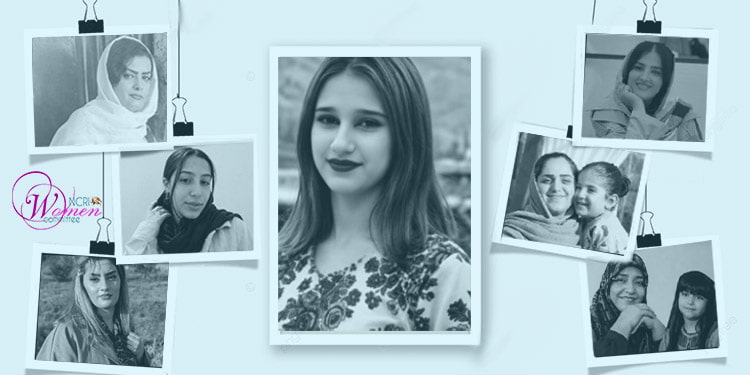
Below are details of 15 cases of women and girls killed in less than one month, between July 24 and August 20, as reported by the media.
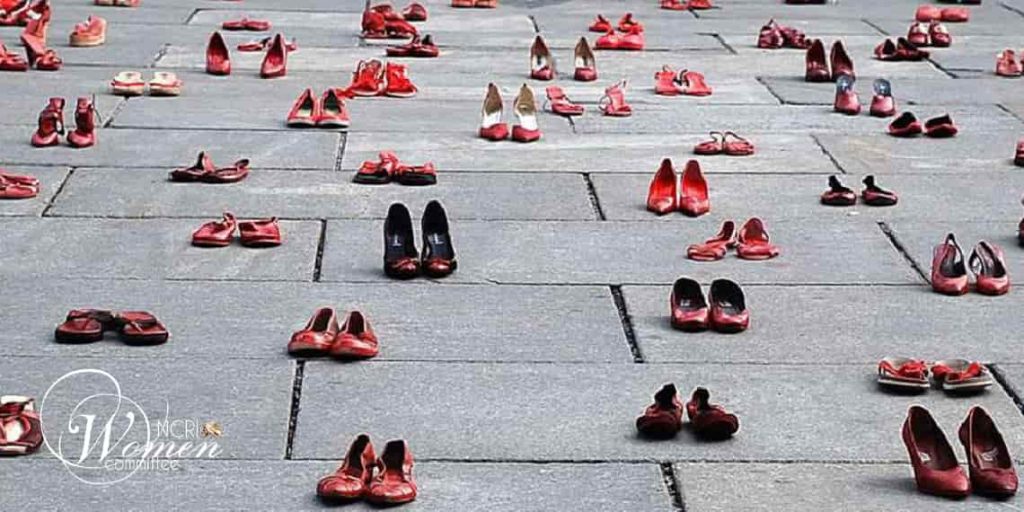
Details of 12 Cases and 15 Women Killed
1. Azarshahr, East Azerbaijan Province, July 24, 2026
A 62-year-old woman in Azarshahr, in East Azerbaijan Province, was killed by her 72-year-old husband with repeated blows from a knife and axe. The perpetrator fled after the killing but was later arrested by law enforcement. He cited “family disputes” as the reason for the crime. (Rokna News Agency)
2. Sanandaj, Kurdistan Province, July 25, 2026
Roshana Nouri, a 15-year-old girl from Sarhvieh village in Sanandaj, was shot and killed by her half-brother.
3. Qazvin, late July, reported August 2026
Esmat Jabbari, a 47-year-old mother, and her eight-year-old daughter, Setareh Karbasi, were killed in Qazvin by her husband and their 17-year-old son. The perpetrators suffocated the mother and daughter in their sleep by exposing them to toxic substances. The crime took place in late July, but news of it was reported in August.
4. Mashhad, Razavi Khorasan Province, June 11, reported July 29, 2026
A 35-year-old woman identified as Fatemeh K. was strangled and killed by her husband in Mashhad. Her husband burned her body in a desert and buried it in a shallow pit. The woman’s remains were later unearthed by wild animals. The crime was attributed to so-called “honor-related” motives. (Rokna News Agency)
5. Marvdasht, Fars Province, July 30, 2026
Sanaz Mehrabi Dashtaki, a 15-year-old from Marvdasht, was shot and killed by her maternal uncle in a so-called honor killing after her family opposed her marriage to the man she loved.
6. Shahr-e Babak, Kerman Province, August 6, 2026
A woman in Shahr-e Babak, Kerman Province, was killed by her husband in a knife attack. Local media cited “family disputes” as the cause of the crime.
7. Qiamdasht, Tehran Province, July, reported August 9, 2026
A 45-year-old woman in Qiamdasht was killed by her husband, who buried her body in the desert outside the city. The man had also killed his daughter several years earlier. During an argument with his wife about that crime, he killed the girl’s mother as well. The woman’s disappearance had been reported in July, but the circumstances of her death were revealed in August.
8. Malekan, East Azerbaijan Province, August 6, 2026
Neda Jalilian, a 26-year-old woman and mother of a four-year-old child from Malekan, was brutally beaten and killed by her husband. Neda, who worked at local celebrations, had been subjected to severe domestic violence and had returned to her parents’ home. Her husband stormed into her father’s house, severely assaulted her parents, and after they were taken to hospital, entered the house and killed Neda. He then hanged his wife’s body to make her death appear to be suicide, but the evidence of severe injuries exposed the truth.
9. Mashhad, Razavi Khorasan Province, August 6, 2026
A 45-year-old woman named Leila was severely injured by multiple knife blows from her 52-year-old husband at their home in Mashhad and died after being taken to Razavi Hospital. The man killed his wife in front of their 17-year-old daughter. The perpetrator, who was addicted to drugs, had been selling household belongings to finance his addiction and committed the killing after his wife objected. (Khorasan Newspaper)
10. Chabahar, Sistan and Baluchestan Province, August 10, 2026
Azita Rahmatzehi, a 24-year-old university student who worked at a pharmacy, was severely beaten by her husband and then shot and killed 12 days after her forced marriage. Despite her strong opposition, Azita had been forced by her family, father, and maternal uncle to marry a man who already had five children. Her husband prevented her from continuing her education and working immediately after the marriage.
11. Babol, Mazandaran Province, August 7, 2026
Somayeh Razaghi, 39, from Babol, was strangled by her former husband on August 5 and died in hospital two days later. Somayeh, who had separated from him several months earlier, had gone to her former husband’s shop to collect some documents when he pulled down the shop’s shutter and strangled her.
12. Qaemshahr, Mazandaran Province, August 14, 2026
Huriyeh Dadashpour and her young daughter, Selin Afraei, were strangled and killed by her husband while they were sleeping at home. To conceal the crime, the perpetrator staged the scene to make the deaths appear to have been caused by a gas leak. (Mehr News Agency)
13. Parand, Tehran Province, August 20, 2026
A 33-year-old woman from Parand was killed by her suitor in a deliberate minibus collision staged as an accident. (Rokna News Agency)
14. Shahr-e Rey, Tehran Province, August 20, 2026
A middle-aged woman was killed by her husband in Shahr-e Rey, and her body was later found outside the city. “Family disputes” were cited as the cause of the crime. (IRNA)
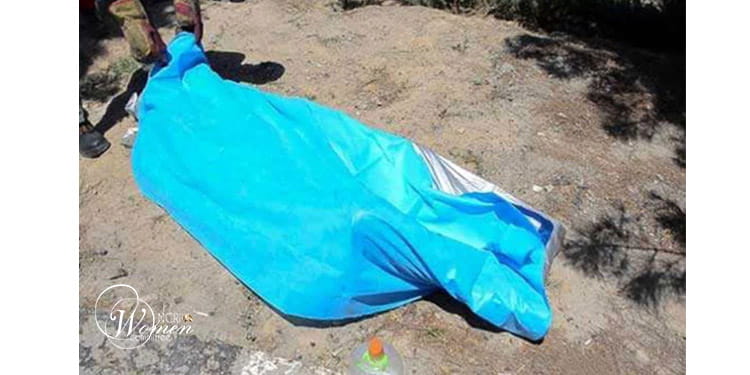
15. Saqqez, Kurdistan Province, August 20, 2026
Latifeh Mohammadzadeh, 40, a taxi dispatcher in Saqqez, was stabbed to death by her husband with 20 knife blows. Latifeh worked to support herself and her child and had repeatedly been threatened with murder by her husband. She had even been assaulted in the courtroom. The man had a previous history of violence and had also attempted to kill his infant child.