
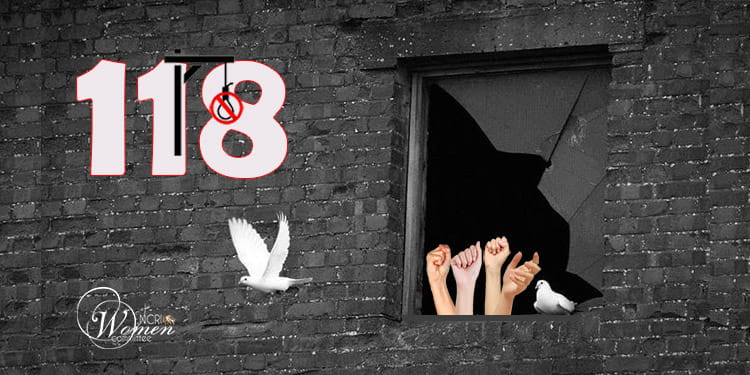
Female Inmates Join Week 118 of Hunger Strike Despite Threats
The “No to Executions Tuesdays” campaign has announced that, in its 118th consecutive week, prisoners in 56 facilities across Iran have once again engaged in a coordinated hunger strike.
According to a statement released by the campaign, protesting inmates have resumed their strike despite intensified pressure and sweeping restrictions, in response to the increasing use of the death penalty. This protest movement, now one of the longest-running and most sustained forms of resistance inside Iran’s prison system, reflects the prisoners’ continued opposition to capital punishment.
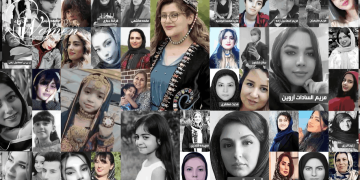
A significant proportion of these prisoners are women political prisoners, currently serving their sentences in the women’s ward of Evin Prison (Tehran), Qarchak Prison (Varamin), the women’s ward of Sepidar Prison (Ahvaz), the women’s ward of Adelabad Prison (Shiraz), the women’s ward of Zahedan Prison, the women’s ward of Yazd Prison, and the women’s ward of the Lakan Prison in Rasht.
Escalating Pressure to Halt the Hunger Strike
In recent weeks, prison authorities have made efforts to prevent inmates from participating in the campaign. Measures reportedly include threats of transfer to solitary confinement, suspension of phone access, denial of family visits, and tighter restrictions on basic welfare provisions, all aimed at coercing prisoners into ending their hunger strike.
Among the most notable cases is the increased pressure on female inmates in Evin Prison. The prison’s director has issued a new directive banning women from participating in the “No to Executions Tuesdays” campaign, warning of punitive consequences such as solitary confinement and loss of phone privileges. Despite these threats, the women prisoners have continued their hunger strike into its 118th week.
Executions of Political Prisoners and Concerns Over Enforced Disappearances
The statement also highlights the execution of three political prisoners in the past week, describing the move as a sign of intensifying repression.
Amirali Mirjafari from Tehran, Erfan Kiani from Isfahan, and Amer Ramesh from Sistan and Baluchestan, were executed following judicial proceedings described as unfair.
The bodies of two of these individuals have not been returned to their families. The campaign has characterized this as a case of enforced disappearance and warned of its serious human rights implications.
Executions and Repression as mean for Containing Dissent
In its concluding remarks, the “No to Executions Tuesdays” campaign asserts that the rise in executions, alongside the tightening security climate, indicates a broader strategy by authorities to suppress public dissent. According to the campaign, the use of capital punishment and the cultivation of an atmosphere of fear are part of a deterrence policy aimed at preventing the emergence of new waves of protest across the country.