
November 4, 1978: Where the Story of Tomorrow’s Generation Begins
On the morning of November 4, 1978, thousands of high school students walked out of their classrooms and marched toward the University of Tehran. They gathered to elevate the voice of a generation protesting against a regime that had suppressed freedom for decades.
The Pahlavi monarchical regime responded not by listening to the youth, but with tear gas and live ammunition. Dozens of teenagers and young adults were shot and killed across the University of Tehran campus and surrounding streets.
Yet, November 4 was more than just a bloody day in Iranian history. It marked the moment the generations of tomorrow entered the historical stage, a generation determined to reject the role of bystander and take ownership of its own destiny.
Nearly half a century has passed since that day, spanning two dictatorships. Yet one truth has endured: the young generation has continuously kept the flame of resistance alive against tyranny and the deprivation of freedom. By rising up against oppression, they have repeatedly proven that no amount of violence can extinguish their call for liberty. Time and again, after every brutal crackdown, this generation has risen anew to raise the flag of freedom.
Today, the day officially designated in Iran to honor students is more than just a memorial for those slain on November 4, 1978. It stands as a tribute to a continuous generation that, despite bullets, imprisonment, torture, and executions, has never abandoned the struggle for freedom.
From Classrooms to the Vanguard of Freedom
Modern Iranian history reveals that dictators have feared the young generation above all else. From the final years of the Pahlavi monarchy, high school students stood on the frontlines of protests. Lacking both political power and financial resources, their only weapons were idealism and sheer courage.
However, with the establishment of the new religious dictatorship, state violence reached unprecedented levels. The clerical regime quickly realized that the youth were unwilling to sacrifice their aspirations for freedom to a newly forged authoritarian state.
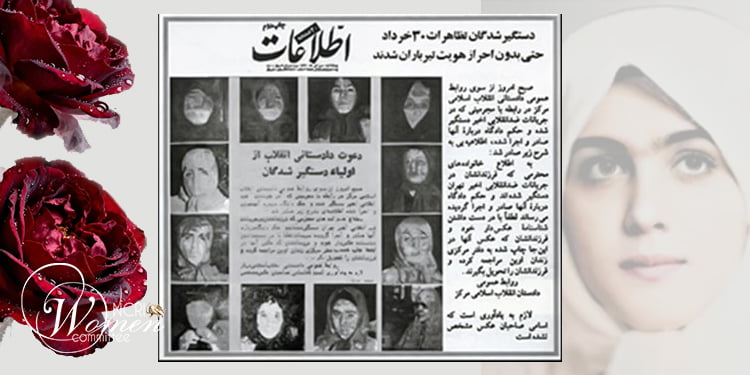
Following the mass uprising on June 20, 1981, a sweeping wave of executions began. History records no instance of a government inaugurating its crackdown by sending teenage girls to firing squads. State newspapers published photographs of executed 13-, 14-, and 15-year-old girls, who had refused even to disclose their names to interrogators, calling on families to identify their children’s bodies.
Among them was 17-year-old Parvaneh Zahiri, who was executed just one day after her arrest, alongside dozens of other young women sent before firing squads.
Yet these young schoolgirls and youths, who endured years of brutal torture in the notorious prisons of the 1980s, reshaped Iran’s social and political landscape through their stunning steadfastness in the streets, dungeons, and before firing squads.
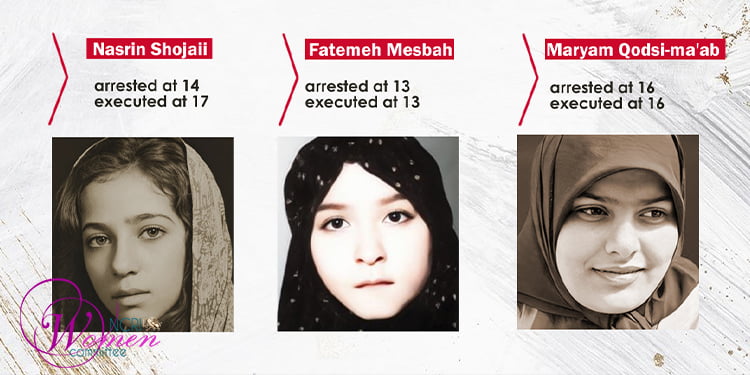
The vivid symbol of this generation, whose name became synonymous with courage, was Fatemeh Mesbah: a spirited teenager who had participated in anti-monarchy protests since the age of nine, and who on September 17, 1981, at just 13 springs of age, was executed by a firing squad. Before her ultimate sacrifice, Fatemeh left a clear-eyed, historic testament:
“To the tyrants in power I say: I have looked back through history, but your crimes are the most heinous atrocities ever witnessed in human history, and these horrific crimes of yours will be recorded in history… I have chosen this winding, perilous path, and I will fight against tyranny until my last drop of blood. I ask the freedom-loving generation of the future to continue my path and the path of my fellow comrades. Long live freedom.”
The clerical regime believed that by executing these teenagers and carrying out the bloody crackdowns of that decade, it could intimidate the future. Yet it never imagined that with these atrocities, it was sowing the seeds of a resistance that would yield an endless procession of shooting stars. During the 1988 massacre of political prisoners, a vast number of those same students from the 1980s, who had been arrested years prior, refused to bow and gave their lives for freedom, including Nasrin Shojaei, who was arrested at age 14 and executed during that same bloody slaughter.
Many of those student youth never had the opportunity to return to their classrooms, but as Fatemeh wished, this path was never blocked. Today, the message of those anonymous and renowned girls of the 1980s has become a bridge between generations: a generation that did not drop the flag of struggle, and relying on those same ideals, has not only refused to abandon the battlefield of resistance, but continues to keep it ablaze, inspiring a free tomorrow for Iran.
From Classrooms to Battlegrounds of Resistance
For decades, the clerical regime attempted to use the school system to raise an obedient and submissive generation. Textbooks, mandatory assemblies, rigid disciplinary structures, and an extensive network of ideological control were all designed to serve this singular purpose.
In recent years, however, these efforts produced the exact opposite result. The very girls’ schools that were intended to be symbols of compliance transformed into vital centers of resistance. Across countless schools, students pushed back against enforced state policies through diverse acts of defiance, turning protest and resistance into a defining reality of daily school life.
To counter this surge, authorities deployed a range of coercive measures—from issuing threats and interrogating students to pressuring families, fabricating security charges, and bringing the State Security Force into schools. Yet these tactics failed to alter the new reality: school was no longer merely a place for formal education; it had evolved into a crucible for an aware, fearless, and rebellious generation.
High School Girls: The Vanguard of Nationwide Uprisings
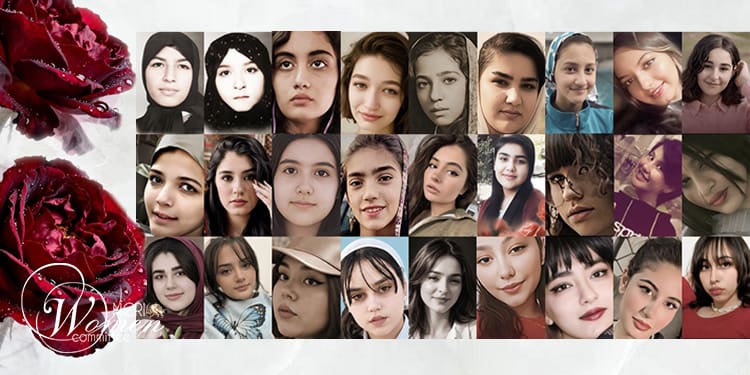
Four decades later, that same idealist courage reemerged within Iran’s schools. During the uprisings of recent years, and particularly the 2022 nationwide uprising, high school girls emerged as one of the most visible and impactful forces of the protest movement. Images emerging from girls’ schools showed a new generation stepping onto the frontlines, demonstrating that they were no longer merely the subjects of state policies, but primary drivers of the country’s social and political transformation. Schoolgirls chanted slogans, organized protests, and converted classroom spaces into hubs of defiance—a presence so formidable that security forces were compelled to storm school grounds to regain control.
Driven by fear of this explosive potential and the breathtaking role of schoolgirls during the 2022 uprising, the regime resorted to a new method of brutality and vengeance: systemic chemical attacks and serial poisonings targeting girls’ schools. This organized crime, which claimed victims across dozens of cities and hundreds of schools, sparked a wave of horror across the country and provoked widespread international outrage, prompting UN Special Rapporteurs to demand an immediate investigation into these appalling events.
Yet beyond the horrific scope of this campaign lay a stark truth: high school girls had become such a formidable vanguard of change in Iranian society that they struck profound fear into the heart of the establishment. The attacks on classrooms and the poisoning of young girls were, above all, a clear demonstration of helplessness by a regime that saw no option left against a generation of girls who had crossed the threshold of fear other than blind retribution.
This decisive presence surged once more during the nationwide uprising of January 2026, proving that Iran’s young generation has never left the battlefield. Throughout these protests, teenagers, and young women in particular, stood on the frontlines. The price of this steadfastness was agonizingly heavy: hundreds of children and teenagers lost their lives, thousands were detained, and countless school desks were left empty.
Yet the story of 2022 and January 2026 uprisings cannot be measured solely by the toll of casualties and sacrifice. The fundamental significance of these events lies in the fact that a new generation of schoolgirls, despite all this repression, refused to retreat—proving that the chain of resistance forged in the 1980s is today more alive and dynamic than ever as it shapes the future of Iran.
The Generation of Tomorrow Has Arrived
From November 4, 1978, to the present day, two dictatorships have sought to silence the voice of Iran’s young generation. Bullets, imprisonment, torture, executions, interrogations, fabricated charges, and raids on schools have all served a single objective: to extinguish a generation that views freedom as its natural birthright.
Yet the history of the past half-century reveals a very different outcome. From the teenage girls of the 1980s who refused to surrender their names to their jailers, to the schoolgirls who stood against tyranny inside Iranian classrooms; from the generation of November 4 to the generation of the 2022 and 2026 uprisings, an unbroken chain of resistance and hope endures.
Today, Student Day is more than a commemoration of the past. It is the day of the Generation of Tomorrow—a generation that has refused to bow to tyranny, paid the highest price, stood firm, and resolved to build a free and prosperous future. It is a generation that dictators have repeatedly tried to silence, only to see it rise stronger from the ashes of every crisis.
And perhaps this is the ultimate truth: the future of Iran rests in the hands of a generation that no longer fears standing up to rewrite its own destiny.