Thursday, August 27, 2026
  • English
  • Français
  • فارسی
  • عربى
PODCASTS
NCRI Women Committee Women Resistance Freedom
  • Home
  • NEWS
    • Women’s News
    • Articles
    • Statements
  • PUBLICATIONS
    • Monthlies
    • Documents
    • Reference Library
  • ABOUT US
    • The NCRI Women’s Committee
    • Gender Equality
    • Women’s Platform
  • MARYAM RAJAVI
    • Maryam Rajavi
    • Maryam Rajavi Speeches
    • The Plan on Women’s Rights and Freedoms
    • Ten-Point Plan for the future of Iran
  • VANGUARDS
    • The Fallen for Freedom
    • Heroines in Chain
    • Women of Iranian Resistance
    • Famous Women
    • Women in History
  • EVENTS
    • IWD Conferences
    • Activities
    • IWD Speeches
    • Solidarity
  • VIDEO
    • Videos
    • IWD Videos
  • PODCAST
  • DONATE
  • CONTACT US
No Result
View All Result
NCRI Women Committee Women Resistance Freedom
  • Home
  • NEWS
    • Women’s News
    • Articles
    • Statements
  • PUBLICATIONS
    • Monthlies
    • Documents
    • Reference Library
  • ABOUT US
    • The NCRI Women’s Committee
    • Gender Equality
    • Women’s Platform
  • MARYAM RAJAVI
    • Maryam Rajavi
    • Maryam Rajavi Speeches
    • The Plan on Women’s Rights and Freedoms
    • Ten-Point Plan for the future of Iran
  • VANGUARDS
    • The Fallen for Freedom
    • Heroines in Chain
    • Women of Iranian Resistance
    • Famous Women
    • Women in History
  • EVENTS
    • IWD Conferences
    • Activities
    • IWD Speeches
    • Solidarity
  • VIDEO
    • Videos
    • IWD Videos
  • PODCAST
  • DONATE
  • CONTACT US
No Result
View All Result
NCRI Women Committee
No Result
View All Result
Home Heroines in Chain
Surviving the Cage: Resistance to Psychological and Physical Torture

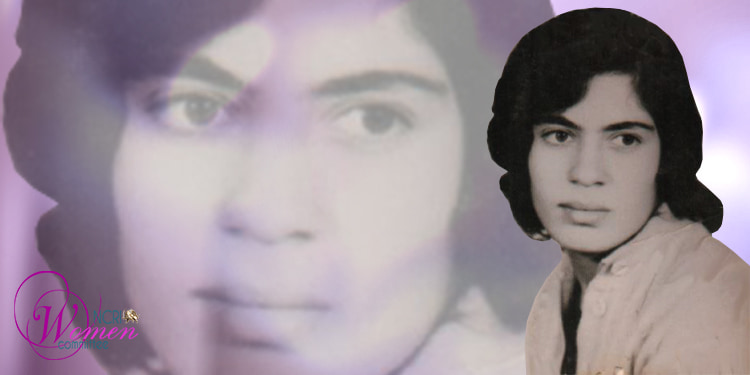
Roqieh Akbari Monfared

Surviving the Cage: Resistance to Psychological and Physical Torture

August 26, 2026
in Heroines in Chain

The Prison Memoir of Azam Haj Heydari from The Price of Being Human — Part Twenty

In the twentieth installment of Azam Haj Heydari’s prison memoir, published in her book The Price of Being Human, she recounts the methods and techniques she used to resist the psychological and physical torture inflicted in the cage.

At the time, Azam was a young teacher of 22 or 23 who had embarked on the path of struggle. She spent five years in the Judiciary’s Temporary Detention Center, Evin, Gohardasht, and Qezel-Hesar prisons, where she was subjected to brutal torture by Khomeini’s Revolutionary Guards.

Teaching, Remembering, and Creating in Confinement

One of the things I did in the cage was teach. Since I loved teaching very much, I devoted part of my time to giving lessons. I would recall the class I had taught and picture each of those little ones I loved so much—their names and the places where they sat in the classroom.

I would start teaching them and talking to them, explaining things I had learned in words they could understand. I would think about their problems; sometimes I would cry remembering them and their difficulties. At other times I would remember their hopes and wishes and tell them, “Children, I haven’t forgotten you. I haven’t forgotten the promises I made to you. I am keeping those promises. It may take time, but it will happen. My dear ones, you will know what it is to have love, comfort, and a decent life, and you will see Iran green and prosperous.”

I remembered little Mansoureh, the beautiful, sweet-talking girl who came to school in the middle of winter wearing nothing but a smock. With tears in her eyes and cheeks reddened and burned by the cold, she would press herself against the heater to warm up.

I remembered Fatemeh, who would crawl under her desk and cry because her father and mother had once again fought over money. She had hidden behind the bedding and heard her father say that he could not feed her and her four siblings, and that he would take them to an orphanage. Her mother had threatened, “Don’t make me pour kerosene over myself and set myself on fire today!” From then on, every day when Fatemeh came to school, she worried that perhaps her mother had set herself on fire at home.

I remembered them this way, comforting and reassuring them: when the revolution came, Mansoureh’s father would find the work he wanted and would be able to buy his daughter a proper coat, good shoes, and warm clothes. Fatemeh’s father, with a good salary, would no longer send his children to an orphanage. I would tell Fatemeh’s mother, “Why kill yourself? Hold on a little longer! Things will get better. The children will grow up; each of them will go to school and university or find a good job, and you will find happiness too!” And so on.

I remembered my friend Roqieh Akbari’s little daughter.[1] I remembered a day in Qezel-Hesar when I saw Roqieh Akbari deep in thought. I jokingly asked her, “What are you thinking about? So I can think about the same thing from afar!”

I had memorized that line from a poem published in the Mojahed newspaper in 1979, alongside a photograph of Mohammad-Reza Sa’adati. Roqieh raised her head, smiled, and said, “I don’t know why, but for a moment my daughter Mahnaz came to mind, and in my heart, I asked God to let my daughter become a member of the PMOI.” I asked Roqieh how old her daughter was. She said, “She is very little. But what matters is that she is my daughter, and I feel certain that she will become a member of the PMOI.”

I drew strength from these memories. I would tell myself, “You are here in this cage because you are fighting for them. If you want Mansoureh and Fatemeh to remain miserable like this, with no clear future, then go ahead—do what those so-called revolutionaries did: they lasted barely a week before they gave in and repented before their executioners. Tell them you’ve embraced Haji’s version of Islam and that you’ve only now realized how misguided and lost you had been before!”

But you are a member of the PMOI! You know that things in this world do not happen without consequence. You know why you are here! You must endure, and you can endure! Then I would say to Haji the Gorilla, “Let’s see which one of us breaks the other! Bring it on!”

For part of my time in the cage, I also devoted some of my daily hours to developing a Persian-language textbook for second-grade elementary school. I would think about what material to include in the book and what points to emphasize in each lesson and subject. Every day I would complete another part of it in my mind. After a while, most of the book had taken shape in my mind. This kept me occupied, and sometimes I genuinely had no idea how the hours had passed or how day had turned into night.

When night came and I first lay down to sleep, I would think about what I should do the next day. At first, I would tell myself, “Like yesterday…” But immediately I would stop myself: “No! Not like yesterday! Repetition isn’t right. Repetition will wear me down. It will swallow me up, and the enemy will win.”

Then I would tell myself, “The radio will be turned on in a few minutes. I must listen very carefully and see what new things are on it, so that I can use whatever I hear to plan tomorrow and keep my daily routine from becoming boring and repetitive.” This meant I didn’t feel the lack of sleep as much or feel as overwhelmed by it. My mind became active, searching for material to use.

Sometimes I would also devise programs, quizzes, twenty-question games, and things of that sort for myself to keep entertained. For example, I played Esm-o-Famil, a game I remembered from childhood. The way it worked was that I would choose a letter, such as “B,” and then mentally come up with a list of names—city names, countries, people’s names, fruits, and so on—that began with that letter.

It was both good exercise for keeping my mind active and a form of entertainment. But unlike sustained thinking, it did not exhaust me. Especially because this was a childhood game that we sometimes played with the girls in our cells, it brought back memories of my childhood playmates and friends, as well as my cellmates, and I would think about them and the memories we shared.

The monotonous, silent days in the cage were sometimes interrupted by incidents as well. Once, perhaps after I had gone three days without eating, a guard gave me a plate of food and a piece of bread, first striking me on the head. When I looked at the food, I became nauseated. I could no longer eat, and my stomach seemed unable to take anything either. That day I felt unwell and depressed. I took the food and put it on the floor.

I was thinking about the girls in prison. I remembered Kheirieh Safaei, with whom I had spent a short time in Ward 4 at Qezel-Hesar. Kheirieh was executed several years later during the 1988 massacre of PMOI prisoners. Talking among ourselves was forbidden in Ward 4, but Kheirieh would communicate with me through her face and sometimes with gestures, and I would answer her with a smile.

One day I went and sat beside her and said, “Why are you being so careful? All this time I’ve been here, you’ve never spoken to me except through facial movements and gestures!”

Her eyes filled with tears and she said, “Because whenever I talk to someone, they take that person to solitary confinement and beat them during interrogation. I wish they would take me and beat me.”

As we talked, she was using the piece of bread dough in her hand to make a sculpture. It was a small sculpture of the face of a young girl. She turned to me and said, “This sculpture is of one of my dearest friends who was martyred. I am giving it to you.”

As my memories of Kheirieh came alive, I felt somewhat revived. Remembering her, I put the bread into the broth, and when it had softened, I took it out and began kneading it. Suddenly, one of the guards came over and, as usual, struck me on the head and said, “Give me your plate!” I handed him the plate with one hand; he did not see the dough I was holding in the other. After he left, I continued kneading it.

I had decided to make a sculpture. I had never done anything like this before and had never even thought of it, but I don’t know why I suddenly became so eager to do it. As a child, I had heard a story about a woman who, because she was lonely and needed companionship, made a wax figure and named it “Naneh Mumi,” and would confide her troubles to it. Perhaps my own need for someone to talk to had driven me to make a sculpture.

I remembered my martyred comrades—Hajar, Mahdokht, Simin, Atiyeh, and others. I decided to make sculptures of them and talk to them. I began making one beneath my chador, concealed behind the edge of my blindfold. I don’t remember which of the girls the sculpture was supposed to be. I began talking to her.

I was so absorbed in what I was doing that suddenly someone struck me on the back and said, “Get up!” I panicked, thinking they had realized what I was doing. If they had seen it and confiscated the sculpture, I would certainly have been beaten badly. In a panic, I shoved the sculpture and the pieces of dough into my pocket and stood up.

But it was time to be taken to the bathroom and to pray. I had become so absorbed in what I was doing that I had lost all sense of time. I was happy about that, and after I returned, I continued my work. With the remaining dough, I made more sculptures of the other girls and spent hours talking to them.

Now, I had several companions to talk to. My spirits lifted considerably, I felt alive again, and the feeling of sickness and malaise that had overcome me disappeared.


[1] Roqieh Akbari was executed during the 1988 massacre of PMOI prisoners at the age of 30. At the time of her execution, she had a young daughter.


ShareTweetPinShareSendShareShare

Related Posts

Execution of 23-Year-Old Forced Marriage Victim: 4th Woman in Iran in a Week

August 26, 2026
Execution of 23-Year-Old Forced Marriage Victim: 4th Woman in Iran in a Week

On the morning of Monday, August 24, the death sentence of a 23-year-old woman named Arezoo Rastad was carried out in Isfahan Central Prison (Dastgerd). Arezoo Rastad who...

Read moreDetails

Iran: The End of the Anti-Violence Against Women Bill

August 26, 2026
Iran: The End of the Anti-Violence Against Women Bill

Over 15 years, Iran’s proposed Anti-Violence Against Women bill was systematically gutted, hijacked by hijab-enforcement clauses, and transformed into a legal framework that empowered abusers. The clerical regime...

Read moreDetails

Victims at Home: Report on 15 Women Killed in One Month

August 26, 2026
Victims at Home: Report on 15 Women Killed in One Month

Misogynistic laws lie at the root of violence against women in Iran Victims at Home: Report on 15 Women Killed in One Month: The roots of the tragedies...

Read moreDetails

43-Year-Old Mother Executed in Rasht Prison, Northern Iran

August 25, 2026
43-Year-Old Mother Executed in Rasht Prison, Northern Iran

A female prisoner was executed in Rasht, northern Iran. The death sentence was carried out at dawn today, August 25, in Lakan Prison, in the northern city of...

Read moreDetails

No to Executions Tuesdays: Mass Hunger Strike Grows Amid Rising Executions

August 25, 2026
"No to Executions Tuesdays": Mass Hunger Strike Grows Amid Rising Executions

The nationwide "No to Executions Tuesdays" campaign continued into its 135th week, driven by the steadfast resolve of prisoners across the country and the joining of new facilities....

Read moreDetails
Next Post
Execution of 23-Year-Old Forced Marriage Victim: 4th Woman in Iran in a Week

Execution of 23-Year-Old Forced Marriage Victim: 4th Woman in Iran in a Week

Documents

Call for Immediate Action to Halt the Death Sentence of Arghavan Fallahi

Sign our Statement to Halt the Death Sentence of 25-Year-Old Political Prisoner Arghavan Fallahi

July 10, 2026

Statement Calling for Immediate Action to Halt the Death Sentence of 25-Year-Old Political Prisoner Arghavan Fallahi We express our profound...

The Ineffectiveness of Population Policies in Iran: Economy, Aging, and the Overlooked Rights of Women

The Ineffectiveness of Population Policies in Iran: Economy, Aging, and the Overlooked Rights of Women

July 10, 2026

Abstract: A compilation of official data, media reports, and disclosures published in April, May, and June 2026 demonstrates that Iran...

Crushed by Design: Structural Crises and Inequitable Policies Push Female-Headed Households to the Edge

Crushed by Design: Structural Crises and Inequitable Policies Push Female-Headed Households to the Edge

May 18, 2026

Introduction Life for the Iranian people under the religious dictatorship is fraught with hardship and peril from every perspective. Whether...

Monthlies

July 2026 Report: Death Sentences for Women Rising Up to Overthrow the Mullahs' Regime
Monthlies

July 2026 Report: Death Sentences for Women Rising Up to Overthrow the Mullahs’ Regime

July 31, 2026
June 2026 Report: Working Iranian Women Erased from Labor Market
Monthlies

June 2026 Report: Working Iranian Women Erased from Labor Market

July 5, 2026
May 2026 Report: The Enduring Resistance of Iranian Women
Monthlies

May 2026 Report: The Enduring Resistance of Iranian Women

May 31, 2026
April 2026 Report: Mass Arrests of Women: Targeted Repression in Time of Crisis
Monthlies

April 2026 Report: Mass Arrests of Women in Iran

April 30, 2026

Articles

Victims at Home: Report on 15 Women Killed in One Month

Victims at Home: Report on 15 Women Killed in One Month

August 26, 2026

Misogynistic laws lie at the root of violence against women in Iran Victims at Home: Report on 15 Women Killed...

Iran Healthcare Workers Protest Against Severe Livelihood and Structural Crises

Iran Healthcare Workers Protest Against Severe Livelihood and Structural Crises

August 19, 2026

In the summer of 2026, an Iran healthcare workers protest wave highlights how the country’s health system faces chronic financial...

More than 4000 Prominent Political and Social Figures Call for the Revocation of Arghavan Fallahi’s Death Sentence

More than 4,000 Prominent Political and Social Figures Call for the Revocation of Arghavan Fallahi’s Death Sentence

August 17, 2026

More than 4000 prominent political and social figures, including elected representatives, university professors, educators, lawyers, judges, authors, artists, leaders of...

The Fallen for Freedom

Mojgan Mahdavi: From U.S. Academia to the Frontlines of the Iranian Resistance
The Fallen for Freedom

Mojgan Mahdavi: From U.S. Academia to the Frontlines of the Iranian Resistance

August 21, 2026
Mehrnoush Esfandiari, a 32-year-old mother from Gazanak
The Fallen for Freedom

Mehrnoush Esfandiari

August 20, 2026
Nasrin Shahrabi: A Lifetime Dedicated to Fighting Religious Fascism in Iran
The Fallen for Freedom

Nasrin Shahrabi: A Lifetime Dedicated to Fighting Religious Fascism in Iran

August 19, 2026
Zeinab Moayyedi, known fondly as "Mahboubeh" by her family, was born in 1998
The Fallen for Freedom

Zeinab Moayyedi (Mahboubeh)

August 19, 2026

ABOUT US

NCRI Women Committee

We work extensively with Iranian women outside the country and maintain a permanent contact with women inside Iran. The Women’s Committee is actively involved with many women’s rights organizations and NGO’s and the Iranian diaspora.
The committee is a major source of much of the information received from inside Iran with regards to women. Attending UN Human Rights Council meetings and other international or regional conferences on women’s issues and engaging in a relentless battle against the Iranian regime’s misogyny are part of the activities of members and associates of the committee.

CATEGORIES

  • Activities
  • Articles
  • Documents
  • Famous Women
  • Heroines in Chain
  • IWD Conferences
  • IWD Speeches
  • IWD Videos
  • Maryam Rajavi
  • Maryam Rajavi Speeches
  • Monthlies
  • Podcast
  • Reference Library
  • Solidarity
  • Statements
  • The Fallen for Freedom
  • Videos
  • Women in History
  • Women in Leadership
  • Women of Iranian Resistance
  • Women's News

BROWSE BY TAG

Child marriage coronavirus education execution forced hijab Gender Gap Generation Equality Honor killings Iran Teachers Maryam Akbari Monfared Nurses Plan on Women's Rights and Freedoms Poverty Prisoners Protests rural women Saba Kord Afshari The girl child Violence against women Women's Leadership Women Heads of Household Zeinab Jalalian

The copyright of all the material published on this website has been registered under © 2016 the Women’s Committee of the National Council of Resistance of Iran. To obtain permission to copy, redistribute or publish the material published on this website, you should write to the NCRI Women’s Committee. Please include the link of the original article on our website, women.ncr-iran.org.

Welcome Back!

Login to your account below

Forgotten Password?

Retrieve your password

Please enter your username or email address to reset your password.

Log In

Add New Playlist

No Result
View All Result
  • Home
  • News
    • Women’s News
    • Articles
    • Statements
  • Publications
    • Monthlies
    • Documents
    • Reference Library
  • About Us
    • The NCRI Women’s Committee
    • Gender Equality
    • Women’s Platform
  • Maryam Rajavi
    • Maryam Rajavi
    • Maryam Rajavi Speeches
    • Ten Point Plan for Iran
    • The Plan on Women’s Rights and Freedoms
  • Vanguards
    • The Fallen for Freedom
    • Heroines in Chain
    • Women of Iranian Resistance
    • Famous Women
    • Women in History
  • Events
    • IWD Conferences
    • Activities
    • IWD Speeches
    • Solidarity
  • Video
    • Videos
    • IWD Videos
  • Podcast
  • DONATE
  • Contact us
  • فارسی
  • عربی
  • Français

The copyright of all the material published on this website has been registered under © 2016 the Women’s Committee of the National Council of Resistance of Iran. To obtain permission to copy, redistribute or publish the material published on this website, you should write to the NCRI Women’s Committee. Please include the link of the original article on our website, women.ncr-iran.org.