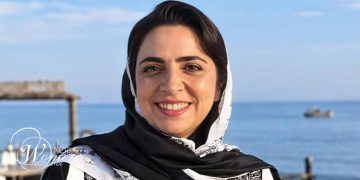


As a 67-year-old Iranian engineer and women’s rights activist faces execution for holding a banner reading “Women, Resistance, Freedom,” an unprecedented wave of international condemnation has emerged. An open letter signed by more than 400 prominent women worldwide, alongside urgent statements from eight UN human rights experts, has triggered extensive global media coverage demanding the immediate halt of Zahra Tabari’s death sentence and exposing the Iranian regime’s escalating use of capital punishment against women.
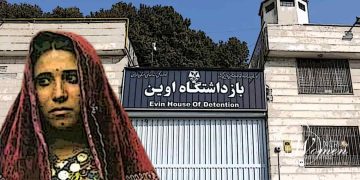
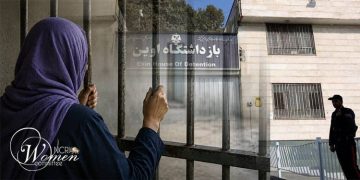
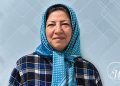
Zahra Shahbaz Tabari, who holds a bachelor’s degree in electrical engineering from Isfahan University of Technology and a master’s degree in Sustainable Energy from Borås University in Sweden, has been detained since April 17, 2025, without a judicial warrant. She is currently held in Lakan Prison in Rasht. A mother of two, Tabari was sentenced to death by the First Branch of the Revolutionary Court of Rasht.
Her charges include alleged support for the People’s Mojahedin Organization of Iran (PMOI). Her trial was conducted via video conference, reportedly lasting less than ten minutes, without the presence of her chosen lawyer. The court-appointed defense attorney provided no effective defense, and the death sentence was issued immediately. According to reports, the only evidence presented consisted of a banner bearing the slogan “Women, Resistance, Freedom” and an unpublished audio message.
International Media Coverage: The Voice of Global Justice and Solidarity
Global and Wire Services: Scale of Support and Imminent Risk
AFP, the French News Agency, reported: More than 400 prominent women, including four Nobel laureates and several former presidents and prime ministers, demanded Tuesday that Iran immediately release engineer and activist Zahra Tabari, fearing she faces imminent execution.
The urgent public appeal charged that Tabari, a 67-year-old mother, was handed a death sentence in October following “a sham 10-minute trial, held remotely via videoconference without her chosen legal representation.”
“In Iran, daring to hold a sign declaring women’s resistance to oppression is now punishable by death,” said Tuesday’s letter, which was also signed by a slew of sitting judges, diplomats and current parliamentarians like U.S. Republican Congresswoman Nancy Mace.
“We demand Zahra’s immediate release, and we call on governments worldwide to stand with the women of Iran in their quest for democracy, equality, and freedom.”
The appeal said Tabari stood accused of collaborating with the opposition organization People’s Mujahedin (PMOI, also known by the Persian acronym MEK), which is banned in Iran.
PMOI told AFP she was one of 18 activists who were currently on death row in Iran for their affiliation with the group.
Barron’s, affiliated with The Wall Street Journal and citing AFP, reported: Nonetheless, a group of eight independent United Nations rights experts also issued a statement Tuesday demanding Iran “immediately stop the execution” of Tabari, saying she had been found guilty of “baghi”, or armed rebellion, based solely on the banner and an unpublished audio message.
“Ms. Tabari’s case shows a pattern of serious violations of international human rights law regarding fair trial guarantees and the inappropriate use of capital punishment for broad and ill-defined national security offences,” they said.
France 24 reported: The experts, who are mandated by the UN Human Rights Council but do not speak on behalf of the world body, stressed that the International Covenant on Civil and Political Rights, ratified by Iran, restricts use of the death penalty to the “most serious crimes”.
“This case involves no intentional killing and contains numerous procedural violations,” they said, insisting that “to execute Tabari under these circumstances would constitute arbitrary execution”.
The Straits Times (Singapore) highlighted that the appeal was signed by over 400 prominent women due to the imminent risk of execution, reporting that Tabari faces the death penalty for holding a banner reading “Women, Resistance, Freedom.”
The Daily Telegraph wrote that more than 400 prominent women from around the world, including Nobel Prize laureates, former presidents, and prime ministers, alongside independent UN human rights experts, have called on Iran to halt the execution of Zahra Tabari.
European Media: Arbitrary Justice and Women’s Repression
Der Spiegel (Germany) reported that over 400 prominent women, including four Nobel laureates and former presidents and prime ministers, demanded Tabari’s immediate release. The magazine noted that her only “crime” was holding a banner reading “Women, Resistance, Freedom,” describing her ten-minute trial as a sham and highlighting serious human rights violations and the misuse of the death penalty for vague national security charges.
Watson (Switzerland) emphasized that Tabari’s death sentence stemmed solely from holding the banner, underscoring how such minor acts of protest can result in capital punishment in Iran.
Le Figaro (France) highlighted that executing Tabari under these circumstances would constitute an arbitrary execution and pointed to decades of fear experienced by Iranian women.
Libération (France) wrote: Written by the London-based association of victims’ families “Justice for the victims of the 1988 massacre in Iran”, the letter was signed by former presidents of Switzerland and Ecuador, former prime ministers of Finland, Peru, Poland and Ukraine. “We demand the immediate release of Zahra and call on governments worldwide to stand in solidarity with Iranian women in their struggle for democracy, equality, and freedom.”
Franceinfo quoted one of the signatories of the letter, philosopher Élisabeth Badinter: “It is truly unbearable that a 67-year-old woman is sentenced to death simply for holding a banner with the words ‘Women, Resistance, Freedom.’”
TF1 (France) highlighted that signatories included Yulia Tymoshenko, Micheline Calmy-Rey, and Élisabeth Badinter, and reported that Tabari was sentenced to death following a ten-minute trial conducted without a lawyer.
L’Orient Today reported that more than 400 prominent women worldwide, including Nobel laureates and former presidents and prime ministers, have called for the immediate release of Zahra Tabari and condemned the imminent execution order against her.
RTBF and Belga (Belgium) noted that the letter was signed by over 400 prominent women, including the French philosopher Élisabeth Badinter, as well as several elected Belgian and European officials. The reports described the death sentence as “arbitrary” and called for Tabari’s immediate release.
BelvedereNews (Italy) reported that over 400 prominent women from around the world—including Nobel laureates, former presidents and prime ministers, members of parliament, UN special rapporteurs, media figures, athletes, and human rights defenders—issued an urgent statement warning of the imminent risk of Tabari’s execution.
Public Broadcasters and UN Focus: Trial Violations and Lack of Evidence
Deutsche Welle (Germany) reported that eight UN independent human rights experts called on Iran to immediately halt Tabari’s execution. The outlet emphasized that her conviction for “baghi” (armed rebellion) was based solely on the banner and the unpublished audio message.
BBC highlighted that UN human rights experts and over 400 prominent women called for stopping Tabari’s death sentence, stressing the extremely limited evidence and the fundamentally unfair trial. The report emphasized that her conviction was based solely on a banner reading “Women, Resistance, Freedom” and an unpublished audio message.
The UK Communications and Education Center noted that the signatories included Nobel laureates, former presidents, prime ministers, legislators, judges, and diplomats. It described Tabari’s trial as extremely brief and fundamentally flawed, and described Iran as the world’s leading executioner of women on a per-capita basis.
Middle Eastern and Arabic Media: Resistance, Executions, and International Law
Independent Arabic emphasized the global resonance of the “Women, Resistance, Freedom” slogan during the 2022 protests and highlighted the formalistic and extremely brief trial conducted without legal representation.
Al-Sharq Al-Awsat emphasized the case as a clear example of serious violations of international human rights law and the misuse of the death penalty for vague charges.
SeeNews (Egypt) reported that the statement includes prominent figures from the fields of sports, media, and human rights, and highlighted the rising number of executions and political repression in Iran.
Al-Ahram Info (Egypt) reported that Tabari faces the death penalty following a brief trial held without the presence of a lawyer, on charges of displaying a banner reading “Women, Resistance, Freedom.” The outlet noted that a call to action was issued by the “Justice for the Victims of the 1988 Massacre in Iran” association, urging governments to take measures in support of Iranian women in their pursuit of democracy and freedom.
Radio Farda reported that, in a UK-based appeal, over 400 women, including Nobel laureates and former leaders, described Iran as “the world’s number one country for executing women per capita,” emphasizing that in Iran, holding a banner declaring women’s resistance to oppression is now punishable by death.
What the World Media Agrees On
- Zahra Tabari’s death sentence is arbitrary and unjustified under international law
- Her conviction followed a brief, deeply flawed trial lacking due process
- The charges stem from peaceful expression, including a protest banner
- Her case reflects broader repression of women and dissent in Iran
World Unites for Iranian Women’s Struggle for Democracy and Rights
The breadth and intensity of international media coverage reflect a growing global alarm over the Iranian regime’s systematic violations of human rights and its escalating repression of women. The open letter signed by hundreds of prominent women, reinforced by the intervention of UN human rights experts, has transformed Zahra Tabari’s case into a powerful symbol of resistance against arbitrary executions and gender-based persecution. This unprecedented global attention underscores both the legitimacy of Iranian women’s struggle for democracy, equality, and fundamental freedoms, and the urgent responsibility of the international community to act before another irreversible injustice is carried out.