Tuesday, February 17, 2026
  • English
  • Français
  • فارسی
  • عربى
PODCASTS
NCRI Women Committee Women Resistance Freedom
  • Home
  • NEWS
    • Women’s News
    • Articles
    • Statements
  • PUBLICATIONS
    • Monthlies
    • Documents
    • Reference Library
  • ABOUT US
    • The NCRI Women’s Committee
    • Gender Equality
    • Women’s Platform
  • MARYAM RAJAVI
    • Maryam Rajavi
    • Maryam Rajavi Speeches
    • The Plan on Women’s Rights and Freedoms
    • Ten-Point Plan for the future of Iran
  • VANGUARDS
    • The Fallen for Freedom
    • Heroines in Chain
    • Women of Iranian Resistance
    • Famous Women
    • Women in History
  • EVENTS
    • IWD Conferences
    • Activities
    • IWD Speeches
    • Solidarity
  • VIDEO
    • Videos
    • IWD Videos
  • PODCAST
  • DONATE
  • CONTACT US
No Result
View All Result
NCRI Women Committee Women Resistance Freedom
  • Home
  • NEWS
    • Women’s News
    • Articles
    • Statements
  • PUBLICATIONS
    • Monthlies
    • Documents
    • Reference Library
  • ABOUT US
    • The NCRI Women’s Committee
    • Gender Equality
    • Women’s Platform
  • MARYAM RAJAVI
    • Maryam Rajavi
    • Maryam Rajavi Speeches
    • The Plan on Women’s Rights and Freedoms
    • Ten-Point Plan for the future of Iran
  • VANGUARDS
    • The Fallen for Freedom
    • Heroines in Chain
    • Women of Iranian Resistance
    • Famous Women
    • Women in History
  • EVENTS
    • IWD Conferences
    • Activities
    • IWD Speeches
    • Solidarity
  • VIDEO
    • Videos
    • IWD Videos
  • PODCAST
  • DONATE
  • CONTACT US
No Result
View All Result
NCRI Women Committee
No Result
View All Result
Home Heroines in Chain
Face to Face with the Beast (15) From the memoir by Hengameh Haj Hassan – Part 15

Face to Face with the Beast (15) From the memoir by Hengameh Haj Hassan – Part 15

Face to Face with the Beast (15)

September 17, 2025
in Heroines in Chain

From the memoir by Hengameh Haj Hassan – Part 15

In the previous part (14) of the Face to Face with the Beast, we read about how the Iranian state tried to crush prisoners’ spirits in Ghezel Hesar by banning even harmless creative outlets like crafts and crossword puzzles, yet the women always found ways to resist and create joy. In this part, Hengameh begins recounting the horror of “the Cage” (Qafas), one of the regime’s most notorious torture projects designed to break resistant prisoners into repentance.

Transfer to the Cage

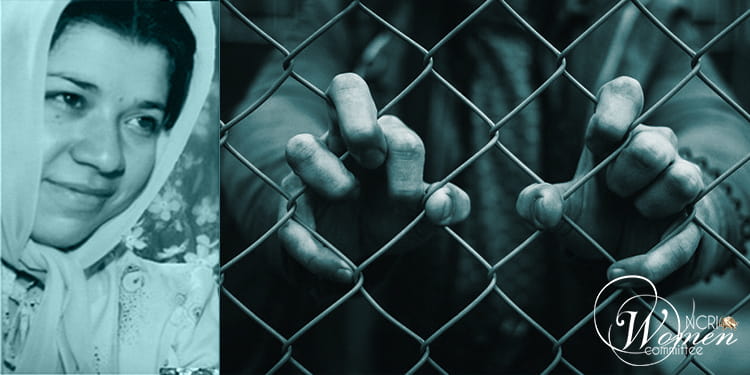
Starting in April 1983, a number of resistant women prisoners — including my dearest friend Shekar — were taken to Gohardasht Prison as punishment. They were placed under no-visitation orders, their whereabouts hidden. When their families came looking, they were sent from prison to prison, left wandering in anguish, not knowing where their children were.
Face to Face with the Beast (15) From the memoir by Hengameh Haj Hassan – Part 15
Shekar Mohammadzadeh

Later we learned that they had been taken to special torture wards nicknamed Residential Units — though in reality no one yet knew such places even existed. These were in Ghezel Hesar, apparently repurposed former staff quarters or abandoned work facilities. For about a year, these women endured the most horrific tortures inside those units before being transferred to Evin.

After interrogations and solitary confinement in Evin, they were brought back again to Ghezel Hesar, this time to Ward 1 — to places that later became known as the Cages (Qafas). At that time, neither the “Cages” nor the so-called “Residential Units” were widely known. We prisoners in Ghezel Hesar only vaguely knew that new punishment wards had been opened in Unit 1 and that some male prisoners had been taken there. But none of us had any idea what those places really were.

Then one day in February 1984, they pulled us out of our wards for an “Islamic Guidance” session. We expected yet another cleric or pseudo-cleric to come and lecture us. But to our shock, we saw some of the non-religious women from our ward — those taken away a week earlier for not praying — now standing before us, weeping and begging forgiveness.

Through the microphone, they declared that they had “found faith in Islam,” that they deeply regretted their past actions against “beloved Islam” and “kind Haj Agha” (the prison cleric), and that they felt no resentment toward Islam or the guards for the executions of their loved ones. After all, they said, the guards had only “pulled the trigger” — the real culprits were America, Israel, China, the Soviet Union, and other foreign powers.

That night, we returned to our ward with bitter hearts. We understood that this so-called “victory” for the regime would bring serious consequences for all of us. And indeed, the very next morning, the prison informers grew bolder, harassing us more openly and constantly looking for excuses to torment us. We tried our best not to be provoked.

That day was supposed to be our bath day. As usual, we heated some bathwater to make “bath tea.” Suddenly, they called out about fifteen women by name — among them Azam, Sara, Jamileh, and others whose names I can’t recall — and took them away. The atmosphere was tense and heavy.

One of the turncoat prisoners, Tavous, sneered at me:

“Good! Serves you right! That’s what you get for making ‘organizational tea’ in the bath.”

These shameless creatures had even turned a few buckets of bathwater into an excuse for torture. I spat back at her:

“Shut up, you filthy garbage! I’ll smash your dirty mouth till it bleeds. Get lost, you pathetic bootlicker!”

The stream of curses I threw at her gave me a strange relief. She slinked off — but only moments later, they called my name too. Oddly, I felt glad, because I didn’t want to stay behind while my comrades were taken.

The girls looked at me with worried eyes, helping me make sure I was dressed warmly since it was cold outside. I put on every piece of clothing I had, knowing there might be no return. Ateqeh, Maryam, and the others said their silent, tearful farewells.

They led me to Zir-e Hasht (the prison’s main checkpoint), blindfolded me, and lined me up with the others facing the wall. Haj Davood — the infamous executioner — was there, his ugly voice filling the room:

“So, these are the ringleaders of the hypocrites? Fine! We’re sending them to a place where they’ll either become human, or they’ll die. What a fine ‘repentance factory’ I’ve built!” He repeated his usual drivel with satisfaction.

Then they marched us out, bundled us into a vehicle, and after a short ride brought us into another building that looked much like Unit 3 — but later I learned it was Unit 1. For hours they kept us standing, blindfolded, facing the wall.

Eventually Haj Davood approached me. I was wearing the thick sweater my aunt had lovingly knitted and sent for me. He sneered:

“Who’s this one? Look at that build! She’s clearly a bodyguard.”

Then, with the heavy cable in his hand, he struck me hard on the head. The blow made me dizzy, but I forced myself not to fall. The strikes kept coming, one after another, relentless. I couldn’t think, only instinctively shielded my face, terrified that one strike would crush it.

Finally, when groans escaped me, Haj Davood stopped. “Take her away!” he barked. They spun me around several times to disorient me, but I counted the steps carefully, determined not to lose my sense of direction.

For a prisoner, holding onto time and space is vital — to know where you are, what day it is, and never let the regime erase your orientation. No one had ever trained me for this, but instinctively, through experience, I knew how important it was.

They finally led me into a small, suffocating room. Two wooden planks had been placed upright, half a meter apart, and they forced me to sit between them. The air was thick, hot, and smelled of a bathhouse. Still blindfolded, I touched my head: swollen ridges ran across my scalp where the cable had struck, even through my scarf and chador.

But strangely, I felt no pain anymore — perhaps the skin had gone numb. My only thought was: where are the others? What’s happening to them?

The air grew unbearable, and soon I felt dizzy. Whether from the blows to my head or the stifling heat, I couldn’t tell. Finally, I lost consciousness.

  • Haj Davood Rahmani was the notorious warden of Ghezel Hesar prison, infamous for his cruelty, especially the Qafas (“Cage”) project.
  • “Bath tea” was a kind of improvised tea brewed by heating bathwater, a small act of normalcy and solidarity that the guards used as a pretext for punishment.
  • “Tawab” (repentant prisoners) refers to prisoners who, under torture and pressure, publicly renounced their beliefs and collaborated with the regime. They were often used as tools against their fellow inmates.
  • Unit 1 / Unit 3 were sections of Ghezel Hesar prison. The Cages were in Unit 1, designed as torture wards to break resistance.
ShareTweetPinShareSendShare

Related Posts

Mina Nasirpour, A Female Prisoner, Executed at Tabriz Central Prison

February 17, 2026
Mina Nasirpour, A Female Prisoner, Executed at Tabriz Central Prison

On Monday, February 16, 2026, a female prisoner identified as Mina Nasirpour was executed at Tabriz Central Prison. Mina Nasirpour, approximately 40 years old and originally from Ardabil,...

Read moreDetails

“No to Executions Tuesdays” Campaign Marks Week 108 Across 56 Prisons

February 17, 2026
“No to Executions Tuesdays” Campaign Marks Week 108 Across 56 Prisons

The “No to Executions Tuesdays” campaign has entered its 108th consecutive week, announcing in a newly released statement the continuation of coordinated anti–death penalty protests in 56 prisons...

Read moreDetails

Social Security retirees voice solidarity with victims’ families

February 16, 2026
Social Security retirees voice solidarity with victims’ families

Social Security Retirees held a protest on Sunday, February 14, outside the local Social Security office in Kermanshah, western Iran.  Demonstrators chanted, “Our tables are empty of bread,...

Read moreDetails

Death of Robabeh Masouri, Mother of Prominent Political Prisoner Saeed Masouri

February 16, 2026
Death of Robabeh Masouri, Mother of Prominent Political Prisoner Saeed Masouri

Systematic Denial of Basic Rights to Supporters of the PMOI On Sunday, February 14, 2026, Mrs. Robabeh Masouri, mother of political prisoner Saeed Masouri, passed away after years...

Read moreDetails

Vanity Fair Italia Interviews Azar Karimi: The Courage and Resilience of Iranian Women in the Face of Repression

February 16, 2026
Vanity Fair Italia Interviews Azar Karimi

The Italian magazine “Vanity Fair Italia” published an interview with Azar Karimi, spokesperson for the Iranian Youth Association in Italy, in its issue dated 14 February 2026. The...

Read moreDetails
Next Post
Samineh Baghcheban: Pioneer of Deaf Education and Children’s Literature

Samineh Baghcheban: Pioneer of Deaf Education and Children’s Literature

Documents

Iranian women Who Lost Their Lives in Iran’s January 2026 Uprising

Iranian Women Who Lost Their Lives in Iran’s January 2026 Uprising

January 25, 2026

Names That Must Not Be Forgotten Iranian women played a central and courageous role in the January 2026 uprising, standing...

More than 400 Prominent Women Demand Halt to Iran Execution of Political Prisoner Zahra Tabari

More than 400 Prominent Women Demand Halt to Iran Execution of Political Prisoner Zahra Tabari

December 25, 2025

More than 400 prominent women from across the globe, among them Nobel Prize winners, former presidents and prime ministers, parliamentarians,...

The Gendered Dimensions of the Water Crisis in Iran: Impacts on Women’s Health, Livelihoods, and Security

The Gendered Dimensions of the Water Crisis in Iran: Impacts on Women’s Health, Livelihoods, and Security

October 12, 2025

How Iranian Women Shoulder the Heavy Burden of a Deepening Crisis Download Italian Version The water crisis in Iran has...

Monthlies

January 2026 Report: Women at the Core of the Uprising
Monthlies

January 2026 Report: Women at the Core of the Uprising

January 31, 2026
December 2025 Report: A Year in Review: Iranian Women’s Resistance Against Religious Dictatorship
Monthlies

December 2025 Report: A Year in Review: Iranian Women’s Resistance Against Religious Dictatorship

January 5, 2026
November 2025 Report: Under the Clerical Regime, Nowhere Is Safe for Women in Iran
Monthlies

November 2025 Report: Under the Clerical Regime, Nowhere Is Safe for Women in Iran

November 30, 2025
October 2025 Report: Death Sentence for a Female Political Prisoner The Resistance of Female Political Prisoners Inspires Iranian Women and Girls in Their Struggle Against the Regime of Executions and Massacre
Monthlies

October 2025 Report: Death Sentence for a Female Political Prisoner

October 31, 2025

Articles

Death of Robabeh Masouri, Mother of Prominent Political Prisoner Saeed Masouri

Death of Robabeh Masouri, Mother of Prominent Political Prisoner Saeed Masouri

February 16, 2026

Systematic Denial of Basic Rights to Supporters of the PMOI On Sunday, February 14, 2026, Mrs. Robabeh Masouri, mother of...

Medical Staff Face Ongoing Detention for Treating Uprising Injuries

Medical Staff Face Ongoing Detention for Treating Uprising Injuries

February 12, 2026

Amid a continuing crackdown following Iran’s nationwide protests, reports indicate that numerous medical staff and members of the medical community...

Iranians March and Rally in Berlin, Calling for Democracy and Rejecting All Forms of Dictatorship

Iranians March and Rally in Berlin, Calling for Democracy and Rejecting All Forms of Dictatorship

February 7, 2026

Iranians March and Rally in Berlin - On Saturday, February 7, 2026, marking the anniversary of the 1979 anti-monarchical revolution,...

The Fallen for Freedom

Sonya Salehi-Rad was killed on January 8, 2026, during the nationwide popular protests in Shiraz
The Fallen for Freedom

Sonya Salehi-Rad

February 10, 2026
Arezoo Abedi was killed on January 9, 2026, during the nationwide popular protests
The Fallen for Freedom

Arezoo Abedi

February 10, 2026
Arnika Dabbagh, from Gorgan, was killed on January 9, 2026
The Fallen for Freedom

Arnika Dabbagh

February 7, 2026
Maedeh Moradi Kia, a resident of Tehran, was killed on January 9, 2026
The Fallen for Freedom

Maedeh Moradi Kia

February 7, 2026

ABOUT US

NCRI Women Committee

We work extensively with Iranian women outside the country and maintain a permanent contact with women inside Iran. The Women’s Committee is actively involved with many women’s rights organizations and NGO’s and the Iranian diaspora.
The committee is a major source of much of the information received from inside Iran with regards to women. Attending UN Human Rights Council meetings and other international or regional conferences on women’s issues and engaging in a relentless battle against the Iranian regime’s misogyny are part of the activities of members and associates of the committee.

CATEGORIES

  • Activities
  • Articles
  • Documents
  • Famous Women
  • Heroines in Chain
  • IWD Conferences
  • IWD Speeches
  • IWD Videos
  • Maryam Rajavi
  • Maryam Rajavi Speeches
  • Monthlies
  • Podcast
  • Reference Library
  • Solidarity
  • Statements
  • The Fallen for Freedom
  • Videos
  • Women in History
  • Women in Leadership
  • Women of Iranian Resistance
  • Women's News

BROWSE BY TAG

Child marriage coronavirus education execution forced hijab Gender Gap Generation Equality Honor killings Iran Teachers Maryam Akbari Monfared Nurses Plan on Women's Rights and Freedoms Poverty Prisoners Protests rural women Saba Kord Afshari The girl child Violence against women Women's Leadership Women Heads of Household Zeinab Jalalian

The copyright of all the material published on this website has been registered under © 2016 the Women’s Committee of the National Council of Resistance of Iran. To obtain permission to copy, redistribute or publish the material published on this website, you should write to the NCRI Women’s Committee. Please include the link of the original article on our website, women.ncr-iran.org.

Welcome Back!

Login to your account below

Forgotten Password?

Retrieve your password

Please enter your username or email address to reset your password.

Log In

Add New Playlist

No Result
View All Result
  • Home
  • News
    • Women’s News
    • Articles
    • Statements
  • Publications
    • Monthlies
    • Documents
    • Reference Library
  • About Us
    • The NCRI Women’s Committee
    • Gender Equality
    • Women’s Platform
  • Maryam Rajavi
    • Maryam Rajavi
    • Maryam Rajavi Speeches
    • Ten Point Plan for Iran
    • The Plan on Women’s Rights and Freedoms
  • Vanguards
    • The Fallen for Freedom
    • Heroines in Chain
    • Women of Iranian Resistance
    • Famous Women
    • Women in History
  • Events
    • IWD Conferences
    • Activities
    • IWD Speeches
    • Solidarity
  • Video
    • Videos
    • IWD Videos
  • Podcast
  • Donate
  • Contact us
  • فارسی
  • عربی
  • Français

The copyright of all the material published on this website has been registered under © 2016 the Women’s Committee of the National Council of Resistance of Iran. To obtain permission to copy, redistribute or publish the material published on this website, you should write to the NCRI Women’s Committee. Please include the link of the original article on our website, women.ncr-iran.org.